
Image Source: i.ytimg.com
Step-by-Step: How Do You Thread a Singer Simple Sewing Machine?
Can you thread a Singer Simple sewing machine easily? Yes, threading a Singer Simple sewing machine is a straightforward process when you follow the correct steps. This guide will walk you through everything you need to know to get your Singer Simple ready for sewing, from winding the bobbin to setting the stitch.
Learning to thread your Singer Simple sewing machine might seem a bit daunting at first, but it’s actually quite simple once you know the path the thread takes. The Singer Simple is designed with ease of use in mind, making it a great choice for beginners. This detailed guide will cover the complete Singer Simple setup, focusing on threading Singer Simple machines to ensure you can start stitching without hassle. We’ll break down each step, so you feel confident tackling this essential part of sewing.
Preparing Your Singer Simple for Threading
Before you begin threading, ensure your sewing machine is properly set up. This involves a few basic checks.
Ensuring Proper Power and Lighting
- Plug it in: Make sure your Singer Simple is plugged into a working electrical outlet.
- Turn it on: Locate the power switch, usually on the side or back of the machine, and turn it on.
- Good lighting: Position your machine in a well-lit area. Good light makes it much easier to see the thread path and the small parts of the machine.
Checking the Needle
The needle is crucial for sewing. A correctly inserted needle ensures smooth stitching.
- Needle Insertion:
- Raise the presser foot. This is important so the needle can move freely.
- Loosen the needle clamp screw. This screw holds the needle in place.
- Insert a new, straight needle. The flat side of the needle should always face the back of the machine.
- Push the needle up as far as it will go into the needle clamp.
- Tighten the needle clamp screw securely. Don’t overtighten, but make sure it’s snug.
The Importance of the Presser Foot
The Singer Simple presser foot is what holds your fabric against the feed dogs. Always make sure it is in the raised position when threading the top thread. This allows the thread to pass through the tension discs correctly. Lower it only when you are ready to sew.
Winding the Bobbin: The First Step to Threading
Winding a bobbin is the first essential step before you can thread the entire machine. A well-wound bobbin ensures even thread tension.
Singer Simple Bobbin Winding Procedure
- Place the bobbin: Put a bobbin onto the bobbin winder spindle. It should sit securely.
- Thread the winder:
- Guide the thread from your spool through the thread guide on the winder spindle.
- Take the end of the thread and wrap it around the small notches on the bobbin a few times.
- Pull the thread end through one of the notches so it’s held in place.
- Engage the winder: Push the bobbin winder spindle to the right, engaging the winder mechanism. Some Singer Simple models might have a small stopper or lever to engage.
- Start winding: Gently press the foot pedal. The bobbin will start to wind.
- Guide the thread: Use your fingers to guide the thread back and forth across the bobbin to ensure even winding.
- Stop winding: When the bobbin is full, stop winding. The winding speed might slow down automatically, or you might need to stop by releasing the foot pedal.
- Disengage and cut: Push the bobbin winder spindle back to its original position. Cut the thread and remove the full bobbin.
Tip: Do not overfill the bobbin, as this can cause the thread to tangle and break.
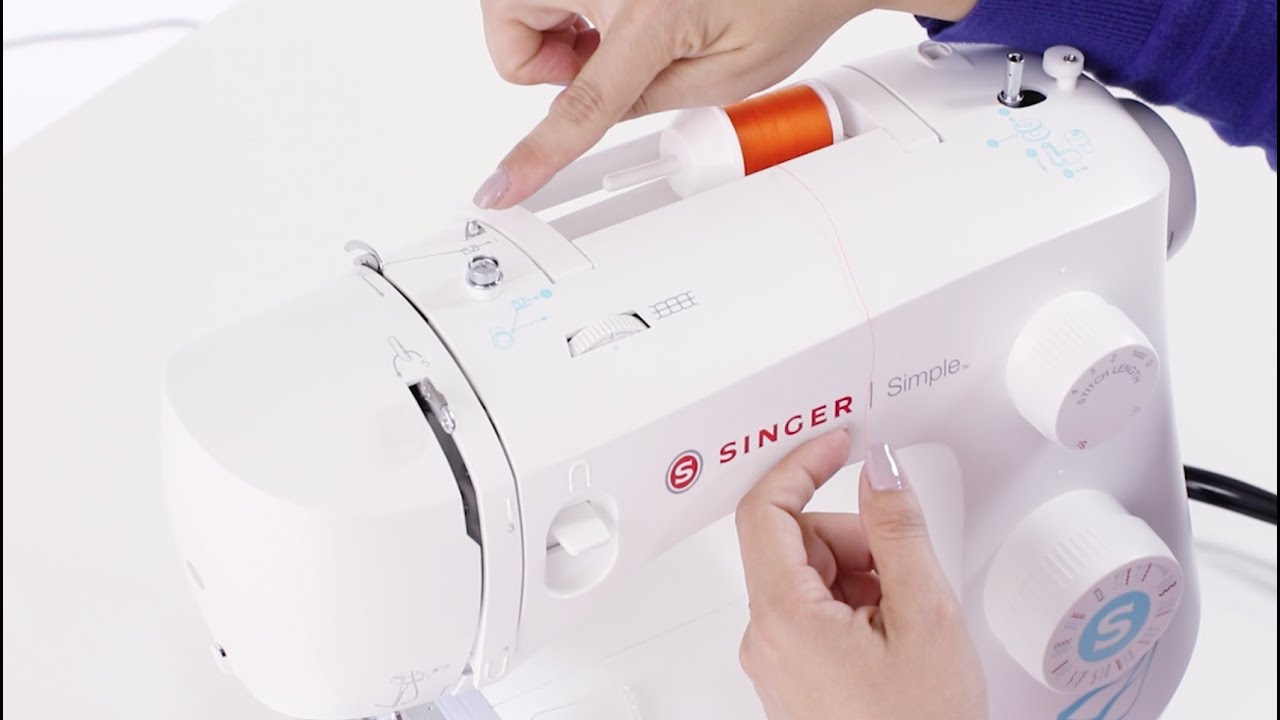
Threading the Top Thread: The Main Pathway
This is the core of the threading Singer Simple process. Follow these steps precisely for a smooth thread path.
Step-by-Step Top Threading
- Raise the Presser Foot: Ensure the Singer Simple presser foot is lifted to its highest position. This is critical.
- Thread the Spool Pin: Place your spool of thread on the spool pin. The thread should unwind from the spool in a counter-clockwise direction.
- Follow the Numbered Path: Your Singer Simple machine has a series of guides and tension discs that the thread must pass through. These are often numbered or marked on the machine itself. Refer to your Singer Simple manual if you are unsure of the exact path.
- Thread Guide (1): Bring the thread up from the spool and pass it through the first thread guide at the top of the machine.
- Tension Discs (2): This is a crucial step. Guide the thread down between the tension discs. Make sure the thread is fully seated between the discs. You’ll feel a slight resistance as it passes through.
- Take-Up Lever (3): Bring the thread up and around the curved arm of the take-up lever, then down through the eyelet on the lever. The thread must go through the eyelet.
- Second Thread Guide (4): Continue guiding the thread downwards and pass it through the next thread guide, usually located above the needle.
- Needle Guide (5): There’s often a small guide just above the needle itself. Pass the thread through this guide.
- Thread the Needle:
- Bring the thread towards the front of the needle.
- Pass the thread through the eye of the needle from front to back. For easier threading, you can trim the thread end cleanly or use a needle threader if your model has one.
Inserting and Threading the Bobbin Case
Once the top thread is in place, you need to set up the bobbin.
Singer Simple Bobbin Insertion
- Open the Bobbin Area: Lift the presser foot and open the needle plate or the bobbin cover.
- Insert the Bobbin: Place the wound bobbin into the bobbin case. The thread should unwind from the bobbin in a counter-clockwise direction (the same way it unwound from the spool).
- Guide the Thread: Pull about 4-6 inches of thread from the bobbin. Guide this thread through the small slit or notch in the bobbin case.
- Pull the Thread Under: Pull the thread under the small metal finger or clip in the bobbin case. This ensures the thread will feed smoothly.
- Replace the Bobbin Case: Carefully place the bobbin case back into the machine. Make sure it’s seated correctly; there’s usually a small hook or lever that it attaches to.
Bringing Up the Bobbin Thread
This is the final step in setting up your Singer Simple.
Step-by-Step Bobbin Thread Retrieval
- Hold the Top Thread: With one hand, gently hold the end of the top thread.
- Turn the Handwheel: With your other hand, turn the machine’s handwheel towards you (counter-clockwise) one full rotation. This action will loop the top thread down through the needle plate.
- Catch the Bobbin Thread: As the handwheel completes its rotation and the needle starts to move upwards, the top thread will catch the bobbin thread.
- Pull Up the Loop: Continue turning the handwheel until the needle is at its highest point. You should see a small loop of bobbin thread emerging from the needle plate.
- Retrieve the Loop: Use your fingers or tweezers to pull this loop of bobbin thread up and out.
- Position the Threads: Pull both the top thread and the bobbin thread about 4-6 inches towards the back of the machine, underneath the Singer Simple presser foot.
Your Singer Simple sewing machine is now threaded and ready to go!
Singer Simple Stitch Selection and Basic Operation
With your machine threaded, you can start thinking about your sewing projects.
Choosing Your Stitch
Your Singer Simple likely has a few basic stitches.
- Straight Stitch: This is the most common stitch, used for seams. It’s usually selected by default.
- Zigzag Stitch: Useful for finishing edges, creating decorative effects, or sewing stretchy fabrics.
- Other Stitches: Depending on your model, you might have other stitches like buttonholes or decorative stitches.
To select a stitch, look for a dial or buttons on your machine. Turn the dial or press the buttons to your desired stitch. Always check your Singer Simple manual for specific instructions on stitch selection for your model.
Adjusting Stitch Length and Width
- Stitch Length: This controls how long each stitch is. Shorter stitches are good for finer fabrics, while longer stitches are good for basting or certain types of seams.
- Stitch Width: This is primarily for zigzag stitches. It controls how wide the stitches are.
These adjustments are usually made with separate dials or buttons.
Singer Simple Tension Adjustment: Getting the Perfect Stitch
The Singer Simple tension adjustment is key to achieving balanced stitches. The tension controls how tightly the thread is pulled through the machine.
Top Thread Tension
- The main dial for top thread tension is usually located on the front or top of the machine.
- Numbers on the dial indicate the tension level. A lower number means looser tension, and a higher number means tighter tension.
- For most fabrics, a setting between 3 and 5 is a good starting point.
Bobbin Tension
- Bobbin tension is usually set by the bobbin case itself and is not typically adjusted by the user unless there’s a specific problem.
- If your stitches are uneven, it’s usually the top thread tension that needs adjustment.
How to Test Tension:
- Take two scraps of your fabric.
- Thread your machine and sew a straight stitch on one scrap.
- On the second scrap, sew a zigzag stitch.
- Examine the stitches.
- Balanced: The stitches should look the same on the top and bottom of the fabric.
- Top Thread Too Loose: Loops of bobbin thread will be visible on the top side of the fabric. Increase the top thread tension (turn the dial to a higher number).
- Top Thread Too Tight: Loops of top thread will be visible on the underside of the fabric. Decrease the top thread tension (turn the dial to a lower number).
Important Note: Always adjust the top thread tension one number at a time and test your stitching after each adjustment.
Using the Singer Simple Fabric Guide
The Singer Simple fabric guide is a handy feature that helps you sew straight lines and maintain consistent seam allowances.
- Location: This guide is often a small metal plate or ruler attached to the machine bed, or it might be part of the presser foot.
- How to Use: Align the edge of your fabric with the desired seam allowance marking on the fabric guide as you sew. This helps keep your stitching parallel and consistent.
Singer Simple Troubleshooting: Common Issues
Even with a simple machine, occasional problems can arise. Here are some common Singer Simple troubleshooting tips:
| Problem | Possible Cause | Solution |
|---|---|---|
| Thread Breaking | 1. Needle is bent or dull. 2. Top thread tension is too high. 3. Bobbin is wound unevenly or incorrectly inserted. 4. Thread is catching on something. 5. Incorrect needle for fabric type. |
1. Replace the needle. 2. Lower the top thread tension. 3. Rewind the bobbin and re-insert it correctly. 4. Check the entire thread path for snags. Ensure the presser foot is up when threading. 5. Use the correct needle (e.g., ballpoint for knits, universal for wovens). |
| Skipped Stitches | 1. Needle is bent or dull. 2. Needle is inserted incorrectly. 3. Top thread tension is too low. 4. Thread is not properly seated in tension discs. 5. Bobbin case is dirty or lint-filled. |
1. Replace the needle. 2. Re-insert the needle with the flat side to the back. 3. Increase the top thread tension. 4. Re-thread the machine, ensuring the thread goes through all guides and tension discs. 5. Clean the bobbin area thoroughly. |
| Fabric Not Feeding Properly | 1. Presser foot pressure is too low (if adjustable). 2. Feed dogs are lowered. 3. Lint buildup in feed dogs. 4. Threading is incorrect. |
1. Check your Singer Simple manual for presser foot pressure adjustment. 2. Ensure feed dogs are raised. 3. Clean the feed dogs. 4. Re-thread the machine and ensure the bobbin is seated correctly. |
| Uneven Stitching (Lopsided) | 1. Top thread tension is too high or too low. 2. Bobbin tension is incorrect. |
1. Adjust the top thread tension dial. 2. If bobbin tension is suspected, consult your Singer Simple manual for specific instructions. Often, bobbin tension issues require professional servicing unless it’s a removable bobbin case. |
| Thread Bunching Underneath | 1. Top thread is not properly threaded through tension discs. 2. Take-up lever is missed. 3. Bobbin is not wound properly or not seated correctly. 4. Top thread tension is too low. |
1. Re-thread the machine, focusing on the tension discs. 2. Ensure the thread passes through the eye of the take-up lever. 3. Rewind and re-insert the bobbin. 4. Increase top thread tension. |
Frequently Asked Questions (FAQ)
Here are answers to common questions about threading your Singer Simple.
-
Q: Do I need to thread my Singer Simple every time I sew?
A: Yes, you need to thread both the top thread and the bobbin every time you start a new project or when you change thread colors or types. -
Q: What kind of thread should I use with my Singer Simple?
A: All-purpose polyester thread is generally recommended for most sewing projects and is suitable for the Singer Simple. Ensure your thread is not old or frayed. -
Q: My Singer Simple is making a strange noise. What should I do?
A: Strange noises can indicate many things, but often it’s due to incorrect threading, lint buildup, or a needle issue. First, re-thread the machine, clean the bobbin area, and check the needle. If the noise persists, consult your Singer Simple manual or seek professional advice. -
Q: Can I use any brand of bobbin with my Singer Simple?
A: While some generic bobbins might fit, it’s always best to use bobbins specifically designed for your Singer Simple machine. Incorrectly sized bobbins can cause tension problems and damage. -
Q: How do I change the needle on my Singer Simple?
A: Refer to the “Checking the Needle” section in this guide. Always ensure the machine is unplugged before changing the needle.
By following these detailed steps, you can confidently thread your Singer Simple sewing machine and get ready to create. Remember to consult your Singer Simple manual for model-specific details and illustrations, as slight variations can occur between models. Happy sewing!