
How do you get an embroidery design onto fabric? You transfer it. This means you move your drawing or pattern from paper onto your fabric so you know where to stitch. There are many simple ways to do this, like drawing it on, using special paper, or sticking a guide onto the fabric. Each way works best for different fabrics and designs.
Putting a design on your fabric is a key step in embroidery. It guides your needle and thread. Choosing the right way to transfer your design makes your project much easier and look better. We will look at different embroidery pattern transfer methods. Some are very simple. Some need special tools. All help you get your picture ready to stitch.
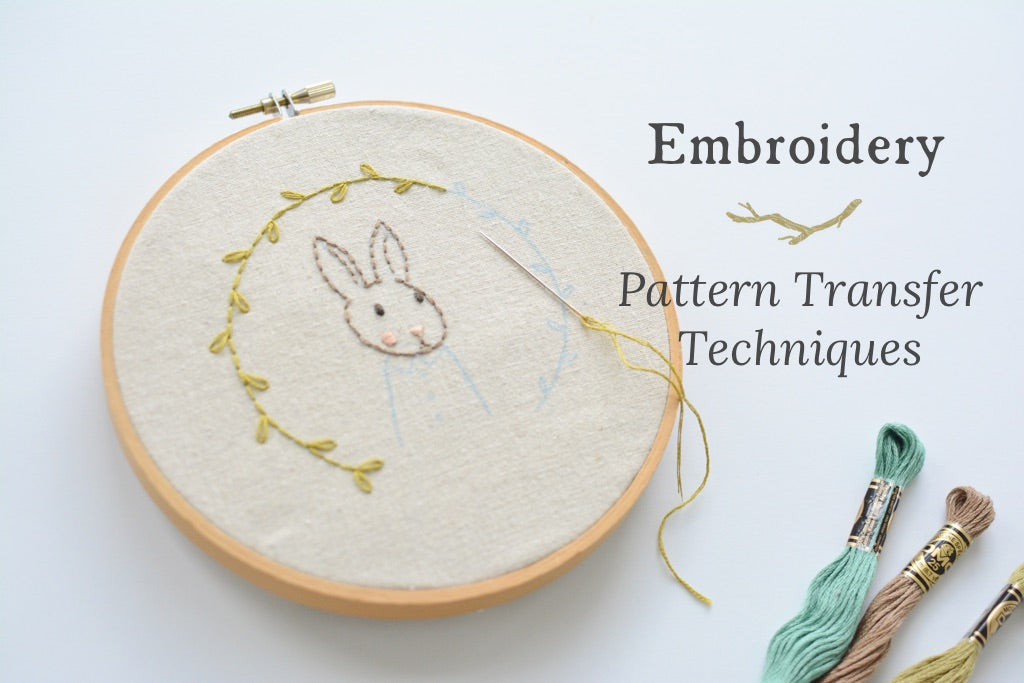
Image Source: www.twigandtale.com
Simple Ways to Move Your Design
Let’s start with easy ways. These often work well for light-colored fabrics and simple designs.
Drawing on Fabric
One easy way is to draw the design right onto the fabric. You can use special pens or pencils made for fabric.
h5 Using Embroidery Transfer Pens
Embroidery transfer pens are made for drawing on fabric. They come in different types. Some lines wash away with water. Some lines disappear with heat. Some lines fade away on their own over time.
- Water-soluble pens: These pens draw lines that disappear when you touch them with water. Just get the finished embroidery wet, and the lines go away. This is good for designs that fill in completely. Make sure to remove all lines before you wash the whole piece.
- Heat-erasable pens: These pens draw lines that disappear when you iron them. The heat makes the ink vanish. Be careful on some fabrics, as heat can leave a mark or change the fabric. Always test on a scrap piece first. Also, sometimes very cold temperatures can make the lines come back.
- Air-erasable pens: These pens draw lines that fade away on their own after a day or two. This is good for stitching quickly. But the lines might disappear before you finish. They are best for small projects.
h5 Using Embroidery Transfer Pencils
Transfer pencils are like colored pencils but leave a mark you can wash away. They are good for light marks on fabric. Tailor’s chalk is also a type of chalk used for marking fabric. It comes in different colors. It rubs or brushes off easily. This can be good for dark fabrics.
Steps for Direct Drawing
- Get your special pen or pencil.
- Put your fabric on a flat, hard surface.
- Place your paper design next to your fabric.
- Look at the design and draw it onto your fabric.
- Draw carefully and lightly. You just need lines to follow.
This method is quick. It works best if you are good at drawing. It is not the most accurate way for detailed pictures.
Getting Lines Onto Fabric Using Light
Tracing embroidery patterns is a very common way to transfer designs. It uses light to help you see the pattern through the fabric. This way is good for many fabrics, but works best on lighter ones.
h5 How Tracing Works
You put the pattern paper under the fabric. Then you shine a light from below or behind. This makes the pattern lines show through the fabric. You then trace the lines onto the fabric with a pen or pencil.
What You Need
- Your pattern printed on paper.
- Your fabric.
- A pen or pencil made for fabric.
- A light source.
h5 Using a Window
A sunny window can be your light source.
- Tape your pattern to the window glass. Make sure it is flat.
- Put your fabric over the pattern. Tape the fabric in place too. Make sure it does not move.
- The sun shines through. You can see the pattern lines through the fabric.
- Use your fabric pen or pencil to trace the lines. Draw right on the fabric.
- Trace all the lines you need for your design.
- Take the fabric and pattern off the window.
This way is free. It works well during the day. But it can be tiring to stand at a window.
h5 Using a Light Box
Using a light box for pattern transfer is like using a window, but easier. A light box is a flat box with a light inside and a clear top.
- Plug in the light box. Turn on the light.
- Place your pattern paper on the light box top.
- Put your fabric over the pattern.
- The light shines up through the paper and the fabric. You can see the pattern lines clearly.
- Trace the lines onto your fabric with a fabric pen or pencil.
- Trace all the lines.
- Turn off the light box. Remove your fabric.
A light box is very helpful. It works any time, day or night. It is flat, so it is easy to work on a table. You can buy light boxes in different sizes. They make tracing very simple and clear. This is often the best method for embroidery pattern transfer when you have a detailed design and light fabric. It is very accurate.
Getting Designs With Heat
Some patterns are made so you can iron them onto your fabric. These are called iron-on embroidery transfers.
h5 How Iron-On Transfers Work
These patterns are printed with a special ink. When you heat the ink with an iron, it sticks to the fabric.
What You Need
- An iron-on transfer pattern. You can buy these or print them yourself if you have special paper.
- Your fabric.
- An iron.
- A hard, heat-safe surface, like an ironing board.
Steps for Ironing On
- Place your fabric on the ironing board. Make sure it is flat.
- Put the iron-on transfer paper face down on the fabric. The side with the design should be touching the fabric.
- Heat your iron to the right setting. Often, a medium to high heat is needed. Do not use steam.
- Press the hot iron onto the back of the transfer paper. Hold it there for a few seconds.
- Lift the iron. Move it to the next part of the design. Press again.
- Go over the whole design with the iron. Do not move the paper while you are ironing. This can smudge the design.
- Carefully lift a corner of the paper to see if the design has stuck to the fabric. If not, put the paper back down and iron that spot again.
- Once the design is fully transferred, carefully peel away the paper.
h5 Tips for Iron-On Transfers
- Test on a scrap piece of fabric first. Fabrics take the ink differently.
- Do not move the iron around like you are ironing clothes. Just press straight down.
- Iron-on patterns can sometimes be used more than once, but the lines get lighter each time.
- Iron-on ink is usually permanent. Make sure the lines will be covered by your stitching.
Iron-on transfers are fast. They are good for getting a clear, solid line. But they are not good for very fine details. And the lines are permanent, which is a problem if you do not cover them perfectly.
Using Special Fabric Helpers: Stabilizers
Water soluble stabilizer for embroidery is a great tool for transferring patterns. It is like a thin sheet of fabric or paper that you stitch through. When you are done, it washes away with water.
h5 How Stabilizers Work for Transfer
You put your design onto the stabilizer. Then you put the stabilizer on your fabric. You stitch right through both the stabilizer and the fabric. After stitching, you wash away the stabilizer. The stitches stay, and the design lines disappear with the stabilizer.
This method is very good for fabrics that are hard to mark. It is also excellent for transferring onto dark fabric embroidery. You can see the design clearly on the light-colored stabilizer, even on dark fabric.
Types of Water Soluble Stabilizers
- Film-type: This is like thin plastic wrap. You can stick it to your fabric.
- Fabric-like: This feels more like a thin cloth or paper. You can hoop it with your fabric.
h5 Sulky Fabri-Solvy
Sulky Fabri-Solvy is a popular brand of water soluble stabilizer. It comes in different forms. Some are sticky, some are not.
h5 Using Sticky Water Soluble Stabilizer (Like Printable Fabri-Solvy)
Some stabilizers let you print your design directly onto them. This is a type of printable embroidery stabilizer.
- Get your design ready on your computer.
- Load the printable stabilizer sheet into your printer. Check which side to print on.
- Print the design onto the stabilizer.
- Cut around your printed design.
- Peel off the backing paper if it’s a sticky type.
- Stick the printed stabilizer onto your fabric where you want the design. Press it down smoothly.
- Put your fabric and the stuck-on stabilizer into your embroidery hoop. Make it tight.
- Stitch your design following the lines on the stabilizer. Stitch right through the stabilizer.
- When you finish stitching, take the fabric out of the hoop.
- Cut away any large extra pieces of stabilizer close to your stitches. Be careful not to cut the fabric or stitches.
- Rinse the fabric in warm water. The stabilizer will dissolve and wash away. You might need to soak it or rinse it a few times.
- Let your embroidery dry flat.
h5 Using Non-Sticky Water Soluble Stabilizer
This type you cannot usually print on directly. You transfer the design to it first, often by tracing.
- Trace your design onto the non-sticky stabilizer using a permanent pen or pencil.
- Place the fabric in your embroidery hoop.
- Lay the traced stabilizer on top of the fabric inside the hoop. Make sure it is flat and covers the area you want.
- Tighten the hoop. The stabilizer should be held in place between the two hoop rings, on top of the fabric.
- Stitch your design following the lines on the stabilizer.
- Finish stitching. Take the fabric out of the hoop.
- Cut away large extra parts of stabilizer.
- Wash away the rest of the stabilizer with water.
Benefits of Using Stabilizers
- Great for dark fabrics. The design shows up well.
- Good for fabrics with texture, like terrycloth or flannel. The stabilizer gives a smooth surface to stitch on.
- Perfect for detailed designs. You can trace or print very fine lines.
- No permanent lines are left on your fabric after washing.
- They also help support the fabric while you stitch. This is especially good for stretchy or thin fabrics.
Downsides of Stabilizers
- You have to wash the finished piece. This might not be good for all projects or fabrics.
- Some stabilizers can feel a bit stiff until washed.
- They cost more than just a pen or pencil.
For many, especially when working with dark or textured fabrics, using a water soluble stabilizer for embroidery is considered the best method for embroidery pattern transfer. Sulky Fabri-Solvy is a popular choice because it works so well.
Other Transfer Ways
There are a few other ways people transfer designs.
h5 Pounce Pad Method
This method uses a fine powder that goes through tiny holes.
- Print or draw your design on paper.
- Use a tool to make tiny holes along the lines of your design. This is called prickling.
- Place the paper with the holes onto your fabric.
- Use a pounce pad (a small bag filled with chalk powder) to dab powder over the paper.
- The powder goes through the holes, leaving dots on your fabric that show the design.
- Connect the dots with a pen or pencil, or stitch along the dots.
This method is good for large designs. It can be messy. The powder must be one that will brush or wash away. It works better on some fabrics than others.
h5 Carbon Paper for Fabric
You can use special carbon paper made for fabric.
- Put your fabric down smoothly.
- Place the carbon paper on top of the fabric, color side down.
- Put your design paper on top of the carbon paper.
- Use a tracing tool or a pen with no ink to trace over your design lines. Press firmly.
- The pressure transfers the carbon color from the paper onto the fabric below the lines you trace.
This method can make a clear line. But the carbon can be hard to remove. It is important to get fabric carbon paper, not paper for writing, as that is usually permanent. This method works okay, but stabilizers or tracing are often preferred for their ease of removal.
Working with Dark Fabric
Transferring onto dark fabric embroidery can be tricky. Light-colored pens or pencils do not show up well. Tracing methods like using a window or light box do not work unless the fabric is very thin and the light is very strong.
Good Methods for Dark Fabric:
- Water Soluble Stabilizers: As discussed, using a light-colored stabilizer like Sulky Fabri-Solvy is one of the best method for embroidery pattern transfer on dark fabric. You see the design on the stabilizer, not the dark fabric.
- Tailor’s Chalk: White or light-colored tailor’s chalk shows up on dark fabric. It can be a bit thick for fine lines and might rub off easily while you work.
- Special Fabric Pens: Some brands make fabric pens with light or metallic ink that shows up on dark fabric. Test these carefully to make sure they can be removed (washed or heated away).
- Carbon Paper for Fabric: Light-colored carbon paper (white or yellow) can transfer lines onto dark fabric. Again, test removal carefully.
For most people, using a stabilizer or light-colored chalk or pen (tested for removal) works best for dark fabric. Stabilizers often give the most accurate and clear result on dark materials.
Choosing the Best Way
With so many embroidery pattern transfer methods, how do you pick one? Think about these things:
h5 What Kind of Fabric?
- Light fabric: Tracing (window, light box), pens, iron-on, stabilizers all work.
- Dark fabric: Stabilizers, light-colored chalk, special light pens, light carbon paper are best.
- Textured fabric: Stabilizers work very well as they give a smooth surface.
- Stretchy or thin fabric: Stabilizers help support the fabric.
h5 What Kind of Design?
- Simple design: Direct drawing, chalk, or a quick trace is fine.
- Detailed design: Tracing with a light box or using a stabilizer gives the most accuracy.
- Design with lines that will not be stitched over: You need a method where the lines can be removed completely (water soluble, heat erasable, air erasable pens, water soluble stabilizers, removable chalk). Avoid permanent methods like iron-on or permanent pens.
h5 How Long Will it Take?
- Quick transfer: Iron-on or direct drawing is fast.
- More time for setup, but easy to stitch: Stabilizers or light box tracing take a little time to set up but make stitching easier.
h5 Do You Want to Wash It?
- If you do not want to wash your finished piece (e.g., on paper, or a delicate item), avoid water-soluble methods like water-soluble pens or water soluble stabilizers. Use heat-erasable pens (test first!) or methods where the mark is covered by stitches (like permanent iron-on if the design is dense).
h5 What Tools Do You Have?
- You can trace with just a window and a pen.
- A light box is an extra tool to buy.
- Stabilizers and special pens/pencils cost money.
Table Comparing Common Methods
| Method | Fabric Color | Design Detail | Line Removal? | Materials Needed | Good For? |
|---|---|---|---|---|---|
| Direct Drawing (Pens/Pencils) | Light/Medium | Simple | Yes (Usually) | Fabric pen/pencil | Quick, simple designs |
| Tracing (Window/Light Box) | Light/Medium | Detailed | Yes (If using erasable pen) | Pattern, fabric, pen/pencil, light | Accurate on light fabric, detailed designs |
| Iron-On Transfers | Light/Medium | Simple | No | Iron-on pattern, iron, fabric | Quick, clear lines (permanent) |
| Water Soluble Stabilizer | Any (Great for Dark) | Detailed | Yes (with water) | Stabilizer, pattern, fabric, pen/printer | Dark/textured fabric, detailed designs, support |
| Pounce Pad | Any | Large/Simple | Yes (usually) | Pattern, fabric, chalk/powder | Big designs, can be messy |
| Carbon Paper (Fabric) | Any | Medium | Hard to remove | Pattern, fabric, carbon paper | Clear lines, but test removal |
There is no single best method for embroidery pattern transfer for everyone or every project. Try a few different embroidery pattern transfer methods to see which ones you like best for different jobs. Many people use tracing on light fabric and stabilizers on dark or tricky fabrics.
Tips for Good Pattern Transfer
No matter which method you use, follow these tips:
- Test First: Always test your transfer method on a small piece of the same fabric you will use. This shows you if the lines show up, if the lines are easy to remove, and if the heat or washing affects the fabric. This is very important.
- Press Lightly: If tracing or using carbon paper, do not press too hard. You need just enough pressure to make a line. Too much pressure can damage fabric or make lines harder to remove.
- Trace Only What You Need: You do not have to trace every single tiny line of a complex drawing. Trace the main shapes and lines you need to guide your stitching. You can add small details as you stitch.
- Keep Fabric Smooth: Make sure your fabric is flat and smooth when you transfer the design. Any wrinkles will make the design bumpy or wrong. If using a hoop, sometimes it is easier to transfer before putting it in the hoop, unless using a stabilizer that goes in the hoop.
- Use the Right Pen: Use a pen or pencil made for fabric. Regular pens can bleed or be impossible to remove.
- Check Removal: If your lines need to be removed (like on a design where fabric shows between stitches), make sure they disappear completely. Nothing is worse than finishing a beautiful piece and having blue pen lines you cannot get rid of. Follow the product directions for removing lines (water, heat, air).
Mastering pattern transfer makes embroidery more fun and your finished work look better. It is worth taking the time to do this step well. Trying different embroidery pattern transfer methods will help you find your favorites.
Frequently Asked Questions
h3 Questions People Ask
h4 Can I use a regular pen?
No, it is usually not a good idea. Regular pens have ink that will likely not wash out. Use pens made for fabric that are water-soluble, heat-erasable, or air-erasable.
h4 What if I can’t see through my fabric to trace?
If your fabric is dark or thick, tracing with a window or light box will not work. Use a water soluble stabilizer for embroidery. You put the design on the stabilizer, put the stabilizer on the fabric, and stitch through both. Then you wash the stabilizer away. This is the best way for many difficult fabrics.
h4 Are iron-on transfers reusable?
Sometimes. You can often get a few transfers from one pattern. But the lines will get lighter each time you use it. The first transfer is always the clearest.
h4 Do I have to wash away the water soluble stabilizer right away?
You can stitch through the stabilizer and leave it on for a while. But it is best to wash it away when your stitching is finished. It will feel stiff until it is washed. Make sure all parts are dissolved.
h4 What is Sulky Fabri-Solvy used for?
Sulky Fabri-Solvy is a brand of water soluble stabilizer for embroidery. It is used to transfer patterns, especially onto dark or textured fabrics, and to give the fabric support while stitching. You stitch through it, then wash it away with water.
h4 How do I transfer a photo to embroidery?
You cannot directly iron or trace a photo perfectly. For photos, you usually simplify the image into lines or areas of color/stitch types. Then you transfer these simplified lines using one of the methods like tracing, using a light box, or printing onto a printable embroidery stabilizer.
h4 What is the absolute best method?
There is no one best method for embroidery pattern transfer. The best way depends on your fabric type (light, dark, thick, thin), your design detail (simple or complex), and if you need to wash the final piece. For light fabrics and detailed designs, tracing with a light box is great. For dark or tricky fabrics, a water soluble stabilizer for embroidery is often the top choice. Try different embroidery pattern transfer methods to see what works for you.
Knowing how to get your design onto your fabric easily and accurately is a big step in your embroidery journey. Choose the method that fits your project best, test it first, and happy stitching!