
Image Source: i.ytimg.com
How To Thread A Sewing Machine Bobbin Easily
Can you thread a sewing machine bobbin without any fuss? Yes, you absolutely can! Threading your sewing machine bobbin is a fundamental skill for any sewer, and with a little practice, it becomes second nature. This guide will walk you through each step, making winding a bobbin a breeze. We’ll cover everything from selecting the right bobbin to ensuring perfect bobbin tension.
The Essential Role of the Bobbin in Sewing
Before we dive into the how-to, let’s touch upon why the bobbin is so crucial. The bobbin is the unsung hero of your sewing machine. It holds the lower thread, which, working in conjunction with the upper thread, creates the stitches that hold your fabric together. Without a properly wound and loaded bobbin, your sewing machine simply won’t sew. This small spool is one of the most important sewing machine parts you’ll interact with regularly. Mastering the art of sewing machine bobbin winding is key to a smooth and successful sewing experience.
Gathering Your Bobbin Winding Supplies
To get started, you’ll need a few basic items:
- Sewing Machine Bobbin: Make sure it’s the correct type for your machine.
- Thread: The same type and color of thread you’ll use for your project is ideal, but any good quality thread will work for practice.
- Your Sewing Machine: Ensure it’s in good working order.
- Scissors or Thread Snips: For cutting the thread.
Step-by-Step Guide to Winding a Bobbin
The process of winding a bobbin is straightforward. Most sewing machines have a dedicated bobbin winder mechanism. Here’s how to use it:
1. Prepare Your Machine and Thread
- Turn on your sewing machine. Make sure it’s plugged in and powered on.
- Locate the bobbin winder spindle. This is usually a small peg or rod on your machine, often near the top. It might be slightly longer than the needle shaft and is designed to hold the bobbin for winding.
- Find the thread guide for the bobbin winder. This is a small hook or eyelet, typically positioned near the spindle.
- Thread your machine as if you were going to sew, but stop before threading the needle. Run the thread from the spool, through the tension discs, and up to the bobbin winder thread guide.
2. Place the Bobbin Onto the Spindle
- Slide the bobbin onto the bobbin winder spindle. Ensure it’s seated securely. Some machines have a small notch or groove on the spindle that the bobbin’s center hole should align with.
- Check the bobbin orientation. The way the bobbin sits on the spindle can sometimes affect how the thread is wound. Refer to your sewing machine manual if you’re unsure, but generally, the thread should unwind from the top of the bobbin as it sits on the spindle.
3. Secure the Thread End
- Bring the thread end over to the bobbin. You need to start winding thread so that the beginning tail is caught and secured.
- Insert the thread end through one of the holes in the bobbin. Most bobbins have one or two small holes. Pick one and push the thread through it from the inside of the bobbin to the outside.
- Wrap the thread tail around the bobbin a few times. This helps to anchor the thread and prevent it from unraveling as you start winding. You can also use your finger to hold the thread tail against the bobbin as you begin.
4. Engage the Bobbin Winder
- Engage the bobbin winder mechanism. This is a crucial step. Most machines have a lever or a movable part that you push or pull to engage the winder. When engaged, the machine will now wind the bobbin instead of the needle.
- Disengage the needle. Many machines have a clutch mechanism. To engage the bobbin winder, you might need to push the handwheel towards the machine (away from you). This disengages the needle so it doesn’t move while the bobbin winds. You’ll know it’s engaged when you can spin the bobbin with your finger, but the needle stays still. Check your manual for specifics on your model.
5. Start Winding the Bobbin
- Hold the thread tail firmly. As the bobbin starts to spin, hold the thread tail for the first few rotations. This ensures the thread is securely caught and wound onto the bobbin.
- Begin winding. Gently press the foot pedal. The bobbin will start to spin and wind the thread.
- Trim the thread tail. Once you’ve wound a few layers and the thread tail is securely on the bobbin, you can trim the excess thread close to the bobbin.
6. Monitor the Winding Process
- Ensure even winding. Keep an eye on the thread as it winds. It should distribute evenly across the bobbin. If it starts to bunch up on one side, stop the machine, reposition the thread guide if necessary, and restart.
- Achieve desired fullness. Wind the bobbin until it’s full, but not overflowing. Most machines have an automatic stop mechanism that disengages the winder when the bobbin is full. If yours doesn’t, watch the thread build-up. Overfilling can cause problems with stitch formation and bobbin tension.
- Stop the machine. Once the bobbin is full, stop your machine.
7. Cut the Thread and Remove the Bobbin
- Cut the thread. Use your scissors or thread snips to cut the thread coming from the spool.
- Disengage the bobbin winder. Push or pull the winder mechanism back to its original position. If you pushed your handwheel, pull it back towards you to re-engage the needle.
- Remove the bobbin. Slide the wound bobbin off the spindle. You now have a ready-to-use sewing bobbin!
Loading the Bobbin into the Bobbin Case
Now that you have a wound bobbin, the next step is loading a bobbin correctly into the bobbin case. The way you load the bobbin depends on whether your machine has a top-loading (drop-in) bobbin or a front-loading (removable) bobbin case.
Top-Loading (Drop-In) Bobbin System
This is the more modern and often simpler system.
- Remove the bobbin cover. This is usually a clear plastic plate that sits over the bobbin area.
- Place the wound bobbin into the bobbin housing. The bobbin should drop into the circular cavity.
- Check the thread direction. This is critical for correct stitch formation. The thread should unwind from the bobbin in a counter-clockwise direction. Your machine manual will show a diagram.
- Thread the bobbin case.
- With the bobbin in place, bring the thread end up through the small slot in the bobbin case.
- Pull the thread through this slot until about 4-6 inches of thread are extending.
- There’s usually a little guide or notch to catch the thread. Make sure the thread runs smoothly through it.
- Replace the bobbin cover. Snap or slide the cover back into place.
- Bring the bobbin thread up to the needle. You’ll do this by holding the upper thread tail and turning the machine’s handwheel towards you. The needle will go down and then come back up, catching the bobbin thread and bringing it up with it. Pull gently on the upper thread to reveal both the upper and lower thread loops.
Front-Loading (Removable Bobbin Case) System
This system involves a separate metal or plastic bobbin case that you remove from the machine.
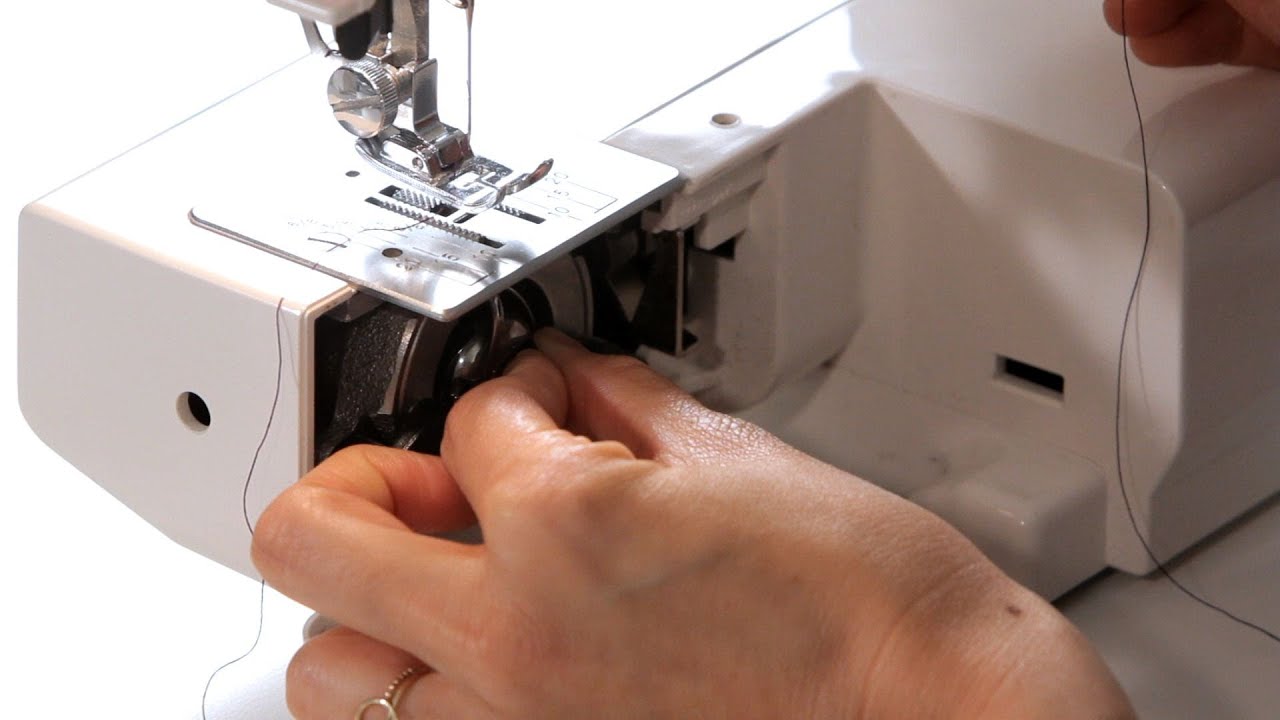
- Open the machine’s bobbin compartment. This is usually a small door or panel on the front of the machine.
- Remove the empty bobbin case. Carefully pull out the bobbin case.
- Place the wound bobbin into the bobbin case.
- Check the thread direction. For most front-loading machines, the thread should unwind from the bobbin in a clockwise direction when looking at the bobbin inside the case. Again, consult your manual for the precise diagram.
- Thread the bobbin case.
- Pull the thread from the bobbin, ensuring it runs through the tension spring on the bobbin case. There’s a small slit in the case for this.
- Pull about 4-6 inches of thread through the case.
- Insert the bobbin case back into the machine.
- This is a key step that requires precision. There’s usually a small lever or notch on the bobbin case that needs to align with a corresponding groove in the machine’s bobbin race.
- Ensure the bobbin case is seated correctly. It should click or settle into place smoothly. If it feels forced, it’s probably not aligned correctly.
- Bring the bobbin thread up to the needle. Similar to the top-loading system, hold the upper thread and turn the handwheel towards you to catch and bring up the bobbin thread.
Troubleshooting Common Bobbin Winding Issues
Even with a clear guide, you might encounter a few hiccups. Here are some common problems and their solutions:
Bobbin Not Winding Evenly
- Problem: Thread bunches up on one side or looks messy.
- Possible Causes:
- The thread wasn’t anchored properly at the start.
- The thread guide on the bobbin winder wasn’t used.
- The bobbin isn’t seated correctly on the spindle.
- The thread tension on the spool pin is too loose.
- Solutions:
- Ensure you wrap the thread tail around the bobbin several times and hold it for the first few rotations.
- Always use the bobbin winder thread guide.
- Double-check that the bobbin is firmly on the spindle, aligning any notches.
- Adjust the thread tension on the spool pin if it seems too loose.
Bobbin Stops Winding Prematurely
- Problem: The machine stops winding thread before the bobbin is full.
- Possible Causes:
- The automatic stop mechanism is faulty.
- The bobbin isn’t turning freely.
- Solutions:
- If your machine has an automatic stop, but it’s not working, you’ll need to manually stop winding when the bobbin looks full. It might be time for a service.
- Check if the bobbin or the spindle is obstructed.
- Ensure the needle is disengaged from the sewing machine bobbin winding process (i.e., the clutch is engaged).
Thread Breaking During Winding
- Problem: The thread snaps while winding a bobbin.
- Possible Causes:
- Using old or damaged thread.
- Thread snagging on the spool or thread path.
- Sharp edges on the bobbin or spindle.
- Thread tension is too tight.
- Solutions:
- Try a new spool of thread.
- Ensure the thread path is smooth, and the spool is sitting correctly on the spool pin.
- Inspect the bobbin and spindle for any rough spots.
- Slightly loosen the thread tension if possible, or ensure you are using the correct thread path.
Bobbin Wound Too Loosely or Too Tightly
- Problem: The wound bobbin feels too soft or is packed too densely.
- Possible Causes:
- Speed of winding.
- Tension setting on the machine.
- Solutions:
- Winding at a moderate speed usually results in good tension. Experiment with your foot pedal control.
- For front-loading machines, the bobbin case itself has tension. If the bobbin thread feels too loose after winding, it might indicate an issue with how the thread is going through the case’s tension spring. For overall tightness, check your machine’s general thread tension settings.
The Importance of Bobbin Tension
Correct bobbin tension is vital for achieving balanced stitches. When the upper and lower threads interlock properly, the stitches look the same on both sides of the fabric.
- Too Tight Bobbin Tension: If your bobbin thread is too tight, it will likely cause the upper thread to loop and create a messy stitch on the top of your fabric, while the bobbin thread might appear pulled to the surface.
- Too Loose Bobbin Tension: If your bobbin thread is too loose, you’ll see loops of the bobbin thread on the top of your fabric, and the stitch might look weak or puckered.
Adjusting bobbin tension is typically done by manipulating a small screw on the bobbin case itself (for front-loading systems) or through the machine’s general tension settings. However, for drop-in bobbins, the tension is usually factory-set and less adjustable. If you suspect a bobbin tension issue with a drop-in system, it often points to an issue with the upper thread tension or the bobbin case itself needing cleaning or replacement. Always consult your machine’s manual for specific tension adjustment instructions.
Maintaining Your Bobbin Winder and Bobbins
To ensure consistent and easy bobbin winding, a little maintenance goes a long way.
- Clean the bobbin winder area: Dust and lint can accumulate around the bobbin winder spindle and the bobbin housing. Regularly clean this area with a small brush or a lint-free cloth.
- Inspect bobbins: Over time, bobbins can get nicked, scratched, or warped. Damaged bobbins can cause uneven winding and stitch problems. Replace any bobbins that show signs of wear.
- Use the correct bobbins: Always use bobbins that are specifically designed for your sewing machine model. Using the wrong size or type can damage your machine and affect stitch quality.
Frequently Asked Questions (FAQ)
Q1: What is the purpose of winding a bobbin?
A1: Winding a bobbin provides the lower thread for your sewing machine. This thread works with the upper thread to create stitches that hold fabric together.
Q2: Can I use any thread to wind a bobbin?
A2: While you can practice with any good quality thread, it’s best to use the same type and weight of thread for your bobbin as you plan to use for your upper thread to ensure proper stitch formation and tension.
Q3: Why does my bobbin thread keep breaking while winding?
A3: This could be due to old or damaged thread, thread snagging, sharp edges on the bobbin or spindle, or excessively tight tension. Ensure your thread path is smooth and try a new spool of thread.
Q4: How do I know if I’m loading the bobbin correctly?
A4: The key is the thread direction. For top-loading bobbins, thread should unwind counter-clockwise. For front-loading, it’s usually clockwise. Always check your machine’s manual for the correct diagram. Also, ensure the thread runs smoothly through the tension spring on the bobbin case.
Q5: How full should I wind my bobbin?
A5: Wind the bobbin until it’s full, but not overflowing. Most machines have an automatic stop. Overfilling can lead to poor stitch quality and tension problems.
Mastering how to thread a sewing machine bobbin is a fundamental step towards confident and enjoyable sewing. By following these steps and paying attention to the details, you’ll be winding a bobbin like a pro in no time! Happy sewing!