
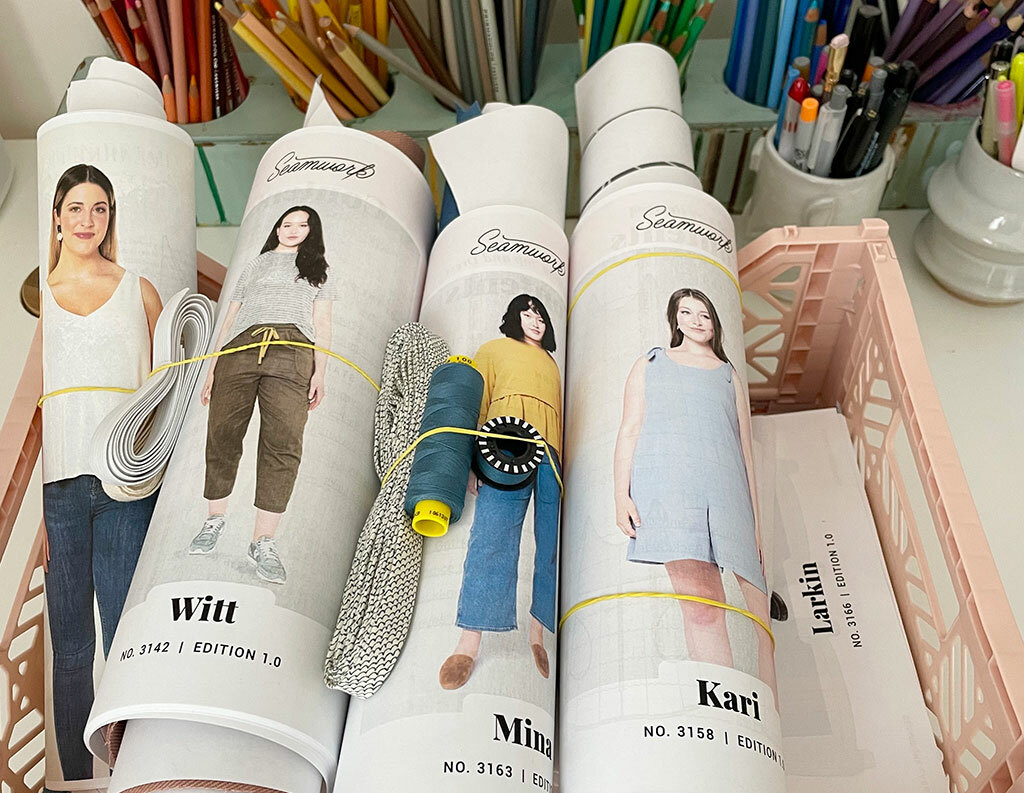
Image Source: www.seamwork.com
Organize Your Stash: How To Store Sewing Patterns Best
Is your sewing pattern collection a messy pile? Do you struggle to find the right pattern when you need it? You are not alone! Many sewers face this challenge. The best way to store sewing patterns depends on what you have and your space. Can you store sewing patterns in a filing cabinet? Yes, you absolutely can! A filing cabinet is a great option for many people. This post will show you how to get your patterns neat and easy to find.
The Need for Order
Think about your sewing projects. You spend time choosing fabric. You plan your makes. But what about the patterns? They can get lost. They can get ripped. A good storage plan stops this. It saves time. It saves money by keeping patterns safe. Organizing sewing patterns makes sewing more fun. It helps you see what patterns you already own. No more buying the same one twice!
Gathering Your Pattern Collection
Before you store patterns, you need to see what you have. Pull them all out. Put them in one spot. This might be a big pile! Don’t worry. This is the first step to getting organized.
Seeing What You Have
Empty out drawers and boxes. Look on shelves. Check under tables. Bring all your patterns together. This step helps you know the size of your collection.
Sorting Your Patterns
Now, sort them into basic groups.
* Patterns you use often.
* Patterns you plan to use soon.
* Patterns you might use someday.
* Patterns you will never use.
Letting Go of Patterns
Look at the “never use” pile. Be honest with yourself. Will you really sew that 1980s prom dress pattern? If not, it’s okay to let it go. You can give them to friends. You can donate them to sewing groups. This makes your collection smaller. It makes organizing easier.
Grouping Like With Like
After sorting, group the patterns you are keeping. You can group them in different ways.
* By type of clothing (dresses, shirts, pants, kids’ clothes).
* By pattern company (McCall’s, Simplicity, indie designers).
* By designer.
* By skill level.
* By size range.
* By decade (if you have vintage patterns).
Pick a way that makes sense to you. This grouping helps you decide how to store them. It forms the start of your sewing pattern organization system.
Ways To Store Patterns
There are many ways to store patterns. The best choice depends on your space. It depends on your patterns. It also depends on how much you want to spend. Here are popular pattern storage solutions.
Using a Filing Cabinet or File Box
This is a popular method. It works well for standard pattern envelopes. It creates a sewing pattern filing system.
How it Works
Treat patterns like paper files. Put them in hanging file folders. You can label the folders. Label them by garment type (e.g., “Dresses – Summer”, “Pants – Casual”). Or label by size or company.
Benefits
- Easy to flip through patterns.
- Protects pattern envelopes from bending.
- Keeps patterns upright and tidy.
- Uses space well, especially vertical space.
- A filing cabinet for patterns can hold many patterns.
What You Need
- A filing cabinet (full-size or small tabletop size).
- Hanging file folders.
- File folder inserts/tabs.
- Labels.
Tips for This Method
- Put patterns in acid-free plastic sleeves before filing. This protects the paper.
- File patterns alphabetically by name. Or group by type and then file alphabetically.
- Keep smaller patterns together in one folder.
- This method is excellent for pattern envelope storage. It keeps everything together neatly.
Storing Patterns in Binders
This method is good for patterns you use often. It also works well for PDF patterns you have printed. It uses sewing pattern binders.
How it Works
Put pattern pieces and instructions into sheet protectors. Keep the pattern envelope or cover page in a sheet protector too. Place these sheets in binders.
Benefits
- Easy to see patterns and instructions.
- Protects pattern pieces from tearing.
- Great for frequently used patterns.
- Good for organizing PDF patterns.
What You Need
- Binders (3-ring binders are common).
- Sheet protectors (acid-free is best).
- Optional: Index dividers.
Tips for This Method
- Don’t stuff binders too full. This can damage patterns.
- Organize binders by type (e.g., “Tops”, “Skirts”).
- Use dividers inside binders to sort further.
- Make a copy of the pattern pieces if you plan to use it a lot. Store the original safely. The copied pieces can go in the binder. This protects the original tissue paper patterns.
Using Pattern Storage Containers
You can use boxes, bins, or baskets. These are pattern storage containers.
How it Works
Place patterns inside containers. You can group patterns first. Then put the groups into boxes.
Benefits
- Easy to use if you have many patterns.
- Can fit on shelves.
- Keeps patterns together.
- Comes in many sizes and styles.
What You Need
- Plastic bins, fabric boxes, or baskets.
- Labels for the outside of containers.
Tips for This Method
- Use containers that fit your shelf space.
- Label boxes clearly (e.g., “Kids’ Patterns”, “Vogue Patterns”, “Historical Costumes”).
- Use acid-free tissue paper or large envelopes inside boxes for extra protection, especially when storing tissue paper patterns.
- Avoid stacking boxes too high if they are heavy.
Hanging Patterns
Some people hang patterns like clothes. This method works best for tracing paper patterns or if you put patterns on hangers.
How it Works
Fold patterns neatly. Place them on special pattern hangers. Or use pant hangers with clips. Hang them on a rack or in a closet.
Benefits
- Uses vertical space.
- Keeps patterns flat.
- Easy to see spine labels (if you label the folded pattern).
What You Need
- Hangers (special pattern hangers or clip hangers).
- A rack or closet space.
Tips for This Method
- Put patterns in garment bags or large plastic sleeves before hanging. This protects them.
- Label the top of the pattern bundle so you can see it easily.
- This method might not be ideal for storing tissue paper patterns directly without protection. They could tear easily.
Digital Pattern Storage
PDF patterns are common now. Storing them digitally is easy.
How it Works
Save PDF patterns on your computer. Use folders to organize them. Or use cloud storage like Google Drive or Dropbox.
Benefits
- Saves physical space.
- Easy to search for patterns.
- Patterns won’t get damaged or lost (if backed up).
- Accessible from different devices.
What You Need
- Computer or tablet.
- Storage space (hard drive or cloud).
- Folder system on your device.
Tips for This Method
- Create a clear folder structure (e.g., “Patterns” -> “Dresses” -> “Indie Designers” -> “PatternName”).
- Rename files clearly (e.g., “DeerAndDoe_MyosotisDress_PDF”).
- Back up your files regularly.
- When you print a PDF pattern, decide if you want to store the printed copy physically using one of the methods above. If so, treat it like a tissue paper pattern.
Special Attention for Tissue Paper Patterns
Tissue paper is delicate. It rips easily. It creases badly. Storing tissue paper patterns needs extra care.
- Keep them flat: Avoid folding them too many times.
- Use protection: Store them in envelopes, plastic sleeves, or acid-free tissue paper.
- Avoid crushing: Don’t put heavy things on top of them.
- Handle gently: Be careful when unfolding and refolding.
Putting tissue patterns into larger envelopes or plastic sleeves before putting them in filing cabinets or boxes helps a lot. For binders, putting them in sheet protectors works well.
Creating Your Pattern Filing System
Once you choose a method, set up your system.
- Choose categories: Decide how you will group patterns (by type, size, company, etc.).
- Get supplies: Buy your filing cabinet, binders, boxes, folders, labels, etc.
- Label everything: Label folders, binders, boxes clearly. Be specific.
- Place patterns: Put your sorted patterns into their storage homes.
- Make a list: Consider making a list or spreadsheet of your patterns. This helps you see what you have at a glance. Include details like size, fabric type, difficulty, and location (e.g., “Dresses Binder 1”, “Filing Cabinet Drawer 2”). This improves your sewing pattern organization.
A Step-by-Step Organization Guide
Ready to start? Follow these steps.
Step 1: Gather All Patterns
Find every pattern you own. Put them all in one spot.
Step 2: Sort and Declutter
Go through each pattern. Decide if you are keeping it. Group the ones you keep. Get rid of the ones you won’t use.
Step 3: Choose Your Storage Method(s)
Based on your patterns, space, and budget, pick how you will store them. You might use different methods for different patterns (e.g., binders for PDFs, filing cabinet for envelopes). This is where you implement pattern storage solutions.
Step 4: Prepare Your Storage
Set up your filing cabinet. Get your binders ready. Label your boxes. Prepare the chosen storage system.
Step 5: Place Patterns in Storage
Put the sorted and grouped patterns into your chosen storage. Be gentle, especially with storing tissue paper patterns. Make sure they fit well.
Step 6: Label Thoroughly
Add labels to folders, binder spines, and box fronts. Use clear writing. Be consistent with your categories.
Step 7: Create an Index (Optional)
If you have many patterns, make a separate list. This could be on paper or a computer file. It helps you find patterns fast without looking through every folder or box.
Step 8: Enjoy and Maintain
Now you can find your patterns easily! The last step is to keep it this way.
Keeping Your System Neat
Organizing is not a one-time job. You need to maintain it.
- Put patterns back: After using a pattern, put it back where it belongs right away. Don’t let a pile start.
- Process new patterns: When you get a new pattern, add it to your system soon. Don’t let new patterns pile up.
- Review regularly: Every few months, quickly look through your patterns. Make sure everything is in the right place. Check for patterns you haven’t used and might want to remove.
- Adjust as needed: Your collection changes. Your needs change. Be ready to adjust your system. Maybe you need more binders or another box.
How Pattern Storage Fits Into Sewing Room Organization
Pattern storage is just one part of keeping your creative space tidy. Sewing room organization involves all your supplies. This includes fabric, thread, tools, and notions.
Having your patterns organized makes it easier to organize everything else. When you know where your patterns are, you can plan your fabric storage better. You can set up your cutting and sewing areas more effectively.
Organizing sewing supplies should be a linked effort. Your pattern system should work with how you store fabric and other items. For example, if you store fabric by type, maybe you store patterns by type too. This creates a smooth workflow in your sewing space.
Caring for Your Patterns
Proper storage also protects your patterns. Patterns, especially vintage ones or delicate tissue paper patterns, can be damaged by:
- Moisture: Keep patterns away from damp areas. This prevents mold and mildew.
- Light: Direct sunlight can fade pattern envelopes and make paper brittle. Store patterns in closed cabinets or boxes.
- Pests: Insects like silverfish or moths can eat paper. Keeping your sewing area clean helps. Storing patterns in sealed containers adds protection.
- Acid: Regular paper and cardboard can turn yellow and brittle over time due to acid. Using acid-free envelopes, sleeves, or storage boxes helps patterns last longer.
Using things like acid-free plastic sleeves or envelopes is especially important when storing tissue paper patterns. This delicate paper needs the most protection.
Comparing Storage Methods
Let’s look at the pros and cons of some popular pattern storage solutions.
| Method | Best For | Pros | Cons | What You Need |
|---|---|---|---|---|
| Filing Cabinet/Box | Pattern envelopes | Easy to browse, good protection, uses vertical space | Takes up floor space (cabinet), heavy when full | Cabinet/box, hanging folders, labels |
| Binders | PDF patterns, frequently used | Easy to flip through, protects pieces well | Bulky on shelves, best for single-size patterns | Binders, sheet protectors, labels |
| Storage Containers | Large collections, various sizes | Flexible, fits on shelves, keeps groups together | Can be harder to browse, need to stack carefully | Boxes/bins, labels |
| Hanging Storage | Traced patterns, large format | Keeps patterns flat, uses closet space | Need hanging space, patterns might slip/tear | Hangers, rack/closet space |
| Digital Storage (PDFs) | PDF patterns | Saves physical space, easy search, secure (with backup) | Requires computer/device, need to print for use | Computer/device, storage space, folder system |
This table helps compare options for your sewing pattern organization needs.
Setting Up a Filing Cabinet for Patterns
If you choose the filing cabinet method, here’s a bit more detail on setting it up.
Step 1: Get Your Cabinet
Find a filing cabinet. It can be new or used. Two-drawer cabinets are common and fit under desks or in corners.
Step 2: Buy Supplies
You need hanging file folders. Get enough for your main categories. You also need blank inserts for the folder tabs. And labels or a pen. Acid-free sleeves are optional but good.
Step 3: Create Main Categories
Decide your main filing categories. Examples:
* Tops (Blouses, T-shirts)
* Bottoms (Pants, Skirts, Shorts)
* Dresses
* Jackets/Coats
* Kids
* Mens
* Home Decor/Bags
* Vintage
* Specific Designer (if you have many)
Make a hanging folder for each main category. Write the category name on the tab insert.
Step 4: Sub-Categorize (Optional)
Within a main category, you might want smaller groups. For example, under “Dresses”, you might have sub-folders for:
* Woven Dresses
* Knit Dresses
* Special Occasion Dresses
You can use standard file folders (not hanging) inside the hanging folders for these smaller groups.
Step 5: Place Patterns in Folders
Put your patterns inside the chosen folders. If using sleeves, put the pattern in a sleeve first.
For pattern envelope storage, the envelope goes right into the folder.
For storing tissue paper patterns that are out of their original envelopes, you might put them in larger envelopes first, then file the envelopes.
Step 6: Refine and Label
Adjust the patterns in the folders so they hang nicely. Make sure labels are easy to read. If you use sub-folders, label those clearly too.
This sewing pattern filing system helps you quickly find the type of pattern you need.
Beyond Envelopes: Storing Traced Patterns
Sometimes you trace a pattern instead of cutting the original. Traced patterns are often on large sheets of paper (like tracing paper or medical paper). They don’t fit neatly in standard envelopes.
- Roll them: Roll the traced pattern pieces together. Tie them with ribbon or an elastic band. Store rolls in a container or upright in a basket. Label the roll clearly.
- Fold them: Fold the traced pattern neatly. Store folded patterns in large envelopes or document boxes.
- Hang them: As mentioned before, hang folded or rolled traced patterns using special hangers.
Make sure the pattern name, size, and any notes are written clearly on the traced pattern itself.
Organizing Sewing Supplies Together
When you are organizing sewing patterns, think about other supplies too.
- Notions: Store buttons, zippers, elastic, etc., in clear containers.
- Thread: Use thread racks or boxes to keep thread neat.
- Fabric: Fold or roll fabric and store it on shelves or in bins.
- Tools: Keep scissors, rulers, markers handy in drawers or tool stands.
When all your sewing supplies have a home, your sewing room organization feels complete. Finding a pattern is faster when your whole space is tidy.
Making a Pattern Inventory
For serious organization, create a list of your patterns.
- Spreadsheet: Use a computer program like Excel or Google Sheets. Columns could include: Pattern Company, Pattern Number, Garment Type, Size Range, Difficulty, Location (where you store it), Notes.
- Notebook: Write down your patterns in a notebook.
- App: Some apps are designed for crafting inventory.
A pattern inventory helps you:
* Avoid buying duplicates.
* Quickly search for patterns you own.
* See gaps in your collection.
* Know what patterns you have when you are away from your sewing space.
This inventory is a powerful tool for sewing pattern organization.
Conclusion: A Place for Everything
Organizing your sewing patterns might seem like a big job. But having a good system makes your sewing life easier. It protects your patterns. It saves you time and frustration.
Whether you use a filing cabinet for patterns, sewing pattern binders, pattern storage containers, or a mix of methods, finding the right pattern storage solutions for you is key. Take the time to sort, declutter, and set up a system. Maintain it as you go. Your future sewing self will thank you! Happy sewing!
Frequently Asked Questions
Q: What is the best way to store vintage sewing patterns?
A: Vintage patterns are delicate. Store them carefully to protect the paper. Use acid-free envelopes or plastic sleeves. Keep them flat in boxes or filing cabinets away from light, moisture, and pests. Storing tissue paper patterns from vintage envelopes requires extra gentle handling.
Q: How can I organize PDF patterns I’ve printed?
A: Once printed, treat them like tissue paper patterns. Fold them neatly. Store them in binders using sheet protectors. Or put them in large envelopes and file them in a filing cabinet or storage container. Remember to label them clearly.
Q: My pattern pieces are all mixed up. What should I do?
A: First, match the pieces back to their original pattern envelope. Use the pattern instruction sheet to help identify pieces. Once matched, fold them neatly and place them back in the envelope. If the envelope is damaged, use a new envelope or plastic sleeve before storing.
Q: How can I store pattern instructions separately from the pattern pieces?
A: Some people like to keep instructions in a binder or file for quick reference. You can copy the instructions or carefully remove them from the envelope. Store the copied or removed instructions in a binder (using sheet protectors) or a separate file folder. Keep a note or the pattern cover with the instructions so you know which pattern they belong to. Store the pattern pieces using your chosen method.
Q: I’m short on space. What’s the best pattern storage solution for small areas?
A: Look for vertical storage. A small filing cabinet or file box that fits under a table works. Using shelves for pattern storage containers is also good. Digital storage for PDFs saves the most physical space. Hanging patterns in a closet uses existing space.
Q: Should I keep all sizes that come in a multi-size pattern envelope?
A: Yes, it’s best to keep all the sizes. You might need a different size later, or you might adjust the pattern using another size line. Store the full pattern as it came. If you trace a size, you can store the traced copy separately, but keep the original complete.
Q: How do I label patterns so I can find them easily?
A: Be consistent! Use the pattern company name and number (e.g., Simplicity 8789). You can also add garment type (Simplicity 8789 – Dress). If using a filing system, label folders by garment type. If using binders, label binder spines by category. An inventory list can help you search by other details like style or size range.
Q: Can I store my sewing pattern binders on a bookshelf?
A: Yes, binders are great for bookshelf storage. Arrange them neatly with the spines facing out so you can see the labels. This makes them easy to access.
Q: What kind of pattern storage containers are best?
A: Look for sturdy containers that fit your space. Clear plastic bins let you see what’s inside. Fabric bins look nice on shelves. Archival-quality boxes are best for valuable or vintage patterns as they are acid-free. Make sure they are deep enough to hold patterns without crushing them.
Q: Is it worth creating a sewing pattern filing system?
A: Yes, for many sewers, a filing system saves a lot of time and frustration. It keeps patterns neat, protected, and easy to find. It’s a core part of good sewing pattern organization.