
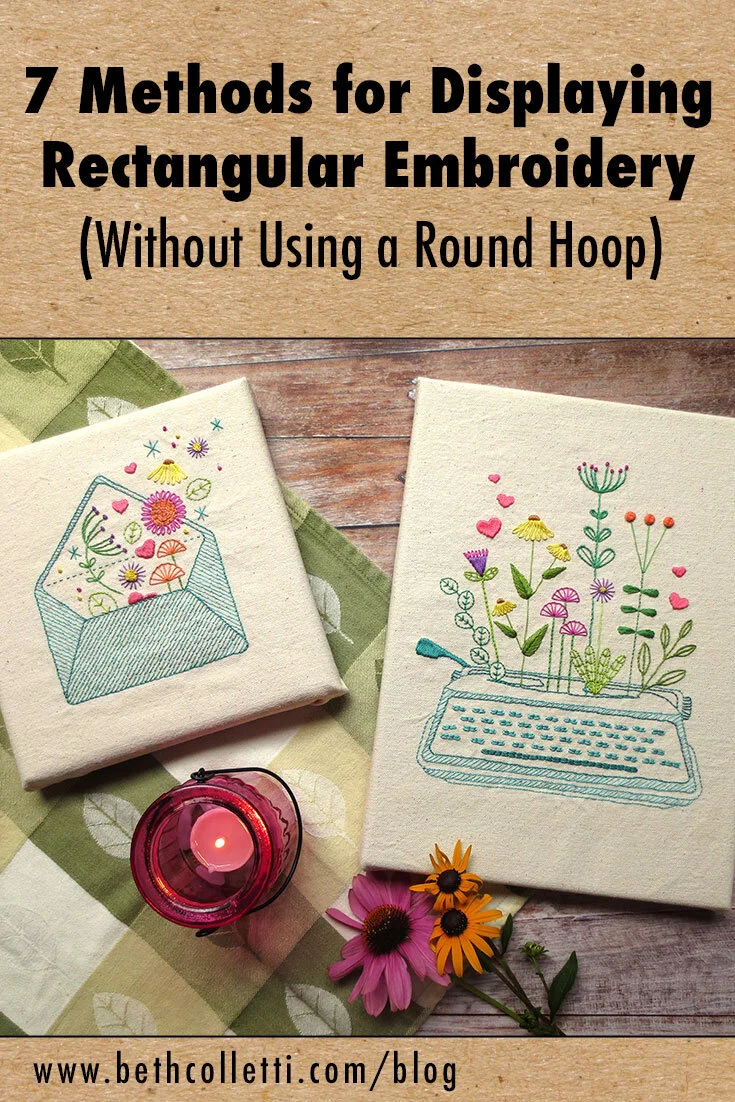
Can you display embroidery without a hoop? Yes, absolutely! While hoops are essential for the stitching process, there are many creative and elegant embroidery finishing techniques that allow you to showcase your needlework beautifully without keeping it in the hoop. This guide explores various hoopless embroidery methods and hand embroidery mounting options to turn your stitched pieces into stunning embroidery wall art and textile art presentation.
Displaying your embroidery should be as enjoyable as creating it. Letting your beautiful stitches shine beyond the confines of a hoop opens up a world of possibilities. Whether you’ve mastered intricate hand embroidery or are showcasing displaying machine embroidery, these methods will help you present your work with flair. We’ll cover everything from simple mounting to more elaborate framing, ensuring your needlework gets the attention it deserves.
Image Source: images.squarespace-cdn.com
Why Move Beyond The Hoop?
Hoops are fantastic tools for keeping fabric taut while you stitch. They ensure even tension and prevent puckering. However, once the stitching is complete, the hoop can sometimes feel like a barrier to presentation. Removing the hoop allows for a cleaner, more finished look, enabling integration into various decor styles and broader textile art presentation.
Reasons to display embroidery without a hoop include:
- Aesthetic Appeal: Many prefer the look of a clean, finished edge without the visible hoop.
- Versatility: Hoopless displays allow your embroidery to be incorporated into garments, pillows, bags, or framed as standalone art pieces.
- Preservation: Certain finishing methods can help protect the stitches and the fabric over time.
- Space Saving: Framed or mounted pieces can be hung without taking up the space a bulky hoop might require.
- Showcasing Texture: Removing the hoop can sometimes allow the texture of the stitches and fabric to be more prominent.
Preparing Your Embroidery: Essential First Steps
Before you can display your masterpiece hoopless, some crucial preparation is needed. This often involves ensuring your fabric is stable and ready for its new presentation.
Fabric Stabilization for Embroidery
Fabric stabilization for embroidery is key, especially when the hoop is no longer present. The stitching process itself can stretch and distort the fabric. To combat this and ensure a flat, smooth finish, consider these methods:
Washing and Pressing
- Pre-wash your fabric: Always wash and dry your fabric according to the thread manufacturer’s recommendations before you start stitching. This prevents shrinkage and color bleeding later.
- Iron thoroughly: After washing, iron your fabric until it is completely smooth and free of wrinkles.
Backing and Interfacing
For many hoopless displays, adding a backing fabric or interfacing is essential for fabric stabilization for embroidery.
- Fusible Interfacing: This is a lightweight material that adheres to the back of your embroidery using heat from an iron. It adds body and prevents stretching.
- How to use: Cut a piece of fusible interfacing slightly larger than your embroidered area. Place the embroidered piece face down on an ironing board. Lay the interfacing, fusible side down, onto the back of the embroidery. Follow the manufacturer’s instructions for ironing temperature and time.
- Non-Fusible Backing Fabric: You can also stitch a separate piece of fabric to the back of your embroidery. This can be as simple as a cotton backing or something more decorative.
- How to use: Lay your embroidered piece face down. Place the backing fabric, right side up, on top of it. Baste or stitch the edges together to secure them.
Trimming Excess Fabric
Once stitching is complete and your fabric is stabilized, you’ll likely need to trim away excess fabric from the edges.
- Leave a margin: Always leave a sufficient margin of fabric around your embroidered design. This margin will be used for attachment to the display method. The amount needed depends on the display technique you choose.
- Consider fabric type: For finer fabrics, trim carefully to avoid fraying. For more robust fabrics, a slightly wider margin might be helpful.
Hoopless Embroidery Display Methods
Now for the exciting part – displaying your beautiful needlework! These methods offer various styles and levels of complexity.
1. Framing Your Embroidery
Framing is a classic and elegant way to present embroidery wall art. It not only protects your work but also enhances its visual appeal.
Traditional Framing
This involves using a picture frame with glass or acrylic.
- Mounting Options:
- Stretched Over Cardboard/Foam Board: Your embroidery is carefully stretched and secured to a rigid backing board. This creates a taut surface.
- Process:
- Prepare your stabilized embroidered piece.
- Cut a piece of acid-free foam board or sturdy cardboard to the desired size (often slightly larger than the design to allow for stretching).
- Position your embroidery face down on a clean surface.
- Center the backing board on the back of your embroidery.
- Carefully pull the fabric taut and use acid-free tape or glue to secure it to the back of the board. Start by securing the top edge, then the bottom, then the sides, ensuring even tension.
- Place the mounted embroidery into your chosen picture frame.
- Process:
- Using a Mat Board: A mat board can be used to add a professional touch and create a visual separation between the embroidery and the frame.
- Process:
- Mount your embroidery to a backing board as described above.
- Have a custom mat board cut with an opening slightly smaller than your design to create a border.
- Use archival mounting tape to attach the embroidery (still on its backing board) to the back of the mat board.
- Assemble the frame with the glass, mat, and backing.
- Process:
- Stretched Over Cardboard/Foam Board: Your embroidery is carefully stretched and secured to a rigid backing board. This creates a taut surface.
- Considerations:
- Glass vs. No Glass: While glass protects from dust and UV rays, some prefer to display textured embroidery without glass to appreciate the stitch texture. If displaying without glass, ensure the embroidery is securely mounted and protected from dust.
- Archival Materials: Always use acid-free materials for mounting and matting to prevent yellowing and deterioration of your embroidery over time.
No-Sew Framing Kits
There are also kits available that make framing easier, often involving magnetic strips or other no-sew methods to hold the fabric in place within a frame. These are great for quick and easy hand embroidery mounting.
2. Mounted on Canvas or Wood Panels
This method gives your embroidery a more modern, gallery-like feel, perfect for showcasing embroidery wall art.
- Canvas Stretching:
- Process:
- Prepare your stabilized embroidery.
- Stretch your embroidery over a blank canvas or a wooden art panel.
- Use staple gun, strong fabric glue, or double-sided tape to secure the edges to the back of the canvas or panel. Ensure the fabric is pulled taut and smooth.
- Trim excess fabric from the back.
- Process:
- Wooden Panels:
- Process: Similar to canvas stretching, but you’ll be adhering your embroidery to a solid wood panel. This can be achieved with fabric glue or strong double-sided tape.
- Benefits: This creates a sturdy, lightweight piece that can be hung directly or placed on a shelf. It’s an excellent example of textile art presentation.
3. Displaying on Embroidery Hoops (Reimagined)
While we’re focusing on hoopless methods, it’s worth noting that hoops themselves can be creatively disguised or repurposed for display.
- Covered Hoops: Wrap the inner and outer hoops with fabric, ribbon, or yarn before placing your embroidery in them. This softens the look of the hoop.
- Decorated Hoops: Paint, decoupage, or embellish the hoops themselves to complement your embroidery.
- Hoop Frames: Once your embroidery is secured in a finished hoop, you can place the entire hoop into a larger, decorative frame as a unique display.
4. Hanging with Dowels or Branches
This rustic and charming method is ideal for a more bohemian or natural aesthetic. It’s a beautiful way to achieve no-hoop embroidery display.
- Using Dowels:
- Process:
- Prepare your stabilized embroidery, leaving a wider margin at the top.
- Fold the top edge of the fabric over a wooden dowel (or a sturdy stick).
- Secure the folded edge with stitching, fabric glue, or strong double-sided tape.
- Attach a hanging cord or ribbon to the ends of the dowel.
- Process:
- Using Branches:
- Process: Similar to dowels, but use a natural, cleaned branch for a more organic look.
- Advantages: This method requires minimal supplies and creates a lovely, relaxed display. It’s a great way of showing off needlework with a natural touch.
5. Creating Fabric Collages and Mixed Media Art
Your embroidery can be a central element in a larger art piece.
- Collage: Cut out your embroidered motifs or entire embroidered pieces and incorporate them into a fabric collage with other textiles, paper, or found objects.
- Mixed Media: Combine embroidery with painting, drawing, or printing on a single piece of fabric or canvas.
- Mounting: These pieces can then be mounted on canvas, framed, or incorporated into other textile art projects. This is a fantastic avenue for textile art presentation.
6. Attaching to Garments or Accessories
Some of the most popular ways to display embroidery hoopless are by integrating it into wearable items.
- Pillows: Embroider a design and then sew it onto a pillow cover.
- Tote Bags or Pouches: Stitch a design and appliqué it onto a bag or pouch.
- Clothing: Embroider directly onto a garment (with proper backing) or create an embroidered patch to attach. This is a direct way of showing off needlework.
- Techniques:
- Appliqué: Cut out your embroidered piece and stitch it onto your garment or accessory.
- Direct Stitching: If the garment is suitable, you can stitch directly onto it, using fabric stabilization for embroidery on the inside to support the stitches. This is especially common for displaying machine embroidery designs.
7. Stretch Fabric Over Cardboard or Binder Clips
For a quick and easy display, especially for practice pieces or smaller motifs.
- Cardboard Mount:
- Process: Cut a piece of cardboard slightly larger than your embroidery. Place the embroidery face up, center the cardboard on the back, and pull the fabric taut around the edges, securing it with tape or glue on the back. You can then punch a hole at the top for hanging.
- Binder Clips:
- Process: Place your embroidery face up. Fold the edges over the back of small binder clips, attaching them evenly around the design. You can then hang the clips from a string or wire. This is a very informal but effective way of no-hoop embroidery display.
8. Making Embroidery Bunting or Garlands
Perfect for celebrations or adding a festive touch to a room.
- Process:
- Embroider multiple small motifs or letters.
- Cut them out with a small border.
- Stabilize the back of each piece if needed.
- Sew or glue them onto a bias tape or ribbon to create a garland.
- Display: Hang these along walls, mantels, or windows for delightful embroidery wall art.
Choosing the Right Method for Your Embroidery
The best display method depends on several factors:
- The Size and Complexity of Your Embroidery: Larger, more intricate pieces often benefit from framing or mounting on a solid surface. Smaller motifs can be great for garlands or appliqués.
- The Fabric Type: Stiffer fabrics might hold their shape better without extensive stabilization, while delicate fabrics will require more support.
- Your Desired Aesthetic: Do you want a formal look, a rustic feel, or something modern and minimalist?
- Your Skill Level: Some methods, like traditional framing, require more precision than others, like dowel hanging.
- The Intended Location: Will it be hung on a wall, placed on a shelf, or attached to a functional item?
Table: Hoopless Display Methods at a Glance
| Method | Best For | Aesthetic | Ease of Execution |
|---|---|---|---|
| Traditional Framing | Detailed designs, artwork | Classic, sophisticated | Medium to High |
| Canvas/Wood Panel Mount | Modern pieces, textured work | Contemporary, gallery-style | Medium |
| Dowel/Branch Hanging | Rustic, bohemian, natural designs | Casual, organic, handcrafted | Easy |
| Garlands/Bunting | Small motifs, lettering, festive occasions | Playful, decorative | Easy to Medium |
| Appliqué to Garments/Bags | Wearable art, functional items | Personalized, unique | Medium |
| Cardboard/Clip Mount | Practice pieces, quick displays, small motifs | Casual, informal | Very Easy |
Advanced Techniques and Considerations
When aiming for professional-level textile art presentation, consider these advanced tips:
1. Acid-Free Materials
For longevity and preservation, always use acid-free materials. This includes:
- Mounting boards: Foam core, mat board.
- Adhesives: Archival tape, acid-free glue sticks.
- Backing fabrics: Preshrunk, unbleached cotton.
2. Tension and Smoothness
Achieving perfectly smooth, wrinkle-free results is crucial when removing the hoop.
- Stretching Tools: Use tools like a staple gun, a heat gun (carefully, on low setting), or even gentle steaming to help smooth the fabric as you mount it.
- Layering: For very delicate fabrics, consider layering a sheer stabilizer (like organza or a lightweight fusible interfacing) behind the main fabric before stitching to provide extra support. This is a great way to ensure fabric stabilization for embroidery from the outset.
3. Displaying Machine Embroidery
Displaying machine embroidery often involves larger, more complex designs. The techniques mentioned above are all applicable.
- Stabilizers: Ensure you have used the correct stabilizer for your machine embroidery project. When removing the hoop, the stabilizer might be trimmed or left on the back for support, depending on the chosen display method. Some finishes involve removing the excess stabilizer entirely and replacing it with a fabric backing for a cleaner look.
- Digitizing: If you’re digitizing your own designs for machine embroidery, consider how the final piece will be displayed and digitize accordingly, perhaps leaving a small border for mounting.
4. Showing Off Needlework Texture
Certain display methods highlight the tactile quality of embroidery.
- Framing without Glass: Allows the viewer to appreciate the dimensionality of the stitches.
- Canvas Mounts: The slight give of a canvas can sometimes emphasize texture better than a rigid board.
- Natural Materials: Displaying on wood or with branches can complement the handmade feel and texture. This is a core aspect of showing off needlework.
Frequently Asked Questions (FAQ)
Q: How do I prevent my embroidery from puckering after removing the hoop?
A: Proper fabric stabilization for embroidery is key. Ensure you’ve used an appropriate stabilizer during stitching and consider adding fusible interfacing or a fabric backing after stitching. Gentle stretching and proper mounting techniques will also help keep the fabric smooth.
Q: Can I wash my embroidery after it’s been mounted without a hoop?
A: Generally, no. Once mounted or framed, washing is not recommended as it can damage the mounting materials and cause the fabric to lose its shape. It’s best to wash and prepare your fabric before stitching.
Q: What’s the best way to display a very delicate embroidery?
A: For delicate pieces, framing behind UV-protective glass or acrylic is often the safest option. Alternatively, mounting onto a rigid, acid-free backing board using archival adhesives provides support without excessive tension.
Q: How can I make my hoopless embroidery look professional?
A: Professional results come from attention to detail: clean edges, smooth fabric, consistent tension during mounting, and the use of archival materials. Framing with a mat board and selecting a high-quality frame will significantly enhance the professional appearance.
Q: Is there a way to display machine embroidery that looks hand-stitched?
A: Yes, by focusing on the finishing. Techniques like mounting onto fabric panels, framing, or even carefully trimming and appliquéing onto other items can give machine embroidery a refined, artwork-like appearance, especially when the stitch quality is excellent.
Q: What is a good method for no-hoop embroidery display if I’m on a budget?
A: Cardboard mounting, binder clip displays, or using dowels/branches are very budget-friendly options. These require minimal supplies and can still look very attractive with careful execution.
By exploring these diverse embroidery finishing techniques and hoopless embroidery methods, you can elevate your needlework from a hobby project to beautiful embroidery wall art and stunning textile art presentation. Each method offers a unique way of showing off needlework, allowing your creativity to shine. Happy stitching and displaying!