
You finished a beautiful embroidery piece. It looks so good! Now you want to put it on your wall. You want to show off your hard work. But you don’t want to make holes everywhere. Can you hang embroidery hoops without using nails? Yes, you absolutely can! There are many great ways to hang your hoops. You can keep your walls looking nice. You can also keep your hoops safe.
Hanging your art is the best part. It makes your house feel like home. Embroidery hoops make pretty wall decor. You can hang just one hoop. Or you can hang many together. You can make a cool display. This guide will show you how. We will look at ways that don’t hurt walls. We will also look at ways with very little harm. You will learn how to get your hoops ready. You will see ideas for showing them off.
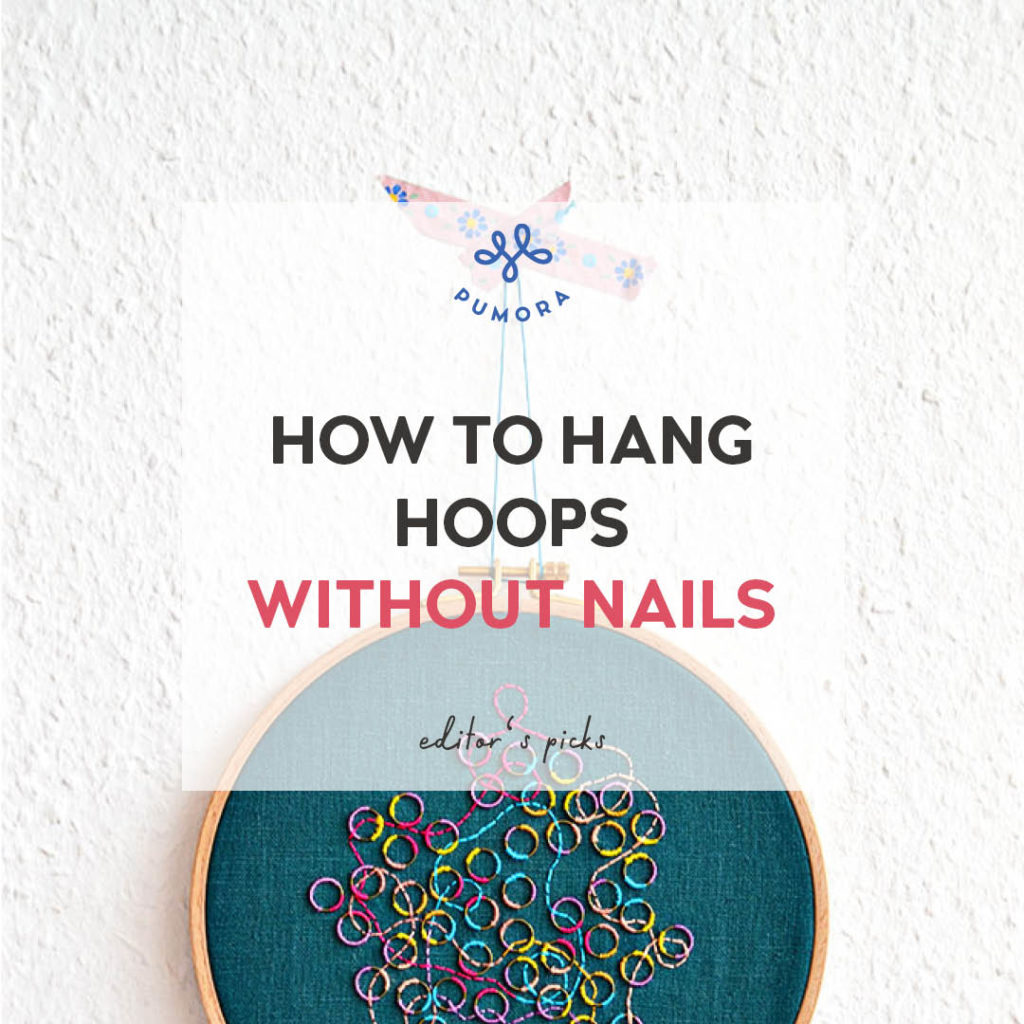
Image Source: pumora.com
Getting Hoops Ready to Hang
Before you hang your hoop, get it ready. Make the back look neat. Trim extra fabric. You can glue felt or fabric on the back. This hides the stitches. It makes the hoop look finished.
You also need a way to hang it. The metal part at the top of the hoop is often enough. It is the screw part. You can hang the hoop from this. Or you can add something extra.
- Add a loop of string.
- Add a loop of ribbon.
- Add a small picture hook to the back.
Adding a loop gives you more choices. It can make the hoop hang flatter. It can also make it hang lower from the hook.
Ways to Hang Without Harming Walls
Many people rent their homes. Or they just don’t want holes. Luckily, there are great ways to hang embroidery hoops on wall without nails. These methods are easy. They can hold your hoops well.
Using Sticky Strips
Sticky strips are very popular. Command strips are a well-known brand. They stick to the wall. They stick to the hoop. Then you pull a tab to take them off. They usually do not hurt the paint. This makes them great for nail free hoop hanging.
H4: What Sticky Strips Are
These strips have glue on both sides. One side sticks to the wall. The other side sticks to your hoop. They come in different sizes. They hold different amounts of weight.
H4: Picking the Right Strip
Choose a strip that is strong enough. Look at the package. It tells you how much weight it can hold. Your embroidery hoop is probably light. Small hoops are very light. Medium hoops are light too. A small strip might work. A medium strip is safer for bigger hoops.
- Small strips often hold 1 pound.
- Medium strips often hold 3 pounds.
- Big strips often hold more.
Your hoop does not weigh much. But pick a strip that can hold more than you think you need. This makes sure it stays up. Using command strips for hoops is easy. Just check the weight limit.
H4: How to Use Sticky Strips
Using sticky strips is simple. Follow the steps on the package.
H5: Steps to Use Sticky Strips
- Clean the wall: Use rubbing alcohol. Wipe the spot where the strip will go. Let it dry. This is important. The strip won’t stick well on dirt or dust.
- Get the strip ready: Take one strip. Find the side for the wall.
- Stick to the wall: Put the strip on the clean spot. Press it hard for 30 seconds.
- Get the hoop ready: Take the other side of the strip. Put it on your hoop. Decide where the strip will go. Put it on the back of the hoop. Or on the metal part. Press hard for 30 seconds.
- Join them: Line up the strip on the wall and the strip on the hoop. Press the hoop onto the wall strip. Push hard for 30 seconds.
- Wait: Do not hang the hoop right away. Wait for one hour. The glue needs time to stick well.
- Hang the hoop: After one hour, your hoop is ready to hang.
Using command strips for hoops is a great way for damage-free hoop hanging methods. They are easy to use. They are easy to take off later. Just remember to pull the tab straight down when you take them off. Do not pull away from the wall.
H4: Pros and Cons of Sticky Strips
- Pros:
- No holes in the wall.
- Easy to use.
- Easy to remove.
- Hold well if used right.
- Many sizes and types.
- Cons:
- Might not work on all wall types (like rough walls).
- Can damage paint if removed wrong.
- Might fall if too much weight or not used right.
- Need a clean, dry surface.
Using Hooks That Stick
There are other hooks that stick to walls. They have glue already on them. They come in plastic or metal. You can find clear ones. Clear hooks are good because you don’t see them much.
H5: How to Use Sticky Hooks
- Clean the wall: Clean the spot like with sticky strips. Use alcohol. Let it dry.
- Peel the back: Take the paper off the back of the hook. This shows the glue.
- Stick the hook: Put the hook on the wall. Press hard for 30 seconds.
- Wait: Let the glue stick. Wait the time the package says. It might be 15 minutes or an hour.
- Hang your hoop: Put the hoop on the hook.
These hooks are also good for nail free hoop hanging. They are simple. Make sure your hoop can hang on the hook style. Some hooks have a closed loop. Your hoop needs a string loop to hang on them.
H4: Pros and Cons of Sticky Hooks
- Pros:
- No holes in the wall.
- Easy to use.
- Many styles.
- Cons:
- Harder to move or remove than sticky strips.
- Can damage paint when removed.
- Might not hold as much weight as some strips.
- Need a clean surface.
Fathoming Ribbon for Hanging
Ribbon is a lovely way to hang your hoops. It looks pretty. It adds to the look of your art. It’s a great alternative ways to hang hoops. You can use almost any ribbon.
H4: How to Use Ribbon
You need a piece of ribbon. Choose a color that matches your embroidery. Or choose a color that stands out!
H5: Steps to Use Ribbon
- Cut the ribbon: Cut a piece of ribbon. Make it long enough. It needs to go around the hoop top. It needs to reach where you will hang it. Add extra for tying.
- Attach to the hoop:
- Method 1 (Loop): Fold the ribbon in half. Put the folded end behind the metal part of the hoop (the screw). Pull the loose ends through the loop. Pull tight. This makes a knot around the screw.
- Method 2 (Tie on top): Wrap the ribbon around the top of the hoop. Tie a bow or a knot right there.
- Hang the ribbon: Now you have the hoop hanging from the ribbon. You need a way to hang the ribbon on the wall.
- Use a small sticky hook. Put the hook on the wall. Hang the ribbon loop on the hook.
- Use a tiny nail or pin (see next section). Put the nail in the wall. Hang the ribbon loop on the nail.
- Use a decorative hook.
Using ribbon for hanging embroidery makes your display look soft and nice. You can use wide ribbon or thin ribbon. You can use satin ribbon or rough string. It changes the look a lot.
H4: Pros and Cons of Using Ribbon
- Pros:
- Looks beautiful.
- Adds a soft touch to the art.
- Many choices of color and style.
- Hoop hangs flat against the wall.
- Cons:
- Needs a separate hook or nail to hang on the wall.
- The ribbon might twist.
- Might not look good with all art styles.
Ways With Very Little Harm
These methods make very small marks. They are not completely damage-free. But the marks are tiny. They are easy to fix later.
Tiny Nails or Pins
You can use very small nails. Picture hanging nails are thin. They make small holes. You can also use strong pins.
H4: Using Small Picture Nails
Small nails are designed to make tiny holes. They hold things close to the wall.
H5: Steps to Use Small Picture Nails
- Find the spot: Decide where the top of the hoop will be. The nail goes just above this.
- Tap the nail: Hold the small nail. Use a small hammer. Gently tap the nail into the wall. Go in at an angle. Point the nail head up a little. This helps hold the hoop.
- Stop tapping: Stop when the nail can hold your hoop. Don’t hammer it all the way in if you don’t need to.
- Hang the hoop: Hang the hoop directly on the nail. The metal screw part usually fits well.
This is a simple way of securing hoops on wall. The hole is much smaller than a regular nail. It’s almost nail free hoop hanging compared to a big nail.
H4: Pros and Cons of Small Nails
- Pros:
- Holds the hoop securely.
- Hoop hangs close to the wall.
- Small hole, easy to fill later.
- Stronger than most sticky options.
- Cons:
- Makes a small hole.
- Needs a hammer.
Using Push Pins
Push pins are simple. You just push them into the wall. They are best for very light things. A small hoop might work. A big hoop is probably too heavy.
H4: Using Push Pins
Choose a strong push pin. Some have metal ends.
H5: Steps to Use Push Pins
- Find the spot: Choose where the hoop will hang.
- Push the pin: Push the pin into the wall. Push it in at an angle. Point the head up.
- Hang the hoop: Hang the hoop on the pin head.
Push pins make a very small hole. They are super easy to use. But they are not very strong. They might bend. The hoop might fall. Use them only for very light hoops.
H4: Pros and Cons of Push Pins
- Pros:
- Super easy to use.
- Makes a tiny hole.
- No tools needed.
- Cons:
- Not strong.
- Hoops might fall.
- Pin might bend.
- Only for the smallest, lightest hoops.
Showing Off Hoops on the Wall
Once your hoops are ready, where do you put them? How do you arrange them? There are many fun embroidery hoop wall display ideas. You can hang just one. Or you can hang many together. Hanging embroidery hoops on wall can make a big impact.
Deciphering Display Ideas
H4: Hanging a Single Hoop
One beautiful hoop can stand alone. Put it in a small space. Put it above a table. Put it next to a door. A single hoop can be a little bit of art. Choose a special piece.
H4: Hanging Many Hoops Together
Groups of hoops look great. This is like making a gallery wall with hoops. You can mix sizes. You can mix designs. Some can have flowers. Some can have words. Some can be just fabric.
H5: Ideas for Grouping Hoops
- Different sizes: Use big, medium, and small hoops.
- Different colors: Use hoops with many colors. Or use hoops with just one or two colors.
- Different styles: Mix detailed pictures with simple patterns.
- Same theme: Hang hoops that all go together. Maybe they are all plants. Or all animals. Or all blue.
Making a Group of Hoops
How do you plan a group? Don’t just start putting holes in the wall. Plan it first!
H5: How to Plan Your Hoop Group
- Choose your hoops: Get all the hoops you want to hang together.
- Lay them out: Put your hoops on the floor. Arrange them there first. Move them around. Try different shapes.
- Put the biggest one in the middle.
- Put them in a straight line.
- Put them in a circle shape.
- Make a messy, fun shape.
- Take a picture: When you like an arrangement, take a picture with your phone. You can look at it later.
- Make a paper pattern (optional but helpful): Cut out paper circles the size of your hoops. Tape them to the wall. Move the paper circles around. This shows you how it will look. It is easy to change.
- Mark where to hang: On the paper circle, mark where the nail or hook will go. Or mark it lightly on the wall after you place the paper circles.
- Start hanging: Use your chosen method (sticky strip, nail, etc.). Start putting up your hoops based on your plan.
Making a gallery wall with hoops is fun. It fills a space well. It shows off many pieces at once. Think about the space between hoops. Leave enough room so they don’t look crowded. But not too much room.
How to Make Sure Hoops Stay Up
Securing hoops on wall is important. You don’t want them to fall. A falling hoop could break. It could also pull paint off the wall.
- Use the right hanger: Make sure the sticky strip or nail is strong enough for your hoop’s weight.
- Clean the wall: For sticky methods, always clean the wall first.
- Wait the right time: If using sticky things, wait the time the package says before hanging the hoop.
- Check the hoop: Make sure the screw on the hoop is tight. Make sure the fabric is held well.
- Check the connection: Make sure the hoop is sitting well on the nail or hook. Make sure the ribbon is tied tight.
If you use small nails, make sure the nail is not loose. If it is loose, it might fall out. If you use sticky strips, press the hoop onto the wall strip very well.
Other Spots to Hang Hoops
You don’t have to just hang them on flat walls. There are alternative ways to hang hoops. Get creative!
- Lean them on shelves: Simply place your hoops on a shelf. Lean them against the wall. This needs no holes at all. It is a true damage-free hoop hanging method. Mix them with books or plants.
- Hang from a rail: Use s-hooks. Hang hoops from a curtain rod or a picture rail.
- Attach to a pegboard: If you have a pegboard, use hooks designed for it. Hang your hoops on the pegboard. This is good for craft rooms.
- Hang from the ceiling: Use clear string. Hang hoops from the ceiling at different heights. This looks cool in a corner. You might need a small hook in the ceiling.
- Hang on a door: Use an over-the-door hook. Hang hoops from it with ribbon or string.
Displaying embroidery hoops is not just for walls. Look around your home. Where else could your art look good?
Step-by-Step Help
Let’s look closely at how to do the most popular ways.
Hanging with Sticky Strips – Steps
This is great for damage-free hoop hanging methods.
- Pick your strips: Look at your hoop. How big is it? How heavy? Choose strips that hold enough weight. A medium strip is often safe for most hoops.
- Find your spot: Look at the wall. Where do you want the hoop?
- Clean the spot: Get rubbing alcohol. Put some on a clean cloth. Wipe the wall spot. Let it dry fully. This is very important for the strip to stick.
- Get the strip ready: Open the strip package. Separate a strip. Peel the paper from one side. This side goes on the wall.
- Stick to wall: Put the strip on the wall where you cleaned it. Press it hard with your fingers. Press for 30 seconds. This makes the glue stick well to the wall.
- Peel other side: Now peel the paper from the other side of the strip. This side will stick to the hoop.
- Get the hoop: Hold your embroidery hoop. Decide where on the back you want to stick it. The top near the screw is common.
- Stick hoop to strip: Line up the hoop and the strip on the wall. The sticky side on the wall should meet the hoop back. Press the hoop firmly onto the strip. Push all over the hoop where it touches the strip. Press hard for 30 seconds.
- Let it stick: Leave the hoop there. Do not touch it. Wait for one hour. This lets the glue get strong.
- Check it: After one hour, gently touch the hoop. Does it feel stuck well? Yes? Great! Your hoop is now hanging on the wall without nails.
To take it off later: Hold the hoop gently. Find the bottom of the strip. There is a pull tab. Pull the tab straight down slowly. Keep pulling until the strip comes off the wall. It will stretch long. Do not pull towards you. This can take paint off.
Hanging with Ribbon – Steps
This adds a pretty look. It is also a good alternative ways to hang hoops.
- Choose ribbon: Pick a ribbon you like. How long do you want it to be? Measure the length. Cut the ribbon. Add extra for tying knots.
- Attach to hoop:
- Find the metal screw part on your hoop.
- Fold the ribbon in half. You have a loop at one end and two tails at the other.
- Put the loop end behind the metal screw part of the hoop.
- Bring the two tail ends through the loop.
- Pull the tails tight. This makes a simple knot around the screw.
- Choose wall hanger: You need something on the wall for the ribbon to hang on.
- A small sticky hook works well (like a Command hook).
- A tiny nail or pin can work.
- A decorative wall hook looks nice.
- Put hanger on wall: Put your chosen hook or nail on the wall. If using a sticky hook, follow its steps (clean, stick, wait). If using a nail, hammer a tiny nail in.
- Hang the hoop: Take the ribbon loop at the top. Put this loop onto the hook or nail you put on the wall.
- Adjust: Make sure the hoop hangs straight. Adjust the ribbon on the hook if needed.
Ribbon hanging makes the hoop hang lower than the hook. Think about this when you place your hook on the wall.
Hanging with a Small Nail – Steps
This makes a very small hole. It is quite secure.
- Get supplies: You need a small picture nail. These are usually thin and short. You need a small hammer.
- Find your spot: Where on the wall will the top of the hoop be? The nail will go right above this spot.
- Position the nail: Hold the small nail against the wall. Hold it where you want the top of the hoop. Place the nail just above. Angle the nail up a little bit. The point goes into the wall. The head points up.
- Tap gently: Use your small hammer. Tap the nail head gently. Tap it into the wall. Don’t use too much force. The wall might break.
- Stop tapping: Stop when the nail feels solid in the wall. It should stick out just enough for the hoop to hang on it. You don’t need to hammer it all the way flat.
- Hang the hoop: Take your embroidery hoop. Place the metal screw part of the hoop onto the head of the nail. Let it hang there.
- Check it: Is the hoop hanging straight? Does the nail feel strong?
This is a fast way to hang hoops. The hole is small. It is easy to fill with a tiny bit of wall filler later if you move or change your mind.
Comparing Ways to Hang Hoops
Here is a quick look at the different ways.
| Method | Damage Level | Easy to Use? | What You Need | Best For… |
|---|---|---|---|---|
| Sticky Strips | None (if used right) | Very Easy | Strips, Alcohol | Rental homes, smooth walls, light hoops |
| Sticky Hooks | Low (risk of paint damage) | Easy | Hook, Alcohol | Light hoops, places where hook shape works |
| Ribbon | None (from ribbon), Low (from hook/nail) | Easy | Ribbon, Hook/Nail | Pretty look, adjusting height |
| Small Nails/Pins | Very Low | Easy | Small Nail, Hammer | Secure hold, small holes okay |
| Push Pins | Very Low | Very Easy | Push Pin | Very small/light hoops, temporary |
| Leaning | None | Super Easy | Shelf | No holes needed, easy to move |
This table helps you choose the best way for your situation. All are good for displaying embroidery hoops.
Frequently Asked Questions
People often ask things about hanging their embroidery art.
H4: Can I use tape to hang hoops?
Using regular tape is not a good idea. Tape is not strong enough. It will not hold the hoop for long. It will fall. Tape can also take paint off the wall. It can leave sticky marks. Use sticky strips or hooks made for walls instead.
H4: What if my hoop is heavy?
Most embroidery hoops are light. But if you use very thick fabric or lots of beads, it might be heavier. For heavier hoops, sticky strips with a higher weight limit are better. Small nails are also strong. Push pins and regular tape will not work for heavy hoops. Always check the weight limit of the hanger.
H4: How do I clean the wall before using sticky things?
The best way is with rubbing alcohol. Put some on a clean cloth. Wipe the spot. Let it dry completely. Alcohol cleans away dirt and oils. This helps the sticky strip or hook stick very well. Don’t use water or household cleaners. They can leave things behind that stop the glue from sticking.
H4: Can I reuse sticky strips or hooks?
Most sticky strips are for one use only. Once you pull the tab to remove them, they lose their stickiness. Some sticky hooks might come with extra adhesive pads. You can buy refill strips for Command products. Always check the product information.
H4: How do I make sure the hoop is straight?
You can use a small level tool. Put it on the side of the hoop. Move the hoop until the bubble is in the middle. Or, you can stand back and look at it from far away. Sometimes the eye is enough for hoops in a group.
H4: How high should I hang my hoops?
Think about who will see them. If standing, hang them so the middle of the hoop is about eye level for a person standing. If hanging over a sofa or table, hang them lower. Leave space between the furniture and the bottom of the hoop. Think about the whole space.
Wrap Up
You have many ways to hang your beautiful embroidery hoops. You can use damage-free hoop hanging methods like sticky strips or hooks. You can use ways with very little harm like small nails. You can use pretty ribbon for hanging embroidery.
Think about your walls. Think about your hoops. Think about the look you want. You can hang one hoop. You can make a big embroidery hoop wall display ideas. You can create a fun gallery wall with hoops.
Now you know how to get your hoops ready. You know many ways of securing hoops on wall. You even know alternative ways to hang hoops. Go put your art on the wall! Show off what you made! Your hard work deserves to be seen. Your walls can stay safe and happy.