
Do you want to know how to avoid wavy seams when sewing stretchy fabric? It is a common sewing problem! Sewing stretchy fabric, like knit fabric or jersey, can be easy and fun. The key is to use the right tools and change how you sew. The main secret to smooth seams is stopping the fabric from stretching out of shape as you sew. We will show you how to do just that on your regular sewing machine.
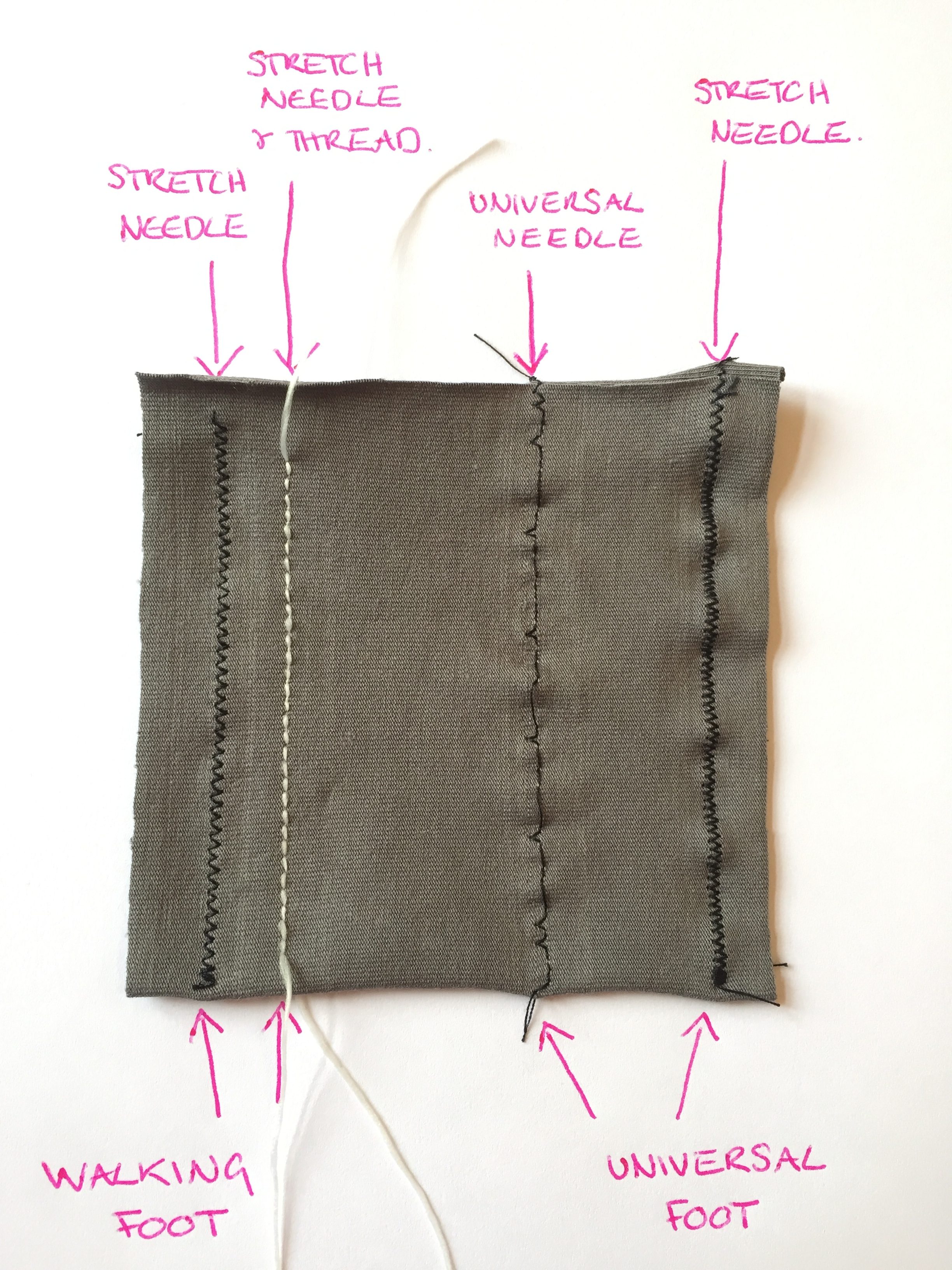
Image Source: www.sewschool.co.uk
Comprehending Why Stretch is Tricky
Stretchy fabric is different from woven fabric. Woven fabric has threads that cross over and under each other like a basket. It does not stretch much on its own. Stretchy fabric, often called knit fabric, is made of loops, like a sweater. These loops let the fabric stretch a lot.
When you sew woven fabric with a straight stitch, the seam does not need to stretch. If you use a straight stitch on knit fabric, and then you stretch the fabric, the thread will break. Also, the sewing machine’s feed dogs (the little teeth under the needle) can pull and stretch the fabric as they move it forward. This makes the seams look wavy or stretched out.
So, sewing stretchy fabric needs special ways to sew. You need stitches that can stretch and tools that help the fabric feed smoothly.
Key Tools for Stretchy Fabric
Having the right tools makes a big difference. Some small changes can make sewing stretchy fabric much easier.
Picking the Right Needles
The needle you use is very important. Using the wrong needle is a main reason for problems.
Why a Special Needle?
A standard needle for woven fabric has a sharp point. This sharp point is good for piercing threads in woven fabric. But knit fabric is loops. A sharp needle can pierce or break these loops. This can cause runs in the fabric. It can also lead to skipped stitches when sewing stretch fabric.
Meet the Ballpoint Needle
A ballpoint needle for knit fabric is a must-have. It has a rounded tip. This tip does not pierce the fabric loops. Instead, it gently pushes the fabric fibers aside. This works much better for many knit fabrics. Use this needle for jersey, interlock, and most medium-stretch knits.
Trying a Stretch Needle
For very stretchy fabrics like spandex, lycra, or performance knits, a stretch needle is even better. It has a more rounded tip than a ballpoint. It also has a special eye and scarf (a groove behind the eye). This design helps the needle go through the fabric without skipping stitches. It is the best needle for stretchy fabric with a lot of stretch.
Using a Twin Needle
A twin needle for knit fabric is great for finishing hems and neckbands. It looks like two needles on one shaft. It makes two lines of stitches on top and a zig-zag stitch on the back. This creates a stretchy hem that looks like coverstitch made by a special machine. Use a stretch twin needle for best results on very stretchy fabrics.
Here is a simple guide for needles:
| Fabric Type | Stretch Amount | Best Needle | Tip Type | Good Uses |
|---|---|---|---|---|
| Cotton Jersey | Medium | Ballpoint | Rounded | T-shirts, simple tops |
| Interlock | Medium | Ballpoint | Rounded | Sweaters, trousers |
| French Terry | Medium/High | Ballpoint or Stretch | Rounded | Hoodies, loungewear |
| Spandex/Lycra | High | Stretch | Very Rounded | Activewear, swimwear |
| Rib Knit | High | Stretch | Very Rounded | Cuffs, neckbands |
| Double Knit (Ponte) | Low/Medium | Ballpoint or Universal | Rounded/Sharp | Dresses, skirts |
Remember to change your needle often. A dull or bent needle can cause snags, runs, or skipped stitches. Change it after every project or about every 8-10 hours of sewing.
Helpful Sewing Machine Feet
Your sewing machine foot holds the fabric down as you sew. The standard foot that came with your machine might work for some knits. But other feet can help a lot.
The Walking Foot Helper
A walking foot for sewing knits is a game changer. It is sometimes called an even feed foot. A standard presser foot holds the top layer of fabric still while the feed dogs pull the bottom layer forward. This can make the top layer stretch and the seams wavy.
A walking foot has its own set of feed dogs on top. These move with the machine’s lower feed dogs. This helps both layers of fabric feed through the machine at the same speed. It stops the top layer from stretching. Using a walking foot for sewing knits is one of the best ways how to avoid wavy seams when sewing stretch.
Other Useful Feet
- Overcasting Foot: Many machines come with this. It helps create a stitch over the edge of the fabric. This stops the edge from rolling and gives a finish like a serger. Use it with a zig-zag or overcasting stitch.
- Rolled Hem Foot: Can be tricky on knits, but some knit fabrics work well. It turns the edge twice and sews it down.
- Clear Foot: Helps you see better where you are sewing. Useful for detailed work.
You do not need all these feet. A ballpoint or stretch needle and a walking foot are the most important tools for sewing knit fabric well.
Setting Up Your Sewing Machine
Once you have the right tools, you need to set up your sewing machine correctly. This means picking the right stitch, setting the tension, and checking for skipped stitches.
Finding the Best Stitch
This is very important for sewing stretchy fabric. As we know, a straight stitch will break when stretched. You need a stitch that can stretch with the fabric. What is the best stitch for stretch fabric? Here are some options:
- Zig-Zag Stitch: This is the most common and useful stitch for knits. The zig-zag shape allows the seam to stretch.
- For construction seams (sewing pieces together): Use a narrow zig-zag. Try a width of 0.5mm to 1mm and a length of 2mm to 2.5mm. This looks almost like a straight stitch but has enough stretch.
- For finishing edges: Use a wider zig-zag to stop the fabric from rolling.
- Stretch Stitch (Triple Straight Stitch): Many machines have this stitch. It looks like a straight stitch but sews each stitch backward and forward three times. This makes a very strong, stretchy seam. It is great for seams that need a lot of strength, like seams in leggings. However, it can be hard to remove if you make a mistake!
- Triple Zig-Zag Stitch: Also sews back and forth multiple times, adding extra stretch and strength. Good for seams that get a lot of pulling.
- Lightning Bolt Stitch: Some machines have this. It is a stretch stitch that looks like a lightning bolt. It is designed specifically for knit fabrics.
- Overcasting Stitches: Many modern machines have stitches that mimic a serger stitch. Use these with an overcasting foot to sew and finish the seam edge at the same time.
Always test your stitch on a scrap of the same fabric you are using. Sew a seam and then stretch the fabric firmly. The stitches should not break.
Adjusting Machine Tension
Sewing machine tension for stretchy fabric is key to preventing puckers and skipped stitches. Tension controls how the top and bottom threads lock together.
* Standard Tension: Start with your machine’s normal tension setting. Often this is around 4 or 5.
* Testing Tension: Sew a test seam on a scrap. Look at the stitches.
* If the fabric is puckering or gathering along the seam, the tension might be too high (too tight). Try lowering the top tension slightly.
* If the stitches look loose or loop on the top or bottom, the tension might be too low (too loose). Try raising the top tension slightly.
* If you see skipped stitches when sewing stretch fabric, tension might be one reason (along with the wrong needle). Adjust tension slightly or change the needle.
* Balance is Key: You want the top and bottom threads to meet evenly within the fabric layers. On the wrong side, you should see the bottom thread lying smoothly. On the right side, you should see the top thread lying smoothly. Neither thread should be pulling loops from the other side.
Sometimes, slightly lower top tension works best for knits. But test on your specific fabric. Each fabric is different.
Solving Skipped Stitches
Skipped stitches when sewing stretch fabric are annoying! They weaken the seam and look bad. Here is what causes them and how to fix them:
- Wrong Needle: This is the most common cause. Using a sharp needle instead of a ballpoint or stretch needle can make the needle skip over the loops in the knit fabric.
- Fix: Change to a ballpoint or stretch needle. Make sure the needle size is right for the fabric weight (smaller number for lighter fabric, larger number for heavier).
- Bent or Dull Needle: A damaged needle cannot pass through the fabric correctly.
- Fix: Change the needle! Even if it is new, it could be faulty.
- Incorrect Threading: If the machine is not threaded correctly, especially the top thread or through the tension discs, it can cause issues.
- Fix: Re-thread your machine completely, with the presser foot UP.
- Tension Issues: Tension that is too tight or too loose can sometimes lead to skips.
- Fix: Adjust sewing machine tension for stretchy fabric as described above.
- Low-Quality Thread: Cheap thread can break or shred, causing skips.
- Fix: Use good quality polyester thread. Polyester has some stretch, which is good for knit seams.
- Speed: Sewing too fast on stretchy fabric can sometimes cause skips.
- Fix: Sew at a medium, steady speed. Do not race the machine.
If you still get skipped stitches after checking these things, your machine might need cleaning or service. Lint and old oil can affect stitch formation.
Getting Ready to Sew
Good preparation makes sewing knit fabric much easier.
- Pre-wash Your Fabric: Knit fabric often shrinks. Wash and dry it how you plan to wash the finished garment. This stops shrinking later.
- Cutting:
- Use sharp scissors or a rotary cutter. A rotary cutter is often easier as you do not lift the fabric, which can distort it.
- Use weights instead of pins inside the cutting line when using a rotary cutter. Pins can stretch the fabric.
- Cut on a single layer if the fabric is very unstable or curls easily.
- Lay the fabric flat without stretching it. Check the grainline – it should be straight up and down or across.
- Stabilizing Edges: Some knit fabrics, especially jersey, roll at the cut edges. You can press the edge with a bit of starch or spray stabilizer (like Odif 505). This makes them flatter and easier to handle while sewing.
- Pinning or Clipping: Avoid using too many pins inside the seam line. Pins can distort stretchy fabric.
- Use fine pins and place them within the seam allowance (the area between the stitching line and the fabric edge). Place them closer together than you would for woven fabric.
- Fabric clips (like Wonder Clips) are great for knit fabric. They hold the fabric edges together without poking holes or causing distortion.
Simple Sewing Steps
Now you are ready to sew jersey on sewing machine or any other knit fabric!
Keeping Seams Smooth
The main goal is to sew without stretching the fabric. This is how to avoid wavy seams when sewing stretch:
- Do Not Pull or Push: Let the machine feed the fabric. Guide it gently with your hands, but do not stretch it from the front or pull it from the back. The walking foot helps a lot with this.
- Support the Fabric: For long seams, support the weight of the fabric in front of the machine and behind it. Letting it hang can pull and stretch the seam as you sew. You can use a sewing table extension or just your hands and the table surface.
- Sew at a Steady Speed: Sewing too fast can make the machine pull the fabric unevenly. A medium, steady speed gives the machine time to form stitches correctly and feed the fabric smoothly.
- Use Stabilizer (Optional but helpful): For tricky areas like shoulder seams that might stretch out, or when sewing on neckbands, you can use a thin strip of clear elastic, knit stay tape, or even wash-away stabilizer in the seam. Sew it in as you stitch the seam. This gives the seam stability and stops it from stretching out over time.
- Test First: Always sew a test seam on scrap fabric before sewing on your project. Check the stitch, tension, and how the fabric is feeding. Adjust as needed.
- Pressing: Press seams flat as you go, but be gentle. Use a low to medium heat setting. Avoid pushing or stretching the fabric with the iron. Just lift and press down. A pressing cloth can protect delicate knits. Pressing helps set the stitches and can sometimes flatten slightly wavy seams.
Here is a quick checklist before you start sewing a seam:
- Is the right needle in the machine (ballpoint or stretch)?
- Is the right stitch selected (zig-zag or stretch stitch)?
- Is the tension tested and correct for this fabric?
- Is the presser foot right for knit fabric (walking foot is best)?
- Is the fabric laid flat and not stretched?
Fixing Common Problems
Even with the right tools and settings, you might run into issues. Here are ways to fix them.
Wavy Seams Again
You followed the steps, but the seam is still wavy.
* Why it happens: You might still be stretching the fabric a little bit, even if you do not mean to. Or the fabric is very slippery or stretchy.
* Fixes:
* Slow down even more.
* Make sure your hands are just guiding, not stretching.
* Check if your walking foot is set up right and working.
* Try using a stabilizer in the seam, like clear elastic.
* Sometimes, a good press with steam can help shrink the seam back a little.
* Check your stitch length. A slightly shorter stitch can sometimes cause less rippling than a long one on some knits.
Dealing with Skipped Stitches
We talked about this before, but it is worth repeating as it is common with stretchy fabric.
* Why it happens: Wrong needle, bent needle, threading errors, tension issues, low-quality thread, sewing speed.
* Fixes:
* Always start with the needle: Change it! Try a new ballpoint or switch to a stretch needle. Make sure it is the right size.
* Re-thread the machine completely.
* Adjust tension slightly.
* Try a different stitch. Sometimes a zig-zag works better than a stretch stitch, or vice versa.
* Clean the machine. Lint can build up around the bobbin case and feed dogs, causing problems.
Fabric Feeding Issues
The fabric is not moving smoothly, or it is getting stuck.
* Why it happens: Pressure foot pressure might be wrong, feed dogs are not working right, or the fabric is getting pushed into the needle plate hole.
* Fixes:
* Presser Foot Pressure: Some machines let you adjust the presser foot pressure. Lowering the pressure can help on very delicate or stretchy knits. This stops the foot from pressing down too hard and stretching the fabric.
* Feed Dogs: Make sure the feed dogs are not lowered (unless you are free-motion quilting).
* Needle Plate: Is the hole in your needle plate very large? For straight stitches, a needle plate with a smaller hole is best (a straight stitch plate). This stops the fabric from being pushed down into the hole. For zig-zag or stretch stitches, you need a plate with a wider hole. Just be extra careful with stretchy fabric and use a walking foot to help guide it.
Finishing Your Work
How you finish the edges and hems of your stretchy fabric projects is also important. You need finishes that can stretch.
- Seam Finishing:
- After sewing your seam with a zig-zag or stretch stitch, you can leave the raw edges as they are. Knit fabric does not usually fray.
- To make it look neat and stop edges from rolling, you can finish the raw edges together or separately.
- Use an overcasting stitch on your machine with an overcasting foot.
- Use a wider zig-zag stitch along the raw edge.
- If you have a serger (overlocker), this is the best way to finish seams quickly. It cuts the edge and stitches it with a stretchy overlock stitch all at once. But you do not need a serger to sew knit fabric. Your regular machine works fine.
- Hems and Neckbands:
- Twin Needle: As mentioned, a twin needle for knit fabric is excellent for hems. Fold the hem allowance up, press, and stitch from the right side with a twin needle. Use a stretch twin needle for the best result.
- Zig-Zag Hem: You can use a narrow zig-zag stitch to hem knit fabric. Fold the hem up, press, and sew with a zig-zag stitch.
- Coverstitch Machine: Special machines called coverstitch machines make the professional-looking hems you see on store-bought t-shirts. It makes two or three lines of parallel stitches on top and a chain stitch on the back. Again, not needed, but nice if you sew a lot of knits.
- Facing or Band: Finish necklines or armholes with a knit fabric band or facing. These are sewn on and then flipped inside.
Frequently Asked Questions (FAQ)
Can I Sew Stretchy Fabric on Any Sewing Machine?
Yes! Most home sewing machines can sew stretchy fabric. You need to use the right needle (ballpoint or stretch) and the right stitch (like a zig-zag or stretch stitch). While some features like adjustable presser foot pressure or a walking foot can help, the basic functions on most machines are enough to get started.
Do I Need an Overlocker (Serger) to Sew Knits?
No, you do not need an overlocker. An overlocker makes sewing knit fabric faster and gives a professional finish to seams, but all the main construction seams can be sewn on a regular sewing machine using a zig-zag or stretch stitch. You can also finish edges with your machine’s stitches.
What Kind of Thread Should I Use?
Polyester thread is best for sewing knit fabric. It has a little stretch to it, which is good for flexible seams. Cotton thread does not stretch and can break easily in a stretchy seam.
How Do I Keep Knit Fabric from Curling?
Jersey knit fabric often curls at the cut edges. You can try these tips:
* Use a rotary cutter and weights when cutting.
* Lightly spray the edges with starch or a fabric stabilizer spray and press them flat before sewing.
* Use fabric clips instead of pins near the edges.
* When sewing, use a zig-zag or overcasting stitch right away on raw edges to stop them from rolling.
What is the Difference Between Ballpoint and Stretch Needles?
Both are for knits, but a stretch needle is designed for fabrics with more stretch, like spandex or lycra. A stretch needle has a more rounded tip and a special design that helps prevent skipped stitches on these very stretchy materials. A ballpoint needle works well for most other knits like cotton jersey or interlock. If you are not sure, try a stretch needle, it often works for all knits.
Wrap Up
Sewing stretchy fabric, including sewing knit fabric and how to sew jersey on sewing machine, does not have to be hard. By using the right needle for stretchy fabric (ballpoint or stretch), picking the best stitch for stretch fabric (zig-zag or stretch stitch), adjusting your sewing machine tension for stretchy fabric, maybe adding a walking foot for sewing knits, and using gentle sewing methods, you can avoid wavy seams and skipped stitches. Take your time, practice on scraps, and soon you will be making comfortable, well-made clothes with stretchy fabrics!