
You can shorten denim pants with a sewing machine by cutting off the extra fabric and sewing a new hem. This guide will show you how to make your jeans fit perfectly, whether you want a simple folded hem or want to keep the cool look of the original edge. Sewing denim might seem hard because the fabric is thick, but with the right tools and steps, you can do it at home.
Jeans are a closet staple for many people. But finding jeans that fit just right in length can be tricky. Maybe your new favorite pair is too long, or you found a great deal on some used jeans that need adjusting. Learning how to hem blue jeans with a sewing machine lets you fix this problem yourself. It saves you money and makes sure your jeans look just how you want them.
This guide covers everything you need to know. We will talk about what you need, how to measure, how to cut, and how to sew a strong hem. We will also look at how to keep the cool, worn look of the first hem on your jeans.
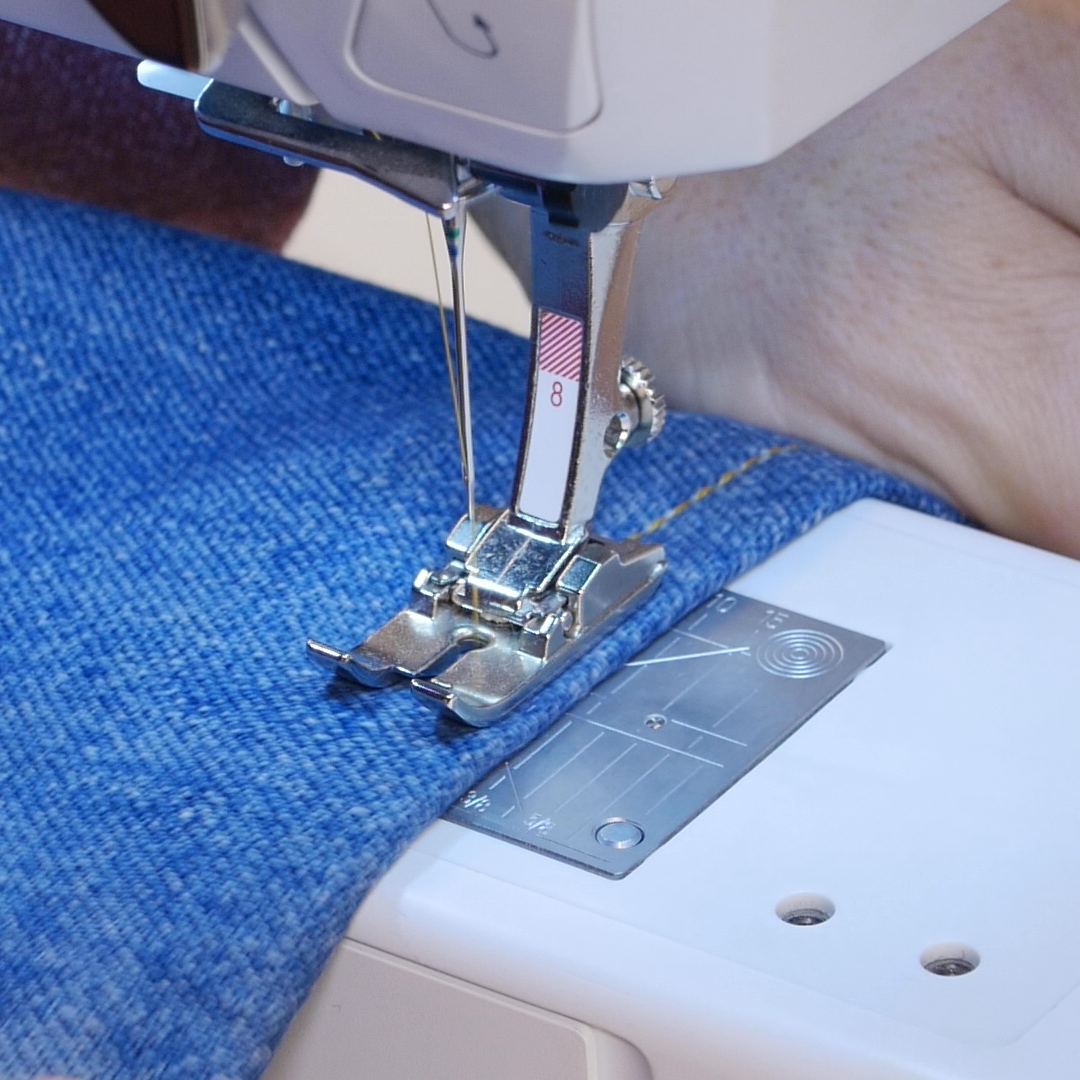
Image Source: weallsew.com
What You Need Before You Start
Before you begin hemming your jeans, gather all your supplies. Having everything ready makes the job go more smoothly. You will need tools for measuring, cutting, and sewing.
Tools and Materials List
Having the right items helps a lot when working with tough fabric like denim.
- Your Jeans: The pair you want to hem.
- Sewing Machine: Make sure it is in good working order. A machine that can handle heavier fabrics is best.
- Sewing machine needle for denim: This is very important. Denim needles are stronger and sharper than regular needles. They are made to push through thick fabric layers without breaking. Using the wrong needle can cause skipped stitches or break the needle. Look for needles marked “Denim” or “Jeans.” They often come in sizes 90/14, 100/16, or 110/18. The higher the number, the thicker the needle.
- Heavy duty thread for jeans: Regular thread might break easily when sewing thick denim. Use a strong thread made for jeans or heavy fabrics. Polyester thread is a good choice because it is strong and durable. Look for thread labeled “heavy duty” or “topstitching thread.” You will want a color that matches your jeans or a contrasting color for a topstitch look.
- Fabric Scissors: Sharp scissors made for fabric are a must. Using paper scissors will make cutting hard and can damage the scissors.
- Measuring Tape or Ruler: For getting the right length.
- Fabric Chalk or Pen: To make marks on your jeans that you can wash away.
- Pins or Clips: To hold the fabric folds in place before sewing. Pins work, but clips are great for thick seams where pins are hard to push through.
- Iron and Ironing Board: Pressing your hem folds is a key step for neat results (LSI: Ironing hem fold).
- Presser foot for jeans hemming: Your standard foot might work, but some feet make sewing thick areas easier. A walking foot helps feed thick layers evenly. A special “jeans” foot or “edge-stitching” foot can also be helpful for sewing close to the edge or over bulky seams. A humper tool (also called a jean-a-ma-jig or thickness plate) is great for leveling the foot when sewing over thick seam bumps.
- Seam Ripper: Just in case you need to undo any stitches.
- Safety Glasses: A good idea when sewing thick fabric. Needles can break, and pieces can fly.
Picking the Right Needle and Thread
Choosing the correct needle and thread is crucial for sewing thick jeans seams.
- Needle: A sewing machine needle for denim has a strong shaft and a very sharp point. This lets it pierce through the tightly woven denim fibers. If you are sewing stretch denim, a stretch or jersey needle (with a rounded tip) might work better, but a denim needle is usually the safest bet for most jeans.
- Thread: Heavy duty thread for jeans is thicker and stronger than standard thread. This gives the hem stitches strength to last through wear and washing. It also looks better on denim, especially if you are trying to match the look of factory-made jeans.
Getting Your Jeans Ready
Before you measure or cut, it is important to prepare your jeans.
Wash and Dry Your Jeans
Always wash and dry your jeans the way you normally would before hemming. Denim can shrink, especially in the first few washes. Hemming clean, preshrunk jeans means the length you set will stay the same after washing.
Try On Your Jeans
Put on the jeans with the shoes you plan to wear with them most often. The right length for jeans depends a lot on your footwear.
Measuring the New Length
This is a very important step. Take your time to get it right. Getting the right measurement prevents cutting too much or too little.
Mark the Desired Length
While wearing the jeans and your chosen shoes, have a friend help you mark the new hem length.
Stand up straight and look in a mirror.
Have your friend fold the extra fabric under to the point where you want the bottom of the finished hem to be.
Use pins to hold this fold in place all around the leg. Make sure the pins go horizontally so they don’t poke you much as you take the jeans off.
Step out of the jeans carefully, keeping the pins in place.
Double Check the Length
Lay the jeans flat on a table. Smooth out the fabric.
Measure the length of the folded part you pinned. This is where the hem will end.
Measure the inseam on one leg from the crotch seam down to the pins. Do the same on the other leg (LSI: Measuring inseam for hemming). Make sure the lengths match on both legs. Small differences are okay, but large ones mean you need to adjust the pins.
Deciding on Your Hem Style
There are two main ways to hem jeans with a sewing machine: a simple double fold hem or keeping the original hem.
Simple Double Fold Hem
This is the most common method. You cut off the extra fabric and create a new folded hem. It is straightforward and works for most jeans.
Keep Original Hem Jeans
This method involves cutting off the original hem and then sewing it back onto the shortened leg. This is great if you love the faded, worn look of the factory hem and want to keep it. It is a bit more complex but gives a professional finish that matches the original style (LSI: Keep original hem jeans).
Let’s look at how to do each method.
Method 1: Simple Double Fold Hem
This is a classic way to shorten denim pants. It is strong and neat.
Mark and Cut the Fabric
- Lay Jeans Flat: Lay one leg of the jeans flat on a table, smoothed out.
- Find Your Mark: Find the pins you used to mark the finished length.
- Add Hem Allowance: You need extra fabric to fold up for the hem. A standard double fold hem uses about 1.5 inches (about 3.5 to 4 cm). From your finished length mark (the pins), measure down 1.5 inches and make a mark with your fabric chalk or pen.
- Draw the Cut Line: Draw a line straight across the leg at the 1.5-inch mark you just made. This is your cutting line. Make sure it is square with the side seams.
- Check the Other Leg: Repeat steps 1-4 on the other leg. Measure from the crotch seam down to your cutting line on both legs to make sure they are the same length.
- Cut the Fabric: Use your sharp fabric scissors to cut along the chalk line you just drew on both legs. You are cutting off the excess denim.
Prepare the Hem Fold
Now you will create the double fold hem. This hides the raw edge of the fabric inside the hem.
- First Fold: Take the raw edge you just cut. Fold it up towards the inside of the pant leg by about 0.75 inches (about 2 cm).
- Press the First Fold: Use your iron to press this fold flat and crisp (LSI: Ironing hem fold). Pressing is key! It makes the fold sharp and easy to sew. Be careful with steam on some denims, it can make them stretch.
- Second Fold: Now, fold the edge up again, this time folding along the line where you want the finished hem to be. This fold should be about 0.75 inches again, tucking the raw edge inside.
- Press the Second Fold: Press this second fold firmly with your iron (LSI: Ironing hem fold). This creates the clean hem edge you will sew.
- Pin or Clip: Pin or clip the folded hem in place all around the leg. Pay special attention to the thick side seams. Use extra pins or clips here to hold everything down.
Sewing the Hem
Time to use your sewing machine! This is where knowing how to handle thick jeans seams comes in handy.
- Set Up Your Machine:
- Thread your machine with heavy duty thread for jeans, both in the needle and the bobbin.
- Put in your sewing machine needle for denim (size 90/14 or larger).
- Choose a straight stitch. A stitch length of 2.5 to 3 mm works well for denim. Shorter stitches can weaken the fabric.
- Attach the correct presser foot for jeans hemming if using a special one.
- Start Sewing: Begin sewing on one of the inseams (the seam on the inside of the leg). Backstitch a few stitches to lock the thread.
- Sew Around the Leg: Sew slowly and steadily around the folded hem, keeping your stitch line about 1/8 to 1/4 inch (3-6 mm) from the top folded edge of the hem. Sew slowly, especially when you come to the side seams.
- Sewing Thick Jeans Seams: This is the tricky part. When you reach a side seam, the fabric is much thicker (often 4 layers from the hem plus the seam allowances of the pants).
- Go Slow: Reduce your sewing speed.
- Use a Hump Jumper: If your machine struggles, use a small plastic tool called a humper or jean-a-ma-jig. You lift the front of your presser foot, slide the humper under the back of the foot just behind the needle, lower the foot, sew a few stitches, then remove the humper once the foot is flat on the thick part. This helps the foot stay level and feed the fabric smoothly.
- Hand Crank: For very thick spots, turn the handwheel slowly by hand to manually push the needle through the fabric. Do not force it!
- Check Needle: If the machine jams or stitches look bad, the needle might be bending. Stop and replace it.
- Keep Stitch Line Straight: Use a guide on your machine or the edge of your presser foot to keep your stitch line a consistent distance from the folded edge. This uses good denim sewing techniques.
- Finish Sewing: Continue sewing around the leg until you meet your starting stitches at the inseam. Backstitch a few stitches to secure the end.
- Repeat: Sew the hem on the second leg following the same steps.
Finishing Touches
- Trim any loose threads.
- Press the finished hem one more time for a crisp look.
Method 2: Keep Original Hem Jeans
This method lets you keep the worn-in look of the factory hem. It is a bit more advanced but gives a great result.
Prepare the Jeans
- Wash and Dry: Wash and dry your jeans as usual.
- Try On and Mark: Put on the jeans with your shoes. Fold the extra fabric up to the inside, marking where you want the bottom of the hem to end. Pin horizontally. This mark is the finished length, just like before.
Measure and Mark for Cutting
This is different from the simple hem.
- Lay Jeans Flat: Lay one leg flat. Find your pins marking the finished length.
- Measure Original Hem Height: Measure how tall the original hem is from the bottom edge up to the stitching line. This is usually around 0.5 to 0.75 inches (1.25 to 2 cm). Note this number.
- Mark the Cut Line: From your finished length mark (the pins), measure upwards towards the waist by the height of the original hem you just measured. Mark this line across the leg. This is where you will cut the jean leg.
- Mark the Hem Cut Line: Now, measure the height of the original hem from the very bottom edge of the original hem upwards. Mark a line across the leg. This is where you will cut off the original hem.
- Check Both Legs: Repeat on the second leg. Double-check your measurements from the crotch seam to the marked lines on both legs. The lines should be the same distance from the crotch.
- Cut the Leg: Use your fabric scissors to cut the jean leg along the upper chalk line you marked. You are cutting off the main part of the excess fabric.
- Cut the Original Hem: Now, cut off the original hem along the lower chalk line you marked. You will have a piece of the original hem edge. Keep this piece! This is what you will reattach.
You should now have the main part of the pant leg cut shorter, and the original hem band cut off separately.
Attach the Original Hem
- Open the Hem Band: Carefully use your seam ripper to open up the original hem band along its fold. You will have a strip of fabric with the original hem stitching on one edge and a raw edge on the other.
- Align and Pin: Lay the main pant leg flat, wrong side out. Take the opened original hem band. Align the raw edge of the original hem band with the raw edge of the shortened pant leg. The right side of the original hem band should be against the wrong side of the pant leg. Match up the side seams carefully. Pin the original hem band to the pant leg all around.
- Sew the Seam: Using your sewing machine needle for denim and heavy duty thread for jeans, sew a straight stitch seam to join the original hem band to the pant leg. Sew about 1/2 inch (1 cm) from the raw edge. You are sewing a circle around the leg. Again, go slowly over the side seams (LSI: Sewing thick jeans seams).
- Finish the Seam: You can finish this seam allowance to prevent fraying. You can use a serger if you have one, or use a zigzag stitch on your regular machine along the raw edges.
- Press the Seam: Press the seam allowance upwards, towards the main pant leg.
Recreate the Hem
Now you will fold the original hem band back down to make it look like the original hem.
- Fold and Press: Turn the pant leg right side out. Fold the original hem band down along the seam you just made. The original hem stitching should now be at the bottom edge. Press this fold firmly with your iron (LSI: Ironing hem fold).
- Tuck and Pin: Turn the pant leg inside out again. The raw edge of the original hem band (with the seam allowance pressed up) is now on the inside of the pant leg. Fold this raw edge under so that it is hidden against the inside of the pant leg. Pin or clip it in place just above the seam you made to attach the band. You want the folded edge to cover the seam allowance.
- Prepare to Stitch: Thread your machine with thread that matches the original hem stitching if possible. Use a denim needle. Set your machine for a straight stitch.
- Stitch the Hem: Sew from the right side of the pant leg. You want to sew exactly in the ditch of the original hem stitching line. This hides your new stitches in the old ones. Sew slowly and carefully (LSI: Denim sewing techniques). Use a presser foot for jeans hemming that helps you stay in the ditch, like an edge-stitching foot or zipper foot.
- Sewing Thick Jeans Seams Again: When you reach the side seams, use the humper tool and go very slowly. You are sewing through many layers here, possibly 8 layers of denim plus thread from the original seam! Take your time to avoid breaking needles or stressing your machine.
- Finish Sewing: Sew all the way around the leg, ending by backstitching where you started.
- Repeat: Hem the second leg using the same steps.
Final Pressing
Give the finished hem a final press from both the inside and outside to make it neat and crisp.
Special Cases: Hemming Flared Jeans
Hemming flared jeans requires a little extra thought compared to straight-leg or skinny jeans (LSI: Hemming flared jeans).
- Flared Shape: The hem edge is wider than the leg just above the hem. This means when you fold up a double hem, the fabric will want to pucker or be bulky.
- Strategy: For a double fold hem on flared jeans, you might need to trim away some of the extra fabric in the hem allowance after the first fold, especially at the side seams, to reduce bulk. Or, you can fold up a slightly narrower hem allowance.
- Original Hem: If keeping the original hem on a very flared jean, the process is the same, but attaching the wide hem band smoothly to the narrower cut edge of the leg requires careful pinning and potentially easing the fabric slightly. Go slow!
Denim Sewing Techniques for Success
Sewing denim needs specific approaches to get good results.
- Choose the Right Needle: We already covered this, but it is worth saying again. A denim needle is not optional for sewing thick jeans seams.
- Use Strong Thread: Heavy duty thread for jeans prevents stitches from breaking.
- Set the Right Stitch Length: A slightly longer stitch (2.5-3mm) works better than a short one. Short stitches can perforate and weaken denim over time.
- Go Slow Over Seams: This is crucial. Do not race over the thick side seams. Hand-cranking or using a humper tool prevents skipped stitches and broken needles.
- Use the Right Presser Foot: A good presser foot for jeans hemming like a walking foot or edge-stitching foot helps control the fabric.
- Pressing is Key: Ironing hem fold helps make sharp, lasting folds that are easier to sew neatly.
- Practice: If you are new to sewing denim, practice on some scraps first, especially sewing over bulky seams. Cut some scraps of denim and fold them over multiple times to mimic a side seam.
Common Problems and How to Fix Them
Even with the right tools, you might run into issues.
| Problem | Possible Cause | How to Fix |
|---|---|---|
| Skipped Stitches | Wrong needle, dull needle, thick spots | Use a new sewing machine needle for denim. Slow down over thick seams. |
| Broken Needle | Wrong needle, sewing too fast over thick seams | Use a new denim needle (larger size if needed). Slow down, hand-crank over bumps. |
| Machine Jams | Thread tension issue, needle hitting fabric wrong | Check threading. Ensure needle is correct size and type for denim. |
| Hem is Wavy or Puckered | Not enough pressing, fabric stretching while sewing | Iron more carefully (Ironing hem fold). Use a walking foot. Don’t pull fabric. |
| Stitches look messy | Wrong tension, wrong thread, needle issue | Check upper and bobbin thread tension. Use heavy duty thread for jeans. Change needle. |
| Can’t sew over thick seam | Too many layers for machine/needle | Use humper tool. Hand-crank over seam. Try a stronger needle (110/18). |
Frequently Asked Questions
Do I really need a special sewing machine needle for denim?
Yes, using a sewing machine needle for denim is highly recommended. These needles are stronger and sharper than standard needles, designed to pierce through thick denim fabric layers without bending or breaking easily. Using a regular needle can lead to broken needles, skipped stitches, or damage to your machine.
Can I use regular thread to hem jeans?
It is best to use heavy duty thread for jeans or a strong polyester thread. Regular cotton or polyester thread might not be strong enough to withstand the stress on the hem of jeans, which goes through a lot of wear and washing. Heavy-duty thread gives your hem strength and durability.
What is the best way to measure how much to cut off jeans?
The best way is to try on the jeans with the shoes you plan to wear most often. Fold the extra fabric under to find the perfect length. Pin this fold, take the jeans off, and then measure from the original hem edge up to the pins (for the simple hem) or from the crotch seam down to the pins (measuring inseam for hemming) to confirm the length on both legs. Remember to add fabric back for the hem allowance before cutting.
How do you sew over the thick seams on jeans?
Sewing thick jeans seams can be challenging. Go very slowly when you reach the side seams. Use a sewing machine needle for denim and heavy duty thread. A humper tool (jean-a-ma-jig) can help level your presser foot. Turning the handwheel manually for a few stitches can help push the needle through the thickest spots. Using the right presser foot for jeans hemming, like a walking foot, also helps feed the fabric.
Is it hard to keep the original hem on jeans?
Keeping the original hem is a bit more complex than a simple double fold hem. It involves cutting off the hem and reattaching it. The trickiest part is often sewing the final stitch line directly on top of the old stitching, especially over the thick side seams. It takes careful measuring, cutting, and slow sewing, but it is a skill you can learn with practice.
What kind of presser foot is best for hemming jeans?
A standard presser foot can work for simple hems on lighter denim. However, a walking foot is excellent for feeding thick layers evenly. An edge-stitching foot or blind hem foot can help you sew a straight line close to the edge or in the ditch of the original hem stitching. A special presser foot for jeans hemming or a hump jumper tool is very useful for getting over the thick side seams.
How much fabric should I leave for the hem allowance?
For a simple double fold hem, leaving about 1.5 inches (about 3.5-4 cm) below your desired finished length is common. You fold up 0.75 inches once, then fold up another 0.75 inches. For keeping the original hem, you cut just above where you want the hem to end, leaving only enough fabric to attach the original hem band. You also cut off the original hem itself.
Can I hem flared jeans the same way as straight-leg jeans?
Yes, you can use the same methods, but hemming flared jeans might require adjusting how you handle the fabric. For a simple double hem, you might need to trim some bulk from the folded fabric. When keeping the original hem, aligning the wide hem band to the narrower leg can require careful pinning. Going slowly and pressing well are key.
Should I iron the hem fold before sewing?
Yes, ironing hem fold is a critical step! Pressing creates sharp, flat creases that make it much easier to sew a neat and even hem. It also helps the fabric layers stay in place, especially the thick denim. Do not skip the pressing step.
How do I make sure the hems on both legs are the same length?
Measure carefully! After marking the length while wearing the jeans, lay them flat. Measure from the crotch seam down to your proposed cutting line or finished hem mark on both legs (measuring inseam for hemming). Adjust your marks as needed to make sure they are equal. Always measure from the crotch seam, not from the waist, as waistbands can sit at different heights.
Wrapping Up
Hemming blue jeans with a sewing machine is a rewarding skill. It lets you customize the fit of your favorite pants and saves you money. While sewing thick jeans seams can be a bit tricky, using the right tools like a sewing machine needle for denim, heavy duty thread for jeans, and the proper presser foot for jeans hemming makes a big difference.
Whether you choose a simple double fold hem or decide to keep original hem jeans, taking your time with measuring (measuring inseam for hemming), marking, and especially pressing (ironing hem fold) will lead to a great result. With a little practice using these denim sewing techniques, you will be shortening jeans like a pro in no time. Don’t be afraid to go slow, especially over the thick parts, and enjoy having perfectly fitting jeans!