
So, you want to know how to thread a Janome sewing machine? Yes, you can absolutely thread your Janome sewing machine by following a few simple steps. It might seem a little daunting at first, but with this easy guide, you’ll be stitching in no time! We’ll walk you through the entire process, from setting up the bobbin to getting the perfect stitch.
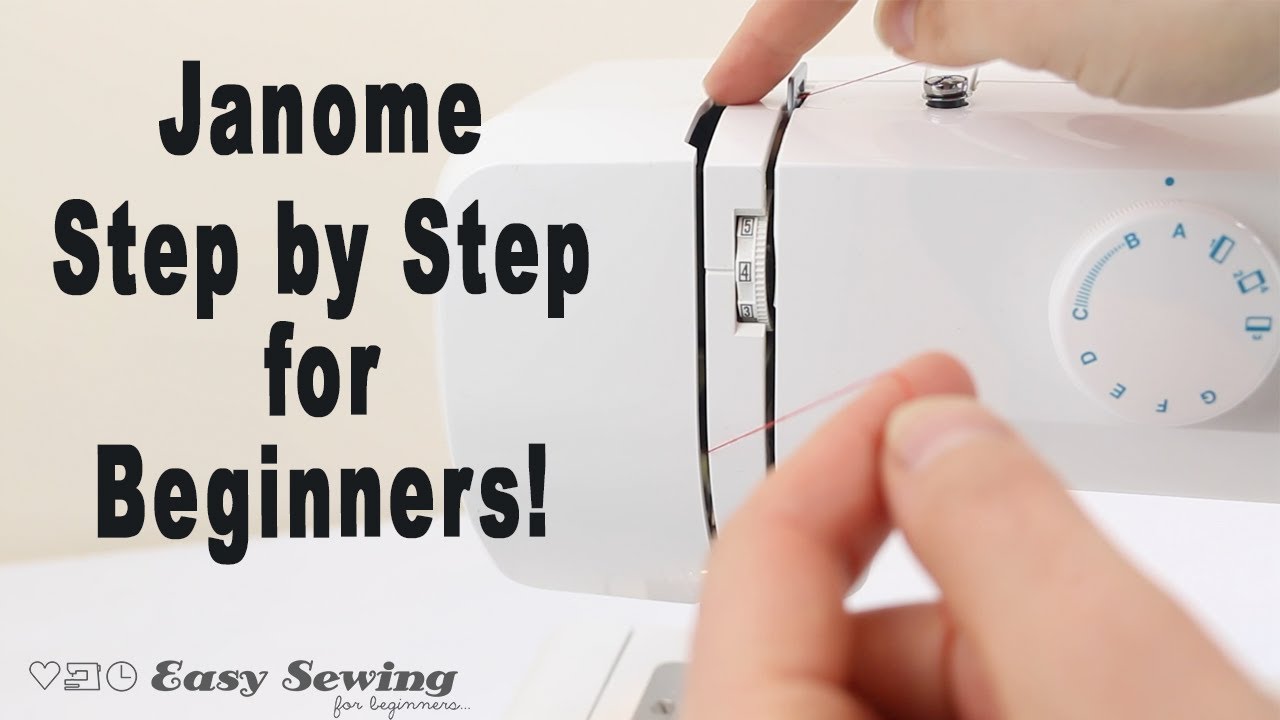
Image Source: i.ytimg.com
Getting Started: What You Need
Before you begin the Janome thread setup, gather these essentials:
- Your Janome Sewing Machine: Make sure it’s plugged in and turned on.
- Sewing Machine Needles: Ensure the needle is the correct type and size for your fabric.
- Thread: Choose good quality thread that matches your fabric.
- Bobbin: Make sure it’s the correct type for your Janome model.
- Fabric: Have a scrap piece ready for testing your stitches.
- Your Janome Sewing Machine Manual: This is your best friend! Keep it handy for specific model details.
Preparing Your Machine
Proper preparation makes threading much smoother.
1. Raise the Presser Foot
This is a crucial first step. Always ensure the Janome presser foot is in its highest position. This opens up the tension discs, allowing the thread to pass through smoothly. You’ll usually find a lever on the side of the machine that lifts and lowers the presser foot.
2. Turn the Handwheel Towards You
The handwheel controls the needle’s movement. Always turn it towards you (counter-clockwise) when threading. This ensures the needle is in its highest position, which is necessary for correct threading.
The Upper Threading Process
Threading the upper thread is often the trickiest part. Let’s break it down step-by-step.
Step 1: Place the Thread Spool
- Place your spool of thread onto the spool pin. Most Janome machines have a horizontal or vertical spool pin. If it’s horizontal, the spool might sit on top. If it’s vertical, the spool will sit on a pin extending upwards.
- If your spool has a small hole on the side, place it with that hole facing upwards.
Step 2: Follow the Thread Guides
Your Janome sewing machine has a series of Janome thread guides. These are strategically placed to guide the thread correctly through the machine. Look for numbered diagrams on your machine – they are your roadmap!
- Thread Guide (1): Take the thread from the spool and guide it down into the first thread guide.
- Take-up Lever (2): Bring the thread up and over, then down through the eye of the take-up lever. This is a vital part of the Janome thread setup. Make sure the thread goes through the slot in the lever.
- Second Thread Guide (3): Guide the thread downwards again, passing it through the next available thread guide.
- Top Tension Assembly (4): Now, bring the thread down through the tension discs. This is where the Janome upper thread tension is controlled. Gently pull the thread through the discs. You should feel a slight resistance.
- Lower Thread Guide (5): Continue guiding the thread downwards. You’ll find another thread guide near the needle area.
- Needle Clamp Screw (6): Loosen the needle clamp screw and remove the old needle if necessary. Insert a new needle, ensuring the flat side faces away from you (or as indicated in your manual). Tighten the needle clamp screw securely.
Step 3: Thread the Needle
This is where Janome needle threading comes into play.
- Manual Threading: Pass the thread through the eye of the needle from front to back. You might need to snip the end of the thread to create a clean edge for easier passage.
- Automatic Needle Threader (if applicable): Many Janome models feature an automatic needle threader.
- Bring the thread to the front of the needle.
- Engage the needle threader lever according to your machine’s manual.
- A small hook will pass through the needle eye and catch the thread.
- Pull the thread gently to bring a small loop through the eye.
- Pull the loop completely through.
Step 4: Bring Up the Bobbin Thread
- Hold the upper thread tail loosely with your left hand.
- Use your right hand to turn the handwheel towards you, bringing the needle down and then back up. As the needle comes up, it will catch the bobbin thread and pull a loop of it up through the needle plate.
- Reach down and grab this loop of bobbin thread. Pull it completely through so you have both the upper thread and the bobbin thread tails extending from the needle plate.
- Place both thread tails towards the back of the machine, under the Janome presser foot.
The Bobbin Winding and Insertion Process
Now, let’s tackle the bobbin. This is where Janome bobbin winding is essential.
Step 1: Wind the Bobbin
- Place the Bobbin: Put a bobbin onto the bobbin winder spindle. You might need to push it onto the spindle so it clicks or locks into place.
- Thread the Bobbin: Find the bobbin winder thread guide. Guide the thread from your spool through the designated bobbin winder thread guide. Then, pass the thread through one of the small holes in the bobbin.
- Secure the Thread: Hold the tail of the thread against the bobbin.
- Engage the Bobbin Winder: Push the bobbin winder spindle to the right (or as indicated in your manual) to engage the bobbin winding mechanism.
- Start Winding: You’ll likely need to snip the thread coming from the spool, leaving only the tail from the bobbin exposed. This prevents the thread from getting tangled. Lift the Janome presser foot and hold the thread tail. Gently press the foot pedal to start winding.
- Trim the Tail: Once the bobbin starts winding evenly, trim the thread tail you were holding.
- Fill the Bobbin: Let the bobbin wind until it’s full. Most Janome machines have an automatic stopper that disengages the winder when the bobbin is full.
- Disengage and Cut: Push the bobbin winder spindle back to its original position. Cut the thread from the spool. Remove the wound bobbin.
- Check the Wind: A properly wound bobbin should be smooth and even, with no loose loops or messy spots. If it’s uneven, it might be due to inconsistent tension or winding speed.
Step 2: Insert the Bobbin into the Bobbin Case
- Locate the Bobbin Case: Open the bobbin cover or throat plate area. You’ll see a bobbin case or a place to drop in the bobbin.
- Place the Bobbin: Place the wound bobbin into the bobbin case or holder. Ensure the thread is unwinding in the correct direction. For most Janome machines, the thread should unwind counter-clockwise from the bobbin. Your Janome manual will specify the exact direction.
- Thread the Bobbin Case: Pull the thread from the bobbin through the small slot in the bobbin case. This provides the correct tension for the Janome lower thread. Make sure the thread is seated in the tension spring.
- Draw Up the Bobbin Thread: Gently pull the thread to ensure it’s moving smoothly.
- Replace the Cover: Replace the bobbin cover or throat plate.
Adjusting Tension for Perfect Stitches
The Janome upper thread tension and the Janome lower thread tension work together to create a balanced stitch.
Understanding Stitch Balance
A balanced stitch looks the same on both sides of the fabric.
- Too Much Upper Tension: Threads will appear on the bobbin side of the fabric.
- Too Much Lower Tension (or too little upper tension): Threads will appear on the top side of the fabric.
Adjusting the Janome Upper Thread Tension
The upper tension is usually adjusted with a dial on the front of the machine, often numbered from 0 to 9.
- Start with the middle setting: Most machines have a recommended starting point, usually around 4 or 5.
- Test your stitch: Sew a few stitches on a scrap piece of fabric.
- Adjust as needed:
- If you see thread loops on the underside of your fabric, increase the upper tension (turn the dial to a higher number).
- If you see thread loops on the top side of your fabric, decrease the upper tension (turn the dial to a lower number).
- Make small adjustments: Turn the dial by just one or two numbers at a time. Re-test after each adjustment.
Janome Lower Thread Tension
The tension on the bobbin is pre-set in the bobbin case. However, some Janome models allow for adjustment.
- Bobbin Case Screw: There is a small screw on the bobbin case. If you need to adjust the lower tension, you might have to loosen or tighten this screw slightly.
- Caution: Be very careful when adjusting the bobbin case screw. A tiny turn can make a big difference. Usually, you’ll only need to adjust the upper tension. Consult your Janome sewing machine manual for specific instructions on adjusting the bobbin case tension.
Selecting Your Stitch
The Janome stitch selector is your gateway to different sewing possibilities.
- Locate the Stitch Selector: Most Janome machines have a dial or buttons to choose stitches.
- Straight Stitch: For most sewing, you’ll use a straight stitch. Ensure the stitch selector is set to the straight stitch symbol.
- Stitch Length: Adjust the stitch length dial as needed for your fabric and project. Shorter stitches are good for fine fabrics, while longer stitches are suitable for thicker materials or gathering.
- Other Stitches: Explore decorative stitches, zigzag stitches, and buttonholes as your skills grow. Refer to your manual to learn what each stitch symbol represents.
The Janome Thread Cutter
Many Janome machines come equipped with a handy Janome thread cutter. This is usually a small blade located on the side of the machine or near the needle arm.
- How to Use: After you finish sewing and lift the presser foot, you can slide the thread end into the cutter to snip it cleanly. This saves you from reaching for scissors every time.
Troubleshooting Common Threading Issues
Even with a guide, you might encounter a snag. Here are some common problems and how to fix them.
Problem: Thread is Breaking
- Cause: Dull or bent needle, incorrect needle type, thread catching on a rough edge, too much tension, thread tangled in the bobbin area.
- Solution:
- Change the needle.
- Ensure you’re using the correct needle for your fabric.
- Check all Janome thread guides for snags or rough spots.
- Adjust the Janome upper thread tension.
- Re-thread both the upper thread and the Janome lower thread.
- Ensure the bobbin is wound correctly and inserted properly.
Problem: Skipped Stitches
- Cause: Bent or dull needle, incorrect needle type, needle inserted incorrectly, thread tension issues, needle not fully inserted into the clamp.
- Solution:
- Change the needle.
- Ensure the needle is the correct type and size.
- Double-check that the needle is inserted correctly with the flat side facing the right way.
- Adjust both upper and lower thread tensions.
- Make sure the needle is pushed all the way up into the needle clamp and the screw is tightened.
Problem: Thread Bunching Under the Fabric (Bird’s Nest)
- Cause: This is the classic sign of incorrect upper thread tension or improper threading.
- Solution:
- Re-thread the upper thread, ensuring you follow all Janome thread guides and the thread is properly seated in the tension discs and the take-up lever.
- Make sure the Janome presser foot was down when you started sewing.
- Check the Janome lower thread for proper insertion and tension.
- Adjust the Janome upper thread tension to a higher setting.
Problem: Bobbin Thread Won’t Come Up
- Cause: Upper thread not threaded correctly, bobbin inserted incorrectly, or the Janome lower thread is not threaded through the bobbin case slot.
- Solution:
- Completely re-thread the upper thread.
- Ensure the bobbin is inserted correctly with the thread unwinding in the specified direction.
- Verify the thread is pulled through the bobbin case slot.
Frequently Asked Questions (FAQ)
Q1: How often should I change my sewing machine needle?
It’s generally recommended to change your needle after every project or every 6-8 hours of sewing time. A dull needle can cause skipped stitches, thread breakage, and damage to your fabric.
Q2: What is the purpose of the Janome presser foot?
The Janome presser foot holds the fabric firmly against the feed dogs, ensuring the fabric moves smoothly and evenly through the machine as you sew. Always ensure it’s down before you start stitching.
Q3: Can I use any brand of thread with my Janome?
While you can use most good quality thread brands, 100% polyester thread is generally recommended for most sewing projects as it’s strong and durable. Avoid very cheap or old thread, as it can be brittle and prone to breaking.
Q4: My Janome stitch selector isn’t working properly, what should I do?
If your Janome stitch selector is not functioning as it should, first try turning the machine off and on again. Ensure you are not trying to select a stitch that is not available on your model. If the problem persists, it might be a mechanical issue, and you should consult your Janome sewing machine manual or contact customer support.
Q5: What are the numbered guides on my Janome for?
The numbers on your Janome sewing machine typically correspond to the sequence for threading the upper thread. They are there to guide you through the correct path the thread needs to follow for proper Janome thread setup.
By following these detailed steps, you’ll master the art of threading your Janome sewing machine. Remember to be patient, refer to your Janome sewing machine manual for model-specific details, and practice! Happy sewing!