
What is my Singer sewing machine’s age? Your Singer sewing machine’s age can be determined by looking up its serial number in a Singer serial number lookup database or chart. Can I find my Singer sewing machine’s date of manufacture? Yes, by using your machine’s unique serial number and a Singer sewing machine serial number decoder.
Singer sewing machines are more than just tools; they are pieces of history, weaving tales of creativity and industry through generations. Many people own an antique Singer sewing machine, inheriting it or finding it at a flea market. These machines often hold a special place in our hearts, not just for their beauty and craftsmanship, but for the memories they represent. A common question that arises is, “How old is my Singer sewing machine?” The answer lies within its serial number. This guide will help you decipher your Singer’s age and unlock the story it tells.
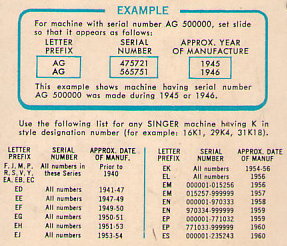
Image Source: ismacs.net
Deciphering Your Singer Sewing Machine’s Serial Number
Every Singer sewing machine ever made has a unique serial number stamped onto it. This number is the key to its identity, revealing not only its age but often its model and even the factory where it was built. Finding this number is the first crucial step in your Singer sewing machine identification journey.
Locating the Serial Number
The location of the serial number can vary depending on the model of your Singer sewing machine. However, there are several common places to check:
- Underneath the machine: Many machines have the serial number plate located on the base, often beneath the feed dogs or on a small metal plaque.
- On the back of the machine: Some models have the serial number printed or etched on the rear housing.
- On the arm of the machine: A common spot is on the side of the machine’s arm, often near the handwheel.
- On a metal plate: Older machines might have a separate metal plate riveted or screwed onto the machine’s frame.
- Inside the bobbin area: Occasionally, the serial number can be found in the bobbin case area.
Take your time to carefully inspect all parts of your Singer sewing machine. You might need a flashlight to see it clearly, especially on older, well-used machines.
What the Serial Number Tells You
A Singer serial number is not just a random string of digits. It’s a carefully constructed code that Singer used to track its production. This code can reveal:
- Year of Manufacture: The most important piece of information for many owners.
- Month of Manufacture: Some serial number systems also indicate the month.
- Factory of Origin: In some cases, it can even pinpoint where the machine was assembled.
- Model Identification: While not always directly in the serial number itself, it’s often linked to specific model runs.
The Importance of the Singer Serial Number Lookup
Once you’ve found your serial number, the next step is to use it for a Singer serial number lookup. This process connects the number to a specific production date and, often, to the machine’s model. There are several reliable ways to perform this lookup.
Finding Your Singer Machine’s Date of Manufacture
The quest to find your Singer machine’s date of manufacture often begins with a simple search. Singer’s extensive history means there are resources available to help you pinpoint when your machine was created.
Online Singer Serial Number Databases
The most accessible way to find the date of manufacture Singer machine is through online databases. These databases are compiled from historical Singer records and are often maintained by sewing machine enthusiasts and historical societies.
- Dedicated Singer Serial Number Websites: Several websites specialize in Singer serial number lookup. These sites usually have a search function where you can enter your serial number and receive an estimated date of manufacture.
- Sewing Machine Forums and Communities: Many online sewing communities have members who are experts in vintage machines. Posting your serial number and machine details can often yield prompt and accurate information.
Singer Sewing Machine Identification Guides
Beyond just the serial number, identifying the exact model of your Singer sewing machine can be a rewarding part of the process.
- Model Number Lookup: Some machines have a model number clearly visible on the machine’s casing or on a plate. Using a Singer model number lookup alongside your serial number can provide a more complete picture.
- Visual Identification: Comparing your machine to images in online Singer sewing machine identification guides can help you identify its model if a model number isn’t readily apparent.
The Singer Sewing Machine Serial Number Decoder
Think of a Singer sewing machine serial number decoder as your personal translator for Singer’s production codes. These decoders are the tools that interpret the alphanumeric sequence you found on your machine.
- How Decoders Work: A Singer sewing machine serial number decoder typically uses algorithms or lookup tables based on Singer’s historical production data. You input your serial number, and it outputs the estimated year or date range of its production.
- Accuracy and Limitations: While generally very accurate, it’s important to note that some older serial number systems might have slight variations. In some rare cases, a serial number might fall into a gray area or be a replacement part.
Exploring Different Eras of Singer Sewing Machines
Singer has been producing sewing machines for over 150 years, and their serial number systems have evolved over time. Fathoming these changes helps in accurate dating.
Early Singer Machines (Mid-19th Century to Early 20th Century)
These are the true antique Singer sewing machine treasures. Their serial numbers often followed a more linear progression.
- The “Sew and Sew” Era: Machines from this period are often referred to by their distinctive names or by their primary features.
- Serial Number Patterns: For very old machines, serial numbers might be shorter and less complex. Finding a Singer sewing machine date for these can sometimes be more challenging but is still achievable through specialized historical resources.
The Golden Age of Singer (Early 20th Century to Mid-20th Century)
This era saw Singer dominate the sewing machine market. Many of the most iconic and beloved Singer models were produced during this time.
- The Rise of the Electric Machine: As electricity became more common, Singer introduced many electric models, further increasing production volume.
- Systematic Serial Numbers: Singer implemented more systematic serial number tracking during this period, making Singer serial number lookup generally straightforward.
Mid to Late 20th Century Singers
Singer continued to innovate and produce a wide range of machines, from basic mechanical models to more complex electronic ones.
- Diversification of Models: This period saw a vast array of Singer models catering to different needs and budgets.
- Modern Serial Number Formats: Serial numbers from this era might be longer and sometimes include letters, reflecting more complex production processes.
Popular Vintage Singer Sewing Machine Models and Their Serial Numbers
Many people seeking to date their machines are often looking for information on specific vintage Singer sewing machine models. Knowing what to look for can greatly assist your Singer sewing machine identification.
Singer Featherweight Models
The Singer Featherweight 221 and 222 are perhaps the most sought-after vintage Singer sewing machines. Their serial numbers are a direct key to their age.
- Featherweight 221: Typically, Featherweight 221 serial numbers begin with “AP” or “EG”.
- AP serial numbers range from AP000001 to AP999999, produced between 1933 and 1935.
- EG serial numbers range from EG000001 to EG999999, produced between 1936 and 1938.
- Later Featherweights (post-WWII) used different prefix letters.
- Featherweight 222K: These machines, often featuring a free-arm, have serial numbers typically starting with “EY” or “GC”.
- EY serial numbers were produced in 1951.
- GC serial numbers were produced between 1953 and 1954.
Singer Model 15
The Singer Model 15 is one of the most produced sewing machines in history, with variations manufactured for decades.
- Serial Number Ranges: For Model 15, serial numbers are crucial for dating. For example, numbers starting with “A” or “B” might indicate early production, while later numbers would fall into different series. A Singer serial number lookup is essential here.
Singer Model 66
Another iconic machine, the Singer Model 66, is known for its beautiful decals and robust performance.
- Decal Patterns: Model 66 machines are often identified by their decorative decals, such as the “Red Eye” or “Wreath” patterns, which can help narrow down the era.
- Serial Number Correlation: The serial number will provide the precise date of manufacture.
Singer Model 99
The Singer Model 99 is essentially a smaller, more portable version of the Model 66.
- Portability: Its compact size made it a popular choice for many households.
- Dating Model 99: Similar to other models, the serial number is the primary tool for dating.
Other Notable Vintage Singer Models
- Singer Model 27 and 127: These machines are known for their Sphinx decals and are considered antiques.
- Singer Model 101: A less common but interesting model, often identified by its unique design and serial number.
- Singer Model 201: Revered for its smooth operation and often considered one of Singer’s best.
Assessing the Old Singer Sewing Machine Value
Once you know how old your Singer sewing machine is, you might wonder about its old Singer sewing machine value. Several factors contribute to this.
Factors Influencing Value
- Condition: Is the machine in working order? Are there any missing parts? Is the paint and chrome in good condition?
- Model Rarity: Some Singer models are much rarer than others, increasing their value.
- Completeness: Does it come with its original accessories, manual, and carrying case?
- Aesthetics: The presence of original decals and the overall appearance can add to its appeal.
- Working Order: A fully functional machine is generally more valuable than one that needs repair.
- Demand: The current market demand for specific vintage Singer sewing machines also plays a role.
Where to Find Value Information
- Online Auction Sites: Browse completed listings on sites like eBay to see what similar machines have sold for. This gives a good indication of current market value.
- Antique Dealers and Appraisers: For a more professional assessment, consider consulting with antique dealers specializing in sewing machines or professional appraisers.
- Vintage Sewing Machine Forums: Experienced collectors in online forums can often provide insights into the value of specific models.
The Intrinsic Value of Your Singer
It’s important to remember that the sentimental value of an old Singer sewing machine often far outweighs its monetary value. If your machine was passed down through your family, its true worth lies in the connection to your heritage and the memories it evokes.
Tips for Using and Maintaining Your Vintage Singer
Knowing your Singer’s age and model is just the beginning. Proper care ensures your vintage Singer sewing machine continues to perform beautifully.
Cleaning Your Singer Machine
- Gentle Cleaning: Use a soft cloth to wipe down the exterior. For stubborn grime, a mild soap and water solution can be used sparingly, ensuring no moisture gets into the internal mechanisms.
- Rust Removal: For minor rust spots, fine steel wool (0000 grade) can be used gently, followed by a polish. For more significant rust, specialized rust removers for metal might be needed.
- Lubrication: Vintage machines require regular lubrication. Use a high-quality sewing machine oil specifically designed for mechanical machines. Apply a drop to all moving parts as indicated in your machine’s manual (if available) or common lubrication points for similar models.
Sewing with Your Vintage Singer
- Proper Thread and Needles: Use good quality cotton or polyester thread. Ensure you are using the correct needle type and size for the fabric you are sewing. Vintage Singers typically use the older style “Class 15” or “Class 66” needles.
- Tension Adjustment: Understanding the bobbin tension and upper thread tension is crucial for good stitch quality. Refer to Singer sewing machine identification guides or online resources for specific model tension settings.
- Maintenance Schedule: Regularly clean lint and dust from the bobbin area and under the needle plate. Oil the machine as needed, especially after extended periods of disuse.
Frequently Asked Questions (FAQ)
Q1: My Singer serial number has letters. What does that mean?
A1: Letters in Singer serial numbers often indicate the factory of origin or a specific production period or series. A Singer serial number decoder or lookup chart will interpret these letters as part of the dating process.
Q2: Can I find a Singer model number lookup if my machine doesn’t have one visible?
A2: Sometimes, the model number isn’t clearly marked. In such cases, detailed Singer sewing machine identification guides that rely on the machine’s appearance, features, and serial number can help you find your Singer sewing machine date and model.
Q3: How do I know if my Singer is truly an antique Singer sewing machine?
A3: Generally, machines manufactured before 1920 are considered antique. However, the term “vintage” is often used more broadly to include machines from the mid-20th century as well. Your Singer sewing machine age determined by the serial number will confirm its status.
Q4: Are old Singer sewing machines worth anything?
A4: Yes, many old Singer sewing machines have value, both monetary and sentimental. The old Singer sewing machine value depends on the model, rarity, condition, and completeness. Some models, like the Featherweight 221, are highly collectible.
Q5: Where can I get my vintage Singer sewing machine repaired?
A5: Look for local sewing machine repair shops that specialize in vintage or antique machines. Online communities and forums can also recommend reputable repair services.
Q6: What is a Singer sewing machine serial number decoder?
A6: A Singer sewing machine serial number decoder is a tool, usually an online database or chart, that translates a Singer sewing machine’s serial number into its approximate date of manufacture and sometimes its model or factory.
Q7: I found a Singer machine, but it’s missing parts. Can I still find its date?
A7: Yes, the serial number is usually independent of missing parts. You can still perform a Singer serial number lookup to find the date of manufacture Singer machine. Replacement parts may be available through specialized vintage sewing machine suppliers.
Q8: How do I find Singer sewing machine date for very old machines where the serial number is hard to read?
A8: For very old machines with worn serial numbers, you may need to consult historical Singer records or experts in antique sewing machines. Sometimes, the style of the machine, its decals, and construction methods can help identify the era, assisting in a Singer serial number lookup.
Q9: What does a vintage Singer serial number tell me besides the age?
A9: A vintage Singer serial number can sometimes indicate the factory where the machine was built and the specific production period. This level of detail aids in complete Singer sewing machine identification.
Q10: Is there a definitive list of all Singer serial numbers and their dates?
A10: While there isn’t one single, universally exhaustive list that covers every single machine ever made, numerous comprehensive Singer serial number lookup resources exist online and in specialized books. These are generally very accurate for dating Singer machines.
In conclusion, your Singer sewing machine’s serial number is a fascinating gateway to its past. By using available Singer serial number lookup tools and Singer sewing machine identification guides, you can accurately determine your machine’s age and appreciate the history it carries. Whether you’re a seasoned collector of antique Singer sewing machine models or a new owner discovering the charm of a vintage Singer serial number, this knowledge enhances the connection to these remarkable machines. Happy sewing!