
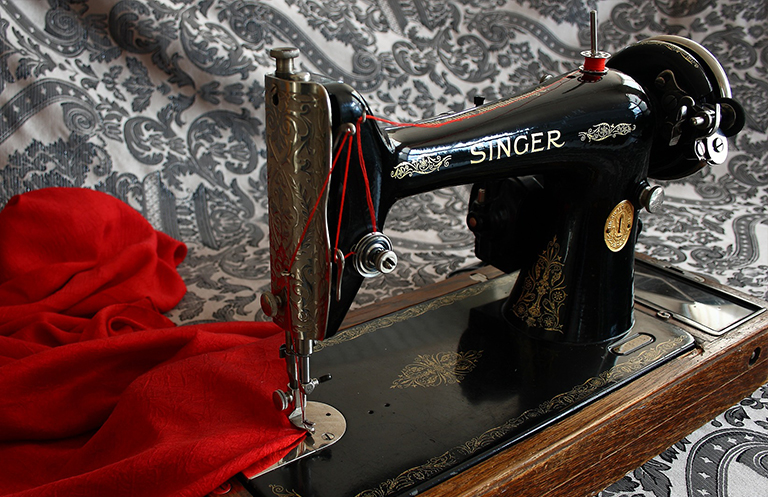
Image Source: www.contrado.co.uk
How To Know Exactly How Old Is My Singer Sewing Machine
Wondering how old your Singer sewing machine is? You can often find out the exact age or a close date. The best way to know is by finding its serial number. Then you can use a Singer serial number lookup to find the manufacturing date. This helps with dating Singer sewing machines easily.
Grasping the Singer Serial Number
Singer sewing machines have a special number. This is the serial number. It is like a birth record for the machine. Singer used these numbers for a long, long time. The way they used the numbers changed over the years.
For machines made before 1900, the serial number is just numbers. It looks like this: 123456.
For machines made after 1900, the serial number has letters and numbers. It looks like this: AB123456.
Knowing if your number has letters or not is the first step. This tells you if your machine is likely antique or vintage. Antique means 100 years old or more. Vintage usually means 20 to 99 years old. Finding this number helps with antique Singer machine age checks and vintage Singer identification.
Where to Find Singer Serial Number
The serial number is on the machine itself. Singer put it in different spots over the years. You need to look closely.
Common Spots for the Number
Look at these places on your machine:
* On the front of the bed (the flat part the fabric sits on). It is often stamped right into the metal.
* On the back of the bed. Sometimes it is here instead.
* On a small plate or badge attached to the machine. This is less common for dating but can happen on newer models.
* Under the bed. Tip the machine back carefully. Look underneath.
Tips for Finding It
- Use a light. Sometimes the number is faint. A flashlight helps it show up.
- Clean the area gently. Dust and grime can hide the number. Use a soft brush or cloth.
- Look for stamped numbers. They are pushed into the metal.
- Look for numbers on a plate. If it’s a plate, it might be riveted on.
Write the number down exactly. Check if it has letters or just numbers. Keep it safe. You will use this number for the next step. This is how you start your Singer machine history lookup.
Deciphering Singer Serial Numbers
Once you have the serial number, you need to use it. Singer has kept good records. They have charts that link serial numbers to when the machine was made. This is the core of dating Singer sewing machines.
Using a Singer Serial Number Chart
Singer made millions of machines. They gave blocks of serial numbers to their factories. The charts show which block of numbers was made at which factory and during which time.
You can find these charts online. Many websites dedicated to Singer machines have them. The official Singer company website used to have one, but it might be harder to find now. Collector sites and history sites are great places to look. Searching for “Singer serial number chart” or “Singer manufacturing dates” will help you find them.
How the Charts Work
The charts list serial number ranges.
* For numbers without letters (Pre-1900): Find where your number fits in the ranges. The chart will give you a year or a range of years for those numbers.
* For numbers with letters (Post-1900): The letters tell you which factory made the machine. The numbers after the letters tell you the place in that factory’s sequence.
* Common factory codes include:
* S: Elizabethport, NJ, USA
* F: Clydebank, Scotland (Kilbowie factory)
* C: Bridgeport, CT, USA
* E: Wittenberge, Germany
* V: St. Jean, Quebec, Canada
* And many others depending on the time period.
Find your letter code first. Then find your number in the list for that letter code. The chart will show the date or date range when that block of serial numbers was assigned to that factory.
Example Chart Snippet (Simplified)
| Serial Number Prefix | From Number | To Number | Factory | Date Range |
|---|---|---|---|---|
| (No Prefix) | 1 | 10,000 | Various (Early) | 1851 – 1859 |
| (No Prefix) | 100,001 | 150,000 | New York/NJ | Around 1866 |
| A | 1 | 50,000 | Elizabethport, NJ | Jan-Feb 1900 |
| A | 50,001 | 150,000 | Elizabethport, NJ | Feb-Mar 1900 |
| F | 1 | 100,000 | Kilbowie, Scotland | Jan-Mar 1900 |
| F | 100,001 | 200,000 | Kilbowie, Scotland | Apr-Jun 1900 |
| … many more … |
Note: This is just a small example. Real charts are much longer and more detailed.
Using this Singer serial number lookup is the most reliable way to get the machine’s birth year. This is key for Singer manufacturing dates.
Interpreting the Results
You used the chart and found a date or date range. What does this tell you?
* If you get an exact year, that is likely when the machine was made.
* If you get a range (like “Jan-Mar 1905”), your machine was made sometime in those months.
* If you get a year range (like “1920s”), the chart might not be that specific, or the records from that time are less exact.
Even a range tells you a lot. It tells you the machine’s age bracket. You can now say if it’s from the late 1800s, the roaring twenties, the post-war era, and so on. This helps you figure out its antique Singer machine age or vintage Singer identification.
Fathoming the Singer Model
Knowing the model of your machine can also help. Different models were made during different times. However, many models were made for many years. So, the model is less precise for dating than the serial number. But it can give you clues and help you find the serial number charts specific to types of machines if needed. It is part of a full Singer model identification guide.
How to Identify Singer Model
Look at the machine closely.
* Is there a model name or number on it? Some common models are “Singer 66,” “Singer 99,” “Singer 201,” “Singer Featherweight 221/222.”
* Look at the shape and features. Singer machines have unique looks for different models. Does it have a bentwood case? A certain kind of decoration?
* Look at the bobbin winder. Does it stick up or is it flat?
* Look at the presser foot and needle area. Does it look like other Singer models you see pictures of online?
Resources for Model ID
- Search online for “how to identify Singer model”.
- Look at pictures of Singer machines online. Compare yours to the photos.
- Websites dedicated to vintage and antique sewing machines often have guides with pictures of different models.
- Look at the manual if you have one. The model name is usually in the manual.
Once you think you know the model, you can search for “Singer [Model Number] history”. This might tell you when that model was first made and when production stopped. This helps narrow down the possibilities for its age, especially when combined with the serial number lookup. This is useful for vintage Singer identification.
Piecing Together Singer History
Finding the age of your machine connects you to history. Singer was a very important company. They made sewing machines that changed the world.
The Importance of Serial Numbers
Singer started using serial numbers in 1851. Isaac Singer got his first patent that year. Early numbers were simple. As they made more machines, the numbers got higher. They added letters when they started making machines in many different factories around the world after 1900. This system of letters and numbers helped them track production from their large global network of factories. The serial number is the most direct link to the machine’s creation date and factory location. This is why Singer serial number lookup is so powerful.
Factory Locations and Dates
Knowing the factory from the letter code (post-1900 numbers) is cool.
* Elizabethport, New Jersey: A major US factory. Machines from here often have ‘S’ (later ‘E’ in some contexts, confusingly) or no letter before 1900.
* Kilbowie, Scotland: This was Singer’s huge factory in Clydebank. Many machines found in the UK and elsewhere came from here. They often have ‘F’ or ‘C’ prefixes.
* Other Locations: Singer had factories in Germany, Canada, Russia, and many other places over the years. The letter codes reflect these locations.
The factory location can sometimes add a little context. For example, machines from the Kilbowie factory with certain prefixes might have been made for specific markets or during certain historical periods. This information is found in detailed Singer serial number chart data.
Checking for Antique Status
Is your machine an antique? An antique is usually defined as being 100 years old or older.
How to Tell if It’s Antique
- Find the serial number. This is the key step.
- Use the serial number chart. Find the year or date range.
- Check the year. Is the manufacturing date 100 years ago or more from today’s date?
If the date is 100+ years ago, congrats! You likely have an antique Singer. If it’s less than 100 years but more than about 20 years, it’s vintage. If it’s newer than 20 years, it’s just a modern used machine. This is the simple rule for antique Singer machine age.
Features of Antique Singers
Antique Singers often have certain looks:
* Heavy cast iron bodies.
* Fancy gold decorations or decals. Patterns like “Gingerbread,” “Sphinx,” “Red Eye,” “Memphis.”
* Often sit in wooden cabinets or treadle stands (foot powered).
* May have fewer stitch options than newer machines. They usually sew a straight stitch very well.
These features can hint at age, but the serial number confirms it. Visual clues help with vintage Singer identification, but the number gives the date.
Exploring Singer Machine History Lookup Resources
Many places online help you find your machine’s age.
Top Online Resources
- Singer Sewing Machine Company Website: Sometimes they have an archive section. Check their support or history pages. Availability varies.
- Singer Machines Serial Number Lookup Sites: Many fan or collector sites host the serial number charts. Search specifically for “Singer serial number lookup” or “Singer serial number chart”.
- ISMACS (International Sewing Machine Collectors’ Society): This is a great resource. Their website often has detailed serial number lists and model information. They are a trusted source for dating Singer sewing machines.
- Museum Websites: Some museums with sewing machine collections might have information or links.
- Online Forums and Groups: Communities of sewing machine lovers can help. Post pictures and the serial number. Someone might know the exact details or point you to the right chart.
What to Look For
When using these resources:
* Make sure the chart looks official or is from a reputable collector’s site.
* Double-check the serial number you wrote down. One wrong digit or letter changes the date.
* Understand that some very old records might have gaps or be less precise.
Using these resources is part of a full Singer machine history lookup. It helps you learn about the specific time your machine was made.
The Difference: Vintage vs. Antique
People often mix up vintage and antique. It is simple.
* Antique: 100 years old or more. Based on the manufacturing date.
* Vintage: Generally means 20 years old up to 99 years old. It implies a certain style or era, but the age is the main point for dating.
Your serial number will tell you if your machine crosses the 100-year line. If it does, it’s antique. If it’s younger but still old, it’s vintage. Both can be valuable or interesting. Vintage Singer identification helps place machines in a time period, while the serial number confirms the exact antique Singer machine age.
Step-by-Step: Dating Your Singer
Let’s put it all together in simple steps.
- Find the Serial Number: Look carefully on the machine’s bed or under it. Write it down exactly. Note if it has letters. This is where to find Singer serial number.
- Use a Lookup Tool or Chart: Go online. Search for “Singer serial number lookup” or “Singer serial number chart”. Look for trusted websites like ISMACS or known collector sites.
- Enter the Number: Use the online tool or find your number in the chart. If there are letters, find the chart section for that letter.
- Read the Date: The result will give you a year or date range. This is the Singer manufacturing date.
- Check the Age: Calculate the age based on the date you found. Is it 100 years or older (antique)? Is it 20-99 years old (vintage)?
You can also try to identify the model as an extra step. Use a Singer model identification guide or compare pictures online. Search for “how to identify Singer model”. Knowing the model can sometimes add more detail about the features it originally had.
Following these steps gives you the most accurate information on your machine’s age. It is the standard process for dating Singer sewing machines.
Beyond the Date: More Machine History
The serial number lookup gives you the date. But there is more history you might find.
Factory History
Knowing the factory from the letter code (post-1900) can be interesting. You can research the history of that specific Singer factory. For example, the Kilbowie factory in Scotland was one of the largest factories in the world at its peak. Machines from there have a rich history.
Model Specifics
Once you know the model, you can learn about it. What were its best features? Was it popular? Was it made for home use or industry? Was it the first to have a certain technology? This kind of info comes from a Singer model identification guide and searching for the specific model’s history.
Condition and Value
The age (antique or vintage) affects value. Condition matters a lot too. Is it working? Does it have its parts? Is the paint good? Researching sold machines like yours online can give you an idea of value. Look at auctions or selling sites. Search for the model and mention if it’s antique or vintage based on the date you found.
All this information helps you understand the full story of your Singer machine. It’s not just a number; it’s a piece of history. This is what a detailed Singer machine history lookup is all about.
Why Knowing the Age Matters
Why bother finding out how old your Singer is?
- Historical Connection: You own a piece of history! Machines from certain eras tell a story about life, work, and technology at that time.
- Collecting: If you collect machines, knowing the exact age is key for value and historical accuracy.
- Repair and Parts: Knowing the model and age helps you find the right manual or parts for repair. Parts for a 1905 machine are different from a 1955 machine.
- Appreciation: Understanding its age helps you appreciate the craftsmanship and engineering from that era. How was this machine made without modern tools?
- Value: The age, especially antique status, plays a big role in a machine’s monetary value if you plan to sell or insure it.
Whether you just want to know for fun or for practical reasons, the serial number is your best friend. Using a Singer serial number lookup makes it possible.
Pitfalls and Tips
Finding the age is usually easy with the serial number. But sometimes there are small problems.
- Hard to Find Number: The number might be very faint or covered in paint or rust. Be patient and look closely with good light. Don’t use harsh chemicals that could damage the finish.
- Number Not Listed: Very rarely, a number might not be in the common charts. This is more likely with very early machines or machines made in less common factories. Try searching for specialized charts or contacting collector groups like ISMACS.
- Confusing Serial Number Systems: Singer’s system changed. Post-1900 letters and numbers can be confusing. Make sure you understand how the chart works for your type of number. Some letter codes were reused or changed meaning slightly over time.
- Online Chart Accuracy: Most charts on reputable sites are accurate. But always check against multiple sources if possible, especially for very old machines.
By being careful and using trusted resources, you can get an accurate date. Relying on the Singer serial number chart is the most reliable way.
Summary of Key Steps
- Locate the serial number on your machine.
- Note if it has letters before the numbers.
- Go online to a trusted source for a Singer serial number lookup.
- Find the Singer serial number chart that matches your serial number type (with or without letters).
- Match your number or letter/number combination in the chart.
- Read the corresponding Singer manufacturing date.
- This date tells you the machine’s age, whether it’s an antique Singer machine age or for vintage Singer identification.
- Optional: Use a Singer model identification guide to learn more about your specific model.
This simple process unlocks the history stored in your Singer machine’s serial number.
Frequently Asked Questions (FAQ)
Is the model number the same as the serial number?
No, they are different. The model number tells you the type or design of the machine (like a Model 66 or 201). The serial number is unique to your specific machine and tells you when and where it was made. You need the serial number for dating Singer sewing machines.
Where is the serial number usually located?
The most common spots are on the flat bed of the machine, either on the front, back, or sometimes underneath. It is often stamped into the metal. This is where to find Singer serial number.
Can I find the age without the serial number?
It is very hard to get an exact date without the serial number. You can estimate a range based on the model and its features (how to identify Singer model), but the serial number is the only way to find the precise Singer manufacturing dates.
Are Singer serial number charts available online?
Yes, many websites, including collector sites like ISMACS, provide Singer serial number chart data. Searching for “Singer serial number lookup” will help you find these resources.
My serial number has letters. What do the letters mean?
For machines made after 1900, the letters before the numbers indicate the factory where the machine was made. For example, ‘F’ often means Kilbowie, Scotland. Using a Singer serial number chart will explain the letter codes for different time periods.
What makes a Singer machine antique?
A Singer machine is considered antique if its manufacturing date is 100 years ago or more. You find this date using the serial number lookup process. This is the standard for determining antique Singer machine age.
Is my old Singer machine valuable?
Value depends on many things: age (antique vs. vintage), model rarity, condition (working or not), original parts, and even the decals. Finding the age is the first step in checking its value. Use your discovered age (e.g., antique 1905 Singer 66) when searching online to see what similar machines have sold for. A Singer machine history lookup can also give you context.
I found the serial number, but it’s not on any chart I can find. What now?
This is rare but can happen. Double-check the number. Try different Singer serial number lookup websites. If you still can’t find it, it might be from a less common factory or a very unusual batch. Contacting a sewing machine collector society like ISMACS or posting on a dedicated forum might help experienced collectors identify it.
Knowing your Singer machine’s age connects you to its past. Use its serial number to unlock its story.