
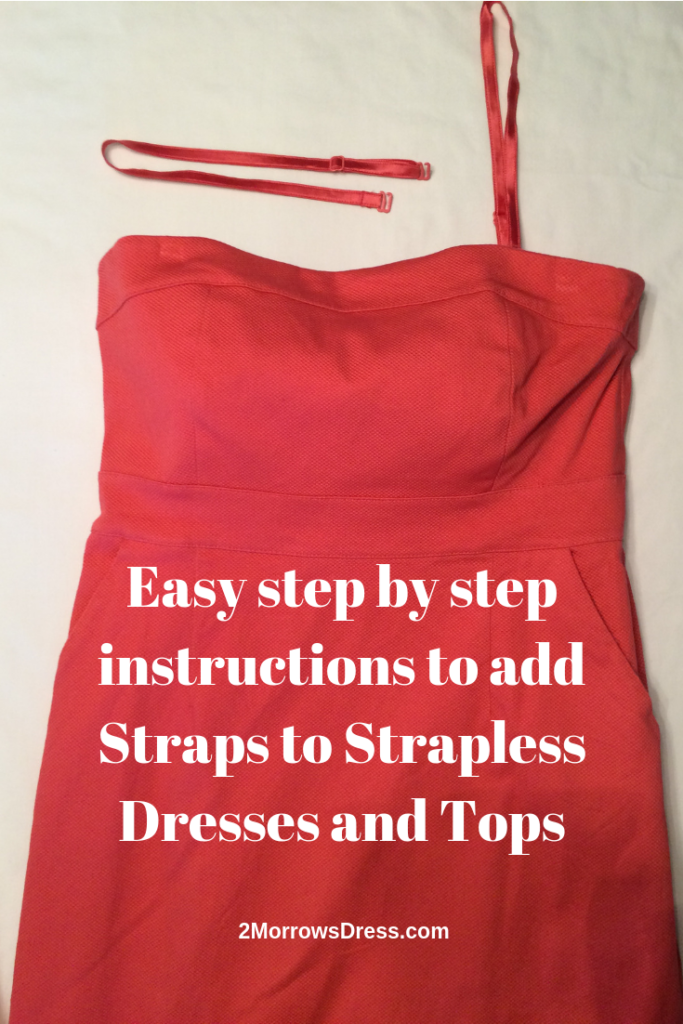
Image Source: 2morrowsdress.com
DIY: How To Add Straps To A Strapless Dress Without Sewing
Can you add straps to a strapless dress without sewing? Yes, absolutely! There are many easy methods to add straps to a strapless dress without using a needle and thread. These clever DIY strapless dress hack methods use common items like glues, tapes, and pins. They offer non-sew dress strap attachment solutions. These tricks are great for adding temporary dress straps. They work for comfort, style, or extra security for your dress.
Why You Might Want Straps
Strapless dresses look great. But they can feel tricky to wear. Many people feel more comfortable with straps. Straps can stop the dress from slipping down. They can also change the look of the dress. Maybe you love a dress but wish it had straps. Or maybe you need a little more support for dancing the night away. Adding straps without sewing is a fast fix. It lets you change your dress for a short time or for a special event. It is a simple way to do no stitch dress alterations.
Key Items You’ll Need
Gathering your items before you start helps. The items you need depend on the method you choose. Here are some common things that are helpful:
- Your strapless dress
- Material for straps (ribbon, elastic, fabric strips)
- Good quality fabric glue for clothing
- Strong fashion tape for dresses
- Safety pins on dresses (small or decorative ones)
- Scissors
- Measuring tape or ruler
- Fabric marker or tailor’s chalk (disappears easily)
- Wax paper or plastic sheeting (to protect surfaces from glue)
- Weights or clips (to hold fabric while glue dries)
- Patience!
Exploring No-Sew Methods
There are different ways to add straps without sewing. Each method has its own steps and works best for certain needs. Let’s look at the popular options.
Using Adhesives for Straps
Glues and tapes can attach straps firmly to fabric. This is a good option if you want the straps to look neat. It avoids holes that pins might make.
The Fabric Glue Approach
Fabric glue for clothing is made to stick fabric together. It stays flexible after it dries. It can be a strong way to add straps. Make sure you use a glue meant for fabric. Some glues are permanent, some wash out. Check the label.
What You Need:
- Fabric for straps (like ribbon, trim, or fabric cut into strips)
- Fabric glue for clothing
- Scissors
- Measuring tape
- Fabric marker
- Wax paper or plastic sheeting
- Weights or clips
How to Do It:
- Prepare the Dress: Lay your dress flat. Turn it inside out if you are hiding the strap ends. Decide where the straps will go on the front and back. Mark these spots lightly with a fabric marker. The front marks are usually near the top edge of the bust. The back marks are typically on the back edge. Make sure the spots match on both sides.
- Cut the Straps: Measure how long you need the straps to be. Hold the measuring tape from your front mark over your shoulder to your back mark. Add an extra inch or two to this length. This extra length is for gluing the strap ends to the dress. Cut two pieces of your strap material to this length.
- Prepare the Straps: If using ribbon, you might need to seal the ends. A little clear nail polish or fray check liquid works well. If using fabric strips, you might fold the edges in and glue them flat first. This makes a clean strap.
- Apply Glue (Back): Place a piece of wax paper inside the dress where you will glue the strap. This stops the glue from soaking through the dress front or sticking to the back. Put a line or thin layer of fabric glue for clothing on the marked spot on the back of the dress. The glued area should be about 1-2 inches long.
- Attach Strap (Back): Carefully place one end of a strap onto the glue on the back mark. Press it down gently. Make sure the strap end is fully in the glue. If the glue is meant to be permanent, be very careful with placement. It is hard to move once set.
- Secure and Let Dry (Back): Use weights or clips to hold the strap end in place. Follow the glue instructions for drying time. Let the back ends dry completely before attaching the front ends. This is very important! If you try to do both at once, the straps might shift.
- Apply Glue (Front): Once the back is dry and secure, turn the dress to the front. Lay wax paper inside. Apply glue to the front marked spot on the dress edge.
- Attach Strap (Front): Hold the dress up or put it on (carefully!) to see how the strap hangs. Place the free end of the strap onto the glue on the front mark. Make sure the strap is not twisted. Adjust the strap length slightly if needed to feel right. Remember, the extra length you cut is for gluing surface, not for making the strap longer when worn.
- Secure and Let Dry (Front): Press the strap end into the glue. Use weights or clips to hold it. Let the front ends dry completely. Check the glue’s instructions for full cure time. Some glues take 24 hours to be very strong.
- Final Check: Once everything is dry, gently test the straps. Make sure they feel secure. Trim any messy glue bits if needed (carefully!).
Pros of Fabric Glue:
- Can be very strong and lasting (depending on the glue).
- Looks neat and smooth.
- No holes in the fabric from pins.
- Good for lighter to medium weight fabrics and straps.
Cons of Fabric Glue:
- Takes time to dry.
- Can be messy to use.
- Placement is hard to change once glue is setting.
- May not work well on all fabric types (like very slick or heavily textured ones). Always test first!
- Might not hold very heavy or thick straps.
The Fashion Tape Approach
Fashion tape for dresses is a special double-sided tape used to hold fabric against skin or other fabric. It is usually temporary. It’s great for a quick fix or for just one event. This is a fast way for adding temporary dress straps.
What You Need:
- Fabric for straps
- Fashion tape for dresses (look for strong types meant for holding fabric together, not just tape for skin)
- Scissors
- Measuring tape
- Fabric marker (optional)
How to Do It:
- Prepare the Dress: Decide and mark where the straps will go, just like with glue.
- Cut the Straps: Measure the strap length. Add a bit extra (1-2 inches) for the tape area. Cut two straps. Prepare the strap ends if needed (like sealing ribbon ends).
- Apply Tape (Back): Cut pieces of fashion tape for dresses about 1-2 inches long. Peel one side of the tape. Stick the tape onto the marked spot on the back of the dress. Use multiple strips if needed to cover the area where the strap will attach.
- Attach Strap (Back): Peel the paper off the other side of the tape. Carefully press one end of a strap onto the tape. Press firmly for a few seconds.
- Apply Tape (Front): Peel the paper off the other side of the tape. Stick tape onto the front marked spot on the dress edge.
- Attach Strap (Front): Hold the dress up. Place the free end of the strap onto the tape on the front mark. Make sure the strap is not twisted. Press firmly.
- Check Security: Gently pull on the straps to see if they feel secure. Add more tape if needed.
Pros of Fashion Tape:
- Very fast and easy.
- No drying time needed.
- Clean to use.
- Temporary and easy to remove.
- Good for lightweight straps and dresses.
Cons of Fashion Tape:
- Not as strong as glue or pins.
- Might not hold up to heavy use or dancing.
- Could come unstuck if it gets wet or sweaty.
- Might not work well on very heavy or textured fabrics.
- Some tapes can leave a sticky mark or peel off finish on delicate fabrics. Always test first!
Using Pins for Straps
Pins offer a quick and flexible way to add straps. Using safety pins on dresses is a common trick. They are temporary and easy to remove.
The Safety Pin Method
Safety pins are a simple tool. You can use them to attach straps directly to the dress fabric. This method is very fast. It’s a great option for adding temporary dress straps.
What You Need:
- Fabric for straps
- Safety pins on dresses (choose small, strong pins. Matching the pin color to the dress or strap can help hide them. Or use decorative pins if you want them to show.)
- Scissors
- Measuring tape
How to Do It:
- Prepare the Dress: Decide and mark the strap spots.
- Cut the Straps: Measure strap length. Add a bit extra (about 1 inch) for folding under the ends to make them neat. Cut two straps.
- Prepare the Straps: Fold one end of a strap under by about half an inch. This hides the raw edge.
- Pin Strap (Back): Place the folded end of the strap onto the back marked spot on the dress edge. Use one or two small safety pins on dresses to attach the strap end firmly to the dress fabric. Push the pin through the strap end and the dress fabric. Make sure the pin is secure and the sharp point is safely closed. Try to place the pins on the inside of the dress edge if possible to hide them.
- Pin Strap (Front): Hold the dress up. Fold the other end of the strap under. Place this end onto the front marked spot on the dress edge. Make sure the strap is not twisted. Use one or two safety pins on dresses to attach this end firmly. Again, try to hide the pins if you can.
- Check Security: Gently pull on the straps. Make sure the pins feel secure and the fabric is not tearing. Add more pins if needed, but be careful not to add too many holes.
Pros of Using Safety Pins:
- Very fast and easy.
- No drying time.
- Uses common items.
- Very temporary and easy to remove.
- Can be used on most fabric types.
Cons of Using Safety Pins:
- Pins might show.
- Pins can snag delicate fabric.
- The holes from the pins will remain.
- May not feel as strong as glue or sewing.
- Need to be careful the pins stay closed.
Creating Detachable Straps
You can make straps that clip or tie onto the dress. This avoids adding anything permanent to the dress itself. It offers great flexibility.
Ribbon Straps No Sew
Ribbon is a good choice for ribbon straps no sew. It comes in many colors and styles. You can simply tie ribbon onto loops on the dress. If your dress doesn’t have loops, you can add them without sewing using glue or tape.
What You Need:
- Ribbon (choose a strong kind, satin or grosgrain works well)
- Small fabric loops (you can buy these, cut from old clothes, or make small loops from thin ribbon/cord)
- Fabric glue for clothing or strong fashion tape for dresses
- Scissors
How to Do It:
- Add Loops to Dress: Decide where the straps will go. On the inside top edge of the dress (front and back), use a small dab of strong fabric glue for clothing or a piece of strong fashion tape for dresses to attach a small loop. You need 4 loops in total: two in front, two in back. Make sure they are placed firmly and are strong enough to hold the ribbon strap. Let glue dry completely if used.
- Cut Ribbons: Measure how long you want your ribbon straps to be. This length can be just enough to go over your shoulder and tie onto the loops. Cut two pieces of ribbon to this length.
- Finish Ribbon Ends: Seal the ends of the ribbons to stop fraying.
- Attach Ribbons: Thread one end of a ribbon through a front loop. Tie a knot or a bow to secure it. Bring the ribbon over your shoulder and thread the other end through the matching back loop. Tie it securely. Repeat for the other strap.
Pros of Ribbon Straps No Sew:
- No permanent change to the dress if loops are added carefully or the dress has loops already.
- Easy to remove.
- Ribbons can be decorative.
- You can adjust the strap length by how you tie the ribbon.
Cons of Ribbon Straps No Sew:
- Relies on the strength of the loops and how they are attached (if you added them).
- Ribbons can slip off the shoulder more easily than fixed straps.
- Ties might come undone.
Elastic Straps Without Sewing
Elastic can also be used to make straps. Elastic straps without sewing offer some stretch. This can make the dress more comfortable. You can attach elastic like ribbon, using loops, or potentially with strong glue or tape if the elastic is flat.
What You Need:
- Elastic (choose flat elastic, not too thin or too thick)
- Small fabric loops (or rely on glue/tape if elastic is suitable)
- Fabric glue for clothing or strong fashion tape for dresses (if not using loops)
- Scissors
How to Do It:
- Add Loops (or prepare for glue/tape): Add loops to the dress as described for ribbon straps, or plan to use glue/tape directly on the dress edge.
- Cut Elastic: Measure the desired strap length. Remember elastic stretches. Cut two pieces of elastic.
- Attach Elastic:
- Using Loops: Thread elastic through loops and tie or secure with a small bit of glue/tape if needed.
- Using Glue/Tape: Apply fabric glue for clothing or strong fashion tape for dresses to the dress edge. Press elastic ends onto the adhesive. Elastic can be trickier to glue/tape than ribbon due to its stretch and sometimes textured surface. Test first!
Pros of Elastic Straps Without Sewing:
- Adds some stretch for comfort.
- Can help the dress stay snug against the body.
Cons of Elastic Straps Without Sewing:
- Elastic can look less formal than ribbon.
- Can lose its stretch over time or with heat.
- Gluing or taping elastic can be difficult.
Other Materials and Ideas
You are not limited to just ribbon or elastic. You could use decorative trim, thin cord, or even non-fabric items if they can be attached safely. The key is that the material should be strong enough and comfortable against your skin. You can use glue, tape, or pins to attach almost any strap material, as long as the material itself can handle it. This is all part of doing no stitch dress alterations in creative ways.
General Steps for Any Method
While each method is different, some steps are the same. Follow these to help your project go well.
- Plan First: Decide where the straps will sit on your shoulders. This is usually over the bra strap line. Think about how far apart they should be on the front and back of the dress. Mark these spots.
- Measure Carefully: Put the dress on if you can. Have someone help you measure from the front mark over your shoulder to the back mark. This gives you the basic strap length. Remember to add extra length for attaching the ends.
- Test Materials: Always test glue, tape, or pins on a hidden part of the dress fabric first. This could be an inside seam or a small piece of extra fabric if the dress came with it. Make sure the product sticks well and does not damage or stain the fabric.
- Prepare the Dress Surface: Make sure the area where you will attach the straps is clean and smooth.
- Work on a Flat Surface: Lay the dress flat when attaching straps with glue or tape. This helps keep everything even.
- Be Patient: If using glue, let it dry completely. Rushing will lead to weak straps.
Selecting the Right Method
Choosing the best way depends on several things. Think about what you need from the straps and your dress. This section helps you with non-sew dress strap attachment decisions.
- How long do you need the straps? Just for a few hours? For a whole day or night? For many wears?
- Temporary (Few Hours): Fashion tape, safety pins are fastest.
- For an Event (One Night): Stronger fashion tape, fabric glue (check if it’s temporary), careful pin placement.
- More Permanent (Multiple Wears): Permanent fabric glue is the strongest no-sew option.
- What is your dress made of?
- Light, Smooth Fabrics (Silk, Satin): Fashion tape can work, but test for residue. Fabric glue works if the fabric isn’t too slippery. Pins can snag these fabrics easily.
- Cotton, Linen, Blends: Glue, tape, and pins usually work well.
- Heavy, Textured Fabrics (Velvet, Brocade): Glue might not stick well to the texture. Fashion tape might not be strong enough. Pins might be visible or hard to push through.
- Delicate Fabrics (Lace, Chiffon): Be very careful with glue (can show through) and pins (can snag). Fashion tape might be best but test first. Loops with tie-on straps (like ribbon) might be safest.
- How heavy are the straps? Thin ribbon is light. Beaded trim is heavy.
- Light Straps: Any method can work.
- Heavy Straps: Permanent fabric glue is usually the strongest no-sew hold. Pins might work if placed very securely, but they put stress on the fabric. Tape is unlikely to hold heavy straps.
- How neat do you want it to look?
- Very Neat: Fabric glue gives a smooth finish.
- Quick Fix: Fashion tape or visible safety pins.
- Hide It: Place pins or glue on the inside edge of the dress.
This table can help compare:
| Method | Strength | Speed | Look | Fabric Suitability | Best For |
|---|---|---|---|---|---|
| Fabric Glue | Medium-High | Slow (Dry) | Neat | Most (Test first) | More lasting hold, clean look |
| Fashion Tape | Low-Medium | Very Fast | Neat | Light fabrics | Quick fixes, very temporary |
| Safety Pins | Medium | Fast | Can show | Most fabrics | Quick fixes, temporary, visible pins |
| Ribbon/Elastic + Loops | Medium | Fast | Can look good | All fabrics (if loops attach) | Flexibility, no change to dress body |
Achieving a Secure Hold
Making sure your newly added straps are secure strapless dress without sewing is key. Here are extra tips:
- Cleanliness: The area where you apply glue or tape must be clean. No makeup, lotion, or oil. This helps the adhesive stick well.
- Press Firmly: Whether using glue or tape, pressing down firmly for the recommended time helps create a strong bond.
- Inside Out: If possible, attach the straps to the inside edge of the dress top. This hides the attachment method.
- Consider the Stress Points: Straps hold weight. The points where they attach to the dress will have stress. Don’t put too much faith in a tiny dab of glue or one small piece of tape for heavy-duty support. Distribute the hold over a larger area (e.g., a 2-inch line of glue or tape).
- Test Before Wearing: Always put the dress on and move around a bit before your event. Check that the straps feel secure and are not coming loose.
- Layering: For extra secure strapless dress without sewing, you could combine methods. Maybe use tape for instant hold while glue dries. Or use a few small pins to back up a glued attachment point (hidden on the inside).
Thinking About Temporary vs. Permanent
These no-sew methods are mostly for adding temporary dress straps. Glue can be permanent, but it’s still often seen as a workaround compared to stitching.
- Temporary: Fashion tape, safety pins, or straps tied onto loops are easily removed. They leave little to no trace (though pins leave holes, tape can leave residue). These are perfect if you only need straps for one night or want to switch back later. This is the core of the DIY strapless dress hack.
- More Lasting (No-Sew): Permanent fabric glue provides a strong bond that can last through wearing and washing. However, removing it later might be difficult or damage the fabric.
If you need truly permanent straps for a dress you plan to wear often, sewing is generally the most reliable and durable method. But for flexibility or a quick fix, these no-sew options are fantastic. They let you perform no stitch dress alterations easily.
Beyond Simple Straps
You can get creative with your DIY strapless dress hack.
- Decorative Straps: Use fancy ribbon, beaded trim, or even make straps from a contrasting fabric.
- Criss-Cross Back: Instead of straight straps, attach them at the front corners and cross them in the back, attaching them further towards the center.
- Halter Style: This is harder without sewing but not impossible. You could potentially attach one strap or two joined straps to the center front of the dress and have them tie around the neck. You’d need a very strong attachment point at the center front, likely using permanent glue or multiple strong pins hidden inside.
Remember, the method’s strength limits how complex or heavy your strap design can be. Keep it simple for the best results with no-sew methods.
Frequently Asked Questions (FAQ)
h4 Will fabric glue ruin my dress?
h5 Good fabric glue for clothing is made for fabric. But it’s key to use the right type (permanent or washable) and test it first. Some glues might leave a mark or change the fabric feel. Always test on a hidden spot.
h4 How long will fashion tape hold the straps?
h5 Fashion tape for dresses is usually for short-term fixes. It can hold for several hours if the dress and straps are light and you don’t sweat much. For dancing or heavy use, it might not last all night. It’s best for adding temporary dress straps.
h4 Can I use regular glue or tape instead of fabric glue or fashion tape?
h5 No. Regular craft glue or household tape won’t work well. Craft glue might dry hard or crack. Household tape won’t stick to fabric or skin well and will likely fall off quickly. Use products made for fabric and clothing like fabric glue for clothing or fashion tape for dresses.
h4 Will using safety pins on dresses damage the fabric?
h5 Safety pins make small holes in the fabric. For some fabrics, like denim or sturdy cotton, these holes might not show later. But for delicate fabrics like silk, satin, or chiffon, the holes will likely be visible and could even cause runs or tears. Use small, sharp pins and place them carefully, ideally on an inside seam or edge.
h4 How much ribbon do I need for ribbon straps no sew?
h5 Measure from the front strap point, over your shoulder, to the back strap point. Double this length. Add extra for tying knots or bows, or for folding/gluing the ends if not tying. It’s always better to cut too long and trim later.
h4 Can I add elastic straps without sewing to a heavy dress?
h5 Adding elastic straps without sewing to a heavy dress is tricky. The elastic itself might not be strong enough to support the weight. Also, no-sew attachment methods like glue or tape might not hold heavy elastic to heavy fabric. Pins would put a lot of stress on the fabric. Sewing is better for heavy dresses.
h4 Are these no stitch dress alterations methods permanent?
h5 Most non-sew dress strap attachment methods are temporary (tape, pins, tie-on straps). Some fabric glue for clothing can be permanent, but it’s still a different kind of permanent than sewing. It might not be as strong or durable over many washes.
h4 Where is the best place to attach the straps on the dress?
h5 Usually, attach them to the top edge of the dress, both front and back. Think about where a bra strap would sit on your shoulder. On the dress, this usually means attaching near the top corner/side of the bust in the front and the top corner/side of the back panel. Ensure they are even on both sides.
Conclusion
Adding straps to a strapless dress without sewing is totally possible! You have several clever options using items like fabric glue for clothing, fashion tape for dresses, and safety pins on dresses. Whether you choose ribbon straps no sew or elastic straps without sewing, you can find a method that works for you. These DIY strapless dress hack techniques are perfect for adding temporary dress straps. They let you customize your look or add comfort without complex no stitch dress alterations. Just choose your method based on your dress fabric, how long you need the straps to last, and the look you want. Plan, test, and go for it! You can make your strapless dress more secure and comfortable for your next event.