
Applique is a fun way to add shapes and pictures to fabric using smaller pieces of fabric. You can do this by hand sewing or by using a sewing machine. Can you applique with a sewing machine? Yes, absolutely! Using a sewing machine makes the process much faster and gives your project a neat, finished look. Machine applique lets you add colorful designs, letters, and images to quilts, clothes, bags, and home décor items.
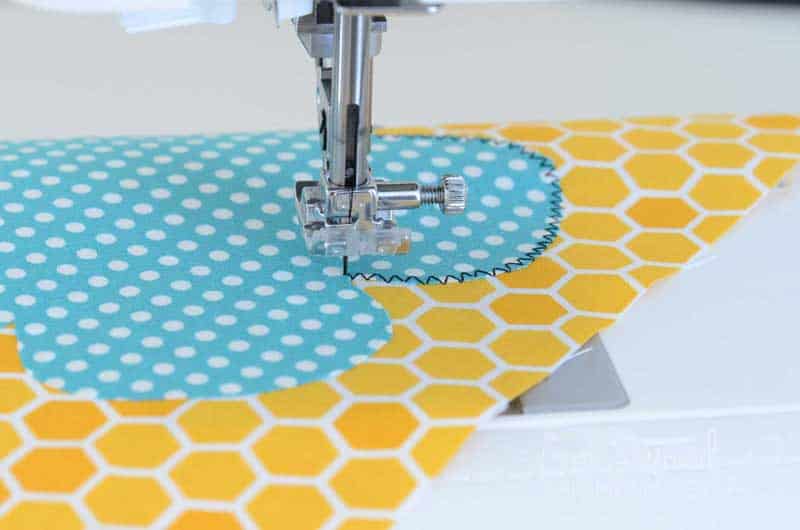
Image Source: www.seasonedhomemaker.com
What is Machine Applique?
Machine applique is sewing fabric shapes onto a background fabric with a sewing machine. It lets you make pictures or designs from different colored fabrics. It is like drawing with fabric and thread. You cut out shapes. Then you put them on a bigger piece of fabric. You use your sewing machine to sew around the edges of the shapes. This holds them in place forever. It is a great way to make your projects look special and unique.
Why Use a Sewing Machine for Applique?
Using a machine for applique has many good points.
* It is fast. Sewing by machine is much quicker than sewing by hand.
* It is strong. Machine stitches hold the fabric shapes down firmly. They will not come off easily.
* It looks neat. Machine stitches can look very clean and even.
* You can do many looks. Your machine has different stitches. You can use different stitches for different looks.
Things You Need for Machine Applique
Before you start, get your supplies ready. Having everything near you makes the work go smoothly.
Fabric Pieces
You need two main types of fabric.
* Background fabric: This is the main cloth you sew your shapes onto. It should be big enough for your design.
* Applique fabrics: These are the small pieces you cut into shapes. Use fabrics that do not stretch too much. Cotton fabrics work well for applique.
Thread for Sewing
You need thread for your sewing machine.
* Choose a good quality thread.
* Pick a color that matches your applique fabric, or choose a color that makes the stitches stand out. Using thread that matches helps hide the stitches. Using a contrasting color makes the stitches part of the design.
* Polyester or rayon threads are good choices for machine applique techniques.
Sharp Scissors
You need scissors to cut your fabric shapes.
* Use fabric scissors that are sharp.
* Small, sharp scissors are best for cutting curves and points on your shapes.
Paper or Pattern Material
You need a way to make your shapes.
* You can draw your shapes on paper.
* Special pattern paper or template plastic can also be used.
Marking Tool
You might need to mark lines on your fabric.
* Use a fabric marking pen or chalk that will come off.
* Make sure it disappears with water or heat later.
Iron and Ironing Board
You will use your iron a lot.
* An iron helps make fabric flat.
* It is also used with fusible web.
Sewing Machine
Of course, you need your sewing machine.
* Make sure it is threaded correctly.
* Check that it is working well.
Needle for Sewing Machine
Use the right needle for your fabric.
* A sharp needle is often best for applique.
* Size 70/10 or 80/12 needles work well for most cotton fabrics.
Optional but Helpful Supplies
Some extra things can make applique easier or better.
* Applique foot: This special foot helps you see where you are sewing. It also helps stitches glide over the fabric edge.
* Stabilizer for applique: This is a material you put under your fabric. It makes the fabric stronger and flatter while you sew. This helps prevent puckering or distortion. There are different kinds like tear-away, cut-away, or wash-away.
* Fusible web: This is a thin material with glue on both sides. You iron it onto fabric. It helps hold the applique shape onto the background fabric before you sew. This is key for fusible web applique.
Different Methods for Machine Applique
There are a few main ways to do machine applique. The method you pick can change the look of your finished work. Let’s look at some popular ones.
1. Fusible Web Applique
This method is very popular because it is fast and easy. You use a special material called fusible web to stick your shapes down first.
How Fusible Web Works
Fusible web is like thin paper with glue on both sides. You put it between two layers of fabric or between fabric and paper. When you iron it, the glue melts and sticks the layers together.
Steps for Fusible Web Applique
Here is how you do fusible web applique:
h5 Step 1: Get Your Pattern Ready
- Draw your shape or trace it onto the paper side of the fusible web.
- Remember that the shape will be flipped when you iron it onto the fabric. If you have words or shapes with a direction, trace them in reverse (like looking in a mirror).
h5 Step 2: Fuse Web to Applique Fabric
- Place the fusible web onto the wrong side (the back) of your applique fabric. The rough, gluey side of the web should be on the fabric. The paper side should face up.
- Use your iron to press down for a few seconds. Follow the fusible web maker’s directions. Do not use steam unless the directions say to. The heat melts the glue onto the fabric.
- Let the fabric cool down.
h5 Step 3: Cut Out Your Shape
- Now that the fusible web is stuck to your fabric, cut out your shape carefully. Cut right along the lines you traced on the paper side.
h5 Step 4: Peel Off the Paper Backing
- Peel the paper off the back of your fabric shape. The glue is now on the fabric. It will feel a little rough or shiny.
h5 Step 5: Position and Fuse Shape to Background Fabric
- Place your applique shape onto your background fabric. Put it exactly where you want it to be. The glue side of the shape should be on the background fabric.
- Use your iron again to press the shape onto the background fabric. This heat melts the glue and sticks the shape down. Hold the iron down for the time the fusible web maker tells you to. This secures applique shapes temporarily.
- Let it cool. The shape is now held in place.
h5 Step 6: Prepare for Sewing
- Put a stabilizer for applique under your background fabric. This helps keep the fabric flat and smooth while you sew around the edges.
- Put the fabric under your sewing machine needle.
h5 Step 7: Sew Around the Edges
- This is where you use machine applique techniques to make your stitches. Sew around the edges of the applique shape.
- You can use a zigzag stitch applique, a satin stitch applique, or other applique stitches.
- Sew slowly and carefully. Guide the fabric with your hands. Do not push or pull it. The stitches hold the shape permanently.
Pros and Cons of Fusible Web Applique
Pros:
* Very easy and fast.
* Shapes stay in place before sewing.
* Edges do not fray much, or at all, if covered by stitches.
Cons:
* Can make the fabric feel stiff.
* Edges can look a little flat or hard compared to other methods.
* Need to trace patterns in reverse.
2. Raw Edge Applique
This method is even simpler because it does not use fusible web. You just cut out your shapes and sew them onto the background fabric. The edges are left “raw,” meaning they are not turned under.
Steps for Raw Edge Applique
h5 Step 1: Prepare Your Shapes
- Cut out your applique shapes directly from your fabric. You can use a paper pattern as a guide.
- No need to trace in reverse unless you are using a specific pattern that requires it.
h5 Step 2: Position Shapes
- Place your applique shapes onto the background fabric where you want them.
- Since they are not stuck down, you might need to hold them in place. You can use pins, temporary fabric glue, or an iron-on adhesive spray (like a very light fusible web). This helps with securing applique shapes.
h5 Step 3: Add Stabilizer
- Put a stabilizer for applique under your background fabric. This is important for raw edge applique to keep the fabric smooth.
h5 Step 4: Sew Around the Edges
- Sew around the edges of each applique shape using your sewing machine.
- You can use many different machine applique techniques.
- A straight stitch close to the edge, a zigzag stitch applique, or a decorative stitch works well.
- The raw edges will fray a little bit over time, especially after washing. This fraying is part of the look of raw edge applique. How much it frays depends on the stitch you use and the fabric.
Pros and Cons of Raw Edge Applique
Pros:
* Very quick and easy.
* Fabric stays softer than with fusible web.
* Gives a relaxed, slightly distressed look as edges fray.
Cons:
* Edges will fray, which some people do not like.
* Shapes are not held in place as firmly before sewing unless you use temporary glue or spray.
3. Applique with Turned Edges
This method gives a very clean finish because the raw edges are tucked under before sewing. It takes more time but results in a neat look. While often done by hand, you can sew the turned edges down with a machine using a straight stitch or a blind hem stitch.
Steps for Applique with Turned Edges
h5 Step 1: Make Templates and Cut Fabric
- Make a template of your shape. This template should be the finished size you want your shape to be.
- Cut out your fabric shape about 1/4 inch larger than your template all around. This extra fabric is for turning under the edges.
h5 Step 2: Turn Under and Press Edges
- Place the template on the wrong side of your fabric shape.
- Carefully fold the extra fabric allowance (the 1/4 inch) over the edge of the template.
- Use your iron to press the folded edge. This makes a crisp edge. Use a little starch or fabric sizing if needed to help the edge stay folded.
- Use pins or fabric glue to hold the turned edges down.
h5 Step 3: Position and Secure Shape
- Place your prepared shape with the turned edges onto your background fabric.
- Pin it well or use temporary fabric glue to secure applique shapes.
h5 Step 4: Add Stabilizer
- Put a stabilizer for applique under your background fabric.
h5 Step 5: Sew Around the Edges
- Sew around the turned edges of the shape using your sewing machine.
- Use a straight stitch very close to the folded edge.
- An applique foot can be very helpful here to sew precisely along the edge.
- You can also use a blind hem stitch. Set the stitch so the straight part sews on the background fabric, and the little zig or zag just catches the folded edge of the applique shape.
Pros and Cons of Applique with Turned Edges
Pros:
* Very neat and finished look with no raw edges showing.
* Durable, as the edges are protected.
Cons:
* Takes much more time and effort to prepare the shapes by turning under the edges.
* Can be tricky to get smooth curves and sharp points when turning edges.
Applique Stitches for Your Machine
Your sewing machine has different stitches you can use for applique. The stitch you choose changes the look of your applique. These are part of machine applique techniques.
1. Zigzag Stitch Applique
This is one of the most common stitches for applique. It is a back-and-forth stitch that goes over the edge of your fabric shape.
How to Use Zigzag Stitch
- Set your machine to a zigzag stitch.
- Adjust the stitch width and length.
- Width: How wide the stitch is. Make it wide enough to go just over the edge of your applique shape. A width of 1.5mm to 3mm is common.
- Length: How close together the stitches are. For a satin stitch look (very close stitches), make the length very short (0.5mm or less). For a more open zigzag, use a longer stitch length (1mm or more).
- When sewing, one side of the zigzag should go into the applique fabric, and the other side should go just off the edge onto the background fabric.
- Use a stabilizer for applique when using a dense zigzag like a satin stitch to prevent puckering.
2. Satin Stitch Applique
A satin stitch is a very dense zigzag stitch. The stitches are so close together that they form a solid band of thread over the fabric edge. This is a beautiful way to finish applique edges.
How to Do Satin Stitch
- Set your machine to a zigzag stitch.
- Set the stitch width to cover the raw edge of your applique shape.
- Set the stitch length very short. This is key for satin stitch. The stitches should touch each other with no space in between. A stitch length of 0.5mm or less is typical. You might need to test on scrap fabric to find the right length for your machine and thread.
- Use a stabilizer for applique! Satin stitch uses a lot of thread and can make fabric pucker without stabilizer.
- An applique foot or open-toe foot is helpful. It lets you see the stitches clearly and guide the fabric accurately.
- Sew slowly and evenly.
Pros and Cons of Satin Stitch
Pros:
* Creates a beautiful, finished edge that looks like embroidery.
* Covers raw edges completely (good for fusible web or raw edge).
* Very durable.
Cons:
* Uses a lot of thread.
* Requires careful tension and stabilizer to prevent puckering.
* Can be tricky to sew smoothly around tight curves and points.
3. Other Applique Stitches
Many other stitches on your machine can be used for applique.
* Straight Stitch: Sew a straight line very close to the edge (for raw edge or turned edge applique). Simple and fast.
* Buttonhole Stitch: This stitch is designed to make buttonholes, but it works great for applique too. It has a straight stitch along the edge and a bar tack stitch going outwards. It gives a nice, decorative edge.
* Blind Hem Stitch: Can be used for turned edge applique. Hides the stitch mostly on the background fabric.
* Decorative Stitches: Many machines have fun stitches like blanket stitch, feather stitch, or other patterns. These can add a unique look to your applique project. Test them on scrap fabric first to see how they look and how they cover the edge.
Getting Ready for Applique Sewing
Good preparation makes sewing easier and better. This includes preparing fabric for applique.
Pre-washing Fabrics
Should you pre-wash your fabrics? Yes, it is a good idea.
* Fabric can shrink the first time it gets wet.
* Colors can bleed, especially bright or dark colors.
* Washing and drying your fabrics before you cut and sew helps prevent these problems later. Wash them the way you will wash the finished project.
Pressing Fabrics
Press all your fabrics smoothly before cutting.
* Use a hot iron to remove wrinkles.
* Flat fabric is easier to cut accurately.
* Flat fabric is easier to sew smoothly.
Cutting Your Shapes
Cut your shapes carefully.
* Use sharp scissors for clean cuts.
* Cut on the lines you marked or traced.
* For raw edge applique, just cut the shape.
* For fusible web, cut after fusing the web but before peeling paper.
* For turned edge, cut larger than the finished shape.
Using Stabilizer for Applique
Stabilizer is a must-have for many machine applique techniques, especially satin stitch applique and zigzag stitch applique.
What Stabilizer Does
- It adds body to the fabric.
- It helps prevent the fabric from stretching or puckering while you sew dense stitches.
- It helps your stitches lie flat and even.
Types of Stabilizer
- Tear-Away: You tear it away after sewing. Good for stable fabrics and less dense stitches.
- Cut-Away: You cut away the extra after sewing, leaving some under the stitches. Better for stretchy fabrics or very dense stitches (like satin stitch). It stays in the project, giving the stitches support.
- Wash-Away: Dissolves in water after sewing. Leaves no trace. Good for delicate fabrics or when you don’t want stabilizer left in the project.
How to Use Stabilizer
- Cut a piece of stabilizer a little larger than the area where you will applique.
- Place it under the background fabric, right where the applique will be.
- Some stabilizers have a sticky side or are iron-on. Others you just place flat.
- Make sure the stabilizer is smooth and flat under your fabric before you start sewing.
Sewing Techniques and Tips
Here are some tips for sewing your applique shapes down smoothly.
Using the Right Applique Foot
An applique foot can make a big difference.
* Many applique feet are clear plastic, so you can see exactly where you are sewing.
* Some have a groove on the bottom. This groove helps dense stitches (like satin stitch) pass under the foot easily without getting stuck.
* If you do a lot of machine applique, getting a specific applique foot for your machine is a good idea. An open-toe foot is also helpful as it offers a clear view of the needle and stitch formation.
Setting Up Your Machine
- Choose your stitch (zigzag stitch applique, satin stitch applique, etc.).
- Set the stitch width and length. Test on scrap fabric first! Use the same layers (background fabric + applique fabric + stabilizer) that you will use for your project.
- Adjust your thread tension if needed. Stitches should look the same on the top and bottom of the fabric.
- Lower your feed dogs if you are doing free-motion applique (where you move the fabric freely to guide the stitching). For sewing around shapes, keep feed dogs up.
Sewing Around Shapes
- Place your fabric with the secured applique shape and stabilizer under the needle.
- Lower the presser foot.
- Start sewing slowly.
- Guide the fabric gently with your hands. Do not push or pull hard. Let the machine feed the fabric.
- When you come to a corner or a tight curve, stop with the needle down in the fabric. Lift the presser foot. Turn the fabric slightly. Lower the foot and keep sewing.
- For curves, turn the fabric in small steps. For sharp points, stop at the point with the needle just off the edge, turn, and continue.
Securing Applique Shapes While Sewing
Even if you used fusible web or temporary glue, it helps to guide the fabric layers together.
* Keep the background fabric and the applique shape flat with your hands as they go under the needle.
* Ensure the stabilizer stays smooth underneath.
Stitch Density and Fabric Type
- Thinner fabrics may need denser stitches or a firmer stabilizer.
- Thicker fabrics can sometimes handle less dense stitches.
- Test on scraps! This is the best way to see how your chosen stitch, fabric, and stabilizer work together.
Table of Machine Applique Methods
Here is a simple table comparing the main methods:
| Method | How Shapes are Held Before Sewing? | Edge Finish | Preparation Needed? | Best For… |
|---|---|---|---|---|
| Fusible Web Applique | Iron-on glue | Covered by stitch | Tracing reversed | Fast projects, smooth shapes |
| Raw Edge Applique | Pins, temporary glue (optional) | Frayed (can be covered by stitch) | Simple cutting | Quick projects, modern look |
| Applique w/ Turned Edges | Pins, temporary glue | Clean, tucked under | Turning & pressing edges | Neat, traditional look |
Table of Common Applique Stitches
Here is a look at popular machine applique stitches:
| Stitch Type | Look | Common Use With… | Density | Need Stabilizer? |
|---|---|---|---|---|
| Straight Stitch | Simple line | Raw Edge, Turned Edge | Low | Sometimes |
| Zigzag Stitch | Back-and-forth line | Raw Edge, Fusible Web | Medium | Often |
| Satin Stitch | Solid band of thread | Raw Edge, Fusible Web | High (very dense) | Almost Always |
| Buttonhole Stitch | L-shape stitch along edge | Raw Edge, Fusible Web | Medium-High | Often |
| Decorative Stitch | Varied patterns | Raw Edge, Fusible Web, Turned Edge | Varies | Often |
Troubleshooting Common Issues
Sometimes things do not go perfectly. Here are some common problems and how to fix them.
Fabric Puckering
- Why it happens: Stitches are too dense for the fabric, or no stabilizer was used. Too much pulling on the fabric.
- How to fix: Use a stabilizer for applique. Use the right type of stabilizer for your stitch density. Lower your stitch length (for less dense stitches) or try a wider stitch. Do not pull the fabric while sewing.
Stitches Skipping
- Why it happens: Wrong needle for the fabric, bent needle, or upper thread tension is off.
- How to fix: Change to a new, sharp needle, correct size for your fabric. Check that the needle is inserted correctly. Re-thread your machine. Check your upper thread tension.
Uneven Stitch Width or Length
- Why it happens: Not guiding the fabric smoothly or letting the machine feed it evenly. Pushing or pulling the fabric.
- How to fix: Let the machine move the fabric. Use gentle guidance with your hands. Sew at a steady, slow speed. Check that your feed dogs are up (unless you are free-motion quilting).
Applique Shape Edges Not Covered
- Why it happens: Stitch width is too narrow, or you are not sewing close enough to the edge.
- How to fix: Increase your stitch width. Guide the fabric so the needle on the outer swing of the zigzag (or other stitch) goes just over the raw edge.
Caring for Appliqued Items
Once your project is finished, you want it to last.
- Follow the washing instructions for your fabrics.
- If you used raw edge applique, expect some fraying over time. This is normal for that style.
- For satin stitch applique, use a pressing cloth when ironing over the stitches. High heat directly on synthetic threads (like rayon or some polyesters) can melt or flatten the beautiful stitches.
Expanding Your Skills
Once you are comfortable with basic machine applique, you can try more complex things.
* Layering Applique: Put one applique shape on top of another to create more complex pictures. Secure each layer before adding the next.
* Free-Motion Applique: Lower your feed dogs and move the fabric freely to sew around shapes without following a set line. This allows for very creative stitching. Use a darning foot or free-motion foot.
* Using Different Materials: Applique with felt (which doesn’t fray), vinyl, or even paper (for art projects, not washable items).
* Adding Details: Use embroidery stitches or fabric paint to add details to your applique shapes.
Machine applique is a wonderful way to add personality and design to your sewing projects. With a little practice, you will be able to create beautiful fabric pictures. Start with simple shapes and methods, then try new techniques as you get more comfortable.
Frequently Asked Questions About Machine Applique
h4 What is the easiest stitch for machine applique?
For covering raw edges, a simple zigzag stitch is one of the easiest to start with. It is not as dense as satin stitch, so it is more forgiving. For raw edge applique where fraying is okay, a simple straight stitch close to the edge is the easiest and fastest.
h4 Do I have to use fusible web for machine applique?
No, you do not have to use fusible web. It is a great option for holding shapes in place easily, especially for beginners or complex designs. But you can also use pins, temporary fabric glue, or just carefully guide the fabric layers, especially for raw edge or turned edge applique methods.
h4 How do I choose the right stabilizer?
The best stabilizer for applique depends on your fabric and the stitch you plan to use. For dense stitches like satin stitch, use a cut-away stabilizer for best support. For simpler stitches or on stable fabrics, tear-away might be enough. If you don’t want any stabilizer left in the project, use wash-away. Test on scraps to see what works best.
h4 Can I applique letters or small shapes?
Yes! Machine applique is perfect for letters and small shapes. Use small, sharp scissors to cut them accurately. Fusible web applique is often easiest for small, detailed pieces as it holds them firmly in place while you sew. Go slowly around curves and points.
h4 My fabric is puckering around the stitches. What am I doing wrong?
Puckering is often caused by not using enough stabilizer or using a stitch that is too dense for the fabric’s weight without proper support. Make sure you are using a stabilizer, especially with zigzag or satin stitches. Also, check that you are not pulling the fabric while sewing. Let the machine feed the fabric.
h4 What is an applique foot used for?
An applique foot helps you see the edge of your fabric shape clearly as you sew around it. Many have a groove underneath that lets dense stitches pass smoothly. Using one helps you stitch accurately right along the edge of your applique. An open-toe foot offers a similar clear view.