
Sewing small pieces of fabric onto a larger piece is called applique. It’s a fun way to add pictures or designs to your sewing projects. Think of putting a heart on a quilt or a flower on a shirt. Doing applique with a sewing machine makes it faster and gives it a neat look. This guide will show you how to do machine applique simply. You can make great things even if you are new to sewing.
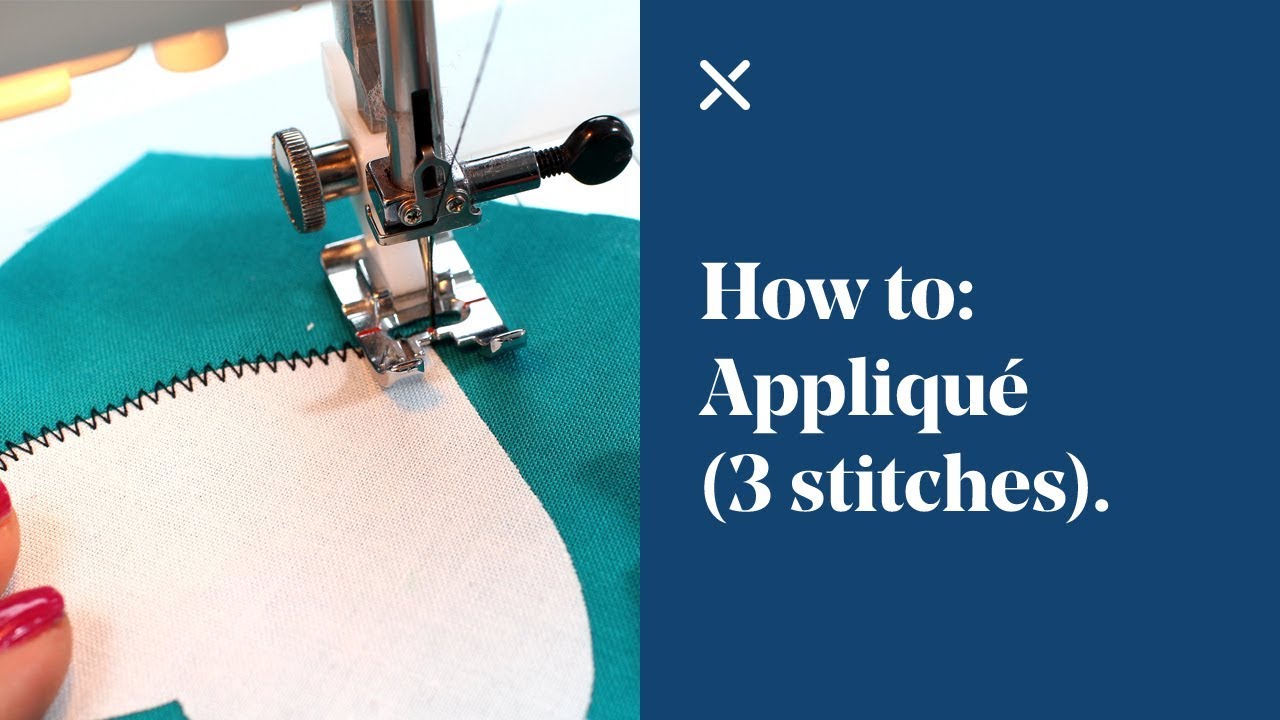
Image Source: i.ytimg.com
What is Machine Applique?
Applique is sewing one fabric shape onto another fabric piece. Machine applique means using a sewing machine to do this stitching. It is faster than sewing by hand. It gives a strong hold. You can use many different machine applique stitches to get the look you want.
Getting Ready: What You Need
You do not need many fancy things to start. Here is a simple list:
- Fabrics: You need a fabric piece for the background and smaller pieces for your shapes. Cotton fabric is a good choice for beginners.
- Applique Shapes: You can cut out shapes freehand. Or you can use patterns. Pictures from coloring books or simple drawings work well.
- Sharp Scissors: Small, sharp scissors are best for cutting fabric shapes nicely.
- Paper or Pattern Material: To draw or print your shapes.
- Iron and Ironing Board: You need to press fabric flat. This is important.
- Fabric Marker or Pencil: To trace shapes onto fabric. Make sure it comes off or will be hidden.
- Sewing Machine: Any working machine will do.
- Sewing Machine Needles: Use a sharp needle. A size 80/12 is often good.
- Thread: Choose thread colors that match or stand out. Use good quality thread.
- Pins: To hold fabric in place.
- Applique Stabilizer: You might need this for flat sewing. (More on this later).
- Fusible Web (Optional but helpful): This sticky stuff holds shapes in place before you sew. (More on this later).
Getting Your Fabric Shapes Ready
Getting the fabric shapes ready is the first step. This must be done right for good results.
Picking Your Design
Choose a simple design if you are new. A circle, square, heart, or star is easy. Later, you can try more complex shapes.
Making a Pattern
Draw your shape on paper. Keep it simple.
Cutting the Fabric Shape
The way you cut depends on the applique method you choose.
- Method 1: Using Fusible Web. This is often easiest for beginners. You trace the shape onto the paper side of fusible web. Iron the web onto the back of your applique fabric. Cut out the shape exactly on the line. Peel off the paper backing. This shape is now sticky on the back.
- Method 2: Raw Edge Applique. For this method, you cut the shape from fabric directly. You can trace the shape onto the fabric first. Add a small border around the shape (like 1/4 inch). Or cut without a border if you want the edge to fray a little.
H4 Cutting Table Example
| Method | How to Cut | Edge Look | Best For |
|---|---|---|---|
| Fusible Web | Cut exactly on traced line after adding web. | Clean, no fraying. | Most projects. |
| Raw Edge | Cut on traced line or slightly outside it. | Can fray a little. | Modern look, fast. |
Placing Your Applique Shapes
Now, put the fabric shapes onto your background fabric.
For Fusible Web Applique
Iron the shapes onto the background fabric. The heat melts the glue on the web. This holds the shape firmly. Place it just where you want it. Press down with the iron. Follow the fusible web instructions.
For Raw Edge Applique
Pin the shapes onto the background fabric. Use plenty of pins to keep the shape from moving. You can also use a little fabric glue stick to hold it first.
Setting Up Your Sewing Machine
Getting your machine ready is key.
Choosing the Right Needle
Use a new sharp needle. A universal needle size 80/12 works well for most fabrics. If you are using fine fabric, a smaller needle (70/10) is better. If you are using thick fabric, a bigger needle (90/14) is best.
Picking Your Thread
Use good quality thread. Polyester or cotton thread is fine. Choose a color that matches your applique shape or contrasts with it. Matching thread makes the stitches blend in. Contrasting thread makes the stitches stand out.
Using the Right Sewing Machine Foot
A special sewing machine foot for applique helps a lot. This foot is clear plastic. This lets you see exactly where you are sewing. It often has a groove on the bottom. This lets the stitches pass smoothly underneath. If you do not have a special applique foot, a regular open-toe or clear foot can work. Check your machine manual for help with feet.
Adding Applique Stabilizer
Using applique stabilizer for sewing machine is a good idea. Stabilizer is a material you put under the background fabric. It helps the fabric stay flat. It stops the fabric from puckering or getting wavy as you sew. There are different kinds:
- Tear-away stabilizer: You tear it away after sewing.
- Cut-away stabilizer: You cut it away, leaving some behind. Good for knits or stretchy fabric.
- Wash-away stabilizer: It dissolves in water later.
Use the type that works best for your fabric and project. Iron or pin the stabilizer to the back of your background fabric, under where the applique will be.
Choosing Your Machine Applique Stitches
The stitch you use gives your applique its finished look. There are many machine applique techniques using different stitches.
Zig Zag Stitch Machine Applique
This is a very common stitch for applique. It looks like a series of ‘Z’ shapes. It goes back and forth over the edge of the fabric shape.
- How it works: The needle swings left and right. Part of the stitch goes into the applique shape. The other part goes onto the background fabric. This covers the raw edge of the applique shape.
- Settings: Set your machine to a zig zag stitch. The important settings are stitch width and stitch length.
- Stitch Width: How wide the zig zag is. Start with a medium width, like 2.0 or 2.5. A wider stitch covers more edge.
- Stitch Length: How close the stitches are together. Start with a short length, like 0.5 to 1.0. Shorter stitches are closer. They cover the edge better. A very short length makes a dense stitch (like a satin stitch).
- Pros: Good for covering raw edges. Gives a classic applique look. Strong stitch.
- Cons: Can be tricky to make even. Needs careful turning around corners.
Satin Stitch Machine Applique
A satin stitch is a very close zig zag stitch. The stitches are so close they touch. This makes a smooth, solid line of stitching along the edge.
- How it works: It’s a zig zag stitch with a very short stitch length (close to 0). The needle swings fast and close together.
- Settings: Set to zig zag stitch. Set stitch length very low (0.1 to 0.5). Set stitch width as you like (2.0 to 4.0 or more). A wider stitch makes a thicker border.
- Pros: Looks very finished and smooth. Great for covering raw edges completely. Gives a rich, embroidered look.
- Cons: Uses a lot of thread. Can make the fabric pucker if you do not use stabilizer. Takes more practice to get smooth curves.
Blanket Stitch Machine Applique
This stitch looks like hand blanket stitches. It has straight stitches along the edge. Then, a stitch goes out from the edge, making an ‘L’ shape.
- How it works: The machine makes a straight stitch along the edge of your shape. Then, it makes a stitch that goes out over the raw edge.
- Settings: Most machines have a built-in blanket stitch. Set the stitch length and width.
- Stitch Length: How far apart the ‘L’ shapes are.
- Stitch Width: How far the ‘L’ shape stitch reaches out from the edge.
- Pros: Looks handmade. Gives a nice decorative touch. Good for covering raw edges. Easier to turn corners than satin stitch.
- Cons: Not all machines have this stitch. Might not cover the edge as densely as satin stitch.
Other Machine Applique Stitches
You can use other stitches too:
- Straight Stitch: Sew close to the raw edge. This is fast. The edge will fray a little over time. This is the basis for raw edge machine applique.
- Decorative Stitches: Many machines have fun stitches. You can use these around your applique shapes. Choose a stitch that is wide enough to catch both the applique and the background.
Sewing Your Applique Shapes: Step by Step
This is where you sew the shapes onto the background. These are the basic machine applique techniques. This guide is for beginner machine applique.
Step 1: Set Up Your Machine
Put on your special applique foot or open-toe foot. Use the correct needle and thread. Put stabilizer under your background fabric if you are using it.
Step 2: Place Your Fabric
Put your background fabric under the foot. Place it so the needle will start sewing near your applique shape.
Step 3: Choose Your Stitch and Settings
Decide which stitch you want to use (zig zag, satin, blanket, etc.). Set the stitch width and length on your machine. Do a test on scrap fabric first! This helps you get the settings right. Practice sewing curves and corners on scraps.
Step 4: Start Sewing
Lower the needle into the fabric at the edge of your applique shape. Lower the presser foot. Start sewing slowly.
- For Zig Zag or Satin Stitch: You want the right swing of the needle to go just off the edge of the applique shape onto the background. The left swing should go into the applique shape. Sew slowly and guide the fabric. Keep the edge of the applique shape right under the center of the foot (or the guide mark on your foot).
- For Blanket Stitch: The machine does the work. You guide the fabric to keep the edge of the applique shape along the line where the straight stitch sews. The little ‘L’s will go out over the raw edge.
- For Straight Stitch (Raw Edge): Sew just a little bit in from the edge of the applique shape (like 1/8 inch or less). This holds the shape down. The edge will be left “raw”.
Step 5: Sewing Around Corners
This is tricky. Go slowly.
- Sharp Corners: Sew almost to the corner. Stop with the needle in the fabric (on the side away from the edge for zig zag/satin, or just before the corner for blanket/straight). Lift the presser foot. Turn the fabric. Lower the foot and keep sewing.
- Rounded Corners: Sew slowly around the curve. You might need to stop often with the needle down. Lift the foot just a little. Turn the fabric just a bit. Lower the foot and sew a few stitches. Repeat until you are around the curve.
Step 6: Sewing Around Curves
Curves are smoother than corners. Again, go slowly. Turn the fabric gently as you sew. Keep the edge of the applique shape lined up with your guide on the foot. You might need to stop, lift the foot slightly, pivot a tiny bit, lower the foot, and sew. This helps make a smooth curve.
Step 7: Finishing the Stitch
When you get back to where you started, sew over the first few stitches for a little bit. This locks the stitches. Or, use your machine’s lock stitch button if it has one. Lift the needle and presser foot. Pull the fabric out. Cut the threads. Leave thread tails a few inches long.
Step 8: Tying Off Threads (Optional but recommended)
Pull the top threads to the back side of your fabric. You can use a needle or hook tool for this. Tie the top threads and bottom threads together on the back. Make a knot. Cut the threads short. This makes sure the stitches do not come undone.
Tips for Better Machine Applique
- Practice First: Always practice on scrap fabric. Use the same number of fabric layers and stabilizer as your project.
- Go Slow: Sewing applique is not a race. Slow and steady wins.
- Use Good Light: Make sure you can see clearly where you are sewing.
- Watch the Needle: Do not watch the foot or the shape itself. Watch the needle as it goes up and down. Guide the fabric so the needle hits just where you want it.
- Press Often: Press your background fabric flat before you start. Press the applique shape after you iron it on (if using fusible web). Press the final piece when done. Pressing makes everything neat.
- Check Your Bobbin: Make sure you have enough bobbin thread before you start a shape. Running out halfway is annoying.
- Needle Position: If your machine lets you change the needle position (left, center, right), you can use this to help sew in tight spots or around curves.
- Needle Down Feature: If your machine has a needle down feature, use it! It stops the needle in the fabric when you stop sewing. This makes turning corners and curves much easier.
Finishing Your Applique Project
After all the sewing is done, there are a few steps to finish.
- Remove Stabilizer: If you used tear-away stabilizer, gently tear it away from the back. If you used cut-away, carefully cut the extra away, leaving some behind. If you used wash-away, follow the instructions to wash it away.
- Trim Threads: Trim any loose threads from the front and back.
- Press: Press your finished applique gently from the back. Use a pressing cloth if needed, especially with synthetic fabrics or fusible web. This makes the applique lie flat and look smooth.
Your applique is now finished! You can add it to your quilt, bag, clothing, or whatever project you are making.
FAQ: Simple Answers to Common Questions
Q: Do I have to use fusible web?
A: No, but it helps beginners. It holds the fabric shapes in place. This makes sewing easier. You can use pins or fabric glue stick instead for raw edge machine applique.
Q: What is the best sewing machine foot for applique?
A: A clear, open-toe applique foot is very helpful. It lets you see where you are sewing. It also slides over the stitches better.
Q: Do I need an applique stabilizer for sewing machine use?
A: It is highly recommended. Stabilizer keeps the fabric flat. It stops puckering. This is especially true with dense stitches like satin stitch.
Q: What are the main machine applique stitches?
A: The most common are zig zag stitch, satin stitch (a very close zig zag), and blanket stitch. Straight stitch is also used for raw edge applique.
Q: Can a beginner do machine applique?
A: Yes! Beginner machine applique is very possible. Start with simple shapes and stitches. Practice helps a lot.
Q: What is raw edge machine applique?
A: It is sewing shapes onto fabric without finishing the edges first. You usually use a straight stitch or a loose zig zag. The edge is left “raw” and may fray a little.
Q: How do I make a satin stitch look good?
A: Use stabilizer. Set the stitch length very short and the width as you like. Sew slowly and guide the fabric carefully. Practice makes it better.
Q: What are some common machine applique techniques?
A: These include using fusible web, raw edge applique, using different stitches (zig zag, satin, blanket), and using stabilizer. Precision cutting and careful sewing are key techniques.
Summing It Up
Machine applique is a fun way to add designs to your projects. You can use different machine applique stitches like zig zag, satin, or blanket stitch. A special sewing machine foot for applique helps you see better. Using applique stabilizer for sewing machine keeps your fabric flat. You can use fusible web machine applique for clean edges or raw edge machine applique for a faster method. Even if you are a beginner machine applique, you can learn these machine applique techniques. Start simple, go slow, and practice. Soon, you will be adding beautiful fabric pictures to all your sewing creations.