
What is backstitch embroidery? Backstitch embroidery is a foundational and versatile stitch used in hand embroidery techniques to create strong, continuous lines. It’s often used for outlining designs, creating lettering, and filling in areas in embroidery patterns. Can I use it for all types of needlepoint stitches or decorative stitches? While backstitch is a core embroidery stitch, it can be adapted or combined with other needlepoint stitches and decorative stitches to create varied textures and effects. Who is this stitch for? This stitch is perfect for beginners learning hand embroidery techniques and also a favorite of experienced stitchers for its reliability and aesthetic appeal.
Backstitch is a true workhorse in the world of needlework. Whether you’re creating intricate embroidery patterns, adding detail to a piece of needlepoint, or just starting your DIY embroidery journey, knowing how to backstitch is essential. This guide will walk you through everything you need to know, from threading your needle to creating a perfect line.
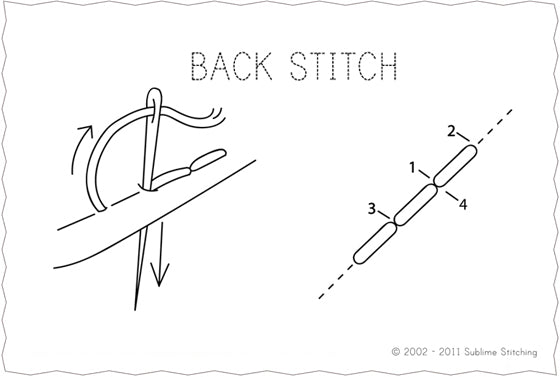
Image Source: cdn.shopify.com
Getting Started with Backstitch
Before you can dive into stitching, you’ll need a few supplies. Having the right tools makes the process much smoother.
Essential Supplies for Backstitch
- Embroidery Floss: This is the thread you’ll use. Embroidery floss typically comes in skeins of six strands. For backstitch, you can use one, two, or more strands depending on the thickness of the line you want. Two strands is a common choice for most embroidery patterns.
- Embroidery Needle: Choose a needle with an eye large enough for your floss and a sharp point to easily pass through fabric. Size 7 or 8 embroidery needles are good general-purpose options.
- Fabric: Aida cloth, linen, cotton, or even felt can be used. The weave of the fabric will affect how easily your needle passes through.
- Embroidery Hoop: This holds your fabric taut, making it easier to stitch evenly and preventing puckering.
- Scissors: Small, sharp scissors are best for cutting floss.
- Embroidery Pattern (Optional): If you’re following a specific design, you’ll need your pattern. You can transfer it to fabric using a transfer pen or by using a light source to trace.
Preparing Your Floss
Embroidery floss comes twisted together in strands. To use it, you need to separate these strands.
- Find the End: Gently pull one strand of floss from the skein.
- Separate Strands: Hold the skein in one hand and the strand you’re pulling in the other. Slowly and carefully pull the strand out. This will untwist the floss.
- Measure and Cut: Cut a length of floss, usually about 18 inches. Longer lengths can tangle easily.
- Thread Your Needle: Thread the desired number of strands through the eye of your embroidery needle. If you’re using two strands, gently pull two strands through the needle’s eye together.
How to Execute the Backstitch: A Detailed Guide
The backstitch, despite its name, is a forward-moving stitch that creates a line of stitches that appear to be worked backward. This overlap is what gives the stitch its strength and solid appearance, making it a favorite for outlines in embroidery patterns and for creating sturdy lines in textile arts.
Step-by-Step Backstitch Tutorial
Let’s break down how to create this fundamental stitch. We’ll assume you have your fabric in an embroidery hoop, your floss threaded through your needle, and your pattern ready.
Step 1: Make Your First Stitch (The Starting Point)
- Bring Thread to Front: From the back of your fabric, bring your needle up at the starting point of your line. This is where your first stitch will begin.
- Secure the Thread: You can secure the thread by making a tiny knot at the end of your floss before you start, or by leaving a small tail on the back and holding it in place with your first few stitches. Many stitchers prefer to avoid knots to keep the back of their work neat.
Step 2: Make the “Forward” Stitch
- Move to the Next Point: Decide how long you want your stitches to be. For backstitch, you’ll typically want stitches of a consistent size.
- Insert Needle: From the front of the fabric, move your needle down through the fabric at the end of where your first stitch will be. Imagine you are creating a dash line. This first stitch is a single “dash.”
Step 3: The “Backward” Movement – Creating the Backstitch
This is where the “backstitch” magic happens.
- Bring Thread Back Up: Look at the stitch you just made. It’s a single line of thread on the front of your fabric. You need to bring your needle back up through the fabric before the end of that first stitch. Typically, you will bring your needle up about the same distance from your current point as the length of your first stitch.
- Positioning for the Next Stitch: You are now positioned to make your next “dash.” You want to move forward again.
Step 4: Continue the Line
- Move Forward: From where you just brought your needle up, move your needle down through the fabric at the end of where your next stitch will be. This creates a second “dash” that is adjacent to, but not overlapping, the first one.
- Repeat: Bring your needle back up through the fabric before the end of this second stitch, about the same distance as the stitch you just made. This creates the characteristic overlap that defines the backstitch.
- Work Along Your Line: Continue this pattern – moving forward to create a stitch, then bringing the needle back up before the end of that stitch – until you have completed your line.
Visualizing the Backstitch:
Imagine you are drawing a line with a pen.
- First Stitch: You draw a short line.
- Next Stitch: You lift your pen and place it down again at the beginning of the line you just drew. Then you draw another short line forward from that new starting point.
- The Overlap: The key is that when you bring your needle up, you are bringing it up into the previous stitch. This overlap is crucial for the strength and appearance of the backstitch.
Here’s a simple representation of how the stitches appear on the front:
—– —– —– —–
And this is how the thread is laid on the back (imagine the small dots are where the needle went through):
.—–.—–.—–.
Key Tips for a Perfect Backstitch
- Consistent Stitch Length: Try to make all your stitches the same size for a neat and even line. This is especially important for lettering and fine details in embroidery patterns.
- Tension: Keep your thread tension consistent. Not too tight (which can pucker the fabric) and not too loose (which can make the stitches look floppy).
- Thread Management: If your thread starts to twist, let the needle dangle for a moment. The thread will untwist itself.
- Ending a Thread: To finish off your thread, simply bring your needle to the back of the fabric and make a few small stitches under the existing stitches on the back to secure it. Then, trim the excess thread.
Variations and Applications of the Backstitch
The beauty of the backstitch lies in its adaptability. It’s not just for simple lines!
Variations of the Backstitch
While the basic backstitch is fundamental, a few variations can add different textures and effects to your needlework.
1. Split Stitch
The split stitch is very similar to the backstitch, but instead of bringing your needle up before the end of the previous stitch, you bring it up through the middle of the previous stitch.
- How to do it: After completing a backstitch, bring your needle up through the center of the thread of the last stitch you made. Then, insert your needle back down at the end of the previous stitch to create the next segment.
- Effect: This creates a solid, woven line that looks very similar to a machine stitch. It’s often used for filling in small areas or for creating a smoother, less textured line than the standard backstitch. This is a popular technique in many traditional textile arts.
2. Thread Count and Thickness
The number of floss strands you use directly impacts the appearance of your backstitch.
- One Strand: For very fine details, delicate lettering, or when working on small-gauge fabric, a single strand of floss can create a subtle line.
- Two Strands: This is the most common choice. It provides a good balance of visibility and detail, suitable for most embroidery patterns and general outlines.
- Three or More Strands: Using more strands will create a thicker, bolder line. This can be effective for creating emphasis, filling larger areas with a dense stitch, or for a more rustic look.
3. Variable Stitch Length
You can play with stitch length for different visual effects.
- Longer Stitches: Creating longer stitches will result in a more open, dashed line. This can be useful for a more decorative effect or when you want to cover more ground quickly.
- Shorter Stitches: Shorter, more consistent stitches create a solid, continuous line. This is ideal for fine details and lettering.
Where to Use Backstitch in Your Projects
The backstitch is incredibly versatile and can be found in almost every type of embroidery project.
- Outlining: This is its most common use. Outline shapes, letters, and details in your embroidery patterns to give them definition.
- Lettering: Backstitch is the go-to stitch for creating clear and readable lettering in hand embroidery.
- Filling Areas: By stitching parallel lines of backstitch close together, you can fill in areas with a solid color. You can also use it for decorative fills with different stitch lengths or colors.
- Creating Texture: Varying stitch length and direction can create interesting textures.
- Connecting Elements: Use it to bridge gaps between different parts of your design.
- Needlepoint: While needlepoint has its own unique stitches, backstitch can be used for detailing or for creating specific effects on canvas.
- DIY Embroidery Projects: From decorating tea towels to personalizing clothing, backstitch is perfect for any DIY embroidery endeavor.
Troubleshooting Common Backstitch Issues
Even experienced stitchers encounter occasional problems. Here are some common issues and how to fix them.
Issue 1: Uneven Stitch Lengths
- Cause: Inconsistent counting or pulling the thread too hard.
- Solution: Focus on making each “dash” the same length. Try to pull the thread with consistent tension. Practice on a scrap piece of fabric to get a feel for the rhythm. It helps to visualize the space you want to cover with each stitch.
Issue 2: Thread Twisting and Tangling
- Cause: The floss naturally untwists as you stitch, and the strands get tangled.
- Solution: As mentioned earlier, let your needle hang freely occasionally to allow the floss to untwist itself. Stitch with shorter lengths of floss (18 inches is ideal). If you have a stubborn tangle, gently try to work it out with your fingers.
Issue 3: Puckering Fabric
- Cause: Pulling the thread too tightly, especially when working on delicate fabrics or when stitching densely.
- Solution: Relax your tension. Aim for stitches that lie smoothly on the fabric without pulling it taut. Ensure your fabric is evenly tensioned in the hoop. If you’ve already puckered, you might need to gently stretch the fabric from the back to release the tension.
Issue 4: Gaps in the Line
- Cause: Not bringing the needle up close enough to the previous stitch, or stitches being too far apart.
- Solution: Ensure you are bringing your needle up through the fabric very close to, or even slightly into, the previous stitch. The goal is for the thread to lie over the point where the previous stitch ended.
Issue 5: Thread Breaking
- Cause: Using too many strands for the needle size, stitching through a very dense fabric, or having a rough spot on the needle.
- Solution: Try using fewer strands of floss. Ensure your needle has a smooth eye. If stitching on a tough fabric, consider a needle with a sharper point or a sturdier needle size. Avoid pulling the thread too hard through tight spots.
Backstitch: A Cornerstone of Textile Arts
The backstitch is more than just a sewing stitch; it’s a fundamental building block in the rich tapestry of textile arts. Its ability to create strong, defined lines makes it indispensable for a wide range of embroidery techniques.
Comparing Backstitch to Other Embroidery Stitches
It’s helpful to see how backstitch fits within the broader spectrum of embroidery stitches.
| Stitch Name | Description | Common Uses | Key Characteristics |
|---|---|---|---|
| Backstitch | A strong, continuous line stitch made by making a “forward” stitch and then moving back to overlap the end of the previous stitch. | Outlining, lettering, creating solid lines, details in embroidery patterns, joining fabric pieces. | Durable, creates a solid line, can be varied in thickness with floss strands. |
| Running Stitch | A simple, intermittent stitch made by passing the needle in and out of the fabric in a straight line. | Basting, gathering, creating dashed lines, simple decorative effects. | Creates a dashed or dotted line, not very strong, easy and fast to execute. |
| Satin Stitch | A filling stitch made of parallel stitches placed close together, covering an area completely. | Filling in shapes, creating smooth areas of color, small details, lettering. | Smooth, solid coverage, can be challenging to keep even and straight. |
| Stem Stitch | Similar to backstitch but with the thread always emerging from the same side of the needle as it passes through the fabric. | Outlining, stems of flowers, creating flowing lines, lettering. | Creates a slightly twisted, textured line, gives a softer look than backstitch. |
| Chain Stitch | Loops of thread interlinked to form a chain-like line. | Outlining, filling areas with a textured effect, decorative borders. | Creates a raised, textured line, can be used for fillings. |
As you can see, while other stitches create different effects, the backstitch remains unparalleled for its clean, strong lines, making it a staple for any stitch guide or embroidery pattern.
Backstitch in Historical and Modern Needlework
The backstitch has a long history in needlework. It was used in ancient times for practical sewing and later became a key stitch in decorative embroidery, particularly for outlining motifs in various folk art traditions. Today, it continues to be a fundamental technique in contemporary DIY embroidery, craft projects, and even in visible mending. Its reliability and the aesthetic it produces make it a timeless choice for textile arts enthusiasts.
Frequently Asked Questions About Backstitch
Here are some common questions about mastering the backstitch:
FAQ: How do I start a backstitch without a knot?
You can start a backstitch without a knot by leaving a small tail of floss on the back of your fabric. Hold this tail taut with your thumb as you make your first stitch. Then, on your second or third stitch, make sure to pass your needle through the back of that initial tail to secure it. This keeps the back of your work looking neat and professional.
FAQ: Can I use backstitch for filling in larger areas?
Yes, you can. To fill larger areas with backstitch, you would work parallel rows of backstitch stitches placed very closely together. Ensure the stitches in each row are consistent in length and that the rows are placed right next to each other without significant gaps. This creates a dense, textured fill. For very large areas, other stitches like satin stitch or long-and-short stitch might be more efficient, but backstitch can certainly be used for filling smaller or more irregularly shaped areas.
FAQ: How many strands of floss should I use for backstitch?
The number of strands you use depends on the desired thickness and appearance of your line. For most general embroidery patterns, two strands of standard six-strand embroidery floss is ideal. If you want a finer line, use one strand. For a bolder, thicker line, use three or four strands. Experiment on a scrap piece of fabric to see what looks best for your project.
FAQ: Is backstitch the same as a running stitch?
No, they are different. A running stitch is made by simply passing the needle in and out of the fabric, creating a dashed line with no overlap. A backstitch involves passing the needle back to the beginning of the previous stitch before moving forward, creating an overlapping stitch that forms a solid, continuous line. The backstitch is much stronger and more durable than a running stitch.
FAQ: Can I use backstitch on any fabric?
Backstitch can be used on most fabrics suitable for embroidery, including Aida, linen, cotton, and even some looser weaves. The key is that the fabric should be stable enough to support the stitches without distorting. For very stretchy or loosely woven fabrics, you might need to use an embroidery stabilizer on the back to provide support and prevent puckering.
Conclusion: Embrace the Backstitch
The backstitch is a fundamental stitch that opens up a world of possibilities in embroidery and needlework. By following these steps and tips, you’ll be able to create clean, strong, and beautiful lines for all your creative projects. Whether you’re working on a complex embroidery pattern or a simple DIY embroidery gift, mastering the backstitch is a rewarding skill that will serve you well in all your textile arts endeavors. So, grab your needle and floss, and start stitching!