
Yes, you can quickly and easily change the needle on your sewing machine yourself. You just need to know a few simple steps. Changing your sewing machine needle replacement is a basic part of sewing machine care. A fresh needle helps you sew better stitches. It keeps your machine running smooth. You should change your needle often. This guide will show you exactly how to do it. We will go step-by-step. It is not hard. You can do it now.
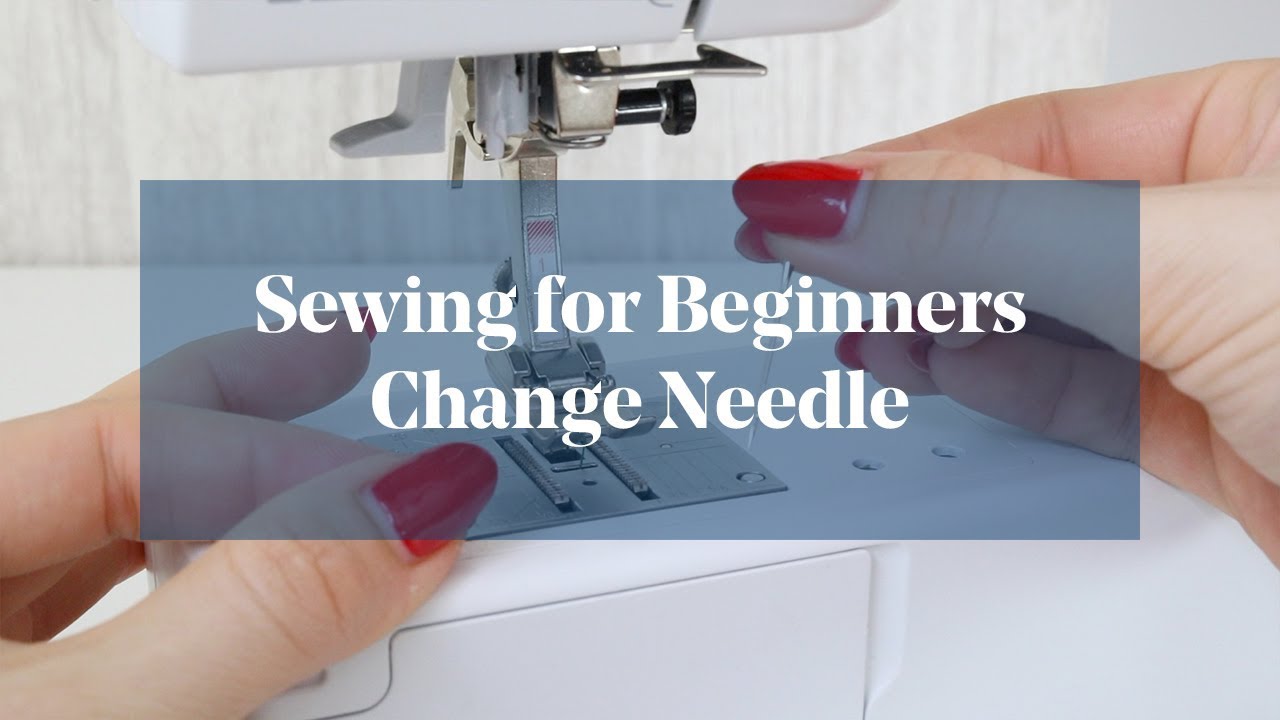
Image Source: i.ytimg.com
Why Change Your Needle?
Needles do not last forever. They get dull. They get bent. Sometimes they even break. Sewing with a bad needle causes problems.
h4 What Happens with a Bad Needle?
- Skipped stitches: The machine misses stitches. The seam looks bad.
- Pulled threads: The needle snags the fabric threads. This makes the fabric look rough.
- Needle breaks: A bent or dull needle can snap. This can be scary. A broken sewing machine needle needs replacing right away.
- Loud noises: The machine might sound wrong. It might thump or click hard.
- Fabric damage: The needle can make holes in the fabric. It can ruin your project.
- Poor stitch quality: The stitches might look uneven. They might not be strong.
Changing the needle fixes these issues. It is the first thing to try if your machine acts up. A new needle is sharp. It glides through fabric easily. This makes sewing fun again.
Getting Ready
Before you touch the needle area, do one very important thing.
h4 Turn Off Your Machine Power
This is for safety. You do not want the machine to start stitching while your fingers are near the needle. Unplug it if you can. Or turn off the main power switch. Make sure it is truly off.
h4 Gather Your Tools
You will need a few things.
* A new sewing machine needle: Get the right type and size for your project. We will talk more about types of sewing machine needles soon.
* A small screwdriver: Most machines come with one. It fits the needle screw. Some machines have a thumb screw you can turn by hand.
* Good light: See what you are doing clearly. Use a desk lamp if needed.
* A small piece of cloth or paper: Put this under the needle area. It helps catch the old needle if it drops.
h4 Clear the Area
Move your fabric away. Make sure no pins are nearby. Have a clean space to work. This helps prevent losing the old needle or dropping the new one.
Taking Out the Old Needle
The needle is held in place by a screw. This is called the needle clamp screw. It is located on the needle bar. The needle bar moves up and down.
h4 Finding the Screw
Look at the front of the needle bar. You will see a screw head there. This screw holds the needle tight.
h4 Loosening the Screw
You need to loosen this screw.
* Take your small screwdriver.
* Put the tip into the slot of the needle clamp screw.
* Turn the screw. Which way? “Left loose, right tight.” Turn it towards the left.
* Turn it just enough to make the needle feel loose. You do not need to take the screw all the way out. Just loosen needle screw enough for the needle to drop down a bit. Be careful not to let the screw fall out completely. If it does, it can be hard to find!
h4 Holding the Needle
Keep one hand holding the old needle. Hold it gently. Hold it near the top. This stops it from falling when the screw is loose.
h4 Pulling Out the Old Needle
Once the screw is loose, pull the old needle straight down. It should slide out easily. If it does not, loosen the screw a tiny bit more. Take the needle out completely.
h4 Getting Rid of the Old Needle
Old needles are sharp even if dull. Do not just toss it in the trash. It could poke someone. Put it in a special needle disposal container. Or tape it inside a folded piece of paper. Then throw it away safely.
Picking the Right Needle
Sewing machine needles are not all the same. They come in different sizes. They are made for different fabrics and jobs. Using the right needle makes a big difference. Knowing the types of sewing machine needles is important.
h4 Needle Size Numbers
Needles have numbers. These numbers tell you the size.
* Small numbers: Mean a thin needle. Good for fine fabrics like silk. (Example sizes: 60/8, 65/9)
* Large numbers: Mean a thicker, stronger needle. Good for heavy fabrics like denim. (Example sizes: 100/16, 110/18)
* Medium numbers: For medium fabrics like cotton. (Example sizes: 75/11, 80/12, 90/14)
Needles often have two numbers. Like 90/14. The first number is the European size. The second is the American size. Both numbers mean the same size needle.
h4 Needle Types
Different needles are designed for different materials or tasks.
h5 Standard or Universal Needle
- This is the most common type.
- It has a slightly rounded point.
- Good for many woven fabrics.
- Use it for basic sewing on cotton, linen, blends.
- If you are not sure which needle to use, start with a universal needle in a medium size (like 80/12 or 90/14).
h5 Jersey or Ballpoint Needle
- This needle has a rounded tip.
- It does not pierce fabric threads. It pushes them aside.
- Use it for knit fabrics like t-shirt material.
- Stops skipped stitches and holes in knits.
h5 Stretch Needle
- Like a ballpoint, but with a special eye and scarf (area behind the eye).
- Designed for very stretchy fabrics like Lycra or Spandex.
- Helps prevent skipped stitches on very stretchy materials.
h5 Denim or Jeans Needle
- This needle is very strong.
- It has a sharp, strong point.
- Made for sewing thick fabrics like denim, canvas, and heavy twills.
- It can push through many layers.
h5 Microtex or Sharp Needle
- This needle has a very sharp point.
- It makes fine holes.
- Great for very fine fabrics like silk, microfibers, and crisp materials.
- Good for precise topstitching.
h5 Leather Needle
- This needle has a wedge-shaped point.
- It cuts small holes in leather as it sews.
- Use only for real leather or suede.
- Do not use on other fabrics; it will damage them.
h5 Quilting Needle
- Designed for sewing through many layers of fabric and batting.
- Often stronger than a universal needle.
- Helps keep stitches even on quilts.
h5 Metallic Needle
- Designed for sewing with metallic threads.
- Has a larger eye and smooth coating.
- Helps prevent the metallic thread from breaking or fraying.
h5 Embroidery Needle
- Used for machine embroidery.
- Has a larger eye to handle embroidery threads.
- Designed to reduce thread breaks.
Here is a simple table to help choose:
h5 Needle Choice Table
| Fabric Type | Needle Type | Common Sizes | What it does |
|---|---|---|---|
| Light Wovens (Silk, Rayon) | Microtex/Sharp | 60/8 – 70/10 | Very sharp, fine point |
| Medium Wovens (Cotton, Linen) | Universal | 70/10 – 90/14 | Standard point |
| Heavy Wovens (Denim, Canvas) | Denim/Jeans | 90/14 – 110/18 | Strong, sharp point |
| Knit Fabrics (Jersey) | Ballpoint/Jersey | 70/10 – 90/14 | Rounded point, pushes fibers |
| Very Stretchy Knits | Stretch | 75/11 – 90/14 | Special scarf, rounded point |
| Leather, Suede | Leather | 80/12 – 100/16 | Wedge point, cuts fabric |
| Quilting | Quilting | 75/11 – 90/14 | Stronger, for layers |
| Using Metallic Thread | Metallic | 80/12 – 90/14 | Larger eye, smooth |
| Machine Embroidery | Embroidery | 75/11 – 90/14 | Larger eye for special thread |
Always check your machine’s manual. It might suggest specific needle types or sizes for your model.
Putting the New Needle In
Now you have your new needle. It is time for installing sewing machine needle. This step is very important. The needle must go in the right way. If it is not in correctly, the machine will not make stitches. Or it will break the thread.
h4 Look at the New Needle
Hold the new needle in your hand. Look closely at the top part. This part goes into the machine. Most sewing machine needles for home machines have a special design at the top.
* One side of the top is flat. This is the flat side of needle.
* The other side is rounded.
h4 Find the Needle Holder
Look at the end of the needle bar. This is where the needle goes in. There is a hole or slot there.
h4 Orient the Needle Correctly
This is the most critical step for installing sewing machine needle.
* The flat side of needle MUST face the back of the machine. On some older machines, it might face the side. Check your manual if you are unsure. But for most modern home machines, the flat side goes to the back.
* The rounded side with the groove faces the front. There is a long groove running down the front of the needle. This is the needle groove. The thread sits in this groove as the needle goes down into the fabric. The flat side is for fitting into the needle clamp correctly.
h4 Insert the Needle
Hold the new needle with the flat side facing the back.
* Gently push the top of the needle up into the hole or slot on the needle bar.
* Push it up as far as it will go. You should feel it stop. The needle needs to be all the way up. If it is not pushed all the way up, it will be too low. This will cause problems.
h4 Tighten the Screw
Keep holding the needle lightly in place with one hand.
* Take your screwdriver again.
* Put the tip back into the needle clamp screw.
* Turn the screw to the right this time. “Right tight.”
* Tighten it firmly. Do not over-tighten, but make sure it is snug. The needle should not wobble or slide down. This is tightening the needle clamp screw.
h4 Check the Needle
Once tightened, let go of the needle. Give it a very gentle wiggle. Does it feel solid? Does it stay in place? If yes, you put it in correctly. If it feels loose, the screw is not tight enough. Or the needle is not pushed all the way up. Loosen the screw, push the needle up again, and re-tighten.
Putting the Thread Back
You changed the needle. Now you need to thread the machine again. This is called threading the machine. You do not need to re-thread the bobbin usually. Just the top thread.
h4 Lift the Presser Foot
Make sure the presser foot is up. This opens the tension discs.
h4 Follow the Threading Path
Most machines have numbers or pictures showing the thread path.
* Start with your spool of thread.
* Guide the thread through all the guides.
* Go down through the tension discs.
* Go up through the thread take-up lever. Make sure the lever is at its highest point. Turn the handwheel towards you to raise it if needed.
* Go down through the last guides towards the needle.
h4 Thread the Needle
This can be tricky sometimes!
* Cut the end of your thread clean. A sharp snip helps.
* The thread usually goes through the needle from front to back. Remember the needle groove on the front? The thread goes through the eye right along that groove.
* Push the thread through the eye of the needle. Tweezers can help if you have trouble grabbing the thread end.
* Pull about 4-6 inches of thread through the needle eye.
* Pull the thread under the presser foot. Pull it towards the back of the machine.
h4 Bring Up the Bobbin Thread
- Hold the end of the top thread with one hand.
- Turn the handwheel towards you slowly. The needle will go down and then come back up.
- As the needle comes up, it will catch the bobbin thread.
- You will see a small loop of the bobbin thread form.
- Use your fingers or tweezers to grab this loop. Pull it up above the needle plate.
- Pull the bobbin thread tail so it is long enough.
- Pull both thread tails (top and bobbin) under the presser foot. Pull them towards the back of the machine. They should lie flat under the foot.
Your machine is now threaded with the new needle.
Checking Your Work
Before you start sewing your real project, do a test stitch.
h4 Use Scrap Fabric
Get a piece of fabric you do not care about. Use the same type of fabric as your project if you can.
h4 Sew a Short Seam
- Place the scrap fabric under the presser foot.
- Lower the presser foot.
- Sew a few lines of stitches. Do a straight stitch.
- Sew slowly at first.
h4 Check the Stitches
- Look at the stitches you just sewed.
- Are they even?
- Are there any skipped stitches?
- Does the tension look right? The stitches should look the same on the top and the bottom. They should not be too loose or too tight.
- Does the machine sound okay?
If the stitches look good, your new needle is installed correctly. You are ready to sew! If there are problems, like skipped stitches or broken thread, check the needle again. Make sure it is pushed all the way up. Make sure the flat side is facing the back. Make sure the screw is tight. Make sure the machine is threaded correctly.
What If Things Go Wrong?
Sometimes you put in a new needle, and it still does not work right.
h4 Needle Keeps Breaking
- Is the needle size right for the fabric? A needle too thin for heavy fabric can break.
- Is the needle bent? Even new needles can be faulty. Put in another new one.
- Is the needle put in correctly? Flat side to the back, pushed all the way up?
- Is the presser foot down? Sewing with the foot up can cause problems.
- Is the fabric being pulled or pushed hard? Let the machine feed the fabric.
- Is the bobbin area clear? Sometimes thread jams there.
- Is the needle hitting the presser foot or needle plate? Stop immediately if you hear clicking or banging. Re-install the needle carefully. Check for loose screws on the machine.
h4 Skipped Stitches
- Is it the right needle type for the fabric? Knits need ballpoint/stretch needles.
- Is the needle put in all the way up and facing the right way? This is the most common cause.
- Is the needle new? A dull needle can skip stitches.
- Is the machine threaded correctly? Check the whole path, especially the tension discs.
- Is the bobbin threaded correctly and in the case the right way?
- Could the hook timing be off? This is more advanced. If all else fails and the machine skips stitches badly, it might need a mechanic.
h4 Thread Keeps Breaking
- Is the needle eye too small for the thread? Use a needle with a bigger eye for thicker threads (like topstitching thread) or metallic thread.
- Is the thread old or poor quality? Old thread can be weak and break easily.
- Is the machine threaded correctly? Check for snags or places where the thread might be catching.
- Is the tension too tight?
- Is the needle bent or damaged? Even a slight bend can cause thread breaks. Replace the needle.
- Is there a burr on the needle eye or shaft? Run your finger along the needle carefully. If it feels rough, replace it.
Dealing with a broken sewing machine needle means you definitely need to replace it. Always check the needle area for any small pieces of the old needle that might have broken off. Remove them before putting in a new one.
Taking Care of Needles
Needles get dull faster than you think. Think about how many times the needle goes through fabric. It is thousands of times in just one seam!
h4 How Often to Change Your Needle
- Rule of thumb: Change your needle for every project. Or every 8-10 hours of sewing time. This might seem often, but needles are cheap. It saves headaches later.
- Special fabrics: Change your needle more often when sewing tricky fabrics. Sewing denim, canvas, or fabric with lots of glue (like interfacing) dulls needles fast.
- If you hit a pin: STOP. Your needle is likely bent or damaged. Replace it immediately. Do not sew over pins!
- If stitches look bad: Change the needle first. It is the easiest fix.
h4 Storing Needles
Keep your needles organized.
* Use a needle case or a small box.
* If you take a needle out to save for later (like a special needle you only used a little), label it. You can stick it point-first into a piece of paper or cardboard. Write the size and type next to it. This stops you from accidentally using a dull needle later.
* Keep new needles in their original package. The package tells you the size and type.
Caring for your needles is part of good sewing machine needle replacement practice. It makes your sewing life much easier.
Steps Again, Simply Put
Let’s quickly go over the steps for sewing machine needle replacement one more time.
- Turn off the power. Unplug the machine. Safety first.
- Get a new needle and a small screwdriver.
- Find the needle clamp screw on the needle bar.
- Hold the old needle with one hand.
- Loosen the needle screw by turning it to the left (loosen needle screw). Turn it just enough for the needle to be loose.
- Pull the old needle straight down and out. Put it somewhere safe for disposal.
- Take your new needle. Find the flat side of needle. Find the needle groove.
- Insert new needle up into the needle bar. The flat side of needle must face the back. Push it all the way up until it stops.
- Hold the new needle gently pushed up.
- Tighten the needle clamp screw by turning it to the right. Make it snug but not overly tight. (tighten the needle clamp screw)
- Check the needle to make sure it is firm and facing the right way.
- Thread the machine again, following the threading path. Remember threading the machine goes from front to back through the needle eye.
- Bring up the bobbin thread.
- Do a test stitch on scrap fabric. Check the stitches.
That is it! You have successfully changed your sewing machine needle.
Common Questions
h5 Do I need a special tool to change the needle?
Most machines need a small flathead screwdriver to loosen the needle clamp screw. Some machines have a thumb screw you can turn by hand. Check your machine’s manual.
h5 Which way does the needle go in?
For most home sewing machines, the flat side of the top of the needle goes to the back of the machine. The rounded side with the long groove faces the front. Always push it all the way up.
h5 How do I know what size needle to use?
The needle size depends on your fabric. Use smaller numbers for light fabrics (silk, fine cotton). Use bigger numbers for heavy fabrics (denim, canvas). Medium numbers work for basic cotton fabrics. Check the table above or your fabric pattern for suggestions.
h5 What kind of needle should I use for stretchy fabric?
Use a ballpoint needle or a stretch needle. These needles have a rounded tip that pushes fabric fibers aside instead of piercing them. This prevents skipped stitches and holes in knit fabrics.
h5 My needle keeps breaking. Why?
Reasons include using the wrong size needle for the fabric, the needle is not put in correctly, sewing over pins, or the machine timing might be off. Always check the needle insertion first. Make sure it is the right type and size. Avoid sewing over pins. If it still breaks, your machine might need service.
h5 How often should I change my sewing machine needle replacement?
Change it for every new project. Or after about 8-10 hours of sewing time. If you hear the machine making a loud popping sound (the needle hitting something) or see skipped stitches, change it right away. Using the right types of sewing machine needles and changing them often makes sewing much better.
h5 Can I put a universal needle in any machine?
Most modern home sewing machines use needles with the same type of shank (the top part). This shank usually has one flat side. So, a universal needle should fit most machines that use this standard needle system (often labeled 130/705 H). Always check your machine’s manual to be sure it uses this standard needle type. Industrial machines or very old machines might need different needle types.
h5 What do I do with a broken sewing machine needle?
Gather all the pieces carefully. Do not just put them in the trash. Wrap them safely in tape or paper, or put them in a hard container (like an old pill bottle) before discarding. This protects you and waste workers.
Conclusion
Changing the needle on your sewing machine is a simple task. It takes only a minute or two. It can solve many sewing problems like skipped stitches or thread breaking. Learning how to loosen needle screw, remove the old needle, choose the right new one from the types of sewing machine needles available, correctly insert new needle (paying attention to the flat side of needle and needle groove), tighten the needle clamp screw, and then do threading the machine again is a key skill for any sewer. Make it a regular habit. A fresh needle makes sewing smoother and more enjoyable. Do not wait! Change your needle now and feel the difference.