
Can you make pot holders with a sewing machine? Absolutely! Making your own pot holders with a sewing machine is a fantastic way to protect your hands from hot dishes and add a personal touch to your kitchen decor. This beginner potholder project is not only practical but also a lot of fun to create. This fabric potholder tutorial will guide you through the simple steps to craft sturdy and stylish pot holders. You’ll be amazed at how easy it is to create these useful kitchen essentials with just a few basic sewing supplies for potholders.
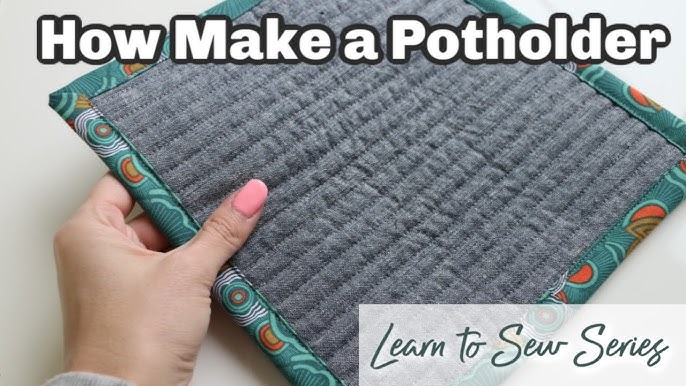
Image Source: i.ytimg.com
Why Make Your Own Pot Holders?
Homemade pot holders offer a unique blend of functionality and personalization. Store-bought options can be expensive, and you might not always find the exact style or colors you desire. By making your own, you control the fabric, the insulation, and the overall aesthetic. Plus, it’s a rewarding way to practice your sewing potholder patterns and improve your machine sewing potholders skills. This project is perfect for anyone looking for easy sewing crafts or wanting to make homemade kitchen mitts.
What You’ll Need: Your Sewing Supplies for Pot Holders
Before you start, gather all your sewing supplies for potholders. Having everything ready will make the process smooth and enjoyable.
Essential Sewing Machine Accessories and Materials:
- Fabric:
- Cotton Fabric: 100% cotton is best for pot holders because it’s heat-resistant and breathable. You’ll need two different coordinating or contrasting fabrics for the front and back of each pot holder.
- Insulation Layer: Insul-Bright or a thick layer of cotton batting (like Warm & Natural or Hobbs Heirloom) is crucial for heat resistance. Insul-Bright is specifically designed for this purpose.
- Sewing Machine: Any basic sewing machine will work.
- Thread: High-quality polyester thread is recommended for durability.
- Rotary Cutter and Mat: For precise fabric cutting. Scissors can also be used.
- Ruler: For measuring fabric accurately.
- Fabric Scissors: For cutting fabric.
- Pins: To hold fabric layers together.
- Iron and Ironing Board: For pressing seams.
- Needle: A universal needle size 80/12 or 90/14 is usually suitable.
- Optional:
- Bias Tape: For a neat finishing edge, especially around curves if you’re using a pattern with them. Pre-made bias tape or you can make your own.
- Quilting Ruler: For squaring up fabric.
- Marking Pen or Chalk: For marking fabric.
Choosing Your Fabrics: A Guide to Pot Holder Materials
The type of fabric you choose significantly impacts the safety and look of your pot holders.
Fabric Considerations:
- Cotton: Always opt for 100% cotton. It’s naturally heat-resistant. Avoid synthetic fabrics like polyester or nylon, as they can melt when exposed to high heat, posing a burn risk.
- Pre-washing: Always pre-wash and dry your fabrics. This prevents shrinkage after you’ve sewn your pot holders and removes any sizing or chemicals.
- Durability: Quilting cotton is a good choice because it’s durable and holds up well to repeated washing and use.
- Design: Have fun with your fabric choices! You can use coordinating prints, bold patterns, or simple solids. This is where your creativity can shine in your DIY potholder sewing project.
The Insulating Powerhouse: Protecting Your Hands
The key to a functional pot holder is its insulating layer. This is what prevents heat from transferring to your hands.
Insulation Options:
- Insul-Bright: This is a polyester batting that has a thin metallic film. It reflects heat away from your hands. It’s highly recommended for the best heat resistance.
- Cotton Batting: If you can’t find Insul-Bright, use multiple layers of thick 100% cotton batting. Three to four layers usually provide decent insulation, but Insul-Bright is superior.
- Fleece or Wool: While some people use these, they are not as effective as Insul-Bright or cotton batting for high heat and can be flammable. Stick to cotton or Insul-Bright for safety.
Cutting Your Fabric: Precision for the Perfect Potholder
Accurate cutting is the foundation of a well-made pot holder. This part is crucial for successful machine sewing potholders.
Standard Pot Holder Size and Cutting:
A common size for a square pot holder is 8 inches by 8 inches.
Step 1: Cut Your Fabric Pieces
For each pot holder, you will need:
- Two (2) squares of Outer Fabric: Cut at 8.5 inches x 8.5 inches. The extra half-inch on each side will be used for the seam allowance.
- Two (2) squares of Lining Fabric: Cut at 8.5 inches x 8.5 inches.
- One (1) square of Insulating Material (Insul-Bright or Cotton Batting): Cut at 7.5 inches x 7.5 inches. This is slightly smaller than the fabric pieces, allowing for a clean seam.
Table 1: Fabric Cutting Guide for One 8.5″ x 8.5″ Pot Holder
| Fabric Piece | Dimensions | Quantity |
|---|---|---|
| Outer Fabric (Front) | 8.5″ x 8.5″ | 1 |
| Outer Fabric (Back) | 8.5″ x 8.5″ | 1 |
| Lining Fabric (Front) | 8.5″ x 8.5″ | 1 |
| Lining Fabric (Back) | 8.5″ x 8.5″ | 1 |
| Insulating Material (Insul-Bright) | 7.5″ x 7.5″ | 1 |
Step 2: Prepare Your Insulating Layer
If using Insul-Bright, it’s usually a single layer. If using cotton batting, stack 3-4 layers together to create a thick insulating core.
Assembling Your Pot Holder: Layering for Success
The layering process is key to creating a sturdy and safe pot holder. This section details the quilting potholder instructions for assembly.
Layering Order:
For one side of the pot holder, you will layer the fabrics in this order, starting from the bottom and working your way up:
- Bottom Fabric (Lining Fabric): Place one 8.5″ x 8.5″ piece of lining fabric right side up on your work surface.
- Insulating Layer: Place the 7.5″ x 7.5″ insulating piece (Insul-Bright or batting) centered on top of the lining fabric.
- Top Fabric (Outer Fabric): Place one 8.5″ x 8.5″ piece of outer fabric right side down on top of the insulating layer.
Important Note: You will assemble two such “sandwiches” – one for the front and one for the back of your pot holder.
Sewing Your Pot Holder: Step-by-Step Machine Sewing
Now it’s time to bring your layers together with your sewing machine. This is the core of the machine sewing potholders process.
Sewing Sequence:
Step 1: Secure the Layers
- Take your first “sandwich” of fabric (lining, batting, outer fabric).
- Pin all layers together around the edges to prevent shifting.
- Repeat with the second “sandwich.”
Step 2: Quilt the Layers (Optional but Recommended)
Quilting helps keep the insulating layer in place and adds visual interest. This is where quilting potholder instructions come into play.
- For the first sandwich: Sew lines across the fabric. You can sew diagonally from corner to corner, creating an “X,” or sew straight lines horizontally and vertically, about 1-2 inches apart.
- For the second sandwich: Quilt it in the same way, ensuring a matching design if desired.
- Sewing Tip: Use a walking foot if you have one. It helps feed the multiple layers of fabric evenly through the machine, preventing puckering. If you don’t have a walking foot, sew slowly and gently guide the fabric.
Step 3: Attach the Binding (Bias Tape)
This is where you give your pot holder a clean, professional finish.
- Prepare Bias Tape: If using pre-made bias tape, you’ll need about 36 inches for an 8.5-inch square pot holder to allow for a slight overhang. If making your own, cut fabric strips 2.25 inches wide on the bias (diagonal) of the fabric and press them in half lengthwise, wrong sides together, to create a double-folded binding.
- Attach the First Side:
- Take one of your quilted pot holder pieces.
- Align the raw edge of the bias tape with the raw edge of the pot holder, starting about 2-3 inches from a corner. Pin it in place.
- Sew along the folded edge of the bias tape, attaching it to the pot holder. Use a 1/4-inch seam allowance. Stop about 1/4 inch before the corner.
- Miter the corner: Fold the bias tape up and then back down along the next edge of the pot holder, creating a neat 45-degree angle. Pin in place.
- Continue sewing bias tape around all four sides, mitering each corner.
- When you reach the starting point, overlap the end of the bias tape by about 1-2 inches. Trim any excess, fold the raw edge under, and sew it to close the gap.
- You should now have the bias tape attached to one side of the pot holder, with raw edges of the tape extending along the sides.
Step 4: Prepare for Binding Attachment
- Place the two quilted pot holder pieces right sides together. The bias tape should be sandwiched between them, with the raw edges of the bias tape aligned with the raw edges of the pot holder pieces.
- Pin the layers securely, ensuring the bias tape edges are trapped evenly between the two pot holder squares.
Step 5: Sew the Pot Holder Together
- Using a 1/4-inch seam allowance, sew around the entire perimeter of the pot holder, stitching through all layers. This will permanently enclose the raw edges of the pot holder and attach the bias tape. Make sure to catch the bias tape securely in this seam.
Step 6: Finish the Binding
- Turn the pot holder right side out. The bias tape should now wrap around the edges.
- Press the bias tape neatly along the edges.
- Fold the bias tape over to the other side of the pot holder, covering the seam.
- You can either:
- Machine Stitch in the Ditch: Carefully sew along the seam line on the front of the pot holder, catching the folded bias tape on the back. This creates a nearly invisible stitch.
- Topstitch: Sew close to the folded edge of the bias tape on the front of the pot holder. This is a more visible stitch but is often easier for beginners.
Step 7: Add a Hanging Loop (Optional)
- Cut a small strip of fabric (about 1 inch wide and 6 inches long). Fold it in half lengthwise, then fold the raw edges in to meet the center fold, and press. You can also use a piece of pre-made bias tape.
- Fold this strip in half again to create a loop.
- Before you sew the final binding edge, tuck the raw ends of the loop into the bias tape on one of the corners (or the middle of a side).
- When you fold the bias tape over to the front and stitch it down, you will catch the loop, securing it in place for hanging.
Alternative Construction Methods: Variations on a Theme
While the bias tape method is popular, there are other ways to create great pot holders.
Simple Folded Edge:
This method avoids bias tape and is even simpler.
- Layering: Layer your fabrics as described before: lining (right side up), batting/Insul-Bright, outer fabric (right side down).
- Sewing: Sew around the perimeter with a 1/4-inch seam allowance, leaving a 3-inch opening for turning.
- Turning: Turn the pot holder right side out through the opening. Push out the corners.
- Pressing: Press the pot holder flat, tucking the raw edges of the opening inward.
- Quilting: Quilt the layers together as described earlier, which will also close the opening.
- Optional Topstitch: Add a topstitch around the entire edge for a finished look.
Quilting First, Then Assembling:
Some crafters prefer to quilt their fabric pieces before layering and sewing.
- Quilt Fabric Layers: Take one piece of outer fabric and one piece of lining fabric. Place the batting/Insul-Bright between them. Baste (temporarily secure with pins or long stitches) or spray baste. Then, quilt these layers together as desired (diagonal lines, squares, etc.).
- Create Two Quilted Panels: Repeat this process to create two quilted panels.
- Sew Together: Place the two quilted panels right sides together and sew around the edges, leaving an opening for turning.
- Turn and Finish: Turn right side out, press, and topstitch or bind as usual.
Making Pot Holders with Specific Sewing Potholder Patterns
Many sewing potholder patterns are available online or in sewing books. These might offer different shapes or construction techniques.
Popular Pot Holder Shapes:
- Square: The most common and straightforward.
- Round: Requires more careful handling of curves when binding.
- Oven Mitts: These are essentially shaped pot holders designed to slip over your hand. They typically involve more pieces and often a thumb gusset for better grip. Homemade kitchen mitts can be a more advanced project but are very rewarding.
When using a pattern, always follow its specific cutting and construction instructions, as they are designed for the intended outcome.
Mastering the Art of Heat Resistance: A Quilting Potholder Instruction Deep Dive
To ensure your heat resistant potholder sewing is effective, pay attention to the insulation and the density of your quilting.
Key Elements for Heat Resistance:
- Sufficient Insulation: Use at least one layer of Insul-Bright or 3-4 layers of thick cotton batting. The more layers of cotton batting, the better the insulation.
- Dense Quilting: Quilting stitches “trap” the insulating material and prevent it from shifting. Denser quilting means more stitches to create a barrier against heat. Think of it like the insulation in a house – more material and tighter construction means better protection.
- Secure Seams: Ensure all seams are well-sewn and there are no gaps where heat could sneak through. The final binding or edge finishing is crucial here.
Tips for Success with Your Fabric Potholder Tutorial
Even the simplest projects can benefit from a few insider tips to make them even better.
Pro Tips for Your Fabric Potholder Tutorial:
- Press as You Go: Ironing your seams after each step makes a huge difference in the final look of your pot holder. It creates crisp lines and ensures all layers lie flat.
- Use a Longer Stitch Length: For quilting, a slightly longer stitch length (e.g., 2.5-3.0 mm) can be easier to manage with multiple layers.
- Backstitch at the Beginning and End: Always backstitch at the start and end of your seams to secure them.
- Test Your Machine: If you’re unsure how your machine handles multiple layers, do a test run on some scrap fabric and batting.
- Be Patient with Corners: Mitering corners for bias tape can take a little practice. Watch a few video tutorials if you’re unsure.
- Make a Set: Once you’ve made one, you’ll likely want to make a matching set. It’s a great way to use up fabric scraps.
Caring for Your Homemade Pot Holders
To keep your handmade treasures looking great and functioning well, proper care is essential.
Care Instructions:
- Washing: Machine wash on a gentle cycle with cold water.
- Drying: Tumble dry on low heat or air dry.
- Avoid High Heat: Do not iron the pot holders on a very high setting, especially if they contain synthetic batting or embellishments.
- Inspection: Regularly check your pot holders for any signs of wear and tear, especially along the seams. If any part of the insulation is exposed, it’s time to make a new one.
Frequently Asked Questions (FAQ)
Here are some common questions people have when making pot holders.
FAQ:
Q1: Can I use polyester fabric for pot holders?
A1: No, it is not recommended. Polyester and other synthetic fabrics can melt when exposed to high heat, which is dangerous and can cause severe burns. Always use 100% cotton fabric for pot holders.
Q2: How many layers of batting do I need?
A2: For good heat resistance without using Insul-Bright, aim for 3-4 layers of thick 100% cotton batting. If using Insul-Bright, one layer is usually sufficient, as it’s designed for insulation.
Q3: Why is my pot holder puckering?
A3: Puckering can occur when sewing multiple layers. Ensure your sewing machine is set to the correct tension, use a walking foot if possible, and sew slowly, guiding the fabric rather than pushing it. Pressing your seams as you go also helps.
Q4: Can I make pot holders without a sewing machine?
A4: Yes, you can hand-sew pot holders, but it will be more time-consuming. The process of layering and sewing seams will be similar, just done by hand. It’s a good project to practice hand-sewing skills.
Q5: How do I make bias tape?
A5: To make bias tape, cut fabric strips 2.25 inches wide on the diagonal (bias) of the fabric. Press each long edge in by 1/4 inch, then press the entire strip in half lengthwise, wrong sides together. This creates a double-folded tape ready for use.
Conclusion: A Rewarding Sewing Project
Making your own pot holders is a wonderfully practical and creative sewing endeavor. This fabric potholder tutorial has shown you how to create heat resistant potholder sewing items with your sewing machine. Whether you’re looking for easy sewing crafts or wanting to expand your DIY potholder sewing repertoire, this project is a fantastic starting point. Enjoy your new, custom-made pot holders – they’re perfect for keeping your hands safe and adding a touch of handmade charm to your kitchen!