
You want to put your design onto fabric so you can stitch it. What are the main ways to transfer embroidery patterns? You can trace the pattern using light, use special transfer papers, draw with iron-on pens, stick on a water-soluble sheet, or even print right onto fabric. Getting your pattern onto your fabric is the first step to making your embroidery project come to life. It needs to be clear so you know where to put your stitches. There are many simple ways to do this. Some ways are great for beginners, and others work best for special fabrics or designs. This guide will show you how to do it step by step. We will look at different methods and pick the best one for your project.
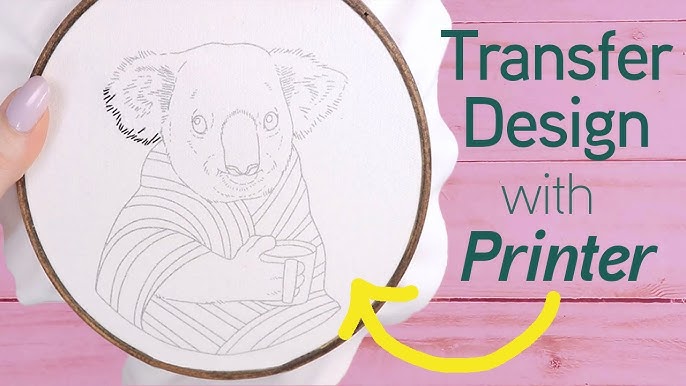
Image Source: i.ytimg.com
Finding Ways to Transfer Patterns
Getting your design from paper or a screen onto your fabric is key. You need a clear line to follow with your needle and thread. If the lines are fuzzy or hard to see, your stitching might not be right. There are several good Embroidery transfer methods. Each method has its own tools and steps. Some methods are very simple, like drawing. Others use heat or water to work. The best way for you depends on your fabric color, the type of design, and what tools you have.
Here are some common ways to get your design onto your fabric:
- Tracing: You draw the design onto the fabric yourself.
- Transfer Paper: Special paper moves the design lines onto the fabric.
- Iron-On Pens: You draw with a pen, then iron it onto the fabric.
- Water-Soluble Stabilizer: You print on a sheet that sticks to the fabric and washes away later.
- Printable Fabric: You print your design directly onto fabric sheets made for printers.
Let’s look at how each of these works. We will talk about what you need and how to do it simply.
Learning How to Trace Patterns
Tracing embroidery patterns is one of the oldest ways. It is also one of the easiest. You simply draw over your design onto your fabric. You need a way to see the design through the fabric.
Simple Tracing Steps
You can use light to help you see through the fabric. A sunny window works well. Or you can use a lamp or a light pad.
Materials You Need:
- Your pattern printed on paper.
- Your fabric.
- A pen or pencil that shows up on your fabric. Choose one that will not stain or is made for fabric and will wash out.
- A window, light box, or lamp.
- Tape to hold things in place.
How to Trace with Light:
- Get Your Pattern Ready: Put your pattern paper flat. Tape it to the window or light source. Make sure the design is facing you.
- Place Your Fabric: Put your fabric over the pattern. Make sure the fabric is smooth. Center your fabric where you want the design to be. Tape the fabric down too. This stops it from moving while you draw.
- Turn on the Light (if using a light box or lamp): The light should shine up through the pattern and the fabric. You should see the lines of your design through the fabric.
- Start Drawing: Use your pen or pencil. Carefully draw over all the lines of your design. Follow the lines on the paper pattern that you see through the fabric.
- Check Your Work: Lift the fabric slightly. Make sure you have traced all the lines. If you missed a spot, put the fabric back down and draw it.
- Remove Tape: Take off the tape from the fabric and the pattern. Your design is now on the fabric.
Tips for Simple Tracing:
- Use a pencil on light fabric. A fine-tip pencil works best.
- Use a fabric pen or chalk pencil on darker fabric. Make sure it is made for fabric and will wash out later. Test it on a scrap piece of fabric first.
- Work on a flat surface if you are using a light box.
- Be gentle so you do not stretch your fabric while tracing.
Using a Light Box for Tracing
A tracing light box for patterns makes tracing even easier. It is a flat box with a light inside. You put your pattern and fabric on top. The light shines up, and you can see the lines clearly.
Materials You Need:
- Your pattern printed on paper.
- Your fabric.
- A pen or pencil for fabric.
- A tracing light box.
- Tape.
How to Trace with a Light Box:
- Set Up the Light Box: Put your light box on a flat table. Plug it in and turn it on.
- Place Your Pattern: Put your pattern paper on the light box. Tape it down so it does not move.
- Place Your Fabric: Lay your fabric smoothly over the pattern. Center the design on the fabric where you want it. Tape the fabric down.
- Trace the Design: Now you can see the pattern lines through the fabric because of the light. Use your pen or pencil to draw over the lines on your fabric.
- Finish Tracing: Trace every line you need for your design.
- Remove Fabric: Take the tape off and lift your fabric. The design is now on your fabric, ready to stitch.
Why Use a Light Box?
- It gives even light. This helps you see the pattern clearly.
- You can trace any time of day, not just when the sun is out.
- It is often more comfortable than holding fabric up to a window.
Tracing Pros and Cons:
Pros:
- Simple and does not cost much.
- Good for simple designs.
- You can use it on many types of fabric.
- No need for special papers or heat.
Cons:
- Hard to use on dark fabric. You cannot see the lines well.
- Tracing fine details can be tricky.
- Lines might rub off while you stitch if using pencil/some pens.
- You need a light source.
Tracing is a great starting point for many embroidery projects. It works best on light-colored fabric with designs that are not too small or detailed.
Using Transfer Paper
Embroidery transfer paper is another simple tool. It is like carbon paper. It has a colored coating on one side. When you press on the other side, the color transfers onto your fabric.
What is Transfer Paper?
Transfer paper usually comes in sheets. It has one side that feels smooth (this is where you trace) and one side with a powdery color coating. The colors are often blue, white, or yellow. Blue is good for light fabrics. White or yellow is good for dark fabrics.
Steps for Using Transfer Paper
You need your pattern, the transfer paper, your fabric, and something to press with. A pen or a special tool called a stylus works well.
Materials You Need:
- Your pattern printed on paper.
- Embroidery transfer paper (choose a color that shows up on your fabric).
- Your fabric.
- A pen or stylus (something with a hard, smooth point).
- Tape.
How to Use Transfer Paper:
- Prepare Your Fabric: Lay your fabric flat on a hard, smooth surface. An old table or a cutting mat works. Do not use your best table, as the pressure might leave marks.
- Place Transfer Paper: Put the transfer paper on top of your fabric. The colored, powdery side must be facing down onto your fabric.
- Place Your Pattern: Put your printed pattern on top of the transfer paper. Make sure it is right where you want the design on your fabric.
- Hold Things Still: Tape the pattern paper and the transfer paper to the fabric or the surface underneath. This stops them from moving.
- Start Tracing: Use your pen or stylus. Trace over all the lines of your pattern design. Press down firmly. You are pressing through the pattern paper and the transfer paper. This pressure makes the color on the transfer paper rub off onto the fabric underneath.
- Trace Everything: Go over every line in your design. Be careful not to press down anywhere you do not want a line. Any pressure will transfer the color.
- Check Your Work: Carefully lift a corner of the pattern paper and transfer paper. Look at your fabric. Are the lines showing up? Are they clear? If not, put the papers back down and press harder on the parts you missed.
- Remove Papers: Once you are sure you have traced everything, remove the tape and lift off the pattern and transfer paper. Your design is now on the fabric.
Tips for Using Transfer Paper:
- Test on a scrap piece of fabric first. See how hard you need to press. Check if the lines can be removed later (some transfer paper marks do not wash out easily).
- Use a smooth, hard point for tracing. A ballpoint pen that has run out of ink is perfect.
- Do not move the papers while tracing. This will make your lines blurry.
- Avoid resting your hand on the papers while tracing. This can accidentally transfer unwanted marks.
- Some transfer papers are sold as “dressmaker’s carbon paper.” They work the same way.
Transfer Paper Pros and Cons:
Pros:
- Can be used on dark fabric (with white or yellow paper).
- Good for detailed designs because you trace directly.
- Relatively inexpensive.
- No light source needed.
Cons:
- The lines can be hard to remove. Some marks are permanent.
- Can be messy. The color powder can smudge.
- Requires firm, even pressure.
- Can leave marks on your surface if you do not protect it.
Using transfer paper is a good option when you need clear lines on fabric, especially if tracing with light is not possible or your fabric is dark. Always check if the marks will wash out before you start your main project.
Working with Iron-On Pens
Using an Iron-on transfer pen is a fun way to get your design onto fabric. You draw your design on paper with this special pen. Then, you use a hot iron to transfer the ink from the paper to the fabric. This creates Heat transfer embroidery patterns.
What is an Iron-On Pen?
An iron-on transfer pen contains ink that reacts to heat. When you apply heat with an iron, the ink transfers from the paper onto the fabric. The lines are usually blue or black.
How to Use an Iron-On Pen
You need the pen, paper to draw on, your fabric, and an iron.
Materials You Need:
- An iron-on transfer pen.
- Plain paper (thin paper works well, like tracing paper).
- Your pattern design.
- Your fabric (light to medium color works best).
- An iron.
- An ironing surface (like an ironing board, but make sure it is hard and smooth).
- Tape.
How to Create Heat Transfer Embroidery Patterns with an Iron-On Pen:
- Draw or Trace Your Pattern on Paper: Use the iron-on pen to draw your design on the plain paper. If you have a printed pattern, you can put the plain paper over it (use a window or light box if needed) and trace the lines with the iron-on pen. Make sure you draw all the lines you need.
- Important: Flip Your Design! Iron-on transfers are mirror images. The design will flip when you iron it onto the fabric. If your design has words or is not the same forwards and backward, you must draw it backward on the paper. You can do this by tracing your pattern onto the back of the paper you drew on, or by flipping your original pattern before tracing it onto the paper with the pen.
- Heat Your Iron: Heat your iron to a medium-hot setting. Do not use steam. Make sure the water is empty.
- Prepare Your Fabric: Lay your fabric flat on a hard, heat-safe surface. An ironing board can be too soft. A hard surface like a table with a heat-resistant mat is better. Make sure the fabric is smooth.
- Position Your Pattern: Place the paper with your design drawn in iron-on ink onto the fabric. The ink side should be facing down onto the fabric. Position it exactly where you want the design to appear.
- Hold the Paper Still: Tape the paper down to the fabric or the surface if needed. This stops it from moving.
- Apply Heat: Press the hot, dry iron straight down onto the paper. Hold it there for a few seconds (check the pen’s instructions – it might say 5-10 seconds). Do not move the iron back and forth like you are ironing clothes. Just lift it up and press it down in the next spot. Lifting and pressing helps create a clear, unbroken line.
- Lift the Paper: Carefully lift a corner of the paper to check if the ink has transferred. If the lines look light, put the paper back down and press with the iron again in that spot.
- Finish Transferring: Once you see the design clearly on the fabric, lift the paper off completely. Your design is now on your fabric.
Tips for Using Iron-On Pens:
- Always test on a scrap first to find the right iron temperature and pressing time.
- Draw clearly and firmly with the pen.
- Remember to reverse your design if it matters!
- Press straight down with the iron. Sliding the iron can smudge the design.
- The lines from iron-on pens are often permanent. They will not wash out. Stitch over them completely or use this method only when the stitches will cover the lines.
Iron-On Pen Pros and Cons:
Pros:
- Relatively fast transfer method.
- Lines are clear and easy to see.
- Good for light-colored fabrics.
Cons:
- Lines are usually permanent and do not wash out.
- Must reverse the design (tricky for words).
- Not suitable for dark fabrics.
- Can smudge if not careful with the iron.
- Requires heat.
Iron-on pens are great for simple designs on light fabric, especially when you want lines that stay visible while you stitch and do not need to be washed away later.
Trying Water-Soluble Stabilizer
Using Water-soluble stabilizer for embroidery is a very popular method, especially for tricky fabrics or dark colors. It is a thin sheet that you can print your design onto. You stitch through it, and then it dissolves completely in water.
What is Water-Soluble Stabilizer?
This stabilizer is a fabric-like material or a thin film that dissolves when it gets wet. There are different types:
* Film Type: Often clear, good for towels or fuzzy fabric.
* Fabric-like Type: Looks like a light fabric, often used for hooping with the fabric or as a topping. Some types are made so you can print directly onto them. This is the type we use for transferring patterns easily. It feels a bit like paper or thin cloth.
How it Works for Transferring Designs
You print your pattern onto the water-soluble stabilizer sheet using your home printer. Then, you stick or pin this printed sheet onto your fabric. You stitch over the lines on the stabilizer. When your stitching is done, you soak the fabric in water, and the stabilizer disappears!
Steps for Using Water-Soluble Stabilizer
You need printable water-soluble stabilizer, a printer, your pattern file, and your fabric.
Materials You Need:
- Printable water-soluble stabilizer sheets.
- An inkjet printer.
- Your pattern design saved on your computer.
- Your fabric.
- Pins or temporary fabric spray adhesive (optional, to stick the stabilizer).
- An embroidery hoop.
- Water.
How to Use Water-Soluble Stabilizer:
- Get Your Design Ready: Have your pattern design ready on your computer. Make sure it is sized correctly for your project.
- Load Stabilizer into Printer: Read the instructions for your specific water-soluble stabilizer. Some have a paper backing you need to peel off later. Make sure you load it into your inkjet printer correctly so that the ink prints on the correct side of the stabilizer sheet.
- Print the Design: Print your pattern directly onto the water-soluble stabilizer sheet using your inkjet printer. Use a normal print setting.
- Let the Ink Dry: Let the printed sheet sit for a while to make sure the ink is completely dry. This stops it from smudging on your fabric.
- Cut Out the Design: Carefully cut around your printed design on the stabilizer sheet. Leave a small border, maybe about 1/2 inch or 1 cm.
- Attach Stabilizer to Fabric: Place the cut-out stabilizer piece with the design on it onto your fabric. Put it exactly where you want your embroidery. You can hold it in place with a few pins outside the design area. Or you can use a temporary fabric spray to stick it gently.
- Put Fabric in Hoop: Place your fabric with the attached stabilizer into your embroidery hoop. Tighten the hoop well. The stabilizer should be smooth over the fabric.
- Start Stitching: Stitch your design as usual. Stitch right over the lines that are printed on the water-soluble stabilizer. The stabilizer adds a little firmness, which can be helpful for stitching.
- Finish Stitching: Complete all your embroidery stitches.
- Dissolve the Stabilizer: Take your fabric out of the hoop. Trim away any large bits of stabilizer around the design. Put the fabric into a bowl of warm water. Gently swish it around or let it soak. The stabilizer will start to disappear. You might need to change the water or rinse it a few times until all the stabilizer is gone. Follow the specific instructions for your stabilizer type.
- Dry Your Fabric: Gently press excess water out of the fabric. Lay it flat on a towel to dry, or hang it up.
Tips for Using Water-Soluble Stabilizer:
- Make sure the stabilizer is marked as “printable” or “for inkjet printers.”
- Let the ink dry fully before putting it on your fabric.
- Do not get the stabilizer wet before you finish stitching!
- Follow the instructions on the stabilizer package for dissolving. Some need cold water, some warm.
- Make sure all the stabilizer is washed away. Any left can feel stiff.
Water-Soluble Stabilizer Pros and Cons:
Pros:
- Excellent for dark fabrics, as the white or light-colored stabilizer shows the dark ink clearly.
- Perfect for fuzzy fabrics like towels, as the stitches do not sink in.
- Very accurate transfer since you print directly.
- No tracing needed by hand.
- Dissolves completely, leaving no marks.
Cons:
- Requires a printer.
- The stabilizer can be a bit more expensive than paper methods.
- You have to wash your finished piece.
- Cannot get the fabric wet while you are working on it.
Water-soluble stabilizer is a top choice for complex designs, dark fabrics, or when you want the transfer marks to disappear completely.
Using Printable Fabric
Using Printable fabric for embroidery is another simple way to get your design ready. You print your design right onto a sheet of fabric made for home printers. This uses Inkjet printing on fabric.
What is Printable Fabric?
Printable fabric sheets are special pieces of fabric (often cotton or silk) attached to a paper backing. This backing makes the fabric stiff enough to go through an inkjet printer like a piece of paper. Once printed, you peel off the paper backing, and you have your design printed directly on the fabric you will stitch on.
How to Print Directly on Fabric
You need the printable fabric sheets, an inkjet printer, and your pattern design file.
Materials You Need:
- Printable fabric sheets (check they are for inkjet printers).
- An inkjet printer.
- Your pattern design saved on your computer.
- An iron (sometimes needed, check instructions).
How to Use Printable Fabric:
- Prepare Your Design: Have your pattern design ready on your computer. Make sure it is sized correctly.
- Read Fabric Sheet Instructions: Look at the package for your printable fabric. Some types need to be ironed first to set them. Some might need pressing after printing. Check which side goes up in your printer.
- Load Fabric Sheet: Load the printable fabric sheet into your inkjet printer. Treat it like a piece of paper. Make sure it goes in correctly so the ink prints on the fabric side.
- Print the Design: Print your pattern onto the fabric sheet using your inkjet printer. You might want to use a higher print quality setting for clearer lines.
- Let the Ink Dry: Let the printed fabric sheet sit flat for a while. This makes sure the ink is completely dry and does not smudge. Drying time varies, but 15-30 minutes is often enough.
- Set the Ink (If Needed): Some printable fabrics say you need to iron them after printing to make the ink color permanent. If your package says this, place a pressing cloth over the printed fabric and iron it.
- Peel Off Backing: Once the ink is dry and set (if needed), carefully peel the paper backing off the fabric sheet. You now have a piece of fabric with your design printed on it.
- Stitch on the Fabric: You can now use this piece of fabric in your embroidery project. Put it in your hoop and stitch right over the printed lines. The lines are permanent.
Tips for Using Printable Fabric:
- Make sure your printer is an inkjet printer. Laser printers use heat and can damage the fabric sheet.
- Choose fabric sheets that match your project needs (e.g., cotton for most embroidery).
- Print a test copy on regular paper first to check size and placement.
- Be careful not to bend or crease the fabric sheet before printing.
- The printed lines are permanent. You stitch over them.
Printable Fabric Pros and Cons:
Pros:
- Very easy and fast process.
- Extremely accurate transfer of complex designs.
- No manual tracing needed.
- Lines are permanent and do not wash out.
- Can be used on any color fabric since the ink is directly on the fabric surface.
Cons:
- Requires a printer.
- Printable fabric sheets are more expensive than paper or stabilizer.
- The lines are permanent, so you must stitch over them completely.
- Limited in size to your printer’s paper size.
Using printable fabric is the simplest method for getting a detailed, accurate pattern onto fabric if you have an inkjet printer. It is great when you want a design that is exactly as you created it on the computer and are happy for the lines to be permanent guide marks under your stitches.
Choosing the Best Way
With several Embroidery transfer methods available, how do you choose the best one for your project? Think about these things:
- Your Fabric Color: Is it light or dark? Tracing with light works best on light fabric. Transfer paper (white/yellow), water-soluble stabilizer, and printable fabric work well on dark fabric.
- Design Detail: How complex is your pattern? Simple tracing is fine for basic shapes. Transfer paper, stabilizer, and printable fabric are better for very detailed designs or text.
- Do You Want Lines to Wash Out? If you do not want to see any guide marks after you finish, use water-soluble stabilizer or a washable tracing pen. Iron-on pens and printable fabric create permanent lines. Transfer paper marks can be hard to remove.
- What Tools Do You Have? Do you have a light box? A printer? An iron? Choose a method that fits the tools you have.
- Cost: Simple tracing is the cheapest. Transfer paper and iron-on pens are also low cost. Water-soluble stabilizer and printable fabric sheets cost more per sheet.
- Your Skill Level: Simple tracing is great for beginners. Other methods might take a little practice to get perfect results.
Here is a simple table to help you compare:
| Method | Fabric Color (Best For) | Design Detail (Good For) | Lines Wash Out? | Needs Printer? | Needs Light Box? | Needs Iron? | Cost (Low to High) |
|---|---|---|---|---|---|---|---|
| Simple Tracing (Window/Lamp) | Light | Simple to Medium | Yes (with washable pen) | No | No (or lamp) | No | Low |
| Tracing (Light Box) | Light | Simple to Medium | Yes (with washable pen) | No | Yes | No | Low to Medium |
| Transfer Paper | Light or Dark | Medium to Detailed | Maybe (can be hard) | No | No | No | Low |
| Iron-On Pen | Light | Simple to Medium | No (permanent) | No | No | Yes | Low |
| Water-Soluble Stabilizer | Light or Dark | Medium to Detailed | Yes (washes away) | Yes | No | No | Medium |
| Printable Fabric | Light or Dark | Detailed | No (permanent) | Yes | No | Maybe | High |
Think about your specific project and pick the method that seems easiest and most suitable.
Getting Great Results
No matter which way you choose for Transferring embroidery designs to fabric, here are some general tips to help you get clear lines:
- Test First: Always try your chosen method on a small scrap of the same fabric you are using for your project. This lets you see how well the lines show up, if they smudge, and if they wash out (if needed).
- Use the Right Pen/Pencil: For tracing, use a fine-tip pencil on light fabrics. For darker fabrics or tracing that needs to wash out, use a pen or pencil made for fabric that is marked as washable or air-eraseable. Let air-eraseable pens disappear completely before washing.
- Keep Fabric Smooth: Make sure your fabric is smooth and flat before you start transferring. Any wrinkles can distort your design.
- Press Firmly (for Transfer Paper): You need good, even pressure to transfer the lines well with transfer paper. Use a tool like a stylus or a pen you do not need anymore.
- Be Careful with Heat (for Iron-On Pens): Do not move the iron side to side. Just press straight down. Moving it will smudge the ink. Make sure your iron is not too hot or not hot enough.
- Let Ink Dry: If you are printing onto stabilizer or fabric sheets, give the ink plenty of time to dry before you touch it or put it in a hoop.
- Hoop After Transfer: Usually, it is best to transfer your design before you put the fabric in the embroidery hoop. Hooping stretches the fabric slightly. If you transfer after hooping, your design might look a bit stretched or distorted when you take it out. (Water-soluble stabilizer is an exception; you often hoop the fabric with the stabilizer on top).
- Store Patterns: Keep your paper patterns safe and flat so you can use them again.
Following these tips will help make your pattern transfer smooth and easy, so you can get straight to the fun part: stitching!
Common Questions About Printing Patterns
Here are answers to some things people often ask about getting designs onto fabric for embroidery.
H5 Can I use a regular printer to print directly onto fabric?
Yes, you can! But you cannot just put any fabric in your printer. You need to use special Printable fabric for embroidery sheets. These are fabric pieces with a paper backing that lets them go through an inkjet printer like paper. You print on these sheets, peel off the backing, and stitch. Do not try to put plain fabric into a regular home printer; it will not work and can damage your printer.
H5 Will the transfer lines wash out when I finish stitching?
It depends on the method and the pen or paper you used.
* Lines from Water-soluble stabilizer for embroidery wash away completely with water.
* Lines drawn with most washable fabric pens will wash out. Air-eraseable pens disappear on their own after a day or two.
* Lines from Iron-on transfer pens and Inkjet printing on fabric (on printable fabric sheets) are usually permanent and will not wash out. You need to make sure your stitches cover these lines.
* Lines from some Embroidery transfer paper can be permanent or very hard to wash out. Always test first!
H5 What is the best way to transfer a pattern to dark fabric?
Simple tracing with light does not work well on dark fabric. Good options for dark fabric are:
* Using white or yellow Embroidery transfer paper.
* Using Water-soluble stabilizer for embroidery. You print on the light-colored stabilizer, stick it to the dark fabric, and stitch over it.
* Using Printable fabric for embroidery. You print directly onto the fabric sheet, and the printed ink shows up well on the fabric itself, which can then be applied to your project or used as the project base.
H5 Do I need special paper to transfer patterns?
Yes, for some methods you do need special paper or sheets:
* For the transfer paper method, you need Embroidery transfer paper.
* For iron-on transfers, you need an Iron-on transfer pen to draw on regular paper.
* For the water-soluble method where you print, you need printable Water-soluble stabilizer for embroidery sheets.
* For printing directly onto fabric, you need Printable fabric for embroidery sheets.
* Simple tracing with light uses regular paper for the pattern and a fabric pen or pencil directly on your fabric.
H5 Can I reuse iron-on transfer patterns?
Iron-on patterns made with an iron-on pen or printed iron-on transfers (like those you can buy) can sometimes be used more than once, but each time you use them, the lines will get lighter. You usually get the clearest transfer the first time.
Getting Started with Printing Patterns
Choosing how to get your pattern onto your fabric is a big part of starting your embroidery project. Don’t feel stuck trying to find the perfect way. Any of these methods will help you get stitching. Simple tracing is a great place to begin. As you do more embroidery, you might try other methods like Water-soluble stabilizer for embroidery or Printable fabric for embroidery for different projects.
Practice makes perfect! Try a new method on a scrap piece of fabric before you start your main project. This will help you feel more confident. With clear lines on your fabric, you are ready to enjoy the relaxing and fun process of adding beautiful stitches. Happy stitching!