
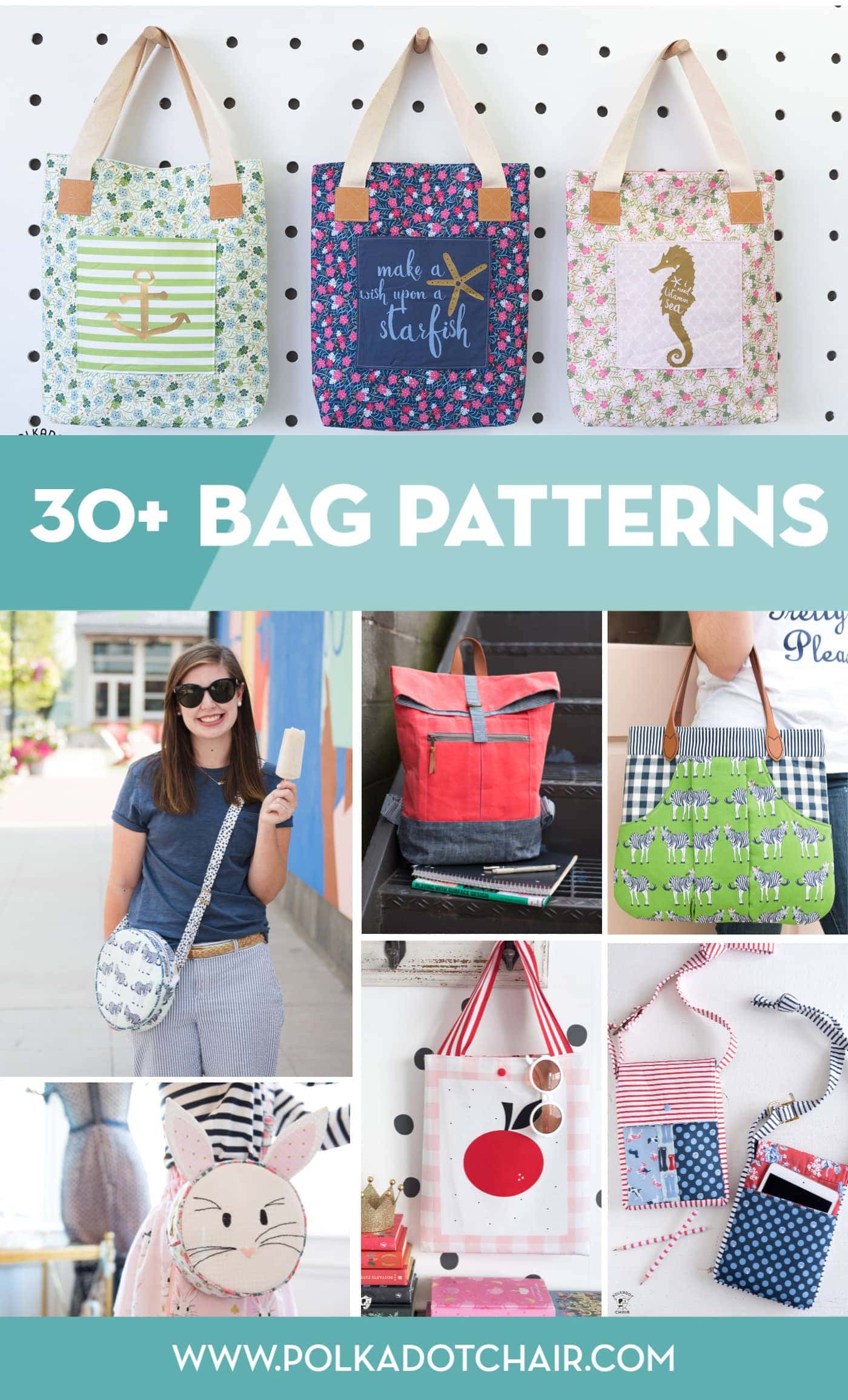
Image Source: www.polkadotchair.com
Beginners’ Guide: How To Sewing A Bag From Start To Finish
Sewing your own bag is a fun project, especially for new crafters. Yes, you can sew a bag even if you’re a beginner! This guide will show you how to sew a simple bag from start to finish. You will learn about the tools you need, how to pick the right fabric, and step-by-step instructions. We will cover everything from choosing bag sewing patterns to putting in a zipper. This makes it easy for anyone to create a useful and pretty bag.
Getting Ready: Your Tools and Materials
Before you start, gather everything you need. Having all your supplies ready makes the sewing process smooth and fun.
Essential Sewing Tools
You will need some basic sewing tools for any bag project.
- Sewing Machine: Any home sewing machine will work. Make sure it is clean and has fresh thread.
- Sharp Scissors: Use fabric scissors only for fabric. This keeps them sharp.
- Pins or Clips: These hold fabric pieces together. Clips are great for thick fabrics.
- Fabric Chalk or Marker: To draw lines on your fabric.
- Measuring Tape or Ruler: For accurate cutting.
- Iron and Ironing Board: Pressing your fabric and seams is key for a neat finish.
- Seam Ripper: Mistakes happen! A seam ripper helps you fix them easily.
- Thread: Pick good quality polyester thread. Match its color to your fabric. Polyester is strong and will not break easily.
Choosing the Right Sewing Machine Needles for Bags
The needle you use matters a lot. Bags are often made from thicker fabrics. A strong needle helps your machine sew through many layers.
- Universal Needle: Size 90/14 or 100/16 is a good start for medium-weight fabrics.
- Denim Needle: Size 100/16 or 110/18 is best for very thick fabrics like denim or canvas. These needles are stronger and less likely to break.
- Leather Needle: If you are sewing faux leather, use a special leather needle. It has a wedge point that cuts through the material.
Table: Recommended Needles for Bag Fabrics
| Fabric Type | Recommended Needle Type | Needle Size |
|---|---|---|
| Cotton, Quilting Cotton | Universal | 90/14 |
| Canvas, Duck Cloth | Denim/Jeans | 100/16 or 110/18 |
| Decorator Fabric | Denim/Jeans | 100/16 or 110/18 |
| Faux Leather, Vinyl | Leather | 100/16 or 110/18 |
| Corduroy, Twill | Denim/Jeans | 90/14 or 100/16 |
Selecting Fabric for Bag Making
The fabric you choose sets the look and feel of your bag. Think about how you will use the bag.
- Quilting Cotton: Great for lining or light bags. It comes in many pretty prints. It is easy to sew.
- Canvas or Duck Cloth: These are strong and durable. Perfect for tote bags or backpacks. They hold their shape well.
- Home Decor Fabric: This fabric is thick and sturdy. It is often treated to resist stains. Look for fun textures and patterns.
- Denim: A classic choice for a casual, strong bag. It is very durable.
- Faux Leather or Vinyl: These give a stylish, modern look. They are durable but can be tricky to sew. Use a walking foot if you have one.
Important Tip: Always buy a little extra fabric than your pattern asks for. This gives you room for mistakes or matching patterns.
Interfacing for Bag Structure: Giving Your Bag Shape
Interfacing is a hidden layer that adds stiffness and body to your fabric. It makes your bag look professional and hold its shape.
- Fusible Interfacing: This type has glue on one side. You iron it onto your fabric. It is easy to use.
- Sew-in Interfacing: This is sewn into the seams. It is good for fabrics that cannot be ironed.
- Types of Interfacing:
- Lightweight: For soft, floppy bags or linings.
- Medium-weight: Good for most everyday bags.
- Heavyweight: For structured bags that stand up on their own. Think about a boxy tote.
- Pellon Peltex or Decovil: These are very stiff. They make bags very firm.
Rule of Thumb: Match the weight of your interfacing to your outer fabric. A thin fabric with heavy interfacing might not look right.
Bag Hardware Types: Adding Shine and Function
Hardware can make your bag look professional and finished.
- D-rings and O-rings: Used for attaching straps or clips.
- Swivel Clasps: For removable straps or key fobs.
- Buckles and Sliders: To adjust strap length.
- Magnetic Snaps: For a secure bag closure.
- Zippers: Many types and sizes available.
- Rivets: To add strength and a cool look to straps.
When choosing hardware, pick items that match your bag’s style. Make sure they are strong enough for your bag’s use.
Starting Your Project: Picking a Pattern
Choosing the right project is key for a beginner. A simple DIY tote bag project is perfect for your first sewn bag.
Why a Tote Bag is Ideal for Beginners
- Simple Shape: Most tote bags are just a few rectangles. This means fewer tricky curves.
- Straight Seams: You will mostly sew straight lines. This is great for practicing.
- Few Pieces: Many tote bags have only two main pieces and two strap pieces.
- No Zippers Needed (at first): You can make a basic tote without a zipper. This lets you learn basic skills first.
- Versatile: Tote bags are super useful for shopping, carrying books, or just everyday use.
Finding Easy Bag Sewing Patterns
You can find patterns in many places:
- Online Blogs and Websites: Many bloggers offer free patterns and tutorials. Search for “free tote bag pattern for beginners.”
- Fabric Stores: They often have simple patterns for sale.
- Sewing Books: Look for books on beginner sewing projects.
- PDF Patterns: Many designers sell digital patterns. You print them at home.
When you pick a pattern, read it fully before you start. Make sure you understand each step. Look for patterns with clear photos or drawings.
Getting the Fabric Ready
Good preparation makes sewing much easier and gives a better result.
Pre-Washing Your Fabric
Always pre-wash your fabric before cutting. This is very important.
- Why? Fabrics can shrink when washed the first time. If you do not pre-wash, your finished bag might shrink or look bumpy later.
- How? Wash and dry your fabric just as you would wash the finished bag. Use the same temperature settings.
After washing and drying, iron your fabric flat. This removes wrinkles and makes it easier to cut accurately.
Cutting Your Fabric Pieces
Accuracy is very important here. Take your time.
- Lay Fabric Flat: Spread your fabric out on a large, flat surface. Make sure it is smooth.
- Use Your Pattern Pieces: Place your pattern pieces on the fabric. Follow the pattern’s layout guide. This helps you save fabric.
- Pin or Weigh Down: Pin the pattern pieces to the fabric. Or use pattern weights to hold them in place.
- Cut Carefully: Use sharp fabric scissors. Cut slowly and precisely around each pattern piece. Cut only one layer of fabric if the pattern says so. This ensures better accuracy.
Tip: If you have trouble cutting straight lines, use a rotary cutter and a cutting mat. This tool makes cutting very fast and accurate.
Applying Interfacing for Bag Structure
This step adds strength and body. Most patterns tell you which pieces need interfacing.
- Cut Interfacing: Cut the interfacing pieces the exact same size as your fabric pieces.
- Place Interfacing: Put the interfacing on the wrong side of your fabric. The rough, gluey side of the interfacing should touch the fabric.
- Iron On: Follow the interfacing manufacturer’s instructions. Usually, you press with a hot iron for 10-15 seconds. Use a pressing cloth to protect your iron.
- Let Cool: Let the fabric cool completely before moving it. This helps the glue set.
Once the interfacing is applied, your fabric will feel stiffer and thicker. This is exactly what you want for a sturdy bag.
Sewing the Outer Bag Body
Now for the fun part: sewing! We will start with the outside of your bag. For this guide, we are making a simple tote.
Sewing the Main Seams
- Place Right Sides Together: Take your two main outer bag fabric pieces. Place them together with the “right sides” (the pretty sides) facing each other. Line up all edges.
- Pin Edges: Pin along the two side edges and the bottom edge. Leave the top edge open.
- Sew: Using your sewing machine, sew along the pinned edges. Use a 1/2-inch or 5/8-inch seam allowance. Your pattern will tell you the exact seam allowance.
- Backstitch: At the start and end of each seam, sew a few stitches backward. This locks your stitches so they do not come undone.
- Press Seams Open: After sewing, press your seams open with an iron. This makes the bag lie flat and look neat.
Making the Bag Bottom (Boxed Corners)
Boxed corners give your bag a flat bottom, allowing it to stand up.
- Flatten Corner: Take one bottom corner of your bag. Flatten it so the side seam and bottom seam meet in the middle. It will look like a triangle.
- Measure and Mark: From the point of the triangle, measure down 1.5 to 2 inches (or whatever your pattern says). Draw a straight line across. This line will be perpendicular to the seam.
- Sew Across the Line: Sew directly on the line you drew. Backstitch at both ends.
- Trim: Cut off the triangle point about 1/2 inch away from your sewn line.
- Repeat: Do this for the other bottom corner.
When you turn the bag right side out, you will see a flat, boxed bottom.
Adding the Straps
Straps can be made from your fabric or from webbing.
- Prepare Straps: If using fabric, fold the strap pieces lengthwise, press, then fold the raw edges in and press again. Topstitch along both long edges.
- Attach to Bag:
- Turn your outer bag right side out.
- Find the top edge. Mark where your straps should go. Usually, they are 2-3 inches in from the side seams.
- Place the raw ends of the straps on the top edge of the bag, matching them to your marks. The strap should be facing down towards the bottom of the bag.
- Pin the straps in place.
- Baste (sew with long stitches) the straps to the bag’s top edge. This holds them while you add the lining.
Sewing the Bag Lining
A lining makes your bag look finished and can add extra pockets. This is often covered in a sewing bag lining tutorial.
Preparing the Lining Pieces
- Cut Lining Fabric: Cut your lining fabric pieces the same size as your outer bag pieces.
- Sew Lining Body: Place the two lining pieces right sides together. Sew the side seams and the bottom seam, just like you did for the outer bag.
- Create Boxed Corners: Make the boxed corners for the lining in the same way you did for the outer bag.
- Leave an Opening: Crucially, when sewing the bottom seam of the lining, leave a 4-6 inch opening in the middle. This is where you will turn your bag right side out later. Remember to backstitch at the start and end of this opening.
Adding Pockets to Bags (Optional but Recommended)
Now is the perfect time to add pockets to your lining. Slip pockets are the easiest for beginners.
- Slip Pocket:
- Cut a rectangle of lining fabric for your pocket. Fold the top edge down twice and stitch for a hem.
- Fold the other three edges in by 1/2 inch and press.
- Place the pocket on one lining piece (wrong side of pocket to right side of lining). Pin in place.
- Stitch around the three folded edges, close to the edge. Backstitch at the start and end. You can add a vertical stitch down the middle to make two smaller pockets.
Joining Outer Bag and Lining
This is where your bag starts to come together.
- Place Bag Inside Lining: Turn your outer bag right side out. Keep the lining wrong side out.
- Insert Outer Bag: Carefully place the outer bag inside the lining. The right side of the outer bag should be touching the right side of the lining.
- Align Top Edges: Line up the top raw edges of the outer bag and the lining. Make sure the side seams match up. The straps of the outer bag should be tucked neatly between the outer bag and the lining.
- Pin All Around: Pin the top edges together all the way around.
- Sew Top Seam: Stitch around the entire top edge, using your pattern’s seam allowance. Backstitch at the start and end.
Finishing Your Bag
Almost done!
- Turn Right Side Out: Remember that opening you left in the lining? Carefully reach through it and pull the entire bag (outer bag and all) through the opening.
- Push Corners Out: Gently push out all the corners so they are nice and sharp. A chopstick or dull pencil can help.
- Close the Opening:
- Fold the raw edges of the opening to the inside by your seam allowance. Press well.
- You can either topstitch very close to the edge to close the opening with your machine.
- Or, for a neater look, hand-stitch the opening closed using a ladder stitch.
- Press and Topstitch:
- Push the lining down into the bag. Smooth everything out.
- Press the top edge of your bag well with an iron.
- Topstitch around the entire top edge of your bag. This gives it a professional look and helps the lining stay in place. Stitch about 1/8 to 1/4 inch from the top edge.
Your basic tote bag is now complete!
How To Install Bag Zipper (Adding a Top Zipper)
Adding a top zipper to your bag makes it more secure. This is a bit more advanced but doable for beginners.
Materials:
* Zipper (length matches your bag opening)
* Zipper foot for your sewing machine
Steps:
- Prepare Zipper Tabs (Optional): Cut two small fabric pieces (about 2×2 inches). Fold them in half, press. Place one raw end of the zipper inside the fold of one fabric piece. Stitch to secure. Repeat for the other end of the zipper. This makes the zipper ends neat.
- Attach Zipper to Outer Bag:
- Lay your outer bag (right side out) flat.
- Place the zipper, right side down, along one top edge of the bag. The zipper teeth should face the fabric.
- Place one lining piece, right side down, on top of the zipper. The zipper is now “sandwiched” between the outer bag and the lining.
- Pin all three layers together.
- Using your zipper foot, stitch along the edge, close to the zipper teeth. Backstitch.
- Flip the fabric up and press the seam away from the zipper. Topstitch along the fabric edge, close to the zipper.
- Repeat for Other Side:
- Place the other side of the zipper along the remaining top edge of the outer bag.
- Place the other lining piece on top, sandwiching the zipper.
- Pin, stitch, press, and topstitch as before.
- Sew Sides and Bottom (Outer Bag & Lining):
- Open the zipper halfway.
- Bring the two outer bag pieces right sides together, aligning the zipper edges. Pin the side and bottom seams.
- Sew these seams, making sure to sew the short ends of the zipper into the side seams.
- Do the same for the two lining pieces, leaving an opening in the bottom of the lining.
- Box Corners: Box the corners of both the outer bag and the lining.
- Join Outer Bag and Lining: Turn the outer bag right side out. Keep the lining wrong side out. Place the outer bag inside the lining. Align the top seams where the zipper is attached. Pin if needed.
- Turn and Finish: Pull the bag right side out through the lining opening. Close the lining opening. Press well.
This method gives a professional-looking zipper closure. Practice on scrap fabric first if you are unsure.
Beginner Bag Making Tips
Sewing a bag can seem big, but these tips will help you succeed.
- Start Simple: Do not pick a complex pattern with many pockets and zippers for your first try. A simple tote is perfect. Build your skills step by step.
- Read the Whole Pattern: Before you even cut fabric, read all instructions from start to finish. This helps you understand the flow and catch any tricky parts early.
- Check Seam Allowance: Patterns usually state a seam allowance (e.g., 1/2 inch, 5/8 inch). Stick to it! It makes sure all your pieces fit together correctly.
- Press, Press, Press: Ironing seams flat as you go makes a huge difference. It gives your bag a crisp, neat, and professional look. It also makes the next sewing step easier.
- Use the Right Needle: We talked about this before, but it is worth repeating. A strong
sewing machine needles for bagsprevents skipped stitches and broken needles, especially with thick fabrics or multiple layers. - Test Stitches: Use a scrap piece of your bag fabric. Test your machine’s stitch length and tension. Make sure your stitches look good on both sides.
- Slow Down: Do not rush. Sewing slowly and carefully leads to fewer mistakes and better results. Use your machine’s speed control if it has one.
- Clip Curves (If Any): If your bag has curved seams, clip the seam allowance before turning. Make small cuts into the seam allowance (not through the stitches!). This helps the curve lie flat.
- Trim Seams: Trim bulky seams after pressing. This reduces bulk, especially at corners.
- Do Not Be Afraid of the Seam Ripper: Everyone makes mistakes! A seam ripper is your friend. It is better to unpick and re-sew than to have a crooked seam.
- Watch Videos: If a step in your pattern confuses you, search for a video tutorial online. Seeing it done can make it much clearer.
- Enjoy the Process: Sewing is a creative hobby. Have fun with it! Your first bag might not be perfect, but you made it!
Frequently Asked Questions (FAQ)
Q1: What is the best fabric for bag making for a beginner?
A1: Quilting cotton is great for beginners because it is easy to cut, sew, and press. Canvas or duck cloth are also good if you want a sturdier bag from the start, but they are a bit thicker to sew.
Q2: Can I use regular sewing machine needles for bags?
A2: For lighter fabrics like quilting cotton, a universal needle (size 90/14) might work. However, for most fabric for bag making (like canvas or denim), it is best to use a denim/jeans needle (size 100/16 or 110/18). These are stronger and can handle thicker materials better.
Q3: Do I really need interfacing for bag structure?
A3: Yes, it is highly recommended! Interfacing gives your bag shape, body, and makes it feel more professional. Without it, most fabric bags would be very floppy. It is key for a good-looking bag.
Q4: How do I choose the right bag sewing patterns?
A4: Look for patterns labeled “beginner” or “easy.” Start with simple shapes like a DIY tote bag project. Read reviews if available. Make sure the instructions are clear and have pictures or diagrams.
Q5: Is adding pockets to bags hard for beginners?
A5: Adding a simple slip pocket to the lining is very easy and a great first pocket project. It is just a rectangle sewn onto another fabric piece. Zipper pockets are a bit more challenging but can be tackled after you have a few basic projects under your belt.
Q6: What if my sewing machine struggles with thick layers?
A6:
* Use a denim or heavy-duty needle.
* Walk your needle through very thick spots by hand-turning the handwheel slowly.
* Lift your presser foot slightly (if your machine allows) to help fabric feed.
* Try a walking foot attachment. It helps feed multiple layers evenly.
* Press bulky seams flat or trim them to reduce thickness.
Q7: How do I ensure my sewing bag lining tutorial makes my lining look neat?
A7:
* Press all seams flat as you sew.
* When you join the lining to the outer bag, make sure the top edges are perfectly aligned.
* After turning the bag right side out, push the lining all the way down and smooth it out. Press the top edge well from the outside.
* Topstitching around the top edge of the bag will help keep the lining neatly inside and give a crisp finish.
Q8: Where can I buy bag hardware types?
A8: You can find bag hardware at local fabric stores, craft stores, or online retailers. Many specialized online shops sell a wide variety of hardware specifically for bag making. Look for quality hardware that will last.
Your First Bag: A Creative Journey
Sewing a bag is a rewarding experience. It gives you a chance to create something useful and personalized. Start with a basic DIY tote bag project to build your confidence. As you learn more, you can try more complex designs. Enjoy the process of picking your fabric for bag making, cutting your pieces, and watching your project come to life. With patience and these beginner bag making tips, you will be sewing beautiful bags in no time!