
Finding out the age of your Singer sewing machine can feel like a treasure hunt! You can tell how old your Singer sewing machine is mainly by finding its serial number and looking it up in Singer’s records. This simple number is like a birth date for your machine. Knowing the age helps you learn its history, understand its features better, and get an idea of its place in the long line of Singer machines.
Singer has made sewing machines for over 170 years. Many old Singer machines are still working today. People love them for their strong build and simple design. Dating your machine helps you learn about its past. It can be a fun project.
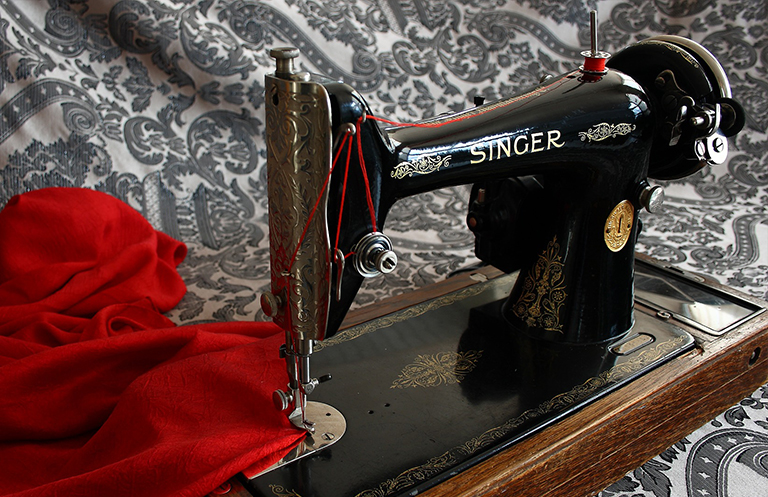
Image Source: www.contrado.com
Starting Your Search for the Serial Number
The first step is to find the serial number. This number is key for Dating Singer sewing machines. Without it, telling the exact age is very hard. Singer put serial numbers on all their machines. The location changed over the years.
Where to Find Singer Serial Number
The spot for the serial number is usually on a metal plate or stamped right into the metal body of the machine. Look in these common places:
- On the front of the machine, near the base.
- On the bed of the machine, near the pillar (the upright part).
- Underneath the machine bed. You might need to turn the machine over or tilt it.
- On the back of the machine, sometimes near the balance wheel.
- On a small plate, often silver or black.
The number can be just digits or have letters before the digits. Pay close attention to letters. They are very important for machines made after 1900.
Tips for Finding the Number
Sometimes the number is hard to see. It might be covered in dirt or old oil. It might be worn down.
- Clean the areas where numbers are usually found. Use a soft cloth and a little sewing machine oil or a gentle cleaner. Do not scrub too hard.
- Use a flashlight. Angle the light from different sides. This can make the stamped numbers stand out.
- Use a magnifying glass if you have one.
- Take a photo with your phone. Sometimes looking at a photo makes the number clearer. You can zoom in.
Write the number down exactly as you see it. Include any letters. Check it twice to be sure it is correct. This number is your key to the Singer serial number lookup.
Using the Serial Number for Dating
Once you have the serial number, you can use Singer’s records. Singer kept good track of the machines they made. They have lists that link serial numbers to the date the machine was made. This is how you find the Singer sewing machine age by serial number.
Accessing the Singer Database
Singer did not have one big public database for many years. Collectors and history groups put together lists from Singer’s old factory records. Now, this information is often found online. Several websites host this data. These sites are the best places for a Singer machine database lookup.
The most common way to do this lookup is to find a table or search tool based on serial number ranges. Singer’s records usually show blocks of serial numbers and the dates they were made or allotted to a factory.
How to Use a Singer Serial Number Lookup Tool
- Find a reliable website: Look for websites known by sewing machine fans or antique machine groups. Some popular sites host Singer serial number lists.
- Enter your serial number: Some sites have a search box. Type your number there. Make sure to include any letters.
- Browse the lists: Other sites show the lists as tables. You will need to find the list that matches your number.
- If your number has letters, find the list for those letter prefixes.
- If your number is all digits, look at the lists for earlier machines.
- Find the date range: The lists will show serial number ranges and dates. Find the range that includes your machine’s serial number. The date shown is usually the date that block of numbers was issued by Singer, often meaning the machine was made around that time.
This process is your Singer manufacturing date guide based on the serial number. It is the most accurate way to date your machine.
Interpreting Serial Number Formats Over Time
Singer changed how they used serial numbers. This affects how you look them up.
Machines Made Before 1900
Machines made before 1900 have serial numbers with only digits. These numbers are often lower. They can be from a few thousand up to millions. These numbers were given out by Singer’s main office. They show the order in which machines were made across all factories.
- Example: A number like “1234567” with no letters would likely be pre-1900.
To date these, you look up the numerical range on a historical list.
Machines Made After 1900 with Letter Prefixes
Around 1900, Singer started using letter prefixes before the serial numbers. This was because they were making so many machines in many factories. The letter (or two letters) tells you which factory the machine numbers were sent to. The numbers after the letters still ran in order.
- Example: A number like “A 1234567” or “AB 1234567”. The letter(s) are the prefix.
The letters are very important. You must look up the number on the list for that specific letter prefix. A number “A 100000” and “B 100000” are for very different machines made at different times or places.
Common letter prefixes include:
* A, B, C, D, E, F, G, H, J, K, L, M, N, P, R, S, T, V, W, X, Y, Z (used at different times)
* Specific factory codes often had two letters (like EG, EF, FA, etc.).
Each prefix series has its own date range linked to the numbers that follow. The Singer machine database lookup needs this prefix to find the right list.
Understanding the Date
The date you find is usually the date Singer assigned that block of serial numbers. This date is very close to the date the machine was finished. It is the accepted date for Singer sewing machine age by serial number.
Beyond the Serial Number: Other Dating Clues
Sometimes, finding the serial number is hard. Or you might want more proof of your machine’s age. Other features of the machine can help with Vintage Singer machine identification and Identifying old Singer sewing machines. These clues can help you guess the age range, even without the serial number.
Examining the Machine’s Design and Features
Sewing machine designs changed over time. The shape, size, and parts can tell you about the period it was made.
- Early Hand Machines: Very old machines (mid-1800s) might be hand-cranked. They often sit on a simple base.
- Treadle Machines: Machines built into tables with a foot pedal (treadle) were popular in the late 1800s and early 1900s. If your machine was originally a treadle, it is likely from this era or later adapted.
- Electric Machines: Singer started adding electric motors around the early 1900s. Early electric machines often had external motors added to existing models. Later models were designed as electric machines. The style of the motor and light can be a clue.
- Machine Shape: Look at the overall shape. Is it a simple “fiddle base”? Is it a more modern, flatbed machine? The shape changed significantly over the decades. For example, the Singer Model 66 (the “Red Eye”) and the Model 15 have distinct shapes common in the early to mid-1900s. The Model 201 also has a unique shape.
Identifying Decals and Finish
The decorations (decals) on the machine can also give clues. Singer used many different decal patterns over the years. Some patterns were only used for a certain period.
- Common Decal Patterns:
- The Sphinx: An early and very common pattern, used for many years. Its style changed slightly over time.
- The Memphis: Another popular pattern.
- The Red Eye: Found on many Model 66 machines.
- Victorian/Edwardian styles: Often ornate and golden.
- Later Art Deco or simpler designs: Used in the mid-20th century.
- Machine Color: Most early Singer machines were black. Other colors like brown, green, or tan appeared much later, mostly after the 1930s or 1940s. The type of finish (glossy, crinkle/matte) can also help.
- Bed Plate Material: The slide plate or needle plate on the bed of the machine changed too. Early ones might be plain metal. Later ones had different finishes or etched lines.
Researching common Singer decal patterns and finishes from different eras can help you narrow down the age range.
Examining the Cabinet or Base
If your machine came with its original cabinet or base, this can also offer clues.
- Treadle Cabinets: Styles varied greatly. Early treadle cabinets were often simple wood stands. Later ones became more decorative or included drawers and storage features.
- Portable Cases: Machines sold as “portable” came in wooden cases with handles. The style of the case changed. Earlier cases were often bentwood or boxy wood. Later cases might be made of different materials.
- Electric Bases: Early electric machines might sit on simple wooden bases or be placed into tables designed for electric use.
The style of the furniture often matches furniture styles popular during the machine’s production period.
Looking at Attachments and Accessories
Original attachments, oil cans, or tools that came with the machine can sometimes have patent dates or design styles that match the machine’s era. The boxes these items came in also changed over time.
Checking for Patent Dates
Sometimes, parts of the machine might have patent dates stamped on them. These dates tell you the earliest the technology could have been used. The machine must be newer than any patent date found on its parts. However, a patent date does not tell you the exact manufacturing date of the machine itself. It just sets a ‘no earlier than’ date.
Identifying the Model Number
Knowing the model number of your Singer machine is also helpful, though it does not tell you the exact year. The model number tells you the type of machine. Singer made many models, like the Singer 66, 99, 15, 201, 301, 401, 500, etc.
Singer Model Number Identification
The model number is usually on a plate or sticker on the machine body. Sometimes it is cast into the metal. Common places include:
- Near the serial number plate.
- On the front or back of the pillar.
- On the bed of the machine.
If you cannot find a model number, you can often identify the model by its shape and features. Websites and books about Singer machines have pictures and descriptions of different models. Once you know the model, you can research the years that model was made. This gives you a production window. For example, if you have a Singer 301, you know it was made between 1953 and 1957. The serial number will tell you the exact year within that range.
Model identification helps with Vintage Singer machine identification. It narrows down the possibilities before you use the serial number for the precise date.
How Factory Location Matters
Singer had factories all over the world. The serial number letter prefix often tells you which factory made your machine. Knowing the factory location can sometimes help explain variations in machine features or design, even for the same model made around the same time.
Some major Singer factories and their common letter prefixes:
- Kilbowie, Scotland: (Largest factory) Many letter prefixes, including A, B, C, E, F, G, H, J, K, L, M, P, R, S, T, V, W, X, Y, Z, and double letters like EB, EC, ED, EE, EF, EG, EH, EJ, EK, EL, EM, EN, EP, ER, ES, ET, EV, EW, EX, EY, EZ, FA, FB, FC, FD, FE, FF, FG, FH, FJ, FK, FL, FM, FN, FP, FR, FS, FT, FV, FW, FX, FY, FZ, GA, GC, GD, GE, GF, GG, GH, GJ, GK, GL, GM, GN, GP, GR, GS, GT, GV, GW, GX, GY, GZ, HA, HB, HC, HD, HE, HF, HG, HH, HJ, HK, HL, HM, HN, HP, HR, HS, HT, HV, HW, HX, HY, HZ, JA, JB, JC, JD, JE, JF, JG, JH, JJ, JK, JL, JM, JN, JP, JR, JS, JT, JV, JW, JX, JY, JZ, KA, KB, KC, KD, KE, KF, KG, KH, KJ, KK, KL, KM, KN, KP, KR, KS, KT, KV, KW, KX, KY, KZ, LA, LB, LC, LD, LE, LF, LG, LH, LJ, LK, LL, LM, LN, LP, LR, LS, LT, LV, LW, LX, LY, LZ, MA, MB, MC, MD, ME, MF, MG, MH, MJ, MK, ML, MM, MN, MP, MR, MS, MT, MV, MW, MX, MY, MZ, PA, PB, PC, PD, PE, PF, PG, PH, PJ, PK, PL, PM, PN, PP, PR, PS, PT, PV, PW, PX, PY, PZ, RA, RB, RC, RD, RE, RF, RG, RH, RJ, RK, RL, RM, RN, RP, RR, RS, RT, RV, RW, RX, RY, RZ, SA, SB, SC, SD, SE, SF, SG, SH, SJ, SK, SL, SM, SN, SP, SR, SS, ST, SV, SW, SX, SY, SZ, TA, TB, TC, TD, TE, TF, TG, TH, TJ, TK, TL, TM, TN, TP, TR, TS, TT, TV, TW, TX, TY, TZ, VA, VB, VC, VD, VE, VF, VG, VH, VJ, VK, VL, VM, VN, VP, VR, VS, VT, VV, VW, VX, VY, VZ, WA, WB, WC, WD, WE, WF, WG, WH, WJ, WK, WL, WM, WN, WP, WR, WS, WT, WV, WW, WX, WY, WZ, XA, XB, XC, XD, XE, XF, XG, XH, XJ, XK, XL, XM, XN, XP, XR, XS, XT, XV, XW, XX, XY, XZ, YA, YB, YC, YD, YE, YF, YG, YH, YJ, YK, YL, YM, YN, YP, YR, YS, YT, YV, YW, YX, YY, YZ, ZA, ZB, ZC, ZD, ZE, ZF, ZG, ZH, ZJ, ZK, ZL, ZM, ZN, ZP, ZR, ZS, ZT, ZV, ZW, ZX, ZY, ZZ. (Note: This is a very extensive list, most factories used fewer.)
- Elizabethport, New Jersey, USA: E, F, G, H, J, K, L, M, N, P, R, S, T, V, W, X, Y, Z (single letters, overlapping with Kilbowie for early series, but distinct later). Also used AA, AC, AD, AE, AF, AG, AH, AJ, AK, AL, AM, AN, AP, AR, AS, AT, AV, AW, AX, AY, AZ, BA, BB, BC, BD, BE, BF, BG, BH, BJ, BK, BL, BM, BN, BP, BR, BS, BT, BV, BW, BX, BY, BZ, CA, CB, CC, CD, CE, CF, CG, CH, CJ, CK, CL, CM, CN, CP, CR, CS, CT, CV, CW, CX, CY, CZ, DA, DB, DC, DD, DE, DF, DG, DH, DJ, DK, DL, DM, DN, DP, DR, DS, DT, DV, DW, DX, DY, DZ. (Again, extensive list, not all used constantly).
- St. Jean, Quebec, Canada: J (certain series), SA, SB, SC, etc. (some overlapping with Kilbowie/Elizabethport but specific ranges).
- Other factories: There were factories in Germany, France, Italy, Australia, etc. These often had specific letter codes tied to them.
Using a Singer machine database lookup tool that lets you select the factory or handles the letter prefixes correctly is key.
Delving Deeper into the Singer Manufacturing Date Guide
The Singer manufacturing date guide found in online databases is built from factory shipping logs and production records. It shows blocks of serial numbers that were made or assigned during certain time periods.
Here is an example of what a lookup table might show (this is a simplified example, real tables are much longer and more detailed):
h5 Example Table: Singer Serial Numbers (Pre-1900 – Fictional)
| Serial Number Range | Year or Period |
|---|---|
| 1 – 100,000 | 1851 – 1860 |
| 100,001 – 500,000 | 1861 – 1870 |
| 500,001 – 1,500,000 | 1871 – 1880 |
| 1,500,001 – 3,000,000 | 1881 – 1890 |
| 3,000,001 – 8,500,000 | 1891 – 1900 |
h5 Example Table: Singer Serial Numbers (With Letter Prefix – Fictional)
| Prefix | Serial Number Range | Year | Factory (Common) |
|---|---|---|---|
| A | 1 – 500,000 | 1900 | Kilbowie |
| A | 500,001 – 1,000,000 | 1901 | Kilbowie |
| B | 1 – 800,000 | 1903 | Kilbowie |
| C | 1 – 750,000 | 1905 | Kilbowie |
| AD | 1 – 600,000 | 1925 | Elizabethport |
| AE | 600,001 – 1,200,000 | 1926 | Elizabethport |
| AG | 1 – 500,000 | 1935 | Kilbowie |
| AG | 500,001 – 1,000,000 | 1936 | Kilbowie |
Note: The dates shown in these tables are simplified. Real lookup tables often give a more precise date (like a month and year) for the allocation of a block of numbers. The year listed is the date that block of numbers was issued or produced. Your machine was likely finished and shipped very close to that date.
It is important to find a comprehensive Singer serial number lookup source. Some sources are more complete than others. Look for sites that reference their data sources if possible.
Why Date Your Singer Machine?
Knowing the age of your Singer machine is more than just satisfying curiosity. It helps with several things:
- Historical Context: You learn about the time period it was made in. This includes the technology available then and how people used sewing machines.
- Finding Parts and Manuals: Knowing the model and age helps you find the correct manual, attachments, needles, and parts. Parts for a machine from 1910 are very different from one made in 1970. Vintage Singer machine identification is key for this.
- Understanding Features: Machines from different eras have different features. An older machine might only do straight stitch. A newer one might have zigzag or decorative stitches. The age helps you know what your machine was designed to do.
- Collecting: If you collect sewing machines, dating is essential. It helps you value your collection and document each piece.
- Resale or Insurance: If you plan to sell or insure an older machine, knowing its age is important. It affects the Antique Singer sewing machine value. Older, rarer, or well-preserved machines can be worth more.
Considering Antique Singer Sewing Machine Value
The value of an old Singer machine depends on many factors, not just age. While age is part of it, other things matter a lot:
- Condition: Does the machine work? Is it clean? Is there rust or damage? Machines in good working order are usually worth more than those needing repair.
- Completeness: Does it have its original case or cabinet? Are the original attachments and manual included? A complete set is often more valuable.
- Rarity: Is it a common model (like a Model 66 or 99), or a less common one? Rare models or those with special features can command higher prices among collectors.
- Appearance: Are the decals in good condition? Is the finish intact? A machine that looks good is more appealing.
- Location: Value can vary greatly depending on where you are. What is rare or desired in one place might be common in another.
An “antique” machine is typically considered something over 100 years old. A “vintage” machine is generally younger, maybe 25-100 years old. Both can have value, but the market for them is different.
Dating your machine accurately using the Singer serial number lookup is the first step in assessing its potential value, but it is just one piece of the puzzle. Do not assume a very old machine is automatically worth a lot of money. Common models made in large numbers are often not highly valuable unless they are in near-perfect condition or have historical importance.
Tips for Identifying Old Singer Sewing Machines
Putting all the clues together helps you in Identifying old Singer sewing machines.
- Find the Serial Number First: This is the best and most accurate method. Check all the usual spots carefully.
- Use a Reliable Lookup: Use a trusted online Singer machine database lookup with your serial number and letter prefix.
- Note the Model Number: Find the model number too. This confirms the type of machine and its general production years. Use Singer model number identification guides if needed.
- Look at Physical Clues: If the serial number is hard to date or you want more info, look at the machine’s design, decals, color, and cabinet style. Compare them to pictures of machines known to be from different periods. This helps with Vintage Singer machine identification.
- Check Patent Dates: Look for any patent dates on parts.
- Research Your Specific Model: Once you know the model and have a date range from the serial number, research that specific model. Learn about its features, history, and known variations.
- Join Groups: Online forums and social media groups for antique and vintage sewing machines are full of helpful people. Share pictures of your machine and its serial number. Others might help you date it or offer insights.
Remember that while the serial number gives the manufacturing date, the style clues help you understand the machine’s place in sewing history. Both are useful for fully Identifying old Singer sewing machines.
Common Pitfalls When Dating a Singer
Be aware of some common mistakes people make when trying to date their Singer machine:
- Mixing up Serial Number and Model Number: These are different! The serial number is unique to your specific machine and tells its age. The model number tells you the type of machine.
- Ignoring the Letter Prefix: If your serial number has letters, you MUST include them in the lookup. A number without a letter is very different from the same number with a letter prefix.
- Using Incorrect or Incomplete Databases: Not all online lists are complete or accurate. Try to cross-reference if possible or use a well-known source.
- Using Patent Dates as Manufacturing Date: A patent date on a part is always older than the machine itself. It is not the machine’s birth date.
- Estimating Age Solely on Looks: While decals and style help narrow it down, looks can be deceiving. Machines were made over many years, and styles sometimes overlapped. The serial number is the definitive guide.
Frequently Asked Questions (FAQ)
h4 Where is the serial number on my Singer sewing machine?
It is usually on a small plate or stamped into the metal base, front, or back of the machine. Sometimes it is underneath.
h4 How do I use a Singer serial number lookup?
Find your serial number (including any letters). Go to a website that hosts the Singer serial number database. Look up your number in the correct list or use a search tool. It will show you the year or date range your machine was made.
h4 My Singer serial number has letters. What do they mean?
The letters are a prefix used after 1900. They tell you which factory the block of serial numbers was sent to. You need the letter prefix and the number to look up the correct date in the Singer machine database lookup.
h4 The lookup gives a date range, not a single day. Why?
Singer’s records usually show when blocks of serial numbers were made or allotted. The date is the production date for that block. Your machine was finished sometime during that period.
h4 Can I tell the age from the color or decals?
Color, decals, and machine style can help you guess a general age range or identify the model (which has its own production years). But only the serial number can give you the specific manufacturing date. These clues are useful for Vintage Singer machine identification when a serial number is hard to find or date.
h4 What makes an Antique Singer sewing machine valuable?
Value depends on condition, working order, completeness (original case, attachments), rarity, and appearance. Age is a factor, but a very old machine in poor condition might not be highly valuable. Dating it using the Singer serial number lookup is step one in finding its age, which impacts value.
h4 Where can I find reliable information for Singer sewing machine age by serial number?
Several websites maintained by sewing machine collectors and historians host the serial number lists. Search online for “Singer serial number lookup” or “Singer manufacturing date guide”. Look for sites that seem detailed and cover many serial number ranges and prefixes.
h4 My machine doesn’t have a serial number plate. Is it worthless?
Machines without visible serial numbers are harder to date accurately. They are not worthless, but the value might be harder to determine without a precise age. You can still use Identifying old Singer sewing machines clues like style and decals to estimate a general age range.
h4 What is the difference between a Singer model number and a serial number?
The model number tells you the type of machine (e.g., Model 66, 15, 201). Many machines share the same model number. The serial number is a unique number for your specific machine and is used to find its exact manufacturing date. Singer model number identification helps understand the machine type, while the serial number provides the age.
Finding the age of your Singer sewing machine is a rewarding process. It connects you to the machine’s history and the many people who used it before you. By following these steps – finding the serial number, using a Singer serial number lookup, and looking at the machine’s features – you can uncover the story your machine has to tell. Happy dating!