
What is a sewing knot? A sewing knot is a knot used to secure thread at the end of a sewing project, preventing stitches from unraveling. Can I tie a knot with just a needle and thread? Yes, you absolutely can tie a knot with just a needle and thread, and it’s a fundamental skill for any sewer.
Sewing can seem daunting at first, but mastering a few key techniques makes it much easier. One of the most important of these is learning how to tie a proper sewing knot. Without a good knot, your stitches can come undone, leaving your hard work in a mess. This guide will walk you through the best methods for creating a secure sewing knot, ensuring your projects are sturdy and long-lasting. We’ll cover everything from basic sewing knots to more advanced techniques, helping you learn how to secure thread effectively.
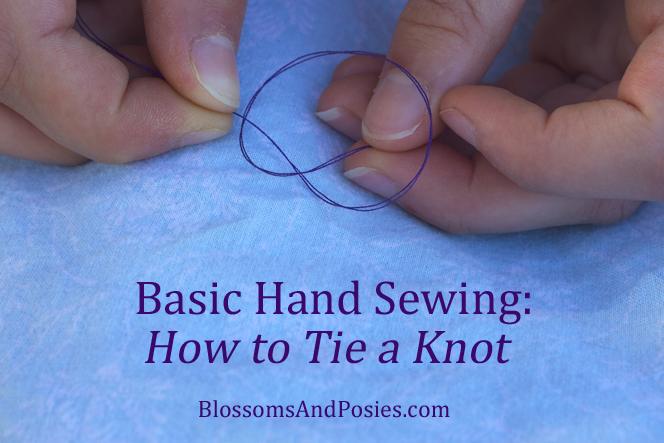
Image Source: blossomsandposies.com
Why Sewing Knots Matter
Think of a sewing knot as the finishing touch on your stitch. It’s the small but mighty guardian that keeps your thread from slipping out. Without it, even the most beautiful stitching can unravel. This is crucial whether you’re hand-sewing a delicate hem or machine sewing a sturdy seam. A well-tied knot prevents your fabric from coming apart, which is essential for both the look and the durability of your finished item.
Here’s why getting your knot game strong is so important:
- Prevents Unraveling: This is the primary purpose. A secure knot means your stitches stay put, no matter how much the fabric is pulled or washed.
- Finishes Stitches Neatly: A good knot isn’t bulky or messy. It blends in, making your sewing look professional.
- Saves Time: While tying a knot might seem like an extra step, it saves you the time and frustration of redoing unraveled stitches later.
- Adds Strength: A proper knot reinforces the end of your thread, making the seam stronger.
Basic Sewing Knots: Your First Steps
When you’re starting out, you don’t need fancy knots. A few simple ones will serve you well. These are the building blocks for all your sewing knot tying adventures.
The Simple Overhand Knot
This is the most basic knot you’ll learn, and it’s surprisingly effective for many situations.
How to Tie It:
- Thread Your Needle: Pass your thread through the eye of the needle.
- Create a Loop: Take the end of the thread and form a loop.
- Pass Through the Loop: Bring the end of the thread back through the loop you just made.
- Pull Tight: Hold the loop with one hand and pull the tail end of the thread with the other. This tightens the knot against the fabric.
Tips for Success:
- Small Knots: Try to make the knot as small as possible. This helps it disappear into the fabric weave.
- Multiple Loops: For thicker thread or when extra security is needed, you can pass the thread through the loop 2 or 3 times before pulling tight. This creates a slightly larger but very strong knot.
- Practice on Scrap Fabric: Get comfortable making these knots on a piece of scrap fabric before working on your main project.
The Double Overhand Knot
This is simply two overhand knots tied on top of each other. It’s a slightly more substantial knot for when you need a bit more security.
How to Tie It:
- Tie One Overhand Knot: Follow the steps above for the simple overhand knot.
- Tie Another: Before pulling the first knot completely tight, create a second loop with the thread end and pass it through this new loop, then pull both knots tight together.
When to Use It:
This knot is great for hand sewing projects where the thread might be under more stress, like sewing buttons or making repairs. It’s a reliable way to ensure how to secure thread without it slipping.
Creating a Secure Sewing Knot: Advanced Techniques
Once you’ve mastered the basics, you might want to explore knots that offer even more security or a neater finish. These are often referred to as the best sewing knots for specific tasks.
The Surgeon’s Knot
This knot is a variation of the overhand knot, but it includes an extra wrap, making it inherently more secure. It’s excellent for preventing slippage, especially with smoother threads.
How to Tie It:
- Thread Your Needle: As usual, thread your needle.
- Double Wrap: Form a loop with the thread end, but this time, wrap the thread around your finger twice before passing the end through the loop.
- Pull Tight: Gently pull the thread through the double loop. This creates a more substantial knot.
- Second Knot (Optional but Recommended): For maximum security, tie another simple overhand knot right next to the first one.
Why It’s Great: The extra wrap provides more friction, which helps the knot grip the thread and fabric more effectively. This makes it a very strong sewing knot.
The Backward Knot (or Purl Knot)
This knot is often favored by quilters and those who want a very small, discreet knot. It’s often tied using the needle itself to create the knot.
How to Tie It:
- Thread Your Needle: Thread your needle and pull the thread through the fabric, leaving a tail.
- Wrap the Needle: Bring the needle up through the fabric. Now, wrap the needle around the thread tail 2-3 times, moving away from the fabric.
- Pass the Needle: Bring the needle back down through the fabric, very close to where you first came up. As you pull the needle through, the wraps will slide down the thread and form a knot.
- Tighten: Gently pull the thread until the knot is snug against the fabric.
Key Benefit: This method is fantastic for finishing sewing stitches because the knot is almost invisible. It’s also a very efficient way to tie off stitches.
The Loop Knot (or Tail Knot)
This knot is similar to the backward knot but is tied using the loop of thread left when you begin sewing.
How to Tie It:
- Start Sewing: Begin sewing, leaving a loop of thread at the end. Do not pull the thread all the way through the fabric.
- Wrap the Needle: Take your needle and wrap it around the thread within the loop two or three times.
- Pull Through the Loop: Now, push the needle through the loop itself, alongside the thread wraps.
- Tighten: Pull the needle away from the fabric. The wraps will slide down the thread and form a knot.
- Continue Sewing: You can now continue your stitches, and the knot will hold your starting thread secure.
Usefulness: This is a smart way to start a seam, as it anchors your thread without needing to tie a knot at the very beginning. It’s a great technique for how to secure thread when starting a project.
Sewing Knots for Machine Sewing
While most machine sewing relies on the machine itself to create strong seams, you still need to tie off your stitches at the beginning and end of a seam to prevent it from unraveling. A knot for sewing machine is essentially about securing the end of the machine-stitched thread.
Securing Machine Stitches: The Tie-Off Technique
Most sewing machines have a reverse stitch function. This is your primary tool for securing machine seams.
How to Tie Off Stitches with a Machine:
- Stitch Forward: Begin sewing your seam as usual.
- Reverse Stitch: When you reach the end of your seam (or the beginning, after you’ve sewn forward), engage the reverse stitch lever or button on your machine.
- Stitch Backward: Stitch backward over the stitches you just made for about 1-2 cm (about half an inch).
- Stitch Forward Again: Release the reverse stitch lever and continue stitching forward to complete your seam.
- Cut Threads: Trim the excess thread tails close to the fabric, leaving a small tail of about 0.5 cm (a quarter inch). The reverse stitching creates a strong anchor.
Why This Works: The overlapping stitches effectively create a dense, strong “knot” that prevents the seam from pulling apart. This is the standard and most effective way for tying off sewing stitches on a machine.
When Extra Security is Needed (Hand Tying After Machine Sewing):
In some rare cases, especially with very delicate fabrics or when extra reinforcement is desired, you might hand-tie a knot after using the machine’s reverse stitch.
- Stitch and Reverse: Sew your seam and use the reverse stitch function.
- Lift Presser Foot: Raise the presser foot.
- Cut Thread: Cut the top and bottom threads, leaving a good length (about 5-7 cm or 2-3 inches).
- Hand Tie: Take the top and bottom thread tails, bring them together, and tie a simple overhand knot or a surgeon’s knot. Trim any excess.
This is an uncommon step for machine sewing but can be useful for very specific, high-stress applications.
Choosing the Best Sewing Knots for Your Project
The best sewing knots depend on what you’re sewing and how. Here’s a quick guide:
| Knot Type | Best For | Considerations |
|---|---|---|
| Simple Overhand | General hand sewing, temporary stitches, starting/ending hand seams. | Quick and easy. Can be bulky if tied too large. |
| Double Overhand | Buttons, repairs, seams under tension, thicker threads. | More secure than a simple overhand. Slightly bulkier. |
| Surgeon’s Knot | Silky fabrics, slippery threads, when maximum security is needed without bulk. | Extra wrap adds friction, preventing slippage. Still relatively small. |
| Backward Knot | Invisible knots, neat finishes, delicate fabrics, quilting, embroidery. | Creates a very small and discreet knot. Requires a little practice to master. |
| Loop Knot | Starting hand stitches without tying a knot at the very end. | Neatly anchors the beginning of your stitches. Good for continuous stitching. |
| Machine Reverse | Knot for sewing machine seams, securing all machine stitches. | The standard for machine sewing. Relies on overlapping stitches. Fast and efficient. |
Common Challenges and Solutions in Sewing Knot Tying
Even with the best methods, sometimes things go wrong. Here are common issues and how to fix them.
Problem: Knots are too Big and Bulky
Solution:
- Use a Smaller Needle: A finer needle allows for a smaller hole, meaning your knot doesn’t need to be as large to pass through.
- Thinner Thread: If your project allows, use a thinner thread.
- Practice Precision: Focus on tying the knot snugly against the fabric, not far away from it.
- Backward Knot: For a truly invisible knot, the backward knot is your best friend.
Problem: Knots Keep Slipping
Solution:
- Use the Surgeon’s Knot: The extra wrap provides much-needed grip.
- Double Up Thread: Use two strands of thread instead of one. This creates a thicker thread that’s harder to pull through.
- Multiple Knots: Tie two simple overhand knots together for extra security.
- Check Thread Quality: Some synthetic threads can be very slippery. Consider a different thread type if this is a recurring issue.
Problem: Thread Breaks While Tying Knot
Solution:
- Use Stronger Thread: Ensure your thread is appropriate for the fabric and task.
- Don’t Pull Too Hard: While you want a secure knot, yanking the thread can cause it to break. Be firm but gentle.
- Check Needle Eye: Make sure the eye of your needle is smooth. A rough edge can fray or break the thread.
Problem: Difficulty Tying Knots on Fine Fabric
Solution:
- Use a Thread Catcher: Some sewers use a small piece of bobbin thread or a different color thread to help create a temporary “leader” to tie the knot off of, then remove it later.
- Anchor Point: If you’re hand sewing, try to tie your knot near a seam allowance or a less visible area.
- Tiny Knots: Focus on tying very small, dense knots. The backward knot is excellent here.
Frequently Asked Questions (FAQ)
Q1: How many times should I loop the thread to tie a knot?
A1: For a simple overhand knot, one loop is usually sufficient. If you need extra security, use two or three loops (like in the surgeon’s knot). For the backward knot, two to three wraps around the needle work well.
Q2: What is the strongest sewing knot?
A2: While there isn’t one single “strongest” knot for all situations, the Surgeon’s Knot is exceptionally strong for hand sewing due to the increased friction from the extra wrap, preventing slippage. For machine sewing, the reverse stitch technique is the strongest method.
Q3: Do I need to knot the thread when using a sewing machine?
A3: You don’t typically tie a hand knot when using a sewing machine. Instead, you use the machine’s reverse stitch function at the beginning and end of your seam to create a secure “tie-off” point.
Q4: How do I make my sewing knots invisible?
A4: The best way to make a knot invisible is to tie it after the thread has gone through the fabric. The Backward Knot (or Purl Knot) is specifically designed for this, creating a tiny knot that sinks into the fabric. You can also try to tie a very small overhand knot right at the fabric’s surface.
Q5: Can I use the same knot for all my sewing projects?
A5: While you can get by with a few basic knots, using the best sewing knots for the specific task will give you better results. A knot for heavy denim might be different from a knot for delicate silk. Experiment to find what works best for your materials.
Conclusion: Mastering Your Sewing Knots
Learning to tie a sewing knot is a foundational skill that will serve you throughout your sewing journey. From the simple overhand knot to the discreet backward knot, each technique has its place. By practicing these methods, you’ll ensure your stitches are secure, your projects look polished, and you can confidently tackle any sewing challenge. Remember, the key is practice and choosing the right knot for the job. With a little patience, you’ll master sewing knot tying and create beautiful, durable pieces. Happy sewing!