
How do you transfer embroidery patterns to fabric? You can put embroidery patterns onto fabric using several easy ways. These include tracing with light, using special transfer papers (like iron-on or water-soluble types), freehand drawing, or using heat-activated pens and pencils. The best way depends on your fabric color, type, and the design’s detail.
Getting your design onto your fabric is a first, important step in embroidery. A good transfer makes stitching much easier and your finished piece look better. There are many embroidery pattern transfer methods you can choose from. Each method has its own tools and steps. What works well for one project might not be the best for another. Let’s look at the different ways you can do this and find the right one for you.
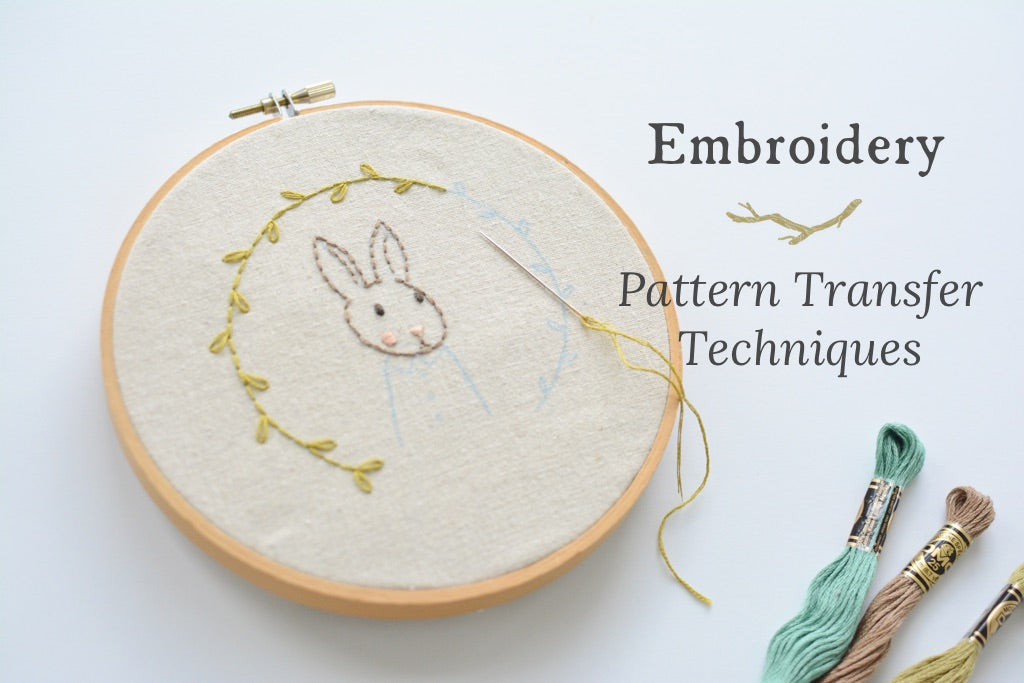
Image Source: www.twigandtale.com
Different Ways to Get Your Design on Cloth
There are many simple ways to get your picture or design onto your fabric. Choosing the right one depends on your fabric, the tools you have, and how careful you need to be. Some ways are best for light fabrics. Some work on dark fabrics. Some wash away easily. Let’s explore the most popular choices.
Drawing Your Design On Directly
One simple way is to draw your design straight onto the fabric. This is good for simple shapes or if you are comfortable drawing.
What You Need for Drawing
- Your fabric
- Your pattern design (printed or drawn on paper)
- A fabric marking tool (like a pencil, pen, or marker made for fabric)
- Possibly pins or tape to hold your paper pattern
Simple Steps for Drawing
- First, get your fabric ready. Wash and iron it if you need to.
- Put your fabric flat on a table.
- Place your paper pattern on the fabric where you want the design to be.
- Hold the paper in place. You can use pins or tape the edges down.
- Carefully draw over the lines of your pattern onto the fabric. Use your fabric marking tool. Make sure you can see the lines clearly, but don’t press too hard.
- Lift the paper pattern away. Now you should see your design lines on the fabric.
Marking Fabric for Embroidery
Picking the right tool to mark your fabric is important. You don’t want the lines to show after you finish stitching.
Using Fabric Pencils
- These are like normal pencils but are made for fabric.
- They usually come in different colors. White is good for dark fabrics. Blue is good for light fabrics.
- Most fabric pencil lines will wash out with water.
- Test the pencil on a small piece of your fabric first. Make sure it washes out completely.
Using Fabric Pens and Markers
- Washable embroidery markers are very popular. They look like regular pens or markers.
- The ink from these markers washes away with water. Some fade on their own over time (air-erasable).
- Embroidery transfer pens can also be used. These often create lines that are more permanent or need specific heat/water to remove. Always check the pen instructions!
- Like pencils, test them on a fabric scrap. Make sure the lines go away as promised.
- Be careful not to draw too heavily. Thin lines are easier to cover with stitches or remove later.
Pros and Cons of Drawing Directly
- Pros: Very simple, low cost. Good for simple patterns. You can change the design as you draw.
- Cons: Hard to get fine details. Lines might not be perfectly smooth. Can be hard to do on dark or stretchy fabrics. Risk of lines not washing away if you don’t test the tool.
Tracing Embroidery Patterns
This method uses a light source to help you see the pattern through the fabric so you can draw it. It’s one of the most common ways of tracing embroidery patterns.
What You Need for Tracing
- Your fabric
- Your paper pattern
- A fabric marking tool (pencil, pen, marker)
- A light source (like a window or a light box)
- Tape (like masking tape or painter’s tape)
Simple Steps for Tracing
- Wash and iron your fabric if needed.
- Place your paper pattern flat.
- Put your fabric over the paper pattern. Make sure the fabric is placed exactly where you want the design.
- Tape the fabric and the pattern together to a flat surface. A table or a window works. Taping stops them from moving.
- Now, put this taped set-up against a light source.
- If using a window: Tape the fabric and pattern to a sunny window.
- If using a lightbox for tracing: Place the fabric and pattern on top of the light box and turn the light on. The light shines through the fabric.
- You should now see the pattern lines through your fabric.
- Carefully trace over the lines of the pattern onto your fabric using your fabric marking tool.
- Take the fabric and pattern away from the light. Remove the tape.
- You should see your design clearly on the fabric.
How a Light Box Helps
A light box is a flat box with a light inside and a see-through top. It’s great because you can trace any time, day or night, no matter the weather. It gives a bright, even light that makes tracing easy, especially with slightly thicker fabrics.
What is Tracing Paper?
Sometimes people talk about embroidery tracing paper. This can mean a few things:
* Thin paper used to draw the original pattern on before tracing onto fabric.
* Special carbon paper or similar paper used to transfer designs by pressing (like Dressmaker’s Carbon Paper), which is a bit different from this light tracing method. We will cover carbon paper later.
For this tracing method using light, you just need your normal paper pattern and a fabric marker.
Pros and Cons of Tracing with Light
- Pros: Very accurate for detailed designs. Works well on light to medium weight fabrics. Simple process. No special chemicals involved.
- Cons: Doesn’t work well on dark fabrics or very thick fabrics because the light can’t shine through. You need a good light source.
Using Special Transfer Papers
There are papers made just for putting designs on fabric. These can save you time and give very clear lines.
Water Soluble Transfer Paper Magic
Water soluble transfer paper is a fantastic tool. It’s a thin paper that you can print or draw your design onto. Then you stitch through the paper on your fabric. When you are done, the paper washes away completely with water.
What You Need for Water Soluble Paper
- Your fabric
- Water soluble transfer paper (sheets or rolls)
- A way to get your pattern onto the paper (printer, or pen/pencil)
- Pins or basting thread
- Sharp scissors
Simple Steps for Using Water Soluble Paper
- Get your pattern onto the paper. You can print it directly onto the paper using an inkjet printer. Or, you can draw or trace your design onto the paper using a pen or pencil.
- Cut out the design from the paper. Cut close to the edge but leave a small border.
- Place the cut-out paper with your design onto your fabric where you want to stitch.
- Hold the paper in place. You can use pins all around the edge. For bigger or more detailed designs, you might want to temporarily stitch the paper down with a few large, loose stitches (basting). This stops it from shifting while you stitch.
- Now, stitch your design right through the paper and the fabric. Stitch over the lines on the paper.
- Once you finish all your stitching, remove any pins or basting stitches.
- Wash the fabric gently with water. The paper will dissolve and disappear!
- Let your fabric dry flat.
Pros and Cons of Water Soluble Paper
- Pros: Works on ANY color fabric, including dark colors. Great for detailed designs. No lines to wash out later from markers, as the paper itself washes away. Holds delicate fabrics stable while you stitch.
- Cons: Can be more expensive than other methods. The paper can feel a bit strange to stitch through at first. Needs water to remove, so not suitable for projects that can’t get wet.
Iron-On Embroidery Transfer
Another type of special paper is designed to be ironed onto your fabric. This often involves a heat-sensitive ink. You can buy pre-printed iron-on embroidery transfer patterns, or you can make your own using special pens or paper.
Buying Pre-Printed Iron-On Patterns
- These patterns come on paper with special ink.
- You place the paper ink-side down on your fabric and press with a warm iron.
- The heat transfers the ink onto the fabric.
- Follow the package instructions carefully for heat setting and pressing time.
- Often, these patterns can be used a few times, but the lines get lighter each time.
Making Your Own Iron-On
- You can use special transfer pens or pencils to draw your own design onto tracing paper or light paper.
- Embroidery transfer pens often use ink that gets activated by heat.
- Draw your design on the paper. If your design needs to face a certain way (like letters), you need to draw it in reverse (mirror image) on the paper.
- Once drawn, place the paper ink-side down on your fabric and iron it.
- Again, follow instructions for your specific pens/pencils.
What You Need for Iron-On
- Your fabric
- An iron
- Your iron-on pattern (pre-printed or homemade)
- An ironing surface (ironing board or towel on a hard surface)
Simple Steps for Using Iron-On
- Make sure your fabric is ironed smooth and is placed on your ironing surface.
- Place the iron-on pattern face down on the fabric where you want it.
- Heat your iron to the setting suggested by the pattern or pen instructions. Usually, it’s a medium to hot setting with no steam.
- Press the iron firmly onto the back of the transfer paper. Do not move the iron around as this can blur the design. Just press down, lift, and press down on the next part of the design.
- Hold the press for the time suggested (usually 10-30 seconds).
- Carefully lift a corner of the paper to see if the design has transferred clearly. If not, press again.
- Once the design is transferred, let the fabric cool before moving it.
- The transferred lines are usually permanent or semi-permanent. Stitch carefully to cover all the lines.
Pros and Cons of Iron-On Transfer
- Pros: Quick and easy transfer. Gives clear lines. Good for repeat patterns.
- Cons: Lines can be hard to remove if you make a mistake or if they show outside your stitches. Not always best for fine details. Can be tricky to get a full transfer on textured fabrics. May not work on all fabric types (check instructions). Lines can fade over time if not stitched quickly. May not work well on dark fabrics unless using specific white transfer pens/papers (which are less common).
Using Carbon Paper or Transfer Paper (Non-Iron)
Another way to transfer designs is using carbon paper made for fabric, sometimes called dressmaker’s carbon paper or embroidery tracing paper. This paper has a chalky or inky coating on one side.
What You Need for Carbon Transfer
- Your fabric
- Your paper pattern
- Carbon transfer paper (made for fabric!)
- A tracing tool (like a stylus, a blunt pencil, or the back of a spoon)
- Tape
Simple Steps for Carbon Transfer
- Iron your fabric smooth.
- Place your fabric flat.
- Put the carbon transfer paper on top of the fabric with the coated side DOWN (facing the fabric). Choose a paper color that will show up on your fabric (white for dark, blue/yellow for light).
- Place your paper pattern on top of the carbon paper.
- Tape all the layers together to keep them from moving.
- Use your tracing tool to firmly draw over all the lines of your pattern. Press hard enough to transfer the coating from the carbon paper to the fabric.
- Lift the paper pattern and the carbon paper carefully.
- Your design should be on the fabric.
Pros and Cons of Carbon Transfer
- Pros: Works on many fabric types. Good for transferring patterns quickly. Can work on dark fabrics if you use white carbon paper.
- Cons: The transferred lines can sometimes be hard to remove. Pressure needs to be even for a good transfer. Can smudge if you are not careful. The lines might show if not fully covered by stitches. Always test on a scrap first!
Transferring Patterns to Dark Fabric
Getting a pattern to show up on dark fabric can be tricky. Light tracing won’t work. Iron-on transfers are usually designed for light fabrics. So, what are the best ways for dark cloth?
- Water Soluble Stabilizer/Paper: This is one of the best methods. You draw or print your design on the white or clear paper, stick it or baste it onto the dark fabric, stitch through both layers, and then wash the paper away. The paper provides a light surface for your design.
- White Fabric Pencils or Markers: If your design is simple, you can sometimes use a white fabric pencil or a chalk marker to draw directly or trace with light from underneath (if the fabric is thin enough and the light is very bright, but this is rare). The challenge is seeing the white lines while stitching on dark thread.
- Tailor’s Chalk: Traditional tailor’s chalk pens or blocks can be used to draw designs. White or yellow chalk shows up well on dark fabric. Chalk lines can rub off easily though, which is good for removal but bad if you need the lines for a long time. Chalk brushes away or washes out.
- Carbon Paper (White): As mentioned, white dressmaker’s carbon paper is designed to transfer white lines onto dark fabric when you trace over the pattern with pressure.
- Transferring using a thin white base: You can sometimes trace the design onto a thin piece of white fabric or batting, lay it on the dark fabric, and stitch through all layers. Then you trim away the excess white layer from the back. This is more involved but can work.
For most beginners working with dark fabric, water soluble transfer paper is often the easiest and most reliable method.
Picking the Best Method for You
With so many embroidery pattern transfer methods, how do you choose? Think about these things:
- Fabric Color: Is it light or dark? (Rules out light tracing for dark fabric).
- Fabric Type: Is it smooth or textured? Thick or thin? (Iron-on can be hard on texture, light tracing on thick fabric, carbon on bumpy fabric).
- Design Detail: Is it simple shapes or very fine lines? (Tracing with light or water-soluble paper is better for fine detail than freehand or maybe iron-on).
- Tool Availability: What pens, papers, or light sources do you have?
- Removability: Do you need the lines to wash away perfectly? Or is it okay if they are permanent? (Water soluble is best for guaranteed removal).
- Project Type: Can the finished item get wet? (Rules out water soluble methods if it can’t).
Comparing Common Transfer Methods
Here is a simple table to help compare some key methods:
| Method | Works on Light Fabric? | Works on Dark Fabric? | Best for Detail? | Lines Remove Easily? | Needs Special Tools? |
|---|---|---|---|---|---|
| Direct Drawing (Washable Pen) | Yes | Maybe (with white pen) | No | Yes (usually) | Fabric Pen |
| Tracing with Light | Yes | No | Yes | Yes (if pen washes) | Light source |
| Water Soluble Paper | Yes | Yes | Yes | Yes (washes away) | Soluble Paper |
| Iron-On Transfer (pre-made) | Yes | No | Medium | No (usually permanent) | Iron |
| Carbon Transfer (non-iron) | Yes | Yes (white carbon) | Medium | Maybe (can smudge) | Carbon Paper, Stylus |
This table is a simple guide. Always test your chosen method on a small scrap of your specific fabric before you start your main project! This is the most important step to avoid problems later. Marking fabric for embroidery should be done carefully.
Extra Tips for Success
- Always test: No matter what method or tool you use, test it on a scrap of the exact fabric you will be using. Check if the lines show up well and if they disappear as expected (wash out, rub off, etc.) without damaging the fabric.
- Use thin lines: Draw your transfer lines as thinly as possible. This makes them easier to cover with stitches and less likely to show if they don’t fully disappear.
- Don’t press too hard: When drawing or using carbon paper, too much pressure can damage the fabric or make lines harder to remove.
- Keep fabric clean: Once you’ve transferred your pattern, try to keep the fabric clean. Oils from your hands can sometimes set certain inks or make removal harder. Wash your hands before you start stitching.
- Transfer just before stitching: Some transfer methods (like air-erasable pens or iron-on) can fade or set over time. Transfer your design when you are ready to start stitching.
- Consider fabric stability: Some transfer methods, like water-soluble paper, also add stability to the fabric, which can be helpful for stitching, especially on knits or delicate fabrics.
- Think about design size: For very large designs, you might need to transfer the pattern in sections. Make sure you can line up the sections accurately. Embroidery tracing paper can help here by keeping large patterns manageable.
Questions People Ask
Can you use pencil to transfer embroidery patterns?
Yes, you can use a pencil, but it’s generally not recommended for long-term projects because graphite (pencil lead) can be hard to remove completely and can sometimes become permanent after washing or ironing. If you use a pencil, use a very light touch and try to cover the lines completely with your stitches. Using fabric-specific pencils is a better choice as they are designed to wash out.
What kind of paper do you use for embroidery transfer?
You can use several kinds of paper. For tracing with light, regular printer paper works fine for your original pattern. For iron-on transfers, you can buy special pre-printed paper or use tracing paper or light paper with heat-activated pens. For water-soluble transfers, you need specific water soluble transfer paper. For carbon transfer, you need dressmaker’s carbon paper made for fabric.
How do you transfer a pattern without a printer?
You can transfer a pattern without a printer by drawing or tracing your design by hand onto the paper you will use for transfer. Then, you can use methods like tracing with light (using a window or light box), using embroidery tracing paper (like carbon paper), or drawing onto water-soluble paper by hand. You can also just draw directly onto the fabric if you feel comfortable.
Do washable embroidery markers wash out completely?
Most washable embroidery markers are designed to wash out completely with water. However, it is very important to test them on a scrap of your fabric first. Factors like fabric type, water hardness, time left on the fabric, and heat can sometimes affect whether the lines wash out fully. Do not iron over the lines before washing, as heat can set some inks.
Is water soluble paper for embroidery easy to use?
Yes, water soluble transfer paper is generally easy to use. You place your design on it (by printing or drawing), stick it to your fabric, stitch through it, and then wash it away. It simplifies transferring complex designs, especially on challenging fabrics like dark or textured ones. The main challenge is that you have to wash the finished piece, which isn’t suitable for all projects.
Choosing the right way to get your design onto your fabric is key to enjoying your embroidery project. Think about your fabric, your design, and what tools you have. Test a method on a scrap piece first. This will help you get beautiful stitches and a lovely finished piece! Happy stitching!