
A sewing awl is a versatile tool for leather crafters, allowing for precise hole creation for stitching. Can you use a sewing awl on leather? Yes, absolutely! It’s a fundamental tool for anyone serious about stitching leather by hand and achieving professional-looking results. This guide will walk you through how to use a sewing awl on leather, from selecting the right awl to mastering different awl stitching techniques.
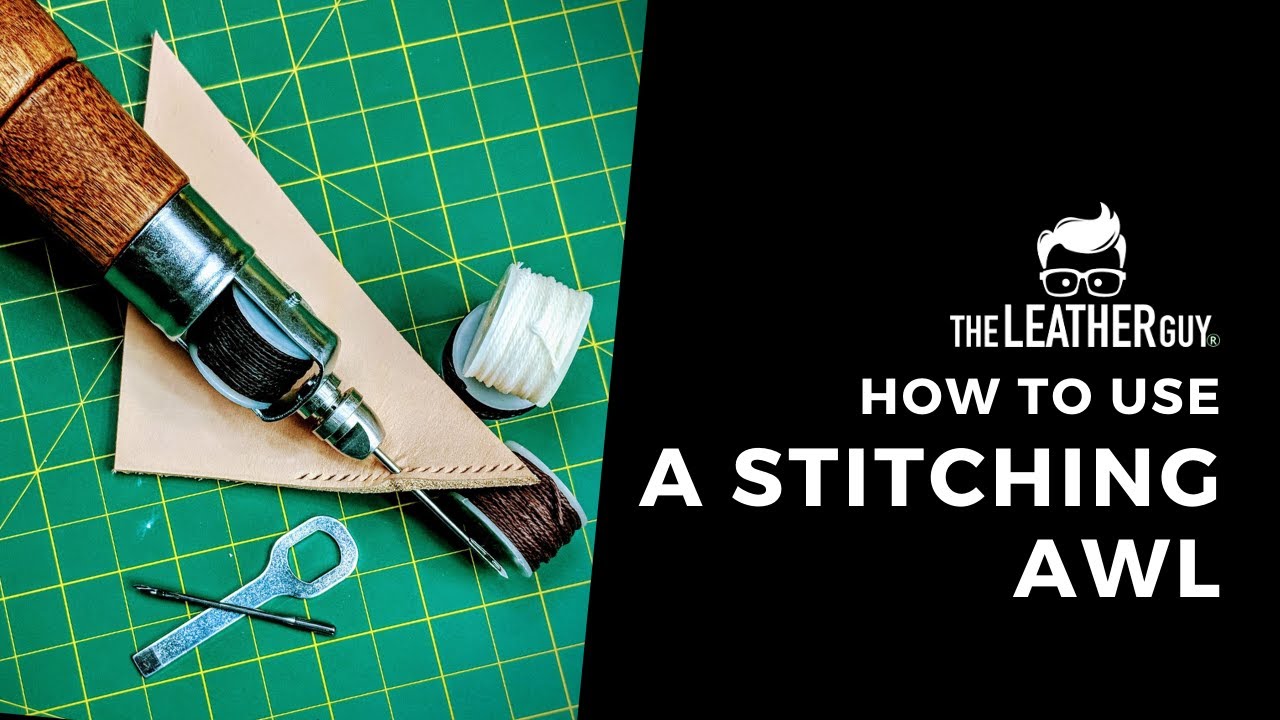
Image Source: i.ytimg.com
What is a Leather Stitching Awl?
A leather stitching awl, also known as a leather awl punching tool, is a sharp, pointed instrument used to create holes in leather for hand sewing. Unlike a simple hole punch, an awl creates a slit or a tapered hole that can accommodate a needle and thread, often allowing the thread to sit flush with the leather surface. This is crucial for durable and aesthetically pleasing leather stitching.
Why Use a Sewing Awl for Leather?
Leather sewing tools are essential, and the awl holds a special place. While some methods involve pre-punched holes, using an awl offers several advantages:
- Precision: You have complete control over the placement and size of each hole.
- Flexibility: You can stitch through multiple layers of leather or around tight curves where pre-punched patterns might not be feasible.
- Durability: A properly made awl slit can be stronger than a punched hole, as it doesn’t cut across the leather fibers as much.
- Aesthetics: It allows for consistent stitch spacing and a neat finish.
- Versatility: An awl for leather craft can be used for marking, scoring, and even making decorative patterns in addition to stitching.
Types of Sewing Awls for Leather
Before diving into the “how-to,” it’s important to know the different types of awls you might encounter:
Straight Awls
These are the most basic type. They have a sharp point at one end and a handle at the other. They are excellent for making pilot holes or for marking.
Winged Awls
These have a small “wing” or blade near the point. This wing cuts a clean slit in the leather, making it ideal for stitching leather by hand. The slit can be angled to guide the thread and create a saddle stitch.
Round Awls
These have a pointed tip that is rounded rather than sharply pointed. They create a rounder hole and are often used for thicker leathers or when a less defined stitch line is desired.
Diamond Awls (Stitching Awls)
These are specialized awls with a diamond-shaped point designed to create a clean, tapered slit that perfectly accommodates a leather needle and thread, facilitating a strong and neat stitch. This is often the go-to for stitching leather by hand.
Rotating Awls
These have a mechanism that allows the point to rotate as you push it through the leather, creating a clean, burr-free hole. They are efficient but can be more complex to use.
Choosing the Right Awl for Your Project
The best awl for leather craft depends on your project.
- For general stitching and saddle stitching: A winged awl or a diamond awl is highly recommended. They create the precise slits needed for a strong, traditional stitch.
- For thicker leather: An awl for thick leather might have a sturdier shaft and a more robust point. You may also need a mallet to drive it through.
- For marking or small holes: A simple straight awl can suffice.
Table 1: Awl Types and Their Best Uses
| Awl Type | Primary Use | Advantages | Considerations |
|---|---|---|---|
| Straight Awl | Marking, small pilot holes, scoring | Simple, inexpensive, precise for marking | Not ideal for stitching slits |
| Winged Awl | Hand stitching, saddle stitching | Creates clean slits for thread, good stitch alignment | Requires practice for consistent angle |
| Round Awl | Stitching, general hole making | Creates rounder holes, good for softer leathers | May not lock thread as securely as diamond awls |
| Diamond Awl | Hand stitching, saddle stitching, fine detail work | Creates tapered slits for perfect thread fit, strong stitch | Can be more expensive, point can break if mishandled |
Essential Leather Sewing Tools
Beyond the awl itself, having the right leather sewing tools will make the process much smoother and more effective.
- Leather: Choose the type and thickness appropriate for your project.
- Needles: Use specialized leather needles. They are typically triangular or chisel-tipped to pierce the leather easily.
- Thread: Waxed linen or polyester thread is ideal for leather. Waxing helps the thread glide through the leather and protects it from abrasion.
- Cutting Mat: Protects your work surface.
- Mallet or Hammer: For driving the awl through thicker leather. A rawhide or poly mallet is preferred to avoid damaging your tools.
- Stitching Groover (Optional): Creates a channel for your stitches to sit in, protecting them and giving a cleaner look.
- Stitching Pony or Clamp: Holds your leatherwork steady while you stitch.
- Rulers and Measuring Tapes: For precise marking.
- Pencil or Scratch Awl: For marking stitch lines.
- Beeswax or Thread Conditioner: To keep your thread smooth and strong.
Preparing Your Leather for Stitching
Proper preparation is key to successful leather stitching.
1. Mark Your Stitch Line
- Use a ruler and a scratch awl or a specialized stitching groover to mark your stitch line.
- A groover creates a shallow channel, allowing your stitches to be recessed and protected. The depth of the groove will depend on the thickness of your leather and thread.
- If you don’t have a groover, a light scratch with an awl or a pencil mark will guide your hole placement.
2. Secure Your Leather
- If you’re not using a stitching pony, clamp your leather securely to your workbench. Ensure the area you’ll be punching is accessible.
3. Choose Your Stitching Pattern (for Winged/Diamond Awls)
- For hand stitching with a winged or diamond awl, you’ll often aim to create a consistent angle for your stitches. This involves punching through from one side at a slight angle, and then from the other side at a matching angle, creating a “V” shape that the thread will follow.
How to Use a Sewing Awl on Leather: Step-by-Step
Now, let’s get to the core of how to use a sewing awl on leather. This method focuses on the popular winged or diamond awl for saddle stitching.
Step 1: Position the Awl
- Place the tip of your leather stitching awl on your marked stitch line.
- For saddle stitching, you’ll typically start by punching through from the grain side (the smooth side) of the leather.
Step 2: Punching the First Hole
- Hold the awl firmly. If the leather is thick or stiff, you may need to use a mallet to gently tap the end of the awl.
- Using a sewing awl requires control. Apply steady, even pressure.
- For winged or diamond awls: Angle the awl slightly, usually pointing towards yourself from the grain side. This angle will dictate the angle of your stitch on the opposite side.
- Push the awl through the leather until the point emerges on the other side.
Step 3: Creating the Slit
- Once the awl is through, rotate it slightly.
- For winged awls: The wing should create a clean slit.
- For diamond awls: The diamond shape will cut a tapered hole.
- If you used a groover, the awl should naturally fall into the groove on the opposite side.
Step 4: The Second Punch (for Saddle Stitching)
- Now, you need to create the matching hole on the flesh side (the rough side).
- Align the awl with the exiting point of the first hole.
- Crucially, angle the awl so that the slit it creates on the flesh side mirrors the angle of the first slit. If your first slit angled forward on the flesh side, your second slit should angle backward. This creates the “V” shape.
- Use your mallet if needed, and push the awl through.
Step 5: Exiting the Awl
- As the awl emerges, ensure the slit is clean. You can rotate the awl slightly to open the slit if needed.
- The goal is to have two opposing slits that form a channel for your thread.
Step 6: Inspecting the Hole
- Take a moment to look at the hole you’ve created. It should be a clean slit, not a ragged tear.
- The two slits should align to create a path for your needle.
Step 7: Repeating the Process
- Move your awl to the next position along your marked stitch line.
- You can measure and mark each subsequent hole, or you can use the awl itself as a guide.
- To maintain consistent spacing and angle: Many crafters will push the awl through the leather at the same angle they created the previous hole. Then, before pulling the awl out, they will slightly twist it to ensure the slit is open on the flesh side.
- Using a sewing awl effectively means developing a rhythm. Consistency is key.
Step 8: Threading and Stitching
- Once you have a few holes punched, thread your leather needle with your waxed thread.
- For saddle stitching, you typically use two needles.
- Pass one needle through the first hole from the flesh side to the grain side.
- Pass the second needle through the same hole from the grain side to the flesh side.
- Pull both needles until they are equal lengths.
- Continue this process for each subsequent hole, passing one needle through from flesh to grain, and the other from grain to flesh, ensuring they meet in the middle of each stitch.
Tips for Perfect Leather Stitching with an Awl
Mastering the awl stitching technique takes practice, but these tips will help:
Consistency is King
- Angle: Maintain the same angle for every awl punch. This ensures your stitches lean in the same direction for a uniform look.
- Depth: Try to punch to a consistent depth.
- Spacing: Use your markings or the awl itself to keep your stitches evenly spaced.
Leather Thickness Matters
- Awl for Thick Leather: For very thick leather (over 4-5mm), you might need an awl with a stronger shaft and a mallet. You might also punch from one side only, creating a single slit, and then use a specialized needle to pass the thread through.
- Thinner Leathers: Thinner leathers are easier to punch. Be careful not to use too much force, as you could tear the leather.
Protecting Your Tools
- Sharpening: Keep your awl point sharp. A dull awl will tear the leather rather than cut it.
- Storage: Store your awl properly to protect the point. A small leather pouch or a designated tool case is ideal.
Using a Mallet Effectively
- When using a mallet, strike the awl handle firmly but with control.
- Avoid hitting the awl shaft, as this can damage or bend it.
- Multiple lighter taps are often better than one hard strike.
Practicing the Motion
- Before you start on your project, practice punching holes in scrap leather of the same thickness.
- Get a feel for how much pressure is needed.
- Practice the angling for the saddle stitch.
Threading the Awl (for some specialized awls)
- Some awls have an eye at the base of the shaft, and the thread is fed through this.
- Ensure your thread is waxed properly to help it pass through the awl’s eye and the leather.
Common Challenges and How to Overcome Them
- Ragged Holes: This usually means your awl is dull or you’re forcing it too much. Sharpen your awl or use a mallet with more control.
- Inconsistent Stitch Angle: This is a common problem for beginners. Focus on maintaining a consistent angle with each punch. Try marking a faint angled line on the leather as a visual guide.
- Awl Not Going Through: If the leather is very thick or dense, you might need a stronger awl or a mallet. Ensure you are holding the awl perpendicular to the leather surface for maximum leverage.
- Thread Snapping: Ensure your thread is waxed and of good quality. Also, make sure the slits you’ve created are clean enough for the thread to pass through without snagging.
Advanced Techniques with a Leather Awl
Once you’re comfortable with the basics, you can explore more advanced uses:
Decorative Punching
- Use different types of awls (like round or specialized decorative awls) to create patterns or borders on your leather.
- This requires careful planning and consistent pressure to achieve a clean look.
Creating Larger Holes
- For larger holes (e.g., for rivets or lacing), you can use a series of awl punches to create the desired shape.
- Start with a central punch and work outwards, gradually widening the opening.
Repairing Leather
- A sewing awl can be used to create new holes in worn leather to allow for stitching repairs.
Caring for Your Leather Stitching Awl
To ensure your leatherworking awl lasts a long time and performs well:
- Cleaning: Wipe down your awl after each use to remove any leather dust or debris.
- Sharpening: Regularly sharpen the point using a fine-grit sharpening stone or a specialized awl sharpener. A sharp awl is crucial for clean punches.
- Storage: Store your awl in a protective case or sheath to prevent damage to the point and to avoid accidental injury.
- Rust Prevention: If you live in a humid environment, a light coat of oil can help prevent rust on the metal parts.
Frequently Asked Questions (FAQ)
Q1: Do I need a special awl for thick leather?
A1: While a standard leather stitching awl can handle moderately thick leather with the aid of a mallet, very thick leathers (over 4-5mm) might benefit from an awl for thick leather which often has a more robust shaft and point. Some crafters also use specialized chisels for extremely thick materials.
Q2: How do I get my stitches to look neat and even?
A2: Consistency is the key. Practice maintaining the same angle and spacing with each awl punch. Using a stitching groover can also help guide your stitches and keep them uniform.
Q3: Can I use a regular sewing needle with an awl?
A3: It’s best to use a leather needle specifically designed for leather. These needles are sturdier and have a point that is better suited for piercing leather, often a triangular or chisel point that complements the awl’s slit.
Q4: What’s the difference between a winged awl and a diamond awl?
A4: Both are excellent for stitching leather by hand. A winged awl has a small blade that cuts a slit, while a diamond awl has a diamond-shaped point that creates a tapered hole. Both are designed to allow the thread to sit flush or recessed in the leather.
Q5: How do I avoid tearing the leather when using an awl?
A5: Ensure your awl is sharp. Use steady, controlled pressure. If the leather is resistant, use a mallet with gentle, repeated taps rather than one hard strike. Practicing on scrap leather is highly recommended.
By following these detailed steps and tips, you’ll be well on your way to mastering the art of using a sewing awl for beautiful and durable leather stitching. Happy crafting!