
Winding a bobbin on your Brother sewing machine is a key step before you can start sewing. It’s how you get the bottom thread ready for your stitches. Knowing how to thread brother sewing machine for bobbin winding correctly makes sure your stitches look good. This guide walks you through the simple process step-by-step.
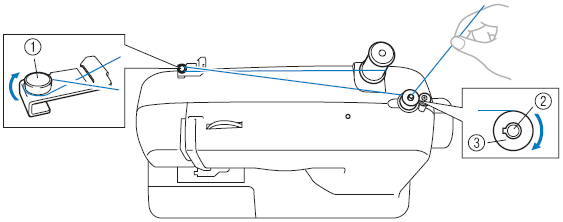
Image Source: support.brother.com
Getting Ready to Wind
Before you wind, gather what you need. You will need your Brother sewing machine, a spool of thread, and an empty bobbin. Most Brother machines use a specific size bobbin. This is often called a class 15 bobbin brother machine. Using the wrong size or type of bobbin can cause problems. Always check your machine’s manual to be sure.
Finding the Key Parts
Your Brother machine has special parts just for winding bobbins. Knowing where they are helps a lot.
The Spool Pin
Look at the top of your machine. You will see one or two little sticks pointing up. This is the spool pin for winding bobbin brother. This is where your large spool of thread will sit. Some pins stand straight up. Others lay down. Pull it up if it lays flat.
The Bobbin Winder Spindle
Find a small metal stick, often on the top or front of your machine, near the handwheel. This is the bobbin winder spindle on brother machine. This is where the empty bobbin goes to get wound.
The Thread Guides
Your machine has little hooks, loops, or discs. These are thread guides. They help control the thread. You will use specific guides for bobbin winding. Look for numbers or pictures near these guides that show the path for winding.
The Bobbin Winder Tension Disc
Near the bobbin winder spindle, you will see one or two round metal discs squeezed together. This is the bobbin winder tension disc. The thread must go through this disc. It adds just the right amount of pull to the thread. This helps the bobbin wind smoothly and evenly.
Setting Up Your Thread
First, get your spool of thread.
Placing the Thread Spool
Put the spool of thread onto the spool pin for winding bobbin brother. Make sure the thread comes off the spool the right way.
* If the spool pin stands up tall, check how the thread unwinds. It should usually come off the front or back, not loop over the top edge. Your machine’s manual might show the best way.
* If the spool pin lies flat, put the spool on so the thread comes off towards you, under the guide cap.
Using a Spool Cap
Some thread spools need a spool cap. This is a little plastic piece. It holds the spool onto the pin. It stops the thread from getting caught. Choose a cap that fits the end of the spool. Place it firmly onto the spool pin after you put the thread on.
Placing the Bobbin
Now, take an empty class 15 bobbin brother machine.
Putting Bobbin on the Spindle
Push the empty bobbin onto the bobbin winder spindle on brother machine. The little hole in the center of the bobbin fits onto the spindle. Push it down firmly. It should fit snugly but still be able to spin freely.
Threading for Winding
This is where you guide the thread from the spool to the bobbin. Knowing how to thread brother sewing machine for bobbin winding is key for a good result.
Following the Winding Path
Look closely at your machine. It has a path for bobbin winding. This path is usually marked with lines, numbers, or pictures.
* Take the thread from the spool pin.
* Guide it through the first thread guide for winding. This might be a loop or a hook.
* Pull the thread firmly through the bobbin winder tension disc. This disc looks like two metal saucers. Make sure the thread goes between them. You might need to pull it into a slot. This step is very important for even winding.
Attaching Thread to Bobbin
Take the end of the thread after it goes through the tension disc. You need to attach it to the empty bobbin on the spindle.
* Wrap the thread end around the bobbin a few times.
* Most bobbins have a small hole on the edge or top. Push the end of the thread through one of these small holes from the inside to the outside. Pull about 3-4 inches of thread through the hole. This holds the thread end in place when you start winding.
Engaging the Bobbin Winder
Your machine needs to know you want to wind a bobbin, not sew.
Moving the Spindle
To start winding, you need to move the bobbin winder spindle on brother machine into its winding position.
* This is usually a small lever or switch near the spindle.
* Push the spindle firmly to the right. You might hear a click.
* When you push the spindle over, it often disengages the sewing needle. This means the needle will not go up and down while you wind. This is important for safety and to prevent the needle from breaking.
* This action is called engaging bobbin winder on brother.
Winding the Bobbin
Now you are ready to wind!
Starting the Machine
Your machine has a foot pedal or a start/stop button.
* Press the foot pedal gently or push the start button.
* The bobbin will start to spin on the spindle.
* The thread will begin to wrap around the bobbin.
Holding the Thread Tail
Remember that 3-4 inch thread tail you put through the hole? You need to hold onto that lightly for a few seconds.
* Hold the end of the thread that came through the hole.
* Hold it to the side, away from the bobbin.
* After the bobbin has wound a few times and the thread is held in place, you can stop and snip off this little tail of thread close to the bobbin. This keeps the start of the wind neat.
Controlling Speed
You can control how fast the bobbin winds.
* Use the foot pedal to go slower or faster.
* Starting slowly helps make sure the thread is wrapping correctly.
* Once the thread is winding well, you can go faster if you like.
Watching the Bobbin Fill
Keep an eye on the bobbin as it fills.
* The thread should wind evenly across the bobbin from top to bottom.
* The bobbin winder spindle on brother machine has a small mechanism that helps guide the thread.
* The bobbin will spin faster and faster as it fills.
Finishing the Wind
Your machine will stop winding automatically when the bobbin is full.
Automatic Stop
Most Brother machines have a little sensor or arm near the bobbin winder spindle.
* When the thread wound on the bobbin reaches a certain size, it pushes against this arm or sensor.
* This tells the machine the bobbin is full.
* The machine will stop winding automatically.
Stopping Manually
You can also stop winding whenever you want.
* Just take your foot off the pedal or push the start/stop button again.
* You might want a bobbin that is only partly full.
Cutting the Thread
Once the bobbin stops winding (either full or stopped by you):
* Move the bobbin winder spindle back to the left. This disengages bobbin winder on brother.
* Lift the bobbin off the spindle.
* Look for a small blade built into the machine near the spindle. This is a thread cutter.
* Pull the thread that connects the full bobbin to the spool across this cutter. It will snip the thread.
* If your machine doesn’t have a cutter there, use scissors to cut the thread.
Checking Your Bobbin
Look at the bobbin you just wound.
Signs of a Good Bobbin
- The thread should be wrapped neatly and evenly from the top edge to the bottom edge of the bobbin.
- The tension should feel firm, not too loose or too tight.
- The bobbin should not be overfilled, which can cause thread jams.
Uneven Bobbin Winding
Sometimes, the thread piles up on one side of the bobbin. This is uneven bobbin winding brother sewing machine. It is a common problem.
Why Winding Steps Matter
Following the Brother sewing machine bobbin winding steps correctly prevents issues. Proper winding helps your machine sew smoothly. Uneven bobbins can cause:
* Poor stitch quality
* Thread breaks
* Machine jams
* Noisier sewing
Dealing with Winding Problems
If your bobbin doesn’t wind correctly, here are some common bobbin winding problems brother and how to fix them.
Problem: Thread is Loose or Messy
- Reason: Thread not through the tension disc.
- Fix: Make sure the thread is pulled firmly between the two metal discs of the bobbin winder tension.
- Reason: Thread not attached to the bobbin correctly at the start.
- Fix: Rewind. Make sure you put the thread end through one of the small holes on the bobbin or wrap it around enough times at the very start, holding the tail for the first few turns.
Problem: Uneven Bobbin Winding Brother Sewing Machine (Thread Piled Up)
- Reason: Thread not through the tension disc. This is the most common cause of uneven winding.
- Fix: Check the threading path again. Ensure the thread is seated deeply in the bobbin winder tension discs.
- Reason: Bobbin not pushed onto the spindle fully.
- Fix: Make sure the bobbin is pushed all the way down onto the bobbin winder spindle on brother machine until it clicks or sits firmly.
- Reason: Spool on the spool pin is catching.
- Fix: Check the spool cap size. Make sure the thread is coming off the spool smoothly. Try a different spool of thread.
- Reason: The bobbin winder mechanism is dirty or damaged.
- Fix: Clean the area around the bobbin winder spindle. Check if the little guide arm moves freely. If it seems broken, you might need service.
Problem: Bobbin Doesn’t Wind
- Reason: Not engaging bobbin winder on brother.
- Fix: Push the bobbin winder spindle firmly to the right until it clicks into place.
- Reason: Machine not set to wind.
- Fix: On some electronic machines, you might need to select a winding mode or the machine might require the presser foot to be up. Check your manual.
- Reason: Thread is broken or out of the spool.
- Fix: Check that thread is coming off the spool and is threaded correctly to the bobbin.
Problem: Machine Won’t Sew After Winding
- Reason: Bobbin winder is still engaged. The needle is locked out.
- Fix: Push the bobbin winder spindle back to the left, away from the winding position. This re-engages the needle.
A Note on Manual Winding
While most modern Brother machines have automatic winding, some older or simpler models might have a method closer to brother sewing machine manual bobbin winding. This might involve holding the thread by hand as it winds or using a separate attachment. However, the core ideas are the same: get thread from spool to bobbin, add tension, and spin the bobbin. Always follow the specific steps for your machine model as shown in its manual.
Inserting the Wound Bobbin
Once your bobbin is perfectly wound, you need to put it into the machine so you can sew. This is called inserting bobbin into brother machine. Brother machines typically have either a top-loading (drop-in) bobbin or a front-loading bobbin case.
Top-Loading Bobbin (Drop-in)
- Open the bobbin cover plate, usually clear plastic, near the needle plate.
- Take your wound bobbin. Hold it so the thread is coming off in the correct direction. There is usually a picture showing this. For Brother, the thread often needs to come off counter-clockwise.
- Drop the bobbin into the bobbin case area.
- Guide the thread tail into the tension slot on the bobbin case. Pull it gently until it slides into place.
- Leave a short tail of thread sitting on the needle plate.
- Close the bobbin cover plate.
Front-Loading Bobbin (Requires a Bobbin Case)
- Open the compartment on the front of the machine, often below the needle.
- Take your wound bobbin. Place it inside a metal bobbin case. Make sure the thread comes off the bobbin in the direction shown on the bobbin case or in your manual.
- Guide the thread tail into the slot on the bobbin case and pull it until it slips under the tension spring on the case.
- Hold the bobbin case by the latch.
- Insert the bobbin case into the shuttle in the machine. It should click or snap into place. Make sure it is seated firmly.
- Leave a short tail of thread hanging out.
- Close the compartment door.
After inserting the bobbin (either type), you will need to bring the bobbin thread up through the needle plate before you can start sewing. This is a separate step from winding but follows right after. Your machine manual will show you how to do this.
Summary of Bobbin Winding Steps
Here is a quick rundown of the Brother sewing machine bobbin winding steps:
- Place thread spool on the spool pin for winding bobbin brother. Use a spool cap if needed.
- Put empty bobbin (class 15 bobbin brother machine) onto the bobbin winder spindle on brother machine.
- Guide thread through the winding thread guides and firmly between the bobbin winder tension disc.
- Attach thread end to the bobbin by wrapping or putting it through a hole.
- Engage bobbin winder on brother by pushing the spindle to the right.
- Start machine slowly, holding the thread tail for a few turns.
- Cut the thread tail close to the bobbin.
- Let bobbin wind, controlling speed if needed, until it stops automatically or is full enough.
- Disengage bobbin winder by pushing the spindle back to the left.
- Lift bobbin off the spindle and cut the thread connecting it to the spool.
- Check the bobbin for evenness. Fix uneven bobbin winding brother sewing machine if needed.
- Now the bobbin is ready for inserting bobbin into brother machine.
Importance of a Properly Wound Bobbin
Why does winding a bobbin the right way matter so much? A bobbin that is wound unevenly or too loosely will cause problems.
* Poor Stitch Quality: The machine relies on even tension between the top thread and the bobbin thread. If the bobbin thread feeds out with uneven tension because it’s wound poorly, your stitches on the fabric will look lopsided, loopy, or messy.
* Thread Jams: Loose or messy thread on the bobbin can catch on itself inside the machine’s bobbin area. This leads to frustrating thread nests, skipped stitches, or even jams that can stop your machine completely.
* Thread Breakage: If the bobbin is wound too tightly, the thread might stretch or weaken. This makes the bobbin thread more likely to snap while you are sewing.
Taking the time to wind your bobbin correctly using the proper Brother sewing machine bobbin winding steps is a small but important step for happy sewing.
Keeping Your Winder Working
The bobbin winder spindle on brother machine and the tension disc need to be clean. Lint and thread bits can build up.
* Use a small brush to clean around the spindle and the tension discs now and then.
* Make sure the little arm or lever that stops the winding moves freely.
Keeping these parts clean helps prevent common bobbin winding problems brother.
Final Thoughts
Winding a bobbin is a basic skill for using any sewing machine. Your Brother machine makes it easy with dedicated parts and an automatic stop feature on most models. By following these simple Brother sewing machine bobbin winding steps, making sure the thread goes through the tension, and engaging bobbin winder on brother correctly, you will get a perfectly wound class 15 bobbin brother machine every time. This sets you up for smooth sewing and beautiful stitches. If you run into uneven bobbin winding brother sewing machine issues or other common bobbin winding problems brother, just re-check the steps, especially the threading path and tension disc. Happy sewing!
Frequently Asked Questions (FAQ)
What is a class 15 bobbin brother machine?
A class 15 bobbin is a standard size bobbin used in many sewing machine brands, including most Brother models. They are usually plastic or metal and have a specific height and diameter. Using the correct size is important for your machine to work right.
Why is my bobbin winding loose?
Loose winding usually means the thread is not going through the bobbin winder tension disc correctly. Make sure the thread is pulled between those two metal discs near the spindle. This adds tension to the thread as it winds, making the bobbin firm.
Why is my bobbin winding unevenly?
Uneven winding, where the thread piles up on one side, is often caused by the same issue as loose winding: the thread is not properly seated in the bobbin winder tension disc. Also, check that the empty bobbin is pushed down fully onto the bobbin winder spindle on brother machine.
Why won’t my bobbin winder spindle move over?
Check if there is any thread wrapped around the spindle or under it. Make sure the area is clean. On some machines, you might need to lift the presser foot before the spindle can be engaged. Check your machine manual for specific requirements.
Can I manually wind a bobbin if the winder is broken?
Most modern Brother machines are designed for machine winding. If the bobbin winder is broken, you might be able to find a separate, small, electric bobbin winder appliance you can buy. True brother sewing machine manual bobbin winding, done just by hand on the machine without the winding mechanism, is usually not recommended as it’s hard to get even tension.
How full should I wind my bobbin?
Wind the bobbin until the machine stops automatically. The automatic stop feature prevents overfilling. Overfilled bobbins can cause issues when inserting bobbin into brother machine and lead to thread jams.
Do I need to use Brother brand bobbins?
It’s best to use bobbins specifically recommended by Brother for your machine model, often the class 15 bobbin brother machine type. Cheap or generic bobbins might look similar but can be slightly different in size or weight, which can affect stitch quality and cause problems.
Why did the needle move while I was winding?
The bobbin winder spindle on brother machine should disengage the needle when you push it to the right. If the needle is still moving, make sure the spindle is pushed completely to the right until it clicks into the winding position. This action engages bobbin winder on brother and locks out the needle.
How do I bring the bobbin thread up after inserting the bobbin?
For top-loading bobbins, thread the top thread through the needle. Hold the top thread lightly. Turn the handwheel towards you one full turn. The needle will go down and pick up the bobbin thread, bringing a loop up. Pull the loop to get the bobbin thread tail out. For front-loading, the method is similar, often involving a handwheel turn to catch the thread. Always check your manual for the exact steps for your machine.