
Who invented the first practical sewing machine? The invention of the first practical sewing machine is widely credited to Elias Howe. His groundbreaking design in 1846 laid the foundation for the modern sewing machine, transforming the way garments were made.
The journey to create a machine that could stitch fabric was a long and winding road, paved with the dreams and determination of many sewing machine pioneers. Before the advent of mechanical sewing, every stitch was made by hand, a painstaking and time-consuming process. Imagine a world where clothing was a luxury, and mending a torn seam could take hours. This was the reality before the invention of stitching machine technology began to take shape. The story of the sewing machine’s invention is a fascinating look back at human ingenuity and the relentless pursuit of efficiency.
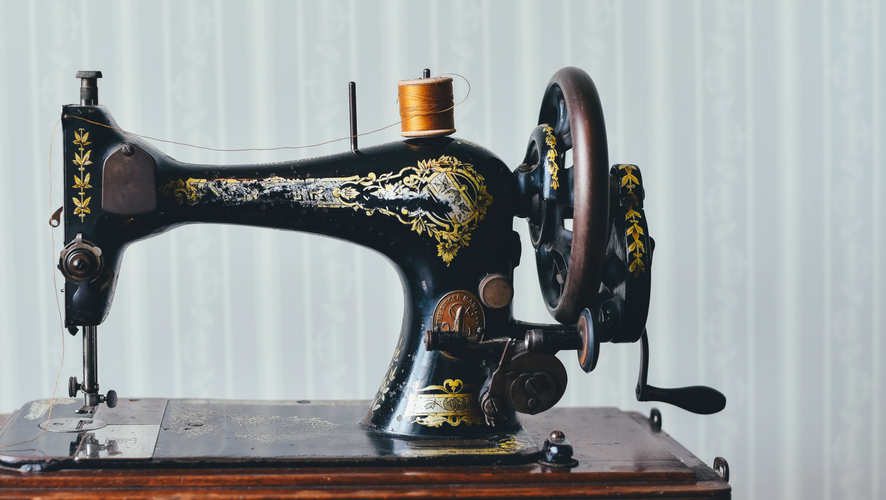
Image Source: www.contrado.co.uk
The Genesis of an Idea: Early Sewing Machines
The desire to mechanize sewing emerged as early as the late 18th century. The Industrial Revolution was in full swing, and inventors were eager to apply mechanical principles to all aspects of life, including the creation of clothing. While many attempted to solve the problem, most early designs were cumbersome, impractical, or simply did not work.
One of the earliest patents for a sewing machine was granted to Charles Weisenthal in Britain in 1790. His machine was designed to produce a backstitch and was intended for use by leatherworkers. However, there’s little evidence it was ever widely manufactured or used.
Early Attempts and Their Limitations
- Thomas Saint (1790): Another British inventor, Thomas Saint, patented a machine that could make a chain stitch. His design featured an awl to punch holes in the fabric and a needle to pass thread through. It was designed to work on leather. While innovative for its time, Saint’s machine was complex and likely difficult to operate. The actual working model of his machine is unknown.
- Barthélemy Thimonnier (1830): A French tailor, Thimonnier, developed a machine that could produce a chain stitch. His machine was made of wood and was robust enough to sew leather and heavy fabrics. Thimonnier’s machine was actually put into production, and he envisioned it being used to mass-produce uniforms for the French army. This marked a significant step forward in early sewing machines.
- Challenges: Thimonnier’s machines faced a significant hurdle: opposition from tailors who feared that mechanized sewing would put them out of work. In fact, a mob of disgruntled tailors reportedly destroyed his workshop and machines. This highlights the social and economic anxieties surrounding new technologies.
- Walter Hunt (1833): An American inventor, Walter Hunt, patented a sewing machine that used a lockstitch. This stitch, created by interlocking two threads, is much stronger and more durable than a chain stitch. Hunt’s machine was innovative, but he was reportedly more concerned about the potential for his invention to be used for ill purposes (like creating counterfeit money faster) and did not pursue its commercialization. His machine was also considered difficult to operate, requiring continuous manual adjustment.
These early attempts, while not achieving widespread success, were crucial in the sewing technology development. They identified key challenges and introduced concepts that future inventors would build upon.
Elias Howe: The Father of the Practical Sewing Machine
The real breakthrough in sewing machine history came with Elias Howe invention. Howe, a gifted mechanic, was working as a factory hand in a textile mill when he overheard his employer discussing the slow and expensive process of sewing clothes. This sparked an idea: what if a machine could do the work of a tailor’s needle?
Howe became obsessed with the idea. He worked tirelessly in his attic workshop, often with little food or warmth, driven by his vision. He experimented with various designs, facing numerous setbacks and financial difficulties. His initial attempts involved single-thread machines, but he soon realized the need for a stronger, more reliable stitch.
The Lockstitch and Howe’s Genius
Elias Howe’s key innovation was the lockstitch. He envisioned a machine that used two threads: one from a needle with an eye near the point, and another from a shuttle that carried a second thread. The needle would pass through the fabric, creating a loop. The shuttle would then pass through this loop, locking the two threads together. This created a strong, durable stitch that resembled hand-sewing.
- The Needle: Howe’s needle was unique. It had an eye at the blunt end, not the pointed end, and the point itself was sharpened. This allowed the needle to push the thread through the fabric, and the eye then carried the thread to create the stitch.
- The Shuttle: A grooved shuttle moved back and forth beneath the fabric, carrying the second thread. It would pass through the loop of thread left by the needle, forming the characteristic lockstitch.
- The Feed Mechanism: Howe also developed a way to move the fabric forward incrementally after each stitch, allowing for continuous sewing. This was a crucial element for creating a practical machine.
Howe patented his sewing machine on September 10, 1846. His machine was revolutionary, capable of sewing at speeds far exceeding anything possible by hand. It was designed to sew a straight seam and had a needle that moved up and down, with a shuttle beneath.
However, Howe’s initial success was limited. He struggled to find manufacturers willing to produce his machine, and he faced patent infringement lawsuits. Despite his groundbreaking invention, Howe himself did not become wealthy from it initially. He spent years fighting for his patent rights and licensing his design to others.
The Rise of Isaac Singer and the Sewing Machine Wars
While Elias Howe is credited with the first practical sewing machine, it was Isaac Singer sewing machine company that truly brought the technology to the masses. Singer, a charismatic entrepreneur and inventor, saw the potential in Howe’s design.
Singer, along with his partner Edward Clark, began improving upon Howe’s machine and marketing it more effectively. Their improvements included:
- The Overhanging Arm: This allowed sewers to maneuver fabric more easily.
- The Presser Foot: This held the fabric firmly in place as the needle passed through it, ensuring consistent stitching.
- A Flywheel: This controlled the speed of the machine, allowing for more precise sewing.
- A Motorized Treadle: While early machines were hand-cranked, Singer’s company later developed treadle-powered machines, freeing up both hands for sewing.
The Isaac Singer sewing machine was not necessarily a completely new invention but a highly refined and user-friendly version of Howe’s original concept. Singer’s machines were more robust, easier to operate, and produced a better stitch.
Patent Battles and Innovation
The period following Howe’s patent was marked by intense patent disputes. Isaac Singer and his company were sued by Elias Howe for patent infringement. Ultimately, Howe won the legal battles, and Singer had to pay him royalties. However, this did not stop Singer’s success. Their aggressive marketing, coupled with the superior design and ease of use of their machines, propelled them to the forefront of the industry.
Other inventors also made significant contributions:
- Allen B. Wilson: Developed a four-motion feed mechanism, which was a significant improvement on how fabric was advanced. This system is still used in many sewing machines today.
- William O. Grover and George B. Palmer: Developed the Grover & Baker sewing machine, which was known for its double-thread stitch and reliability.
These rivalries and innovations pushed the boundaries of sewing technology development, leading to increasingly efficient and versatile machines.
The Impact of the Sewing Machine
The invention of the sewing machine had a profound and far-reaching impact on society, industry, and daily life.
Revolutionizing the Garment Industry
The most immediate and significant impact was on the garment industry.
- Mass Production: For the first time, it was possible to produce clothing on a large scale and at an affordable price. This led to the rise of ready-to-wear clothing.
- Factory System: The sewing machine enabled the establishment of garment factories, employing thousands of workers, primarily women. This marked a significant shift in labor practices and the workforce.
- Efficiency and Speed: Sewing machines could stitch many times faster than the most skilled seamstresses, dramatically reducing production times.
Table 1: Sewing Speed Comparison
| Method | Approximate Stitches per Minute |
|---|---|
| Hand Sewing | 50 – 100 |
| Early Sewing Machines | 250 – 500 |
| Modern Sewing Machines | 1,000+ |
Changing Domestic Life
The sewing machine also transformed domestic life.
- Empowerment of Women: For many women, the sewing machine was a tool of independence. They could create their own clothing, alter existing garments, and even earn an income by sewing for others.
- Mending and Household Tasks: Mending clothes, making curtains, bedding, and other household linens became significantly easier and faster.
- Democratization of Fashion: As clothing became more affordable, fashion trends were no longer exclusive to the wealthy. More people could afford to dress stylishly.
Economic and Social Shifts
The widespread adoption of sewing machines contributed to broader economic and social changes:
- New Industries: It spurred the growth of industries related to sewing machine manufacturing, sales, and repair.
- Urbanization: The concentration of garment factories in cities led to increased urbanization.
- New Business Models: Companies like Singer pioneered innovative sales and marketing techniques, including installment plans, making machines accessible to a wider range of customers.
Types of Sewing Machines Emerge
As the technology matured, different types of sewing machines were developed to suit various needs.
The Domestic Sewing Machine
The domestic sewing machine became a staple in households around the world. These machines were designed for personal use, focusing on ease of operation and versatility for making and repairing clothing, as well as crafting and quilting. They evolved from treadle-powered models to electric machines, becoming more user-friendly with each iteration.
The Industrial Sewing Machine
The industrial sewing machine was developed to meet the demands of mass production. These machines are built for heavy-duty use, capable of sewing thick fabrics and operating at high speeds continuously. They are specialized for specific tasks, such as:
- Lockstitch Machines: The workhorse of the industry, used for a wide variety of sewing tasks.
- Overlock Machines (Sergers): Used to finish the edges of fabric, preventing fraying and creating a neat seam.
- Buttonhole Machines: Designed to create buttonholes quickly and consistently.
- Embroidery Machines: Used for decorative stitching and creating intricate designs.
The development of the industrial sewing machine was critical in establishing modern garment manufacturing as we know it.
The Legacy of the Sewing Machine Pioneers
The story of the sewing machine is a testament to the power of persistent innovation and the collaborative (and sometimes competitive) nature of invention. The sewing machine pioneers like Weisenthal, Thimonnier, Hunt, Howe, and Singer, each played a vital role in bringing this revolutionary invention to life.
Elias Howe’s patent provided the essential blueprint for the lockstitch machine, while Isaac Singer’s business acumen and design improvements made the sewing machine a household name and a commercial success. The ongoing sewing technology development has continued to refine these machines, making them faster, more versatile, and more automated. From the earliest chain stitch machines to the sophisticated computerized embroidery machines of today, the legacy of these early inventors is evident in every stitch.
The sewing machine didn’t just change how we make clothes; it changed economies, empowered individuals, and reshaped the fabric of society. It stands as a powerful example of how a single invention can ripple through history, leaving an indelible mark on the way we live.
Frequently Asked Questions (FAQ)
Q1: Who is considered the primary inventor of the sewing machine?
A1: Elias Howe is widely credited with inventing the first practical sewing machine. His patent in 1846 established the essential elements of the lockstitch machine.
Q2: What was the main problem that Elias Howe solved?
A2: Elias Howe solved the problem of creating a strong and durable stitch mechanically. His lockstitch, using two threads, was a significant improvement over earlier chain stitch designs and was much more secure than hand sewing for many applications.
Q3: Did Isaac Singer invent the sewing machine?
A3: Isaac Singer did not invent the sewing machine from scratch, but he made crucial improvements to Elias Howe’s design and was a brilliant marketer who made the sewing machine a commercial success. His company became the dominant force in the early sewing machine market.
Q4: What was the “sewing machine war”?
A4: The “sewing machine war” refers to the series of patent disputes and lawsuits that occurred in the mid-19th century, primarily between Elias Howe and various other inventors and manufacturers, most notably Isaac Singer. These legal battles were crucial in determining who held the rights to key sewing machine technologies.
Q5: How did the sewing machine change the garment industry?
A5: The sewing machine revolutionized the garment industry by enabling mass production of clothing, leading to the rise of ready-to-wear garments. It drastically increased sewing speed and efficiency, allowing for lower costs and greater accessibility to clothing for the general population.
Q6: What are some early examples of sewing machines before Elias Howe?
A6: Before Elias Howe, several inventors patented sewing machines. Notable examples include Thomas Saint (1790), Barthélemy Thimonnier (1830), and Walter Hunt (1833). These early machines often used chain stitches and had various limitations in practicality and efficiency.
Q7: What is a lockstitch, and why was it important?
A7: A lockstitch is created by interlocking two threads – one from the needle and one from a shuttle – to form a strong and stable seam. This stitch is essential because it is less likely to unravel than a chain stitch and closely resembles hand sewing in its durability.
Q8: How did the sewing machine affect women’s lives?
A8: The sewing machine significantly impacted women’s lives by making clothing production and mending much faster and easier. It provided many women with opportunities to earn income from home, contributing to their economic independence. It also freed up time for other activities and helped democratize fashion.
Q9: What are the main differences between domestic and industrial sewing machines?
A9: Domestic sewing machines are designed for home use, focusing on versatility for various tasks, user-friendliness, and often a wide range of decorative stitches. Industrial sewing machines are built for heavy-duty, continuous use in manufacturing settings. They are specialized for specific tasks, operate at much higher speeds, and are engineered for extreme durability and precision in mass production.