
Can you tie a knot in sewing? Yes, you absolutely can, and it’s a fundamental skill for any sewer. This guide will show you how to make a knot in sewing, exploring various sewing knot types and how to tie a knot sewing to create a secure stitch and ensure your fabric stays together. Learning how to properly tie a knot sewing is crucial for preventing thread unraveling and achieving professional-looking results. We’ll delve into the best practices for knotting thread and tying off thread as part of your finishing stitches and general sewing techniques.
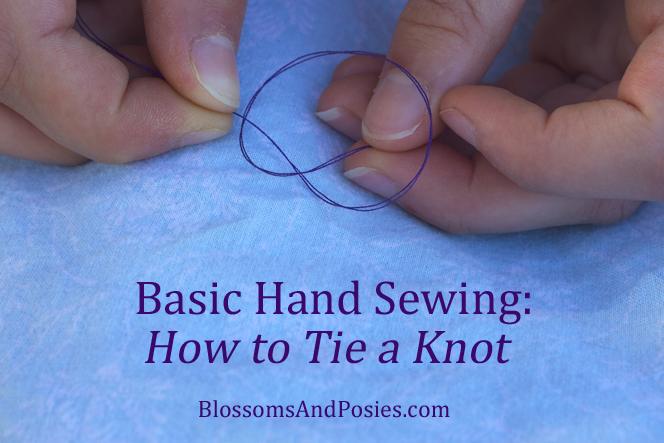
Image Source: blossomsandposies.com
The Importance of a Good Sewing Knot
In sewing, a well-tied knot is your best friend. It’s the small but mighty hero that keeps your stitches in place, prevents your thread from coming undone, and ensures the longevity of your handmade creations. Without a proper knot, your beautiful stitching could unravel after just a few wears or washes, leaving you with damaged fabric and a lot of frustration. Mastering how to tie a knot sewing is just as important as mastering your stitch. It’s the final flourish that guarantees your hard work holds up.
A secure knot acts as an anchor, locking your thread into the fabric. This is especially vital when you’re hand-sewing or when working with fabrics that tend to fray easily. It’s a key element in finishing stitches and is essential for creating a secure stitch that can withstand stress. Think of it as a tiny insurance policy for your sewing project.
Why Knots Matter:
- Security: They stop your thread from slipping out.
- Durability: They help your stitches last longer.
- Neatness: A tidy knot makes your sewing look more professional.
- Efficiency: Knowing how to tie a good knot saves you time and frustration.
When you’re learning sewing techniques, focusing on the basics like knot tying is paramount. It might seem simple, but the execution matters. A knot that’s too big can create a bump on the fabric, while a knot that’s too small might not be secure enough. Finding that balance is part of the journey.
Basic Knot Tying for Sewing
The most common and straightforward way to tie a knot in sewing is the simple overhand knot. This is often the first knot sewers learn and is sufficient for many basic tasks. However, there are other sewing knot types that offer different levels of security and neatness.
The Classic Overhand Knot: Your Go-To
This is the foundation of knotting thread in sewing. It’s easy to learn and effective for most situations.
Steps to Tie a Simple Overhand Knot:
- Thread Your Needle: First, you’ll need to thread your needle. If you’re using a machine, this step is handled by the machine’s threading mechanism. For hand sewing, pull your thread through the eye of the needle. Leave a tail of thread – about the length of your forearm is a good starting point, but adjust based on your project.
- Create a Loop: Take the end of the thread (the tail) and bring it back towards the needle. Create a small loop by crossing the tail over the main length of the thread.
- Pass the Needle Through the Loop: Now, take the needle and pass it through the loop you just created.
- Pull Tight: Hold the thread close to the fabric with one hand, and with the other hand, pull the needle and the tail of the thread away from the fabric. As you pull, the loop will tighten around the thread, forming a knot.
This basic knot is perfect for starting your sewing when you need to tie a knot sewing to secure your initial stitch. It’s a primary method for tying off thread when you finish a seam by hand.
Variations of the Simple Knot:
While the basic overhand knot is excellent, you can make it more secure by adding a second or even a third loop before pulling tight. This is particularly useful for preventing thread unraveling on fabrics that might be slippery.
- Double Knot: After creating the first loop and passing the needle through, create a second loop with the tail before pulling it tight. Then, pull both loops snug against the fabric. This provides extra security.
- Triple Knot: Similar to the double knot, but you create three loops before pulling. This is for maximum security, though it can result in a slightly larger knot.
Choosing the right number of loops depends on the fabric type and the stress the seam will endure. For everyday garments, a double knot is often sufficient. For items that will be handled frequently or put under strain, a triple knot might be preferable.
Securing Your Stitch: The Anchor Point
When you start sewing, you need to anchor your thread to the fabric. This is where your knot comes in.
How to Anchor Your Thread:
- Knot the Tail: Tie a knot at the end of your thread as described above.
- Insert Needle: Bring your needle up from the wrong side of the fabric where you want to begin your seam.
- First Stitch: Take a small stitch backwards into the fabric, just a few millimeters from where you came up. This small stitch, secured by your knot on the wrong side, locks the thread in place.
- Continue Sewing: You can then continue your seam from the correct starting point.
This method ensures that your knot is hidden on the inside of your project, creating a clean finish on the visible side. It’s a key part of finishing stitches and creating that secure stitch.
Advanced Sewing Knot Techniques
While the simple overhand knot is widely used, experienced sewers often employ other sewing knot types for a neater and more secure finish. These techniques are particularly useful for preventing thread unraveling and making your stitches look more professional.
The Surgeon’s Knot: Double the Security
The surgeon’s knot is a variation of the overhand knot that offers enhanced security. It’s excellent for tying off thread at the end of a seam, particularly when you don’t want to risk your knot slipping.
Steps to Tie a Surgeon’s Knot:
- Create a Double Loop: Instead of just looping the thread once, you’ll loop it twice around the needle. Bring the tail of the thread back towards the needle and wrap it around the needle twice.
- Pass Through Both Loops: Now, carefully pass the needle through both loops you’ve just created.
- Pull Snug: Hold the thread close to the fabric and pull the needle and tail away. The double wrap creates more friction, resulting in a very secure knot.
- Add a Second Knot (Optional): For ultimate security, you can tie a second, regular overhand knot on top of the surgeon’s knot.
The surgeon’s knot is one of the best sewing knots for its reliability. It’s a fantastic method for tying off thread at the end of a seam, ensuring your work doesn’t come undone.
The Backward Knot: A Subtle Finish
The backward knot is a technique for tying off thread that aims to be less visible than a standard knot. It’s often used when you need a very neat finish, perhaps on visible areas of a garment.
Steps to Tie a Backward Knot:
- Final Stitch: Make your final stitch as usual, bringing the needle up through the fabric.
- Loop Around the Needle: Instead of looping the thread over the needle, you’ll wrap the thread around the needle backwards, from the point of the needle towards the eye.
- Pass Through the Loop: Pass the needle through the loop you’ve created.
- Pull Tight: Pull the needle and thread away from the fabric, cinching the knot down tightly. It usually requires a couple of passes to make it secure.
This knot is a bit trickier to master than the overhand knot, but it provides a discreet way to secure your stitches. It’s a valuable addition to your repertoire of sewing techniques.
Securing Thread Without a Knot: For Machine Sewing
While hand sewing often relies on knots, machine sewing has its own methods for securing stitches, often eliminating the need for traditional knots at the start and end of seams.
- Backstitching: Most sewing machines have a reverse stitch function. When you reach the beginning or end of a seam, you sew a few stitches forward, then engage the reverse stitch and sew a few stitches backward. Then, you sew forward again. This creates a dense area of stitching that acts like a knot, preventing unraveling. This is a fundamental machine sewing technique.
- Thread Tacking: Some machines have a “thread tack” or “tie-off” function that automatically creates a series of short, dense stitches at the beginning or end of a seam to secure it. This is the machine’s way of tying off thread.
For machine sewing, using backstitching or thread tacking is usually sufficient, and it’s often preferred over hand-tied knots because it’s faster and can create a cleaner finish.
Choosing the Right Knot for Your Project
The best sewing knots are the ones that suit your project and your skill level. Different fabrics and sewing tasks call for different knotting strategies.
Fabric Considerations:
- Delicate Fabrics (Silk, Chiffon): These fabrics require a small, discreet knot. A single or double overhand knot, pulled gently, is often best. Avoid large, bulky knots that can show through or damage the fabric.
- Medium-Weight Fabrics (Cotton, Linen): These are forgiving and can handle simple or double overhand knots, as well as surgeon’s knots for extra security.
- Heavy-Weight Fabrics (Denim, Canvas): These fabrics can accommodate larger knots, so a surgeon’s knot or even a triple overhand knot is perfectly acceptable and highly recommended for its strength.
- Knit Fabrics: Knits can stretch, and a rigid knot might cause the fabric to pucker. Sometimes, it’s better to use a shorter stitch length and backstitch securely rather than a bulky knot.
Project Type:
- Apparel: For visible seams on clothing, neatness is key. Backward knots or a well-executed double overhand knot are good choices for hand sewing. Machine sewing with backstitching is ideal.
- Quilting: Quilters often use small knots, like a single or double overhand knot, to start and end their quilting stitches, ensuring they don’t show on the right side.
- Upholstery/Home Decor: Durability is often the priority here. Stronger knots like the surgeon’s knot are excellent for ensuring seams hold up to wear and tear.
When you are knotting thread for a project, always consider how visible the knot will be and how much stress the seam will endure. This will guide you in selecting the best sewing knots.
Common Sewing Knotting Mistakes and How to Avoid Them
Even experienced sewers can sometimes struggle with knots. Here are some common pitfalls and how to navigate them.
1. Knots That Are Too Big or Bulky
- Problem: A large knot can create a bump on your fabric, making the seam uneven or unsightly.
- Solution: Use a finer thread or a thinner needle. Practice tying your knot closer to the fabric. For hand sewing, try using only one or two loops instead of three. On machine sewing, rely on backstitching.
2. Knots That Slip or Come Undone
- Problem: The knot doesn’t hold, and your stitches unravel. This is a failure of preventing thread unraveling.
- Solution: Ensure you are creating enough loops (double or triple knots) or using the surgeon’s knot. When tying off thread by hand, pull the knot firmly. For machine sewing, backstitch a sufficient number of times.
3. Knots That Break the Thread
- Problem: The thread snaps as you pull the knot tight, especially with finer threads.
- Solution: Use a slightly longer tail when knotting thread. Don’t pull the knot with excessive force. If you’re using a very fine thread, consider reinforcing it with a second knot immediately after the first.
4. Knotting Too Far from the Fabric Edge
- Problem: The knot is tied too far away, leaving a significant amount of thread that could snag or unravel.
- Solution: Practice keeping your fingers close to the fabric when you pull the knot tight. This ensures the knot is right where you want it.
5. Not Knotting at All (Machine Sewing)
- Problem: Forgetting to backstitch or use the tie-off function on a sewing machine.
- Solution: Make backstitching a conscious habit at the beginning and end of every seam. Most machines will audibly signal when they are in reverse stitch mode.
Mastering these sewing techniques includes learning to avoid common errors. Proper knot tying is about precision and practice.
Table: Sewing Knot Types at a Glance
Here’s a quick comparison of popular sewing knot types to help you choose the right one:
| Knot Type | Description | Best For | Pros | Cons |
|---|---|---|---|---|
| Simple Overhand | One loop of thread around the needle. | General sewing, starting/ending stitches, basic repairs. | Easy to learn, quick. | Can unravel if not pulled tight. |
| Double Overhand | Two loops of thread around the needle. | Increased security for most fabrics, everyday sewing. | More secure than a simple knot. | Slightly bulkier than a simple knot. |
| Triple Overhand | Three loops of thread around the needle. | High-stress seams, heavy fabrics, situations where maximum security is needed. | Very secure, excellent for preventing unraveling. | Can be quite bulky. |
| Surgeon’s Knot | Two wraps of thread around the needle before pulling. | Tying off seams, preventing thread slippage, durable construction. | Highly secure, less likely to slip. | Requires a bit more dexterity. |
| Backward Knot | Thread wrapped backwards around the needle. | Discreet finishes, visible seams where neatness is important. | Less visible on the fabric surface. | Can be tricky to master. |
| Machine Backstitch | Sewing forward and backward on a machine. | Machine sewing seams, securing ends of stitches. | Fast, strong, clean finish. | Not applicable for hand sewing. |
This table should give you a good overview of how to tie a knot sewing for different needs.
Frequently Asked Questions About Sewing Knots
Here are some common questions people have about knotting thread in sewing.
Q1: What is the most common sewing knot?
The most common sewing knot is the simple overhand knot. It’s easy to tie and effective for many basic sewing tasks.
Q2: Can I sew without making a knot?
For hand sewing, it’s generally recommended to tie a knot to secure your stitches and prevent thread unraveling. For machine sewing, you can often rely on backstitching or automatic thread tacking functions to secure your seams, eliminating the need for traditional knots.
Q3: How many times should I loop the thread for a knot?
For a basic knot, one loop is sufficient. For extra security, a double knot (two loops) or a triple knot (three loops) is recommended. The surgeon’s knot, which involves wrapping the thread twice around the needle, offers even more security.
Q4: How do I stop my thread from breaking when I knot it?
Avoid pulling knots too tightly, especially with finer threads. Using a longer thread tail can also help. If you notice a thread is prone to breaking, consider using a slightly thicker thread or reinforcing the knot with a second pass.
Q5: What are the best sewing knots for preventing thread unraveling?
The surgeon’s knot and a triple overhand knot are among the best sewing knots for preventing thread unraveling. Machine backstitching is also highly effective.
Q6: How do I make a knot at the end of my sewing?
To make a knot at the end of your sewing by hand, simply tie one or more overhand knots (or a surgeon’s knot) close to the fabric surface after your last stitch. For machine sewing, use the reverse stitch (backstitch) function for a few stitches.
Q7: Is it okay to use a huge knot?
Generally, it’s best to avoid overly large knots as they can create bumps and look untidy. Aim for a knot that is secure but as small and flat as possible.
Q8: What if my needle doesn’t have a knot end?
If you’re machine sewing, you likely won’t need knots as the machine’s backstitching secures the thread. If hand sewing and you prefer no knot, you can use a “thread tack” by making several very small stitches in place on the wrong side of the fabric before starting your main seam.
Conclusion: The Power of a Well-Tied Knot
Mastering how to tie a knot sewing is a fundamental step in becoming a proficient sewer. Whether you’re hand-sewing a delicate hem or constructing a sturdy bag, knowing how to tie a knot sewing correctly ensures your stitches are strong and your project stays together. We’ve explored various sewing knot types, from the simple overhand knot to the more secure surgeon’s knot, and discussed the importance of these techniques for preventing thread unraveling and achieving secure stitches.
Remember, practice makes perfect. Experiment with different sewing techniques for knotting thread and tying off thread to find what works best for you and your projects. A well-tied knot is a small detail, but it contributes significantly to the overall quality and durability of your sewing. So, next time you thread your needle, take a moment to tie that knot with confidence, knowing you’re building a strong foundation for your creative endeavors.