
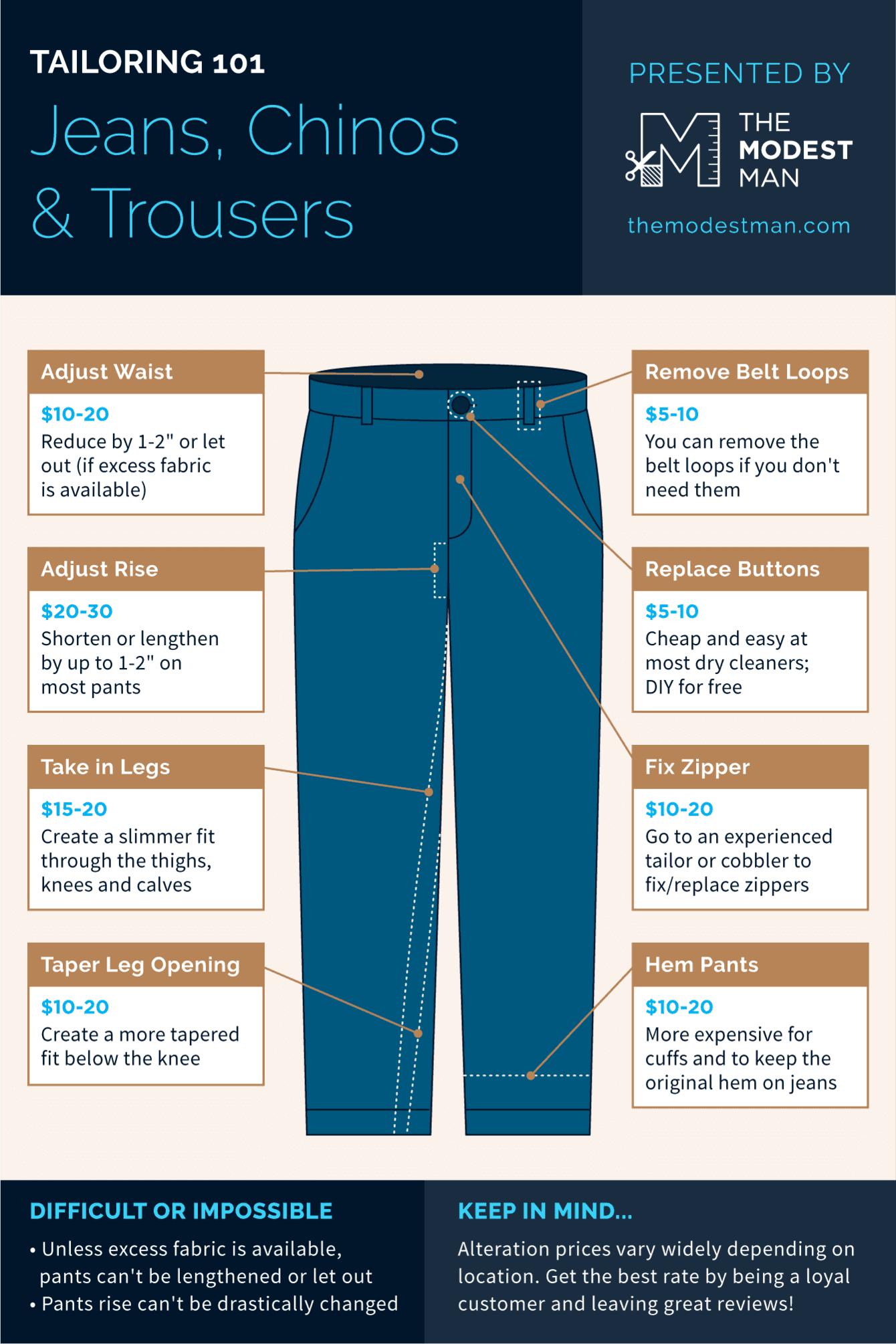
Image Source: www.themodestman.com
How Much Is It To Tailor Pants? Full Pricing Details
Getting pants to fit just right makes a big difference in how you look and feel. Pants off the rack often need small changes to fit your unique body shape. This is where tailoring comes in. Many people wonder about the price of these changes. So, how much is it to tailor pants? The average cost to tailor pants can range from about $10 to $50 for simple jobs like hemming, but can go up to $75 or more for complex work involving the waist, seat, and legs. The final price depends on the type of change, the fabric, and where you go.
Decoding Tailoring Prices
The price of tailoring pants is not fixed. It changes based on a few things.
* What needs to be done: A simple task like making the legs shorter costs less than changing the waist size or making the legs thinner.
* The fabric: Some fabrics are harder to work with. Think thick denim or delicate silk. These can cost more to tailor.
* How the pants are made: If the pants have a lining, special stitching (like on jeans), or complex details, it takes more time and skill to alter them. This adds to the cost.
* Where you live: Tailor shops in big cities or fancy areas usually charge more than those in smaller towns.
* The tailor’s skill: An experienced tailor with a great reputation might charge more for their work.
* How fast you need it: Needing the work done quickly will almost always cost extra.
Common Pant Changes and Their Costs
Let’s look at the most common things people ask a tailor to do to pants and what those services usually cost.
Shortening Pant Legs (Hemming)
This is perhaps the most common type of pant change. It means making the legs shorter. It can be done on jeans, dress pants, casual pants, or any other type.
Cost to Hem Pants
The cost to hem pants is usually the lowest tailoring price. This is because it is a standard and fairly simple job.
- Simple Hem: For basic pants like cotton chinos or dress pants without a cuff or special lining, the cost is often between $10 and $20.
- Cuffed Hem: If your pants have a cuff at the bottom, making them shorter costs a bit more. The tailor has to take the cuff off and then put it back on perfectly. This might cost $15 to $25.
- Original Hem on Jeans: Many people like to keep the original look of the bottom of their jeans. Tailors can cut off the original hem and reattach it after shortening the leg. This is a more complex job and costs more. Expect to pay $20 to $35 or even more for this.
How Much to Shorten Pants
The amount you need to shorten pants doesn’t usually change the price. Whether you need 1 inch or 5 inches taken off, the work involved for the tailor is similar. The price is based on the type of hem, not how much is removed. So, how much to shorten pants is less about the length removed and more about the complexity of the pant leg bottom.
Making Pant Legs Thinner (Tapering)
Sometimes the waist fits, but the legs are too wide. Tapering means making the legs narrower from the knee down, or even from the hip down. This gives pants a more modern or fitted look.
How Much to Taper Pants
Tapering is more work than hemming. The tailor has to open the seam along the inside or outside of the leg (or both), take in the fabric evenly, and then sew it back up smoothly.
- Tapering from the knee down: This is fairly common and usually costs between $25 and $40 per pair of pants.
- Tapering from the hip down: This is a bigger job. It means changing the fit of the pant leg higher up. This is more complex and costs more, maybe $35 to $50 or even higher.
The price can also go up if the pants are lined or made of a difficult fabric like corduroy or thick tweed. Jeans tapering can also be tricky due to the thick seams and sturdy fabric.
Changing the Waist Size
Pants often fit well in the legs but are too tight or too loose in the waist. Tailors can adjust the waist size.
Price to Alter Pants Waist
Changing the waist involves opening the back seam (or sometimes side seams), adding or removing fabric, and sewing it back neatly, making sure belt loops and pockets line up.
- Taking in the waist: This is usually easier than letting it out. A tailor can typically take in a waist by 1 to 3 inches. This might cost $20 to $35. If the pants have a split waistband (which makes it easier), it might be on the lower end. If the waistband is continuous or has complex details, it costs more.
- Letting out the waist: This is only possible if there is extra fabric inside the waistband seam. Not all pants have this. If they do, a tailor might be able to let it out by 1 to 2 inches. This is often more work than taking it in and might cost $25 to $45 or more.
The price to alter pants waist can be higher if the pants have a lot of layers, special stitching, or a complex lining.
Other Common Pant Changes
Besides hemming, tapering, and waist adjustments, tailors can do other repairs or changes:
- Fixing or replacing a zipper: This usually costs between $20 and $35, depending on the type of zipper and how hard it is to replace.
- Repairing pockets: If a pocket is ripped or needs fixing, the cost might be $15 to $30.
- Fixing a ripped seam: Simple seam repairs are usually cheap, maybe $10 to $20.
- Adding belt loops: If you need extra belt loops or one replaced, this could cost $10 to $20 per loop.
- Adjusting the seat: Making the seat (butt area) tighter or looser is similar to adjusting the waist and often costs $25 to $40 or more.
Factors That Change the Price Tag
As mentioned earlier, several things make the price go up or down. Let’s look closer at these factors.
Fabric Type
The material of your pants plays a big role in the tailoring cost.
- Easy Fabrics: Cotton, linen, and simple wool are relatively easy to sew and work with. Prices for alterations on these fabrics are often standard.
- Hard Fabrics: Thick denim (like raw denim jeans), leather, suede, velvet, silk, or delicate lace are harder. They need special needles and techniques. This difficulty increases the price. For example, cost to tailor jeans is often slightly higher than basic cotton chinos, especially if dealing with thick seams.
- Lined Pants: If pants have a lining, the tailor has to work with two layers of fabric. This adds time and care to any alteration, making it more expensive. This is common for cost to tailor dress pants.
Complexity of the Work
The difficulty of the specific change affects the price.
- Simple: Hemming straight legs is simple.
- Medium: Tapering legs from the knee, taking in a waist with a split band is medium.
- Complex: Tapering from the hip, letting out a waist, dealing with intricate stitching (like original jean hems), working with pleated pants, or pants with many pockets or details are complex. Complex jobs take more time, skill, and attention to detail, costing more.
Tailor’s Location and Reputation
Where the tailor shop is located matters a lot.
- Big Cities vs. Small Towns: Tailoring prices near me will be different depending on whether ‘me’ is New York City or a small town in the Midwest. Rent and living costs are higher in cities, so tailors charge more to cover their costs.
- High-End Boutiques vs. Local Dry Cleaners: A tailor shop that works with designer clothing will likely charge much more than a dry cleaner that offers basic alteration services. You often pay for the tailor’s expertise and the shop’s reputation.
How Quickly You Need the Work
Most tailor shops have a standard time for completing work, often a week or two. If you need your pants back sooner, you will almost always pay a rush fee. This can add 25% to 100% (or more) to the total cost.
Tailoring Different Types of Pants
The type of pants you have also influences the tailoring process and cost.
Cost to Tailor Jeans
Jeans are very popular, but they have unique features that affect tailoring.
- Thick Fabric and Seams: Denim is tough. The seams are often thick, especially the outer seam. Working with this requires heavy-duty machines and needles.
- Original Hem: Many people who get jeans hemmed want to keep the look of the original worn hem. As mentioned, reattaching the original hem is a skilled job that costs more than a standard hem.
- Rivet Removal/Replacement: Sometimes, when tapering or working on pockets, tailors might need to remove and replace rivets (the small metal buttons). This adds a small cost.
- Complexity: Tapering jeans can be tricky to make sure the fade and stitching look right.
Because of these factors, the cost to tailor jeans is often on the higher end compared to basic cotton trousers, especially for hemming with an original hem or extensive tapering.
Cost to Tailor Dress Pants
Dress pants, often made of wool, blends, or delicate fabrics, have their own considerations.
- Fabric: Fine wools and delicate blends need careful handling.
- Lining: Many dress pants are lined. Any alteration requires working with both the outer fabric and the lining smoothly. This increases the cost.
- Creases: Dress pants often have a sharp crease down the front. Tailors must ensure this crease is perfectly maintained or restored after an alteration.
- Waistband: Dress pant waistbands can be simple or complex, affecting the price to alter pants waist.
- Men’s Pant Tailoring Cost: For men’s dress pants, common alterations include hemming (often with a cuff), taking in or letting out the waist and seat, and sometimes tapering the leg. The cost to tailor dress pants for men follows the general patterns discussed, with lined pants and complex fabrics increasing the price. Men’s pant tailoring cost for basic hemming is low, while waist/seat adjustments and tapering are higher.
Getting an Idea of Prices Near You
To find out specific prices, it’s best to look for tailoring prices near me.
- Search Online: Use search engines or map apps to find tailors or alteration shops in your area. Look at their websites if they have them. Some might list prices, or at least the types of services they offer.
- Call or Visit: The best way to get an exact price is to call the tailor shop or visit in person with your pants. A good tailor will look at the pants and tell you exactly what needs to be done and the price before they start work.
- Get Multiple Quotes: If you have complex work or want to save money, get quotes from two or three different tailors. Prices can vary.
Remember that the lowest price isn’t always the best value. A good tailor will do careful work that makes your pants look and feel great. A cheap tailor might do sloppy work that ruins your pants. Read reviews if you can.
Pant Alteration Price List (Estimated Ranges)
Here is a table giving a general idea of pant alteration price list items and their likely costs. These are just estimates. Actual prices will vary based on the factors discussed.
| Alteration Type | Description | Estimated Price Range ($) | Notes |
|---|---|---|---|
| Hemming (Simple) | Shorten legs, basic stitch | 10 – 20 | Cotton, linen, unlined wool |
| Hemming (Cuffed) | Shorten legs, maintain cuff | 15 – 25 | More complex than simple hem |
| Hemming (Original Jean Hem) | Shorten legs, reattach original hem | 20 – 35+ | Requires special skill and effort |
| Tapering (from knee) | Make lower leg narrower | 25 – 40 | Standard leg slimming |
| Tapering (from hip) | Make leg narrower from higher up | 35 – 50+ | More complex, affects fit of upper leg |
| Waist (Take In) | Make waist smaller (1-3 inches) | 20 – 35 | Easier than letting out, depends on band |
| Waist (Let Out) | Make waist larger (if fabric allows) | 25 – 45+ | Only possible with extra fabric, harder job |
| Seat Adjustment | Make seat tighter or looser | 25 – 40+ | Often done with waist adjustment |
| Zipper Replacement | Replace front zipper | 20 – 35 | Price varies by zipper type and difficulty |
| Pocket Repair/Replacement | Fix or replace a pocket bag | 15 – 30 | Price varies by complexity of pocket |
| Simple Seam Repair | Stitching came undone | 10 – 20 | Easy fix |
| Belt Loop Adjustment/Addition | Add or fix belt loops | 10 – 20 per loop | Small job per loop |
This pant alteration price list gives a snapshot. Always get a quote for your specific pants and needed work.
Is Paying to Tailor Pants Worth It?
Thinking about the average cost to tailor pants might make you wonder if it’s worth the money. In most cases, yes, it is absolutely worth it.
- Better Fit = Better Look: Well-fitting clothes look much better than clothes that are too loose or too tight. Tailoring makes even inexpensive pants look like they were made just for you.
- Comfort: Pants that fit correctly are more comfortable to wear throughout the day. No more pulling up a loose waist or feeling restricted by tight legs.
- Saving Money Long Term: Instead of buying many pairs of pants that almost fit, you can buy fewer, quality pairs and get them tailored. This can save you money over time. It also lets you get more wear out of pants you already own instead of replacing them.
- Keeping Favorite Items: If you have a favorite pair of jeans or dress pants that don’t quite fit anymore, tailoring can give them a second life. The cost to tailor jeans or dress pants is usually much less than buying a new high-quality pair.
- Confidence: When your clothes fit well, you feel more confident.
The price to alter pants waist, cost to hem pants, or how much to taper pants might seem like an extra expense. But the value you get from a perfect fit often outweighs the cost.
Grasping the Value of a Good Tailor
Finding a skilled tailor is like finding a good mechanic or hairdresser. They understand how clothes are made and how to change them without ruining their look or structure.
- Skill and Precision: A good tailor knows exactly where to cut, how to sew different fabrics, and how to make the alterations look like they were part of the original design. They can handle complex jobs like cost to tailor dress pants with linings or jeans with special washes and stitching.
- Advice: An experienced tailor can offer advice on how the pants should fit and what alterations are possible or recommended. They can tell you if letting out the waist is possible or if tapering the legs will look good with the pant style.
- Consistency: A good tailor provides consistent quality work.
When you look for tailoring prices near me, don’t just compare the numbers. Consider the tailor’s experience and the quality of their past work if you can. Sometimes paying a little more upfront means getting a much better result that lasts longer. Men’s pant tailoring cost can vary widely, so finding a tailor you trust for your suit trousers or everyday chinos is key.
Step-by-Step: Getting Your Pants Tailored
Here is a simple guide on what to do when you decide to get your pants tailored.
- Decide What Needs Changing: Put on the pants you want to alter. Wear the shoes you plan to wear with them, especially for hemming. Look in a mirror. What doesn’t fit right? Is the waist too big? Are the legs too long or too wide?
- Find a Tailor: Search for “tailor” or “alterations” in your area. Check reviews online. Ask friends or family for recommendations. Look for tailoring prices near me online or by calling shops.
- Visit the Tailor: Take the pants and the right shoes with you. Explain what you want changed. The tailor will have you try on the pants. They will pin the fabric to show you how the alteration will look.
- Get a Quote: The tailor will tell you the exact price for the work. This is the time to ask questions about the process or the cost.
- Agree and Leave the Pants: If you agree to the price and feel comfortable with the tailor, leave your pants with them. Get a ticket or receipt that says when the pants will be ready.
- Pick Up and Try On: When the pants are ready, go back to the shop. Try them on right away before you leave. Make sure the changes were done correctly and that the fit is now right. If something isn’t right, tell the tailor immediately so they can fix it.
This simple process helps ensure you get the result you want and know the cost upfront. The pant alteration price list you saw earlier is a good starting point, but the final price is determined when the tailor sees the actual garment and tries it on you.
Planning Your Tailoring Budget
If you plan to buy new pants or get existing ones fixed, knowing the typical costs can help you budget.
- New Pants: If you know a brand or style of pants usually needs hemming or a waist adjustment for you, factor that cost into your purchase price. For example, if you buy jeans for $50 and know you’ll need $25 for cost to tailor jeans (original hem), the total cost is really $75.
- Existing Pants: Look at your closet. Are there pants you don’t wear because they don’t fit? Estimate the cost to tailor them based on the pant alteration price list. See if fixing them is cheaper than buying new ones.
Even small changes can make a big difference. Knowing the how much to shorten pants or how much to taper pants cost helps you make smart decisions about your wardrobe. The average cost to tailor pants for common alterations is a small price to pay for pants that fit well and look great.
Conclusion: Tailoring is an Investment
Getting pants tailored is more than just an expense; it is an investment in your wardrobe and your comfort. While the cost to hem pants is low, and the price to alter pants waist or how much to taper pants is higher, each service helps make your clothes fit you better. By understanding the pant alteration price list and the factors that affect cost, you can make informed choices. Whether it’s cost to tailor dress pants for an important event or cost to tailor jeans for everyday wear, finding a reliable tailor and paying for quality work is a decision you won’t regret. Looking for tailoring prices near me is the first step to getting that perfect fit. Men’s pant tailoring cost varies, but the result of well-fitted trousers or jeans is always worth it.
Frequently Asked Questions (FAQ)
Q: How long does it usually take to tailor pants?
A: Simple jobs like hemming can often be done in a few days to a week. More complex alterations like waist or seat adjustments or extensive tapering might take one to two weeks. Rush services are usually available for an extra fee if you need them faster.
Q: Can a tailor make pants bigger?
A: A tailor can sometimes make the waist or seat bigger, but only if there is extra fabric folded inside the seams. This is called “letting out.” If there is no extra fabric, they cannot make the pants bigger. Making legs wider after tapering is usually not possible without looking strange.
Q: Is it cheaper to go to a dry cleaner for alterations?
A: Dry cleaners that offer alterations might be cheaper for very simple jobs like basic hemming. However, they often have less experienced staff for tailoring. For more complex changes like tapering, waist adjustments, or work on delicate fabrics or jeans with special finishes, a dedicated tailor shop is usually better and worth the slightly higher price.
Q: Can I get any pair of pants tailored?
A: Most pants can be tailored. However, there are limits to how much a tailor can change. There needs to be enough fabric to let out a waist or length. If pants are much too small all over, tailoring might not be possible or cost-effective. An experienced tailor can tell you what is possible.
Q: Do I need an appointment to get pants tailored?
A: It depends on the tailor shop. Some shops accept walk-ins, especially for simple jobs. Others prefer or require appointments so they can dedicate time to properly fit you and discuss the changes. Calling ahead is always a good idea.