
Making clothes by hand took a very long time. Each stitch needed care. People wanted a faster way to make clothing. The sewing machine was invented to solve this problem. It aimed to make sewing quicker and easier. This invention changed the world in big ways.
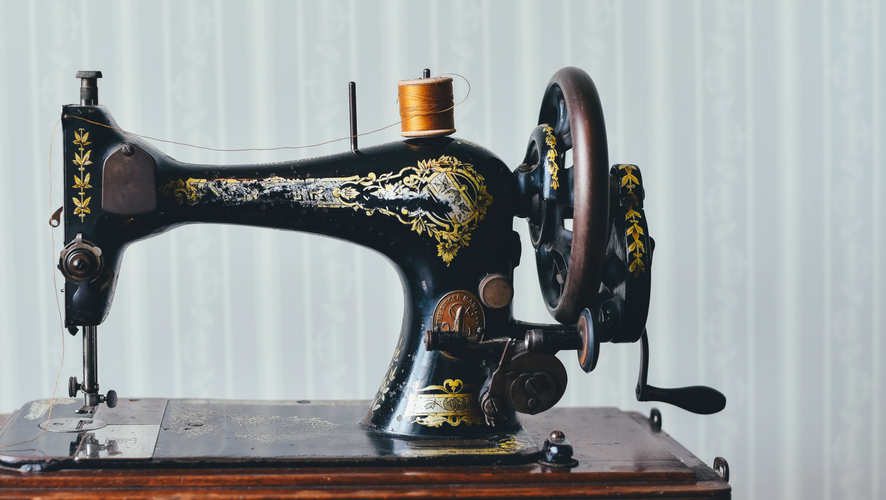
Image Source: www.contrado.co.uk
The Slow Work of Hand Sewing
Before machines, every piece of clothing was made by hand. Seamstresses and tailors spent hours on just one item. Families often made their own clothes at home. This work was slow and tiring.
- Putting clothes together was a very hard job.
- It took many hours to make one shirt or dress.
- People had to sew countless stitches one by one.
- The work was hard on the hands and eyes.
- Making clothes for a whole family took months.
- Only rich people could buy many clothes.
- Most people had just a few outfits.
This slow process held back the making of clothing. As populations grew, the need for more clothes grew too. But the old ways could not keep up. People dreamed of a faster method. They wanted to make more clothes for more people.
Hand Sewing Problems Were Many
Hand sewing had major drawbacks. It was very slow. A skilled person could sew maybe 30 stitches in a minute. A simple dress could take days or even weeks to finish.
Think about the time needed for a single outfit:
* Cutting the fabric: A few hours.
* Planning and fitting: Several hours.
* Sewing seams and details: Many, many hours.
This long time meant fewer clothes were made. Clothes were expensive because of all the labor. Most people could not afford to buy new clothes often. They wore their clothes until they wore out completely. Repairing clothes also took much time. The limits of hand sewing were clear. People needed a better solution. The desire for speed pushed inventors to think of new ideas.
Setting the Scene: The Industrial Revolution’s Need
Big changes were happening in the world. This time is called the Industrial Revolution. Machines were taking over tasks once done by hand. Factories were built. New power sources like steam were used.
The Industrial Revolution changed how goods were made. It started in industries like cotton spinning and weaving. New machines made it easy to make lots of cloth quickly. The Industrial Revolution textile industry grew fast. Cloth became cheaper to make.
But there was a problem. Making the cloth was fast. Sewing the cloth into clothes was still slow. Hand sewing became a bottleneck. Factories could make huge amounts of fabric. But they could not turn it into clothes fast enough. There was a big gap between making cloth and making clothing.
Factory owners and clever thinkers saw this gap. They knew a machine that could sew would be very valuable. Such a machine could speed up clothing making. It would fit perfectly with the new factory way of working. The demand for automation was high. The time was right for mechanized sewing development.
Early Steps in Machine Sewing
Inventors started working on sewing machines in the late 1700s. It was a hard problem to solve. How do you copy the complex motions of hands holding fabric and a needle? Many tried, but success was slow to come.
One early attempt was by Thomas Saint. He got a patent in England in 1790. His machine was meant for sewing leather. It used a single thread and made a chain stitch. This stitch could easily unravel. Also, there is no proof Saint’s machine was ever built or worked well. His idea was lost for many years.
Other inventors tried different ideas:
* Barthélemy Thimonnier (France): He built a machine in 1830. It also used a chain stitch. He even opened a factory with 80 machines to make army uniforms. But tailors feared losing their jobs. They destroyed his factory.
* Walter Hunt (America): Around 1834, Hunt made a machine. It used two threads and an eye-pointed needle. This was a key idea. His machine made a lockstitch, which is much stronger. But Hunt did not think it would make much money. He did not patent it right away.
These early machines had problems. They were often clumsy or broke easily. They did not always sew well. And the chain stitch was weak. People still relied mostly on hand sewing. But these early tries showed what was possible. They laid the groundwork for later inventors.
The Key Innovation: The Lockstitch
The biggest problem was creating a strong stitch. Hand sewing uses a stitch where threads cross over each other tightly. Early machines often used a chain stitch, which loops thread but is weak.
The answer was the lockstitch. This stitch uses two threads. One thread comes from the top (from the needle). The other thread comes from the bottom (from a bobbin). A loop from the top thread goes around the bottom thread. They lock together inside the fabric. This makes a strong, secure stitch that does not pull apart easily.
Creating the lockstitch required new ideas:
* An eye-pointed needle: The hole for the thread is near the point, not at the top. This lets the needle push the thread loop through the fabric.
* A shuttle or bobbin: A way to carry the second thread under the fabric and pass the needle’s thread loop around it.
Many inventors worked on this. Walter Hunt had the idea first but did not pursue it. The person who brought the lockstitch sewing machine to the world in a successful way was Elias Howe.
The Man Who Made It Work: Elias Howe Inventor
Elias Howe was born in Massachusetts in 1819. He was a skilled mechanic. He heard people talking about the need for a sewing machine. He decided to try and build one. Howe worked on his machine for years. He faced many money troubles.
In 1846, Elias Howe inventor received a patent for his sewing machine. His machine used an eye-pointed needle that moved horizontally. It also had a shuttle that moved back and forth. This created the lockstitch. His machine was faster and more reliable than earlier ones.
Howe’s machine could sew about 300 stitches per minute. This was much faster than hand sewing (around 30 stitches per minute). It was a major step forward in mechanized sewing development.
But getting people to use his machine was hard. It looked strange. People were used to hand sewing. Tailors worried about their jobs. Howe struggled to sell his machines in America. He even went to England to find buyers, but that did not go well either.
When Howe came back to America, others had started making sewing machines. Some were even using ideas similar to his patent. This led to big legal battles.
The Rise of a Business Genius: Isaac Singer
One of the people making machines was Isaac Merritt Singer. Singer was not an inventor first. He was a showman and businessman. He saw Howe’s machine and other designs. Singer built his own sewing machine. He got a patent for his version in 1851.
The Isaac Singer sewing machine had important improvements:
* It used a vertical needle that moved up and down. This felt more like hand sewing to people.
* It had a presser foot. This held the fabric down as the needle moved. This made sewing easier and more even.
* It used a foot treadle. This left the user’s hands free to guide the fabric. Howe’s machine often used a hand crank.
Singer was brilliant at selling his machines. He showed them working in public places. He offered payment plans, letting people pay a little bit each month. This made his machines affordable for more people, not just factories. The Isaac Singer sewing machine became very popular in homes.
The Sewing Machine Wars
Elias Howe saw that Singer and others were using his lockstitch idea and eye-pointed needle. He sued them for patent infringement. The legal fight was long and costly.
In 1854, Elias Howe won his case against Singer and others. The court said that Howe’s patent for the lockstitch mechanism was valid. This meant other companies had to pay Howe a fee for every machine they sold that used his invention.
This patent victory made Howe rich. The different sewing machine companies later formed a “patent pool.” They agreed to share technology and pay fees to each other. This helped the industry grow faster. It also set a pattern for how companies in new industries could work together despite competing.
Grasping How the Machine Works (Simply)
How does a sewing machine make a stitch so quickly? Let’s look at the basic steps of the lockstitch:
- The Needle Goes Down: The eye-pointed needle holds the top thread. It pushes through the fabric.
- It Starts to Come Up: As the needle pulls up slightly, it makes a small loop of the top thread just under the fabric.
- The Hook Catches the Loop: A part under the fabric (either a shuttle or a rotating hook) spins or moves forward. It catches the loop of the top thread.
- The Second Thread Passes Through: The hook or shuttle carries the bottom thread (from the bobbin) through the loop of the top thread.
- The Loop Tightens: The needle keeps moving up, pulling the top thread tight. The take-up lever (a moving arm on top) also pulls the thread. This pulls the two threads together, locking them inside the fabric.
- Repeat: The process starts again for the next stitch.
This simple action, repeated hundreds or thousands of times a minute, creates a strong seam very quickly. It is a masterpiece of mechanical engineering.
The Huge Impact on Clothing Production
The invention of the sewing machine changed the world of clothing forever. Its impact on clothing production was massive and far-reaching.
Before the machine, clothes were bespoke (made one at a time for a specific person) or made at home. After the machine, mass production of clothing became possible.
- From Home to Factory: Much clothing production moved out of homes and small workshops into factories.
- Ready-to-Wear Clothes: Factories could make clothes in standard sizes. This created the ready-to-wear clothing industry. People could buy clothes off the rack instead of having them made.
- Speed and Volume: The automation of garment making increased production speed dramatically. One person with a machine could sew more in an hour than many people sewing by hand. This led to a huge efficiency increase in sewing.
- Lower Costs: Faster production meant lower labor costs per item. This made clothing much cheaper.
Let’s look at the difference in speed:
Sewing Speed Comparison
| Method | Stitches per Minute (Approx.) | Time to Sew a Shirt (Estimate) | Cost Implication |
|---|---|---|---|
| Hand Sewing | 20 – 40 | Days to Weeks | High labor cost |
| Machine Sewing | 500 – 1500+ | Hours | Much lower labor cost |
This jump in speed changed everything. More clothes could be made. More types of clothes were made. Fashion changed faster because making new styles was easier and cheaper.
Deciphering the Wider Impact
The sewing machine did more than just speed up sewing. Its impact spread to many parts of life and business.
Economic Changes:
* Growth of Factories: New factories were built just for making clothes.
* New Jobs: The need for factory workers, machine operators, and mechanics grew.
* Retail Boom: The ready-to-wear industry needed stores to sell the clothes. Department stores grew partly because they could sell mass-produced clothing.
* Other Industries: The machine helped other industries too. Upholstery, shoe making, bookbinding, and sail making all used sewing machines.
Social Changes:
* More Affordable Clothing: Ordinary people could now afford more and better-quality clothes. They could follow fashion trends.
* Changes for Women:
* Many women found work in clothing factories. This gave them some financial independence, though factory conditions were often poor.
* At home, the machine greatly reduced the time women spent sewing clothes for their families. This freed up time for other tasks or leisure.
* Changes in Fashion: With clothes cheaper and easier to make, fashion became more accessible and changed more often. Styles that were hard to sew by hand became possible with a machine.
* Migration: The promise of factory jobs drew people from rural areas to cities.
The sewing machine was a key part of the Industrial Revolution’s effect on everyday life. It helped create the modern consumer economy where goods are mass-produced and relatively cheap.
Mechanized Sewing Development Continued
After Howe and Singer, inventors kept making the sewing machine better.
- Later machines added features like:
- The ability to sew backward.
- Different stitch patterns (like the zigzag stitch).
- Buttonhole attachments.
- Electric motors were added, replacing foot treadles and hand cranks. This made the machines even faster and easier to use.
- Industrial sewing machines were developed. These were bigger, stronger, and faster for factory use. Home machines became smaller and easier for home use.
Companies like Singer, Howe Machine Company, Wheeler & Wilson, and Grover & Baker competed and innovated. This competition drove rapid improvements in machine design and function. The foundational concept – the mechanized lockstitch – remained, but the machines became more user-friendly, versatile, and efficient.
Isaac Singer’s Business Model
Singer’s success was not just his machine design, but how he sold it. He used smart business ideas:
- Payment Plans: The installment plan was revolutionary. People could take a machine home and pay a little each week or month. This made the relatively expensive machine affordable for middle-class families.
- Showrooms and Demonstrations: Singer opened fancy stores where people could see the machine working. This created excitement and showed how easy it was to use.
- Advertising: Singer spent a lot of money on ads. He built a strong brand name.
- Service and Training: Singer provided lessons on how to use the machine and offered repair services.
These business strategies helped the Isaac Singer sewing machine become a household name around the world. His methods were copied by companies selling other expensive goods.
The Legacy: An Efficiency Increase in Sewing and Beyond
The sewing machine stands as one of the most important inventions of the Industrial Revolution. Its immediate purpose was simple: to make sewing faster than hand sewing. It achieved this goal with incredible success, leading to a huge efficiency increase in sewing.
But its true legacy is much bigger. It powered the creation of the modern clothing industry. It changed economies by creating factories, jobs, and new ways of doing business. It changed societies by making clothing affordable and freeing up time for millions.
The history of sewing machine shows a path of invention, struggle, competition, and ultimately, massive impact. From Thomas Saint’s early idea to Elias Howe’s critical lockstitch and Isaac Singer’s business genius, many people played a part.
Today, advanced sewing machines are used in huge factories to make the clothes we wear. Home sewing machines are still popular for hobbies and repairs. The fundamental idea born from the need to overcome hand sewing problems continues to shape our world.
The invention of the sewing machine was not just a mechanical trick. It was a force that helped stitch together the fabric of modern life.
Frequently Asked Questions about the Sewing Machine
h4: Why was the sewing machine invented?
The sewing machine was invented mainly because hand sewing was too slow and labor-intensive to meet the growing demand for clothing, especially during the Industrial Revolution when fabric production was speeding up. People needed a faster, more efficient way to make clothes.
h4: Who invented the first sewing machine?
Many people worked on the idea. Thomas Saint got a patent in 1790 for an early design that may not have worked well. Barthelemy Thimonnier built a working machine in 1830. Walter Hunt made a lockstitch machine around 1834 but did not patent it. Elias Howe patented a successful lockstitch machine in 1846 and is often credited with inventing the first practical sewing machine. Isaac Singer later made important improvements and popularized the machine.
h4: What was the biggest problem with hand sewing that the machine solved?
The biggest problem was the sheer time and effort needed to make clothes stitch by stitch. The sewing machine drastically reduced the time it took to create a garment, increasing speed and production volume hugely.
h4: How did the sewing machine impact the clothing industry?
It transformed the clothing industry from a craft-based system to a factory-based one. It enabled mass production of clothing, led to the ready-to-wear industry, made clothes much more affordable, and changed fashion by allowing for faster style changes.
h4: How did Isaac Singer make the sewing machine popular?
Isaac Singer was a great businessman. He made improvements to the machine that made it easier to use, like the foot treadle. Crucially, he offered payment plans (installments) and used effective advertising and showrooms to sell machines directly to people’s homes, making them accessible to the middle class.
h4: Did the sewing machine only affect clothing?
No, while clothing was a major impact, the sewing machine was also used in other industries. These included making shoes, upholstery, sails, tents, bookbindings, and other goods that needed strong, fast stitching.
h4: What is a lockstitch?
A lockstitch is a type of stitch made by most sewing machines. It uses two threads, one from the top (needle) and one from the bottom (bobbin). A loop from the top thread passes around the bottom thread, locking them together inside the fabric. This makes a very strong stitch that does not easily unravel.
h4: How fast is machine sewing compared to hand sewing?
Machine sewing is much faster. A person sewing by hand might make 20-40 stitches per minute. Early sewing machines could make around 300 stitches per minute. Modern industrial machines can make thousands of stitches per minute.
h4: What happened to people who sewed by hand for a living?
The rise of the sewing machine greatly reduced the need for skilled hand seamstresses and tailors for basic garment construction. Some found jobs in factories running machines, while others focused on high-end custom work or repairs that still required hand skills. It changed the nature of the sewing profession.
h4: Is the sewing machine still important today?
Yes, it is still very important. Most clothing and many other fabric goods are made using industrial sewing machines in factories worldwide. Home sewing machines are still used for crafting, repairs, and making custom items. The core technology remains fundamental to textile production.