
Sewing by hand is a rewarding skill. But a bad knot can ruin your work. Your stitches can come undone. Your hard work can fall apart. What is the best way to make a knot in thread? You need strong, secure knots. These knots hold your stitches tight. They make sure your sewing lasts. Learning how to knot sewing thread well is key. It stops stitches from pulling through fabric. It makes your sewing look neat. We will show you the right way to make knots for hand sewing.
When you sew by hand, you need knots. You need a knot to start. This is a starting a stitch knot. You need a knot to finish. This is an ending a seam knot, sometimes called tying off sewing thread. Both are important parts of hand sewing knots. Good sewing knot techniques make your projects strong. Let’s learn how to make a secure knot for hand stitching.
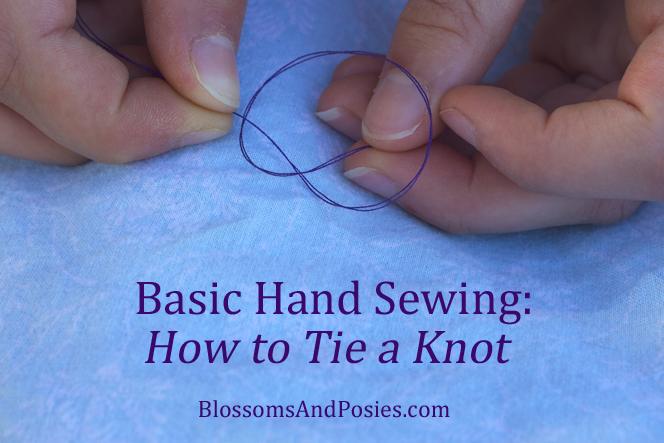
Image Source: blossomsandposies.com
Getting Ready to Knot Thread
Before you make a knot, you need thread and a needle. Pick thread that works with your fabric. Thick fabric needs strong thread. Fine fabric needs thinner thread.
How to Thread a Needle
Put the thread end through the needle’s eye. The eye is the hole in the needle. This can be tricky. Lick the thread end or use a threader if it helps. Pull the thread through. Now you are ready to make your thread a needle knot.
Why Knots Are Important
Knots keep your stitches from coming out. A loose knot can slip. Then your seam opens up. A good knot stays put. It locks your first stitch. It locks your last stitch. This is true for any hand sewing project.
Making a Knot to Start Sewing
You need a knot at the start of your thread. This knot holds your first stitch in place. It stops the thread from pulling all the way through the fabric. There are a few ways to make a starting a stitch knot.
The Simple Knot
This is the easiest knot. It is a simple sewing knot. But it can be small. Sometimes it pulls through loose fabric.
Steps for a Simple Knot
- Hold the needle in one hand.
- Hold the thread end in the other hand. The long part of the thread goes to the needle. The short end hangs free.
- Make a loop with the thread end. Cross the short end over the long part.
- Push the short end through the loop you just made.
- Pull the short end. The loop gets smaller. It turns into a knot.
- Slide the knot down to the very end of the thread.
This makes one small bump. For more security, you can make a double knot sewing.
The Double Knot
This knot is like the simple knot. But you do it two times. It makes a bigger knot. It is better for many fabrics. This is a stronger simple sewing knot.
Steps for a Double Knot
- Make one simple knot as shown above.
- Make a second simple knot right on top of the first one.
- Hold the first knot.
- Make a new loop next to the first knot.
- Push the thread end through this new loop.
- Pull tight.
Now you have two bumps stacked up. This double knot sewing is much less likely to pull through fabric. It is a good secure knot for hand stitching.
The Tailor’s Knot (or Quilter’s Knot)
This is a very popular knot. Many sewers like it. It is fast to make. It is a great knot for hand sewing. It makes a small but strong knot right at the end of the thread. This sewing knot technique is very useful.
Steps for a Tailor’s Knot
- Hold the needle in one hand.
- Hold the thread end in the other hand. The needle is on the long part of the thread.
- Lay the very end of the thread across the tip of your pointer finger.
- Hold the thread end there with your thumb.
- Wrap the thread end around your pointer finger one time. Wrap it near the tip.
- Keep holding the wrapped thread with your thumb and pointer finger.
- Roll your pointer finger forward. This rolls the thread off your finger. As it rolls, it makes a little twisted bundle of thread on your finger tip.
- Use your thumb and finger to grab this little bundle. Slide it down the thread towards the end.
- Keep sliding it down the thread. Hold the very end of the thread. Pull the bundle tight. It forms a knot at the end.
This knot is neat and secure. It is a good starting a stitch knot. Practice makes this knot easy and fast. This is one of the key sewing knot techniques.
Making the Tailor’s Knot Stronger
You can wrap the thread around your finger more than once. Wrap it two or three times. Then do steps 7-9. This makes a bigger bundle. When you pull it tight, it makes a larger knot. This double knot sewing method using the tailor’s knot technique is very strong. It is a super secure knot for hand stitching on many fabrics.
Making a Knot to Finish Sewing
When you get to the end of a seam, you need to stop. You need to tie off sewing thread. This knot holds all your stitches in place. If you don’t make a good knot here, your stitches will come undone. This is an important ending a seam knot.
The ending knot is different from the starting knot. The starting knot is made at the end of the thread before you sew. The ending knot is made right on the fabric, close to your last stitch.
The Simple Tie-Off Knot
This is a basic way to finish a seam. You make a knot close to the fabric.
Steps for a Simple Tie-Off
- Finish your last stitch. Have the needle and thread come up through the fabric on the back side (or the side that won’t show).
- Put the needle back into the fabric very close to where it just came out. Go in only a tiny bit. This makes a very small stitch right on the fabric surface.
- Pull the thread most of the way through. But leave a small loop of thread on the fabric surface.
- Bring the needle back through this loop.
- Pull the thread tight. The loop gets smaller and forms a knot against the fabric.
- You can make another knot the same way right next to the first one for more strength. This is double knot sewing at the end.
This method works. But the knot sits on the surface. It can rub and come undone. Or it can be seen. There are better ways to tie off sewing thread.
The Hidden Tie-Off Knot
This method hides the knot. It puts the knot right inside the fabric layers. This makes it very secure. And it looks cleaner. This is a better ending a seam knot.
Steps for a Hidden Tie-Off
- Finish your last stitch. Have the needle and thread come up through the fabric on the back side.
- Take a tiny stitch in the fabric. Go in very close to where the thread came out. Go into the fabric layers. Do not go through to the front. Just grab a few threads of the fabric right where the thread came out.
- Pull the thread most of the way through. Leave a small loop on the fabric surface.
- Bring the needle back through this loop.
- Pull the thread tight. This makes a knot. Because you only went into the fabric layers, the knot forms inside the fabric.
- Repeat steps 2-5 right next to the first knot. Do this two or three times. Making a double knot sewing or triple knot makes it very strong.
- Cut the thread close to the fabric.
This hidden knot is a very secure knot for hand stitching. It is much less likely to come undone. It is a great sewing knot technique for ending seams.
Tie-Off Knot in a Seam Line
If you are sewing a seam that will be hidden, you can tie off right in the seam allowance.
Steps for Tie-Off in Seam
- Sew your seam line. When you reach the end, take one last stitch.
- Bring the needle out near the seam line, but in the seam allowance (the extra fabric past the stitch line).
- Take a small stitch just into the fabric right next to where the thread came out. Leave a loop.
- Bring the needle through the loop. Pull tight.
- Repeat steps 3-4 one or two more times in the same spot. This is double knot sewing on the fabric.
- Cut the thread end.
This method is fine for seams inside a project.
Advanced Knotting Ideas
Some sewing knot techniques are more specific. They are used in certain situations.
Knotting on the Needle
You can make a knot right on the needle’s shaft. This is another way of making a knot in thread. It is often used for starting.
Steps for Knotting on the Needle
- Hold the needle in one hand.
- Hold the thread with the needle threaded. The long part of the thread goes away from you.
- Wrap the thread around the needle shaft 2-3 times, close to the eye. Wrap it loosely.
- Hold these wraps on the needle with your thumb and pointer finger.
- Push these wraps off the end of the needle with your fingers.
- As the wraps slide off, pull the long thread end away from the needle. The wraps twist and form a knot at the end of the thread.
This makes a neat knot. It is similar to the tailor’s knot. It is a good starting a stitch knot.
Knotting for Beads or Loops
If you are adding beads or making loops (like for buttons), you might need knots along the thread.
Steps for Knotting Along Thread
- Sew your stitch. Bring the thread up.
- Decide where you want a knot.
- Put the needle back into the fabric right next to where it came out. Go in only a tiny bit, grabbing just a few threads.
- Pull the thread through, leaving a loop.
- Bring the needle through the loop. Pull tight. This makes a knot on the fabric surface.
- Move to the next spot.
You can do this after each bead. Or to make knots that form small loops on the fabric edge.
Checking Your Knots
How do you know if your knot is good?
* It should be right at the very end of the thread (for starting knots).
* It should be right against the fabric (for ending knots).
* It should look like a small, tight bump.
* Gently pull on the thread near the knot. It should not loosen or slip.
* Try to push the knot through the fabric weave. For most fabrics, it should not go through easily. If it does, you need a bigger knot (try double knot sewing or wrapping more times for a tailor’s knot).
A knot that is too loose or too far from the fabric will not work. A knot that is too big might make a bump that shows on the front of your work. Find the right size for your fabric and thread.
Table: Knot Types and Uses
Here is a quick look at the knots we talked about.
| Knot Type | Used For | How it Sits | Strength | Good Fabrics | Notes |
|---|---|---|---|---|---|
| Simple Knot | Starting | At thread end | Basic | Tightly woven fabrics | Can pull through loose weaves. |
| Double Knot Sewing | Starting | At thread end | Good | Most fabrics | Two simple knots on top of each other. |
| Tailor’s Knot | Starting | At thread end | Good | Most fabrics | Fast to make, neat. |
| Tailor’s Knot (Multi-wrap) | Starting | At thread end | Very Good | Loosely woven fabrics | Wrap thread 2-3 times around finger. |
| Simple Tie-Off | Ending | On fabric surface | Basic | Any | Can be seen or snagged. |
| Hidden Tie-Off | Ending | Inside fabric | Very Good | Most fabrics | Best for a clean, secure finish. |
| Tie-Off in Seam | Ending | In seam allowance | Good | When seam allowance exists | Good for seams inside a project. |
This table helps you see which hand sewing knots are best for different jobs. Choosing the right sewing knot techniques makes a big difference.
Fixing Knot Problems
Sometimes things go wrong with making a knot in thread.
* Knot is too small: It pulls through the fabric. Try a double knot sewing or a multi-wrap tailor’s knot.
* Knot is too big: It makes a bump. This might show on the front of your work. Or it can make starting a stitch hard if the knot is huge. Practice making neat, smaller knots that are still secure. The tailor’s knot is good for this.
* Knot is messy: It looks loose or like a tangle. This usually happens when you don’t pull the knot tight enough or control it as it forms. Hold the knot as you tighten it. Pull the thread smoothly.
* Thread twists: As you make a knot, the thread can twist. This happens a lot with long threads. Let the needle and thread hang from your project sometimes. This lets the twists untangle.
Practice is the key to good hand sewing knots. Try making knots on a scrap piece of fabric. See how they look and feel.
Threading Techniques Matter
Getting the thread through the needle’s eye is the first step to making a thread a needle knot.
* Cut the thread end clean with sharp scissors. A frayed end is hard to push through.
* Wet the thread end slightly. This makes it stiffer and thinner.
* Pinch the thread end very flat between your fingers.
* Use a needle threader. This tool has a thin wire loop. Push the wire through the needle eye. Push the thread through the wire loop. Pull the wire back through the eye. The thread comes with it.
Once the thread is through, pull enough thread. How much thread? For most hand sewing, an arm’s length is good. Longer threads can tangle and knot up by accident while you sew, not just when making a starting knot. A short thread means you make more knots to start and end. An arm’s length balances this.
The Importance of Thread Type
The type of thread affects your knots.
* Cotton thread: Can be a bit fuzzy. Knots well, but can break if pulled too hard.
* Polyester thread: Stronger than cotton. Less likely to break. Can be a bit slippery. Tailor’s knots or double knots work well.
* Silk thread: Very strong and smooth. Can be very slippery. Needs careful knotting, maybe a double knot or extra wraps.
* Heavy-duty thread: Thicker thread. Makes bigger knots easily. A simple knot or single tailor’s knot might be enough.
Always test your secure knot for hand stitching on a scrap of the fabric you are using. Use the same thread. See if the knot pulls through. This helps you pick the best sewing knot technique.
Different Sewing Tasks, Different Knots
Think about what you are sewing.
* Sewing a regular seam: A hidden tie-off knot is usually best at the end. For starting, a tailor’s knot or double knot sewing works well.
* Sewing a hem: You don’t want knots to show on the front. Use tiny stitches. Start and end your thread inside a fold if possible. Use a hidden tie-off knot inside the hem fold.
* Adding a button: Start with a knot hidden under where the button will sit. End by making knots under the button as well. This keeps the knot hidden and secure. Double knot sewing is often good here for strength.
* Embroidery: Often, you don’t use a knot to start embroidery. You leave a small ‘tail’ of thread on the back and stitch over it to secure it. For ending, you can weave the thread end through the back of your stitches. This avoids bulky knots. However, if you do need a knot, keep it small and neat on the back.
Knowing these different hand sewing knots helps you pick the right one for the job. It’s not just about making a knot in thread; it’s about making the right knot.
Common Mistakes When Making Knots
- Making the knot too far from the end: The knot needs to be right at the very end of the thread for starting. Pinch it as you pull it tight to make sure it slides down all the way.
- Not pulling the knot tight enough: A loose knot is weak. Gently but firmly pull to make it snug. Be careful not to break thin thread.
- Making knots on the front: Starting and ending knots should be hidden whenever possible. Practice the hidden tie-off. Start inside folds or on the back of the fabric.
- Not securing the end: Just cutting the thread without an ending a seam knot means your work will come undone. Always tie off sewing thread securely.
- Using the wrong size knot: A simple knot on loose weave fabric will fail. A huge knot on delicate fabric will look bad. Match the knot size to the fabric and thread. Double knot sewing or multi-wrap knots for loose fabric. Simple knots for tight fabric.
Avoiding these mistakes will make your hand sewing much better and more lasting.
Practicing Your Knots
Like any skill, making knots takes practice. Get some scrap fabric and thread. Just practice making the different starting knots. See which feels easiest for you. Practice the hidden tie-off knot. Do it a few times until it feels natural.
Try making the tailor’s knot. At first, the little bundle might not form right. Keep trying. Roll your finger slower or faster. Use your thumb to help control the thread.
Practice tying off close to your last stitch. See how tiny you can make the securing stitches while still grabbing fabric.
Good hand sewing knots are a foundation skill. They give you confidence that your sewing will stay together. Learning the right sewing knot techniques is worth the time. Whether you need a simple sewing knot or a more complex one, mastering these skills will improve your sewing projects.
Making a knot in thread is a small thing. But doing it the right way makes a big difference. It ensures your hard work lasts. It keeps seams strong. It makes edges neat. Secure knots are the unsung heroes of hand stitching.
FAQ: Questions About Sewing Knots
Q: Why does my starting knot pull through the fabric?
A: This happens when your knot is too small for the gaps in your fabric weave. To fix this, make a bigger knot. You can make a double knot sewing (two simple knots on top of each other) or wrap the thread more times (2-3 times) when making a tailor’s knot. This makes the knot thicker and less likely to slip through.
Q: How do I make a knot invisible?
A: For starting knots, the tailor’s knot is neat and small. You can also start by sewing a few tiny stitches in the same spot on the back side of the fabric, instead of using a starting knot. For ending knots, the best way is the hidden tie-off knot. This knot is made inside the fabric layers, not sitting on the surface. It’s secure and doesn’t show.
Q: Is it better to use a knot to start or to stitch over the thread end?
A: For many projects, especially where the back might show (like embroidery), stitching over the thread end is preferred. You leave a 1-inch tail on the back, make your first few stitches, and the stitches catch the tail, holding it down. This avoids a knot bump. However, for things like seams or quick repairs, a starting a stitch knot (like a tailor’s knot or double knot sewing) is faster and works well if the knot is hidden on the back or inside a seam allowance.
Q: How many knots should I make at the end of a seam?
A: At least two knots are best for security when you tie off sewing thread. Making a double knot sewing at the end, or even three small knots stacked together using the hidden tie-off method, gives you confidence that the seam will not unravel. One single knot can sometimes loosen over time or with stress on the seam.
Q: My thread keeps getting tangled when I try to make a knot. Why?
A: This often happens with long threads. The thread gets twisted as you sew or try to make a knot. Try using a shorter length of thread (around an arm’s length). When making knots, keep control of the thread. Hold the knot as you tighten it so it forms neatly instead of tangling. Letting your needle and thread hang free sometimes can help untwist the thread.
Learning these simple sewing knot techniques is a key part of becoming a confident hand sewer. Practice them, and your projects will be stronger and look better.