
Sewing lets you make clothes that fit you perfectly. It also lets you create home items that match your style. A sewing pattern is your guide. It shows you how to cut fabric pieces and put them together. Learning to read a sewing pattern is key to successful sewing. How do you read a sewing pattern? You start by looking at the envelope. This gives you important details. Then, you study the paper pieces inside. These pieces have special marks and lines. You need to know what they mean. Finally, you follow the instructions step by step to sew your project. It takes a little practice, but it is easy to learn.
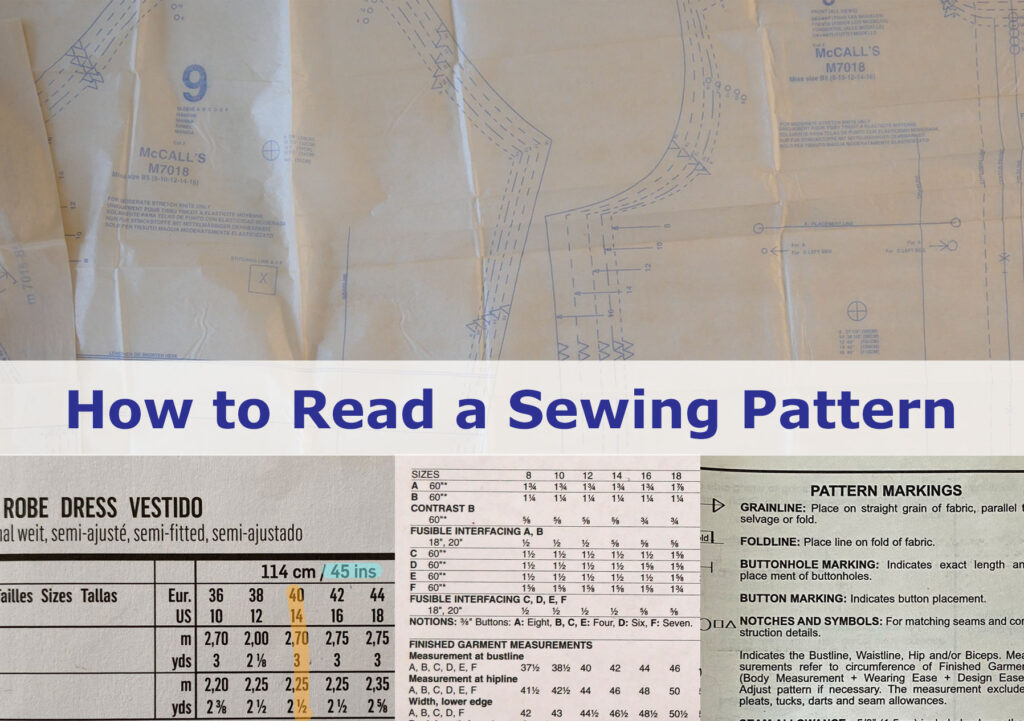
Image Source: thedailysew.com
Getting Started: What’s Inside Your Pattern Envelope?
Your sewing journey starts with the pattern envelope. It holds a lot of information. It helps you choose the right pattern, pick your size, and buy supplies. Think of it as the map for your sewing project.
The Front of the Envelope
The front of the envelope is like a picture book. It shows you what the finished project can look like.
- Pictures: You will see photos or drawings of the finished item. If it is a clothing pattern, you might see different styles or “views.”
- Pattern Number: Each pattern has a number. This helps you find it again later.
- Size Range: It lists the sizes included in the envelope. Make sure your size is listed here.
- Design Name: Sometimes the pattern has a name.
The Back of the Envelope
The back of the envelope has all the important details. You need to read this carefully before you even buy the pattern. This is where you find a lot of helpful pattern envelope information.
Find Your Size
This is very important for choosing pattern size. Sewing pattern sizes are often different from ready-to-wear clothing sizes. Do not just grab your usual store size.
- Size Chart: The back has a chart. It lists body measurements like bust, waist, and hip.
- Measure Yourself: Use a tape measure to measure your body. Wear light clothes. Stand up straight.
- Compare: Compare your measurements to the chart. Find the size that best matches your largest measurement. If your bust is a size 12 and your hip is a size 14, you might choose size 14 and adjust the waist area.
- Finished Measurements: Some patterns list “finished measurements.” This is how big the final garment will be. Look at this too. It helps you see how loose or fitted the item will be.
Check Fabric Needs
The envelope tells you what kind of fabric to use. It also tells you how much fabric you need.
- Fabric Types: It suggests fabrics that work well for the design. For example, it might say “lightweight cotton, linen, rayon.” Using the wrong fabric can make your project look wrong.
- Fabric Widths: Fabric comes in different widths, like 45 inches or 60 inches. The amount you need changes based on the fabric width.
- Yardage Chart: This chart shows how much fabric you need for your chosen size and view (style) of the pattern. It lists amounts for different fabric widths. Always buy a little extra fabric just in case.
Look at Notions
Notions are the extra things you need besides fabric.
- List of Notions: The envelope lists these items. Examples are zippers, buttons, elastic, thread, interfacing, or ribbon.
- Buy Them: Get these items before you start sewing. It saves you a trip to the store later. The list usually says how many buttons or what size zipper you need.
See Finished Size
As mentioned earlier, some patterns give you the finished measurements of the garment. This is not your body size, but the size of the actual clothing item after sewing. This information helps you see how the pattern fits. It might be loose or snug depending on the design.
Pick a Style View
Many patterns offer different styles or “views” from the same set of paper pieces. View A might be a simple dress. View B might be the same dress with sleeves. View C might be a top version.
- Pictures on Front: Look at the pictures on the front to see the different views.
- Descriptions on Back: The back often describes each view.
- Choose One: Pick the view you want to make. This affects the fabric you buy and the instructions you follow.
Opening the Envelope: Paper Pieces and Paper Guide
Once you open the envelope, you will find two main things inside. You find the large sheets of paper with the pattern shapes on them. You also find a smaller paper booklet or sheet. This sheet has all the instructions.
The Tissue Pieces
The large paper sheets are called the pattern tissue. These sheets have all the different pieces you need for your project. The pieces overlap on the paper. This is okay. You only use the lines for your chosen size and view. This is the start of understanding the pattern tissue layout.
The Instructions
The paper booklet or sheet inside is the pattern instructions guide. This guide tells you everything you need to know to sew the project. It has diagrams and written steps. It often includes a glossary of sewing terms. It might also have tips for fabric layout.
Deciphering Pattern Markings and Symbols
The paper tissue pieces are full of lines and symbols. These are the sewing pattern symbols and pattern markings. They tell you how to cut the fabric, how to line up pieces, and where to sew. Learning these marks is like learning a secret code for sewing.
Finding Your Size Line
The pattern tissue has lines for many sizes. These lines overlap. You need to find the line for the size you chose on the envelope.
- Different Lines: Each size has a different type of line. One size might be a dashed line (- – – -). Another might be a dot-dash line (. – . – .). Another might be a solid line (_____).
- Key: Look at the instructions or the pattern tissue itself. There is a key that shows which line belongs to which size.
- Highlight: It is helpful to highlight the lines for your size on the pattern tissue. This makes them easy to see.
The Grainline: Keeping Things Straight
One of the most important marks is the grainline sewing pattern mark. This is a long line with arrows at both ends.
- What is Grain? Fabric is made of threads woven together. The threads that run parallel to the selvage (the finished edge of the fabric) are called the lengthwise grain. This grain is usually stronger and does not stretch much.
- Why it Matters: The grainline mark on the pattern piece must be placed parallel to the lengthwise grain of your fabric. This makes sure your finished garment hangs correctly and does not twist or pull out of shape.
- How to Use It: You line up the grainline arrow on the pattern piece with the lengthwise threads in your fabric. The instructions might tell you how to measure from the grainline to the selvage edge to make sure it is straight.
Lines for Cutting
The pattern pieces have lines that tell you where to cut. These are the cutting lines on patterns.
- Outline of Piece: The cutting line is usually the outermost line of the pattern piece.
- Size Specific: Remember to follow the cutting line for your chosen size.
- Scissors Symbol: Sometimes a little picture of scissors is placed along the cutting line.
Seam Lines (Sometimes Included)
Some patterns show the seam line. This is the line where you will actually sew the fabric pieces together.
- Inside the Cutting Line: The seam line is inside the cutting line. It is usually a dashed or dotted line.
- Why it is There: It can help you see where the stitching should go. However, many patterns only show the cutting line.
Seam Allowances: Your Sewing Space
Patterns usually include extra fabric outside the seam line. This is called the seam allowance. Seam allowances explained are simply the distance between the cutting line and the seam line.
- Built-in: The seam allowance is already added to the pattern piece for you. You do not need to add it yourself when cutting.
- Common Size: The most common seam allowance is 5/8 inch (1.5 cm). But check your pattern! It might be different, like 1/4 inch (6 mm) for necklines or 1/2 inch (1.3 cm) for other areas.
- Importance: You will sew along the seam line (or the distance of the seam allowance from the cut edge) to join the fabric pieces. The seam allowance fabric is trimmed or finished later.
Notches: Matching Pieces
Sewing pattern notches are small marks on the edge of the pattern pieces. They are like little keys that help you match pieces together correctly before sewing.
- Types: Notches can be single dashes (|), double dashes (||), or even triangles (^).
- How to Use Them: When you cut your fabric, cut around the notches or make a small snip into the seam allowance where the notch is. When you sew two pieces together, you line up the notches on the edges of both pieces. Single notches match single notches, double match double, and so on.
- Importance: Notches help you ease in fabric where needed or make sure you sew pieces together in the right order and direction.
Dots, Triangles, and Squares: Key Points
Other symbols like dots (•), triangles (▲), and squares (■) mark specific points on the pattern pieces.
- Meaning Varies: Their exact meaning depends on the pattern. Check the instruction guide for a symbol key.
- Common Uses:
- Matching points (like lining up a pocket).
- Where to stop sewing (like at a dart point).
- Where to place a button or buttonhole.
- Where to start or end gathering stitches.
- Fold points.
- Transferring Marks: You will need to transfer these marks from the pattern tissue onto your fabric using tailor’s chalk, a fabric pen, or pins.
Fold Lines and Place on Fold
Some pattern pieces are only half of the actual piece you need. These pieces have a “Place on Fold” marking.
- Marking: This is usually a line with double arrows pointing towards the edge of the pattern piece.
- How to Use It: When laying out your fabric, you fold the fabric first. Then you place the pattern piece so the edge with the “Place on Fold” marking sits right along the fold of the fabric.
- Result: When you cut around the other edges and open the fabric, you get one full, mirrored piece (like the front of a shirt or a skirt).
Adjusting Length: Lengthen/Shorten Lines
Most patterns include lines that help you change the length of a piece. These are called lengthen/shorten lines.
- Look: They are usually marked by two parallel lines across the pattern piece.
- How to Use: If you need to make the garment longer, you cut along one line and spread the pattern piece apart before taping paper in between. If you need to make it shorter, you fold the pattern piece between the two lines, overlapping them.
- Why: This lets you adjust the pattern to fit your specific height.
Here is a quick table of common sewing pattern symbols:
| Symbol | Look Like | What it Means |
|---|---|---|
| Cutting Line | Outermost line | Cut along this line. |
| Seam Line | Inner dashed line | Where you will sew (if shown). |
| Grainline | Line with arrows | Place parallel to fabric’s lengthwise grain. |
| Single Notch | | | Match edges with this notch. |
| Double Notches | || | Match edges with these notches. |
| Triangle Notches | ▲ | Match edges with these notches. |
| Dot / Circle | • | A key point for matching, stopping, or placement. |
| Triangle | ▲ | A key point for matching, stopping, or placement. |
| Square | ■ | A key point for matching, stopping, or placement. |
| Place on Fold Line | Line with arrows | Place this edge exactly on a fabric fold. |
| Lengthen/Shorten Lines | Parallel lines | Where to change the pattern’s length. |
Laying Out the Pieces: Fabric and Paper
After you have figured out the symbols and chosen your size lines, it is time to place the pattern pieces on your fabric. This step is called the pattern tissue layout. Doing this correctly saves fabric and makes cutting easier.
Read the Layout Diagram
Your pattern instructions guide includes diagrams showing you how to lay out the pattern pieces on your fabric.
- Different Layouts: There are different diagrams based on your size, the view you chose, and the width of your fabric (45″ or 60″).
- Look Closely: Find the diagram that matches your choices. It shows you how to fold your fabric and where to place each pattern piece.
- Why Follow It? These layouts are planned to fit all the pieces on the required fabric amount with the grainline correct.
Prepare Your Fabric
Before laying out pattern pieces, prepare your fabric.
- Pre-wash: It is usually best to wash and dry your fabric the way you plan to wash the finished item. Fabric can shrink. Pre-washing prevents your finished project from shrinking later.
- Press: Iron your fabric to remove wrinkles. Laying out pattern pieces on wrinkled fabric makes cutting hard and can lead to crooked pieces.
- Fold: Fold your fabric as shown in the layout diagram. Sometimes you fold it in half lengthwise, sometimes crosswise, and sometimes it stays unfolded. Make sure the fold is smooth.
Place and Pin
Now you place the pattern pieces onto the fabric.
- Find Pieces: Locate the pattern pieces needed for your size and view as shown in the layout diagram.
- Place Carefully: Lay the pieces on the fabric following the diagram.
- Align Grainline: This is critical! Make sure the grainline marking on each pattern piece is parallel to the selvage edge (or the fold, if the grainline is parallel to the fold). You can measure the distance from each end of the grainline arrow to the fabric selvage or fold. The distance should be the same.
- Pin: Use sharp pins to hold the pattern pieces firmly in place. Pin within the cutting line. Use enough pins so the tissue does not shift while you cut.
- Check Everything: Double-check that all pieces are on the fabric, they are placed according to the layout, and all grainlines are correct before you start cutting.
Following the Steps: The Sewing Instructions
Once your fabric pieces are cut, you move to the pattern instructions guide. This booklet is your step-by-step helper for putting your project together.
Comprehending the Pattern Instructions Guide
The instruction guide seems long, but it breaks down the sewing process into small, manageable steps.
Read Everything First
Before you start sewing, read through all the instructions from beginning to end.
- Get the Big Picture: This helps you understand the whole process.
- Identify Techniques: Note any steps that look tricky or use a technique you are not familiar with. You can look up videos or tutorials online for those specific steps.
- Check Order: See the order in which pieces are sewn together.
Step-by-Step Sewing
The instructions are numbered. Follow them in order.
- Take Your Time: Do not rush. Read each step carefully before doing it.
- Fabric Sides: Instructions often tell you to place fabric “right sides together” (RST) or “wrong sides together” (WST). The right side is the pretty side of the fabric. The wrong side is the back. Putting right sides together is how you make seams that hide the raw edges inside.
- Stitching Line: Remember you are sewing on the seam line, which is a specific distance from the cut edge (usually 5/8 inch unless stated otherwise).
- Seam Finishing: Instructions will often tell you how to finish your seams to prevent fraying (like using a zigzag stitch or serger).
Use the Diagrams
The instruction guide has diagrams next to the written steps.
- Visual Help: The diagrams show you what the fabric pieces should look like at each stage. They show where to sew, where to press, and how to put things together.
- Match Text to Picture: Look at the diagram for the step you are on. It helps clarify the written words.
Look for Sewing Tips
Many instruction guides include helpful tips.
- Techniques: They might explain how to do a specific stitch, handle a certain fabric, or insert a zipper.
- Pressing: Pressing is very important in sewing. The instructions will tell you when and where to press seams. Pressing makes your finished project look professional. Pressing seams open or to one side helps them lie flat.
Putting it All Together: A Quick Summary
Reading a sewing pattern might seem like a lot at first. But it is just following a map.
- Check the Envelope: Find your size, see fabric needs, and pick your style.
- Look at the Paper Pieces: Find your size lines and understand the symbols like grainline, cutting lines, and notches.
- Follow the Layout: Use the diagram to place pattern pieces on your fabric, minding the grainline.
- Cut: Cut carefully along your size’s cutting line.
- Read Instructions: Go through the steps in the instruction guide, using the diagrams.
- Sew: Stitch your fabric pieces together following the guide.
Each pattern uses the same basic language of symbols and instructions. Once you learn the basics, you can use almost any pattern!
Tips for Your First Time
Starting your first project with a pattern is exciting. Here are some tips to help you.
- Pick an Easy Pattern: Look for patterns marked “Easy” or “Beginner.” Simple items like pajama pants, skirts with elastic waists, or simple tote bags are good starts.
- Read Everything Twice: Read the envelope and instructions fully before you even touch fabric. Read them again before you start cutting or sewing.
- Make a Practice Run: If using new fabric or a tricky technique, try it on a small piece of scrap fabric first.
- Transfer Marks: Do not skip transferring marks like dots, squares, or button placements to your fabric. They are there to help you. Use tailor’s chalk or a fabric pen that will wash out.
- Pin Well: Use enough pins when pinning the pattern to fabric and when pinning fabric pieces together for sewing. This stops things from shifting.
- Press Often: Pressing as you go makes a big difference in how your final project looks.
- Do Not Be Afraid to Ask: If you get stuck, ask a friend who sews, join an online sewing group, or visit a fabric store for help.
- Mistakes Happen: Everyone makes mistakes. It is okay! Sometimes you can fix them. Sometimes you learn for the next project. The goal is to learn and have fun.
Frequently Asked Questions (FAQ)
Let’s answer some common questions beginners ask about reading patterns.
H4: Can I cut a pattern for a size smaller or larger than the one I chose?
Yes, you can. The pattern tissue has lines for several sizes. If you measured yourself and decided size 14 is best, you will cut along the size 14 line. If you wanted it a little looser, you could follow the size 16 line instead. If you realize after measuring that you are a size 10, you would follow the size 10 line. Make sure the size range on the envelope includes the size you want to cut.
H4: What if my body measurements are between sizes on the chart?
This happens often! Sewing patterns are made for standard body shapes, and most people are not standard. If you are between sizes, you might start with the larger size. It is easier to make a garment smaller than to make it bigger. You can also blend sizes. For example, if your bust is a size 12 and your hip is a size 14, you would cut the pattern at size 12 at the bust and curve out to size 14 at the hip. This takes a bit more practice, but it gives a better fit. Look for resources on pattern blending.
H4: Why are there so many symbols on the pattern tissue?
The sewing pattern symbols are like a language. They give you important directions without needing lots of words right on the tissue pieces. Each symbol tells you something specific. The grainline tells you how to place the piece. Notches tell you how to match pieces. Dots tell you where to stop sewing or add something. These pattern markings guide you through cutting and sewing correctly. Learn the common ones, and the others you can look up in the instructions.
H4: What does “right sides together” (RST) mean?
This is a very common instruction in sewing. The “right side” of fabric is the front, the side you want to show on your finished project. The “wrong side” is the back. When instructions say “right sides together,” you place the two fabric pieces so their pretty sides are facing each other. The wrong sides will be on the outside. You sew your seam along the edge. When you open the fabric pieces, the seam will be hidden on the inside, and the right sides will be facing out.
H4: Do I need to cut out the pattern pieces exactly on the line?
Yes, cut as accurately as you can along the cutting line for your size. This line already includes the seam allowance. If you cut inside the line, your piece will be too small. If you cut outside the line, it will be too big. Accuracy in cutting leads to easier sewing and a better fitting final project. Take your time and use sharp sewing scissors.
Learning to read a sewing pattern is a skill that unlocks endless creative possibilities. Take it one step at a time, refer to your pattern envelope and instructions often, and enjoy the process of bringing your fabric to life!