
How much should you charge for custom embroidery? Figuring out your prices is key to running a good embroidery business. There is no single right answer for everyone. Your price depends on many things like the number of stitches, how hard the design is, the type of item, and how many items a customer wants. This guide will help you understand how to set your prices fairly and make money. It covers the main ways people charge and what things change the cost.
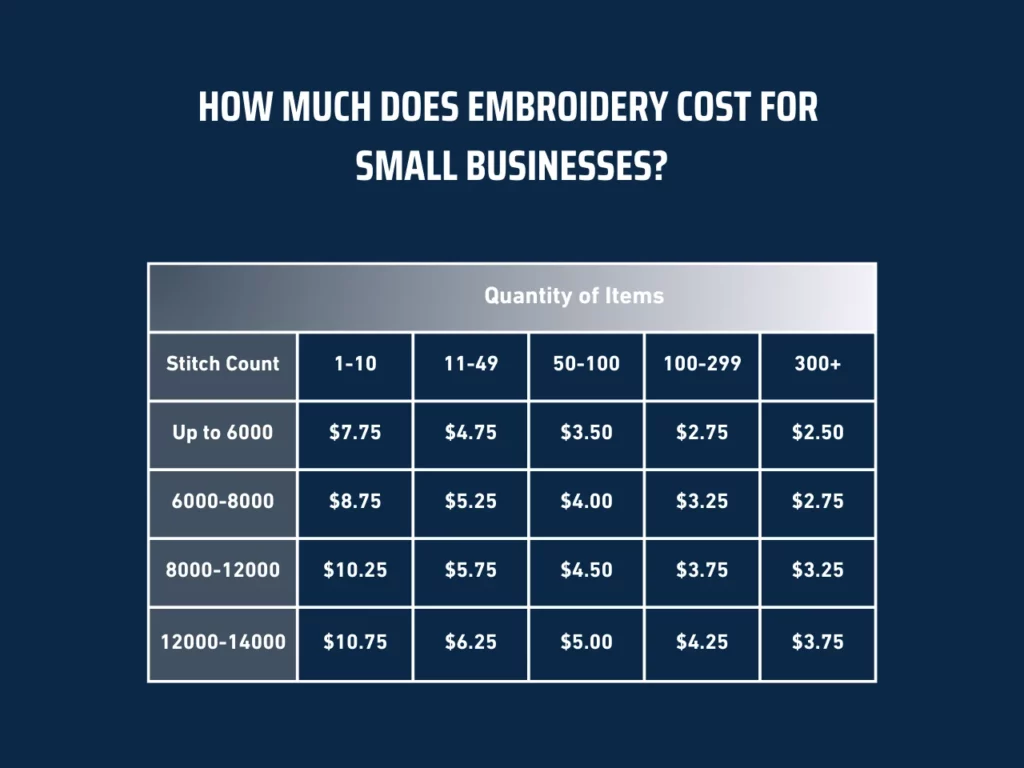
Image Source: scalablepress.com
Ways to Figure Out Embroidery Prices
Businesses use different methods to decide what to charge. The best way for you might be a mix of a few methods. Here are the common ways to think about pricing embroidery designs.
Pricing By Stitch Count
Many people charge based on the number of stitches in the design. This is a very common way to figure out the embroidery cost per stitch. More stitches take more time on the machine and use more thread. So, a design with more stitches usually costs more.
How this works:
* You count or estimate the total stitches needed for the design.
* You set a price for every 1,000 stitches.
* You add this cost to the price of the item being embroidered.
Example: If your price is $1.00 per 1,000 stitches, and a design has 15,000 stitches, the embroidery part costs $15.00.
This method is good because it directly relates the price to the work the machine does. It’s fair for both simple and complex designs. But you need a way to count or estimate stitches accurately before you sew.
Pricing By Design Size
Some people charge based on the size of the finished design. A bigger design often has more stitches, but this method is simpler. You might have price tiers based on size.
Example Price Tiers:
* Small design (under 3 inches): $X
* Medium design (3 to 6 inches): $Y
* Large design (over 6 inches): $Z
This method is easy for customers to understand. It’s also quick to give a price. However, it might not be fair if a small design is very dense with stitches, making it take longer than a larger, simpler design.
Pricing By Item Type
Charging based on the item being embroidered is another way. Different items are harder to hoop (put in the frame) or sew on. A hat is harder than a flat shirt. A thick jacket is harder than a thin polo.
Here, the item itself affects the price. You add the embroidery cost (figured by stitch count or size) to the item cost, plus a fee for working on that specific item type.
Example Extra Fees per Item:
* Shirt: No extra fee
* Hat: Add $2.00
* Jacket: Add $5.00
This helps cover the extra time and effort needed for tricky items.
Pricing By the Hour
Charging for embroidery per hour is less common for the embroidery itself. It’s more often used for design work, fixing files, or special requests. It’s hard to track machine time accurately per customer job when multiple machines are running.
However, if you do custom design work or apply patches by hand, charging hourly makes sense. You set an hourly rate and track the time spent on the customer’s specific tasks.
Example Hourly Rate:
* Design/Setup Time: $50.00 per hour
This method works well for unique or time-consuming tasks not tied to stitch count or item type. It requires good time tracking.
Combining Methods
Most businesses use a mix of these methods. They might have a base price based on stitch count or size, then add fees for item type, digitizing (setting up the design file), or rush jobs. This blended approach often gives the fairest price for both you and the customer.
What Changes the Price
Many things affect the final embroidery price. These are often called factors affecting embroidery price. Knowing these helps you explain costs to customers and set prices correctly.
Stitch Count
This is a big one. The total number of stitches needed for a design greatly impacts time and thread use. A small logo might be 5,000 stitches. A large back design might be 50,000 stitches. More stitches mean more cost. Figuring out your embroidery cost per stitch is key for this method.
Design Complexity
How complex is the design? Does it have very fine details? Are there lots of color changes? Complex designs can take longer to digitize and sew. They might need special threads or techniques. This adds to the cost, even if the stitch count isn’t sky-high. This ties into pricing embroidery designs based on how detailed they are.
Digitizing Requirements
Before you can embroider a logo or design, you need a special digital file. This file tells the embroidery machine exactly where and how to place stitches. Making this file is called digitizing. It’s a skilled job.
If a customer gives you artwork that needs digitizing, you must charge for this. Embroidery digitizing fees can be a one-time cost for the customer’s specific logo. The fee depends on the design’s complexity and the number of stitches. Simple text is cheaper to digitize than a detailed picture.
Quantity Ordered
Like most things bought in bulk, more items usually mean a lower price per item. Setting up the machine, hooping the first item, and loading the design takes time. This setup cost is the same whether you sew one shirt or one hundred. When you sew many items, the setup cost is spread out. This makes the price per item lower for bigger orders.
Offer price breaks for larger quantities. This encourages customers to order more.
Item Type and Fabric
As mentioned before, the item itself matters. Hats, bags, jackets, and items with zippers or odd shapes are harder to handle than flat shirts or towels. Delicate fabrics might need special care or backing. These difficulties add labor time and potential risk, so they should affect the price.
Number of Thread Colors
Each time the machine needs a new thread color, it stops. You or the machine must change the thread. This adds a little bit of time. While minor for most designs, a design with many, many color changes can add up in machine stop time. Some businesses add a small fee for designs over a certain number of colors.
Location of Embroidery
Putting a design on a standard spot like a left chest is easy. Putting it on a pocket, sleeve, or side of a hat can be harder. These spots might need special hoops or extra time to line up correctly. Harder locations can add to the cost.
Turnaround Time
How fast does the customer need the order? Standard turnaround might be 1-2 weeks. If they need it faster, you might have to stop other jobs, work extra hours, or pay staff overtime. Rush orders should have an extra fee. This covers the inconvenience and extra cost to you.
Materials Used
The type of thread, backing, or other materials needed can affect the price. Metallic threads or special effects threads cost more than standard polyester thread. Special backing for stretchy fabric also adds material cost.
Figuring Out Your Business Costs
To know how much to charge, you first need to know how much it costs you to do the work. This includes all your expenses.
Direct Costs
These costs are directly tied to each specific order:
* Garment Cost: What you pay for the blank shirt, hat, jacket, etc.
* Thread Cost: How much thread the design uses. You can estimate this by weight or length per 1,000 stitches.
* Stabilizer Cost: The material you put behind the fabric to make it stable for sewing. Different fabrics need different stabilizers.
* Needle Cost: Needles break and wear out.
* Electricity: Running the machine uses power.
Overhead Costs
These are the costs of running your business, not tied to one job:
* Rent: For your workspace.
* Utilities: Electricity (beyond just the machine), water, gas, internet.
* Machine Payment/Lease: If you finance or rent your equipment.
* Machine Maintenance & Repair: Machines need regular service.
* Software: Digitizing software, accounting software.
* Insurance: Business insurance.
* Marketing: Advertising, website.
* Supplies: Scissors, tape, office supplies, cleaning supplies.
* Wages: Your pay, or pay for any employees.
Labor Costs (Beyond Machine Time)
Even with automatic machines, people do work:
* Getting items ready (unbagging, checking).
* Hooping items.
* Loading designs into the machine.
* Changing threads and checking machine during sewing.
* Trimming loose threads.
* Folding and packaging items.
* Talking to customers, taking orders, invoicing.
You need to figure out how much time these human tasks take per order or per item.
Digitizing Costs
If you digitize designs yourself, this is part of your labor and software overhead. If you send it out, it’s a direct cost per design. These embroidery digitizing fees are important to factor in.
Calculating Your Price Per Stitch
Let’s look closer at the embroidery cost per stitch method.
First, estimate your total costs (direct and overhead) for a period, like a month. Then, estimate how many total stitches you expect to sew in that month based on your machine capacity and typical orders.
Total Monthly Costs / Total Expected Monthly Stitches = Cost Per Stitch
Example:
* Total Monthly Costs: $5,000
* Total Expected Monthly Stitches: 5,000,000 (5 million)
* Cost Per Stitch: $5,000 / 5,000,000 = $0.001 per stitch
This is your break-even cost per stitch. To make a profit, you need to charge more than this. Your selling price per stitch might be $0.003 or $0.004. This is $3.00 or $4.00 per 1,000 stitches.
Most businesses charge between $1.00 and $5.00 per 1,000 stitches. Simpler designs or higher volumes might be on the lower end. Complex designs, small orders, or challenging fabrics might be on the higher end.
Remember to add the cost of the blank item to this embroidery cost.
Pricing for Logo Embroidery
Logos are a very common type of custom embroidery. The average cost for logo embroidery depends heavily on size and stitch count.
- Standard Left Chest Logo: These are usually 3-4 inches wide/tall. They typically have between 4,000 and 8,000 stitches. Using a price of $3.00 per 1,000 stitches, the embroidery cost would be around $12.00 to $24.00 per item, before adding the blank item cost and digitizing fee.
- Cap Logo: Similar size to left chest, maybe slightly smaller or shaped differently. Stitch counts are often similar or slightly higher due to dense underlay needed for hats, maybe 5,000 to 10,000 stitches. Embroidery cost might be $15.00 to $30.00.
- Large Back Logo: These can be 10-12 inches and have 30,000 to 60,000+ stitches. At $3.00 per 1,000 stitches, the embroidery cost could be $90.00 to $180.00+.
These are just embroidery costs. You must add:
1. The cost of the blank item (shirt, hat, jacket).
2. The one-time embroidery digitizing fee for the logo. This might range from $25 to $150 depending on complexity. Some businesses waive this fee for large orders.
3. Any extra fees for item type or rush service.
The final price for a single embroidered polo shirt with a left chest logo might end up being $25 – $45+, depending on the shirt cost, embroidery stitch count, and whether digitizing was needed. The price per shirt drops significantly as the quantity increases.
Comprehending Embroidery Digitizing Fees
Digitizing is turning a picture (like a JPG or PNG file) into a special embroidery file (like DST, EXP, or JEF). This file tells the embroidery machine:
* What type of stitch to use (fill, satin, run).
* The order of sewing colors and elements.
* The direction of stitches.
* When to trim threads.
This is not an automatic process. A skilled person uses special software to make these decisions. A poor digitizing job leads to bad embroidery (gaps, puckering, broken threads).
Embroidery digitizing fees cover the time and skill needed to create this file.
* Simple Text/Shapes: May cost $15 – $30.
* Standard Logo: Often $30 – $75.
* Complex Logo/Artwork: Can cost $75 – $150 or more.
Some businesses offer flat-rate digitizing. Others charge based on complexity or even an estimate of the final stitch count the design will have. Many shops charge this fee only once per logo. If the customer orders more items later with the same logo, they don’t pay the digitizing fee again, unless the logo size or details change a lot.
Decide if you will digitize in-house or send it out. If in-house, factor the software cost and your time into your prices. If sending out, factor the vendor’s fee into the customer’s total cost, usually as a separate line item.
Creating an Embroidery Price List Template
A clear price list helps customers know what to expect. It also helps you quote quickly and consistently. Your embroidery price list template should show your pricing structure.
What to include:
* Embroidery Cost: Explain how you charge (e.g., per 1,000 stitches, based on size). Provide a range or a few tiers.
* Item Cost: Explain if the item price is included or separate. Often, it’s best to show garment cost + embroidery cost.
* Digitizing Fees: Clearly state your one-time fees for digitizing. List price tiers for simple, medium, and complex designs. Mention if fees are waived for large orders.
* Minimums: If you have a minimum order quantity or minimum total price, state it.
* Extra Fees: List costs for things like:
* Rush orders (e.g., +25% for jobs needed in under 5 days).
* Extra locations (e.g., +$5 per extra spot).
* Personalization (names/numbers – often a flat fee per item).
* Special materials (metallic thread, puff embroidery).
* Quantity Discounts: Show how the price per item goes down as the quantity goes up. Use a table.
* Payment Terms: When payment is due (e.g., 50% deposit).
* Turnaround Time: Your standard production time.
Example Simple Price Table (Part of a Template):
| Quantity | Left Chest Logo (approx. 6000 stitches) Embroidery Price Per Item |
|---|---|
| 1-11 | $18.00 |
| 12-23 | $15.00 |
| 24-49 | $12.00 |
| 50-99 | $10.00 |
| 100+ | $8.00 |
Note: This table shows only the embroidery cost per item. Add the blank garment cost and any applicable digitizing fee.
Make your template easy to read. Use clear language. Avoid too much jargon.
Using an Embroidery Pricing Calculator
Tools can help you figure out prices faster. An embroidery pricing calculator is a tool that takes inputs like stitch count, item type, quantity, and your costs to suggest a price.
You can find these calculators online. Some are free, some are part of paid business software. You can also build your own in a spreadsheet program like Excel or Google Sheets.
A simple calculator might ask for:
* Number of items
* Stitch count of the design
* Your desired price per 1,000 stitches
* Cost of the blank item
* Digitizing fee
It then calculates: (Stitch Count / 1000) * Price per 1000 stitches + Item Cost + (Digitizing Fee / Quantity if spread out) = Price per item.
Remember, a calculator is a tool. You still need to know your own costs and value your time and skill. It gives you a starting point or helps speed up quoting.
Charging for Embroidery Per Hour
While not ideal for machine time, charging for embroidery per hour can apply to hand embroidery, design setup, or correcting files.
Decide on an hourly rate that covers your time, skills, and overhead for non-machine tasks. Look at what other skilled trades or graphic designers charge in your area. Rates might range from $30 to $75+ per hour.
Clearly explain to the customer what tasks are billed hourly. Provide an estimate of the hours needed for their specific request.
Pricing Embroidery Designs: Other Considerations
Beyond the main methods, think about:
- Small Orders: Small orders of 1 or 2 items are not very profitable if only charging per stitch. The setup time is too high. Set a minimum charge per order (e.g., $25 or $35 minimum). This covers your setup costs for small jobs.
- Personalization: Adding names or numbers is extra embroidery. Charge a flat fee per name/number ($5-$10 is common). This covers the digitizing (if needed, often standard fonts are ready) and the sewing time.
- Samples: Will you charge for samples? Sewing a sample of a logo on a scrap piece of fabric uses machine time and materials. Charge a small fee or require a deposit that goes towards the final order.
- Customer-Supplied Items: Be careful embroidering on items the customer provides. If you make a mistake, you might have to pay for their item. Some shops charge more for customer-supplied goods due to this risk.
Reviewing and Changing Prices
Your costs change over time. Thread prices go up. Machine maintenance costs increase. Your skills get better. Review your prices at least once a year. Make sure you are still making a profit after all your costs. Don’t be afraid to raise prices if needed. Explain to customers that costs have risen or that you’ve improved your service.
Frequently Asked Questions About Embroidery Pricing
Q: How much does a typical embroidered logo cost?
A: The average cost for logo embroidery varies a lot based on size, stitch count, and the item it’s on. A standard left chest logo on a polo shirt might cost $20-$45 per shirt for small quantities, including the shirt. This price usually goes down for bigger orders. There is often a one-time embroidery digitizing fee on top of the first order.
Q: What is the average embroidery cost per stitch?
A: The average cost per stitch for businesses to charge is typically between $0.001 to $0.005 per stitch, or $1.00 to $5.00 per 1,000 stitches. The exact rate depends on the shop’s costs, location, and volume.
Q: Why do you charge a digitizing fee?
A: The digitizing fee covers the cost of turning a regular image file into a special embroidery file that tells the machine how to sew the design. It requires skilled work and special software. This is usually a one-time fee for a specific logo design.
Q: Is there an embroidery pricing calculator I can use?
A: Yes, many online tools and software programs offer an embroidery pricing calculator. You input details like stitch count, quantity, and item type, and it helps you figure out the cost. You can also make a simple one yourself in a spreadsheet.
Q: How do factors affecting embroidery price like quantity change the cost?
A: The biggest factor is often quantity. Setup time (hooping, loading the design) is the same whether you sew one item or 100. For bigger orders, this setup cost is spread across more items, making the price per item lower. More stitches and complex designs also increase the price.
Q: How do I create an embroidery price list template?
A: Start by listing your costs (item, embroidery based on stitches/size, digitizing). Then, add your desired profit margin. Organize this information clearly showing costs per item at different quantities, plus separate fees for digitizing, rush orders, and personalization.
Q: Can I see an example embroidery price list template?
A: Most businesses create their own, but a basic template includes sections for Garment Costs, Embroidery Costs (per stitch or size tiers, with quantity breaks), Digitizing Fees (one-time), Extra Services (names, locations, rush), and Minimum Order requirements.
Q: Is charging for embroidery per hour a good method?
A: Charging per hour is usually not ideal for the machine embroidery time itself, as multiple machines might run at once, and estimating precise time per job is hard. It works better for human tasks like design setup, complex artwork cleanup, or hand finishing.
Q: How do you calculate pricing embroidery designs?
A: Designs are typically priced based on their stitch count or size. You set a rate per 1,000 stitches or have price tiers for small, medium, and large designs. The complexity of the design and the number of color stops also play a role.
Wrapping Up
Setting prices for embroidery can seem tricky at first. By figuring out your costs, choosing a pricing method (like per stitch), and considering all the things that affect the price, you can create a fair and profitable pricing system. Use tools like an embroidery pricing calculator and build a clear embroidery price list template. Remember to include embroidery digitizing fees when needed. Knowing your average cost for logo embroidery and other common jobs helps you quote fast. Review your prices often to keep your business healthy.