
So, you want to know how to make a patch using your embroidery machine? This guide will show you the easy steps to create your own custom patches. You will learn about the supplies you need, how to get your design ready, and how to sew and finish your patches. Let’s get started!
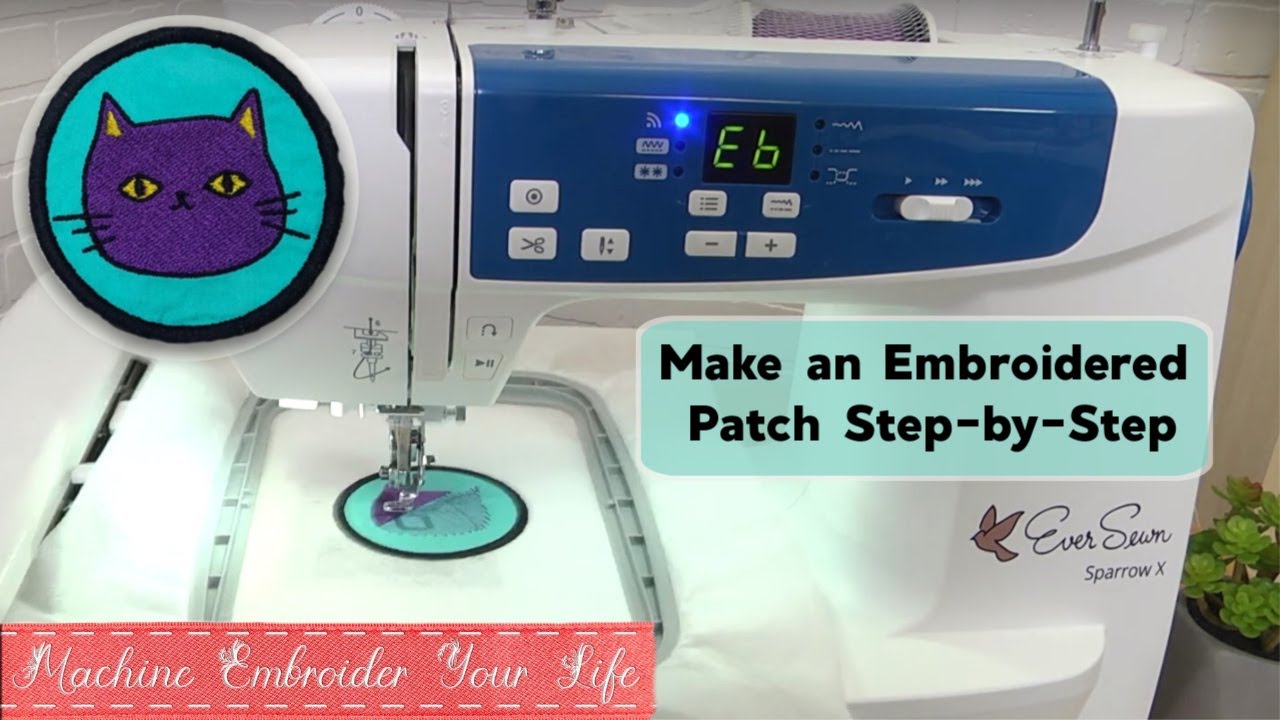
Image Source: i.ytimg.com
Essential Supplies for Patch Making
Making patches needs a few specific things. Having the right tools helps make nice patches. Here is a list of embroidery machine patch supplies you will need.
- Embroidery Machine: This is the main tool. Any home embroidery machine can make patches.
- Embroidery Hoop: You need a hoop that fits your machine. It holds the fabric tight.
- Fabric for the Patch: The material you sew on. Felt, twill, or canvas are good choices. Pick a strong fabric.
- Stabilizer: Very important for patches. It supports the stitches. We will talk more about stabilizer for patch making soon.
- Embroidery Thread: Choose good quality thread. Rayon or polyester threads work well. Get the colors you want for your design.
- Scissors: You need sharp scissors. Small, pointed ones are best for cutting out the patch later.
- Needles: Make sure you have the right embroidery needle for your machine and thread. Keep a few spares.
- Design File: This is the picture or logo your machine will sew. It needs to be a special file type for embroidery.
- Patch Backing (Optional): What you put on the back. This lets you attach the patch to things. Options include iron-on or sew-on materials. We will cover applying patch backing.
Selecting the Right Fabric
The fabric you pick matters. It needs to be strong enough to hold lots of stitches. It also needs to look good.
- Felt: Easy to work with. It does not fray much when you cut it. It comes in many colors.
- Twill: This is common for patches like on uniforms. It is durable. It can fray a bit.
- Canvas: A heavier fabric. Also very strong.
Choose a color that works with your design. Sometimes the fabric is the background color of the patch.
Deciphering Stabilizer for Patches
Stabilizer for patch making is very important. It keeps the fabric from moving or stretching while the machine sews. It stops stitches from sinking into the fabric. It helps make the patch stiff like a real patch.
There are different kinds of stabilizer.
- Cut-Away Stabilizer: You cut away the extra stabilizer after sewing. It stays attached to the stitches. This gives the patch more body and strength. It is good for designs with lots of stitches. It helps keep the patch shape over time. You use it behind your patch fabric.
- Tear-Away Stabilizer: This type tears away easily after sewing. It is faster to remove than cut-away. It is good for designs with fewer stitches. It might not give as much support for very dense designs or patches that need to be super stiff.
- Heat-Away Stabilizer: This stabilizer goes away when you iron it. Be careful not to use too much heat on your patch fabric. It is good for fabrics where you cannot see tear-away or cut-away.
- Water-Soluble Stabilizer: This dissolves in water. It comes in film or fabric types. Film type is great on top of fuzzy fabrics to keep stitches sitting right. Fabric type is often used alone to make “freestanding” patches. But for standard patches on fabric, cut-away or tear-away under the fabric is most common.
For most patches on fabric like felt or twill, a medium to heavy weight cut-away stabilizer is a top choice. It gives great support and makes the patch strong. Use one layer or maybe two if your design is very thick with stitches.
Getting Your Design Ready
You need a design file for your machine. This file tells the machine where to sew each stitch.
- Buying Designs: Many websites sell ready-made patch designs. Make sure they are in a format your machine can read (like .DST, .PES, .JEF, etc.).
- Creating Your Own: If you want a custom patch, you need to create a design. This involves special software.
Digitizing embroidery patch design is the process of turning artwork into stitches. You use software to map out the path of the needle. You tell it what type of stitch to use (like fill stitches for large areas, satin stitches for borders) and in what order.
- Why Digitizing is Key: You can’t just load a regular picture (like a JPG) into your embroidery machine and expect it to sew. The machine needs stitch data. Digitizing embroidery patch design creates this data.
- DIY Digitizing: You can learn to digitize yourself with software. It takes time and practice.
- Hiring a Digitizer: Many people pay a professional digitizer to create their design file. This is often the best way to get a high-quality, custom design. A good digitizer knows how to plan stitches so the patch sews out well and lies flat. They add things like stop commands for color changes and special stitches for the border.
Your design file should ideally include specific steps for a patch:
1. A placement line: A simple outline to show where the patch fabric should go.
2. A tack-down line: Stitches that hold your patch fabric and stabilizer together.
3. The main design fill stitches.
4. Detail stitches.
5. A border stitch (like a satin stitch border for patches).
Steps to Create Embroidered Patches
Here are the main steps to create embroidered patches. We will go through them one by one.
- Gather your embroidery machine patch supplies.
- Get your design file ready. Make sure it is digitized for a patch.
- Prepare your fabric and stabilizer for patch making.
- Hoop the fabric and stabilizer correctly.
- Set up your embroidery machine with the right thread and design.
- Sew the design following the machine’s steps.
- Remove the patch from the hoop.
- Remove excess stabilizer.
- Carefully cut out the patch.
- How to finish embroidery patch edges.
- Add patch backing if you want it.
Let’s look closer at some of these steps.
Preparing Fabric and Stabilizer
This step is very important for a good patch.
- Cut a piece of your chosen patch fabric. Make it a bit bigger than your design.
- Cut a piece of your chosen stabilizer for patch making. Cut it larger than your hoop size. If using two layers of stabilizer, cut both.
- If your design has a placement line, you will hoop the stabilizer first. Then you will lay the fabric piece over the placement line once the machine sews it.
- If your design is set up to sew right onto hooped fabric, you will hoop the fabric and stabilizer together.
Hooping Correctly:
Put the stabilizer in the hoop first. Make it smooth. If hooping fabric too, put the fabric on top of the stabilizer. Pull the hoop tight. The fabric and stabilizer should be flat like a drum head. No wrinkles! Wrinkles will cause stitches to be uneven.
Make sure the fabric is centered where you want the design to be sewn.
Starting the Embroidery Machine Patch Tutorial
Now it is time to sew!
- Load your patch design file into your embroidery machine.
- Select the design on your machine’s screen.
- Choose the right colors in the right order as planned in the design file.
- Put the hooped fabric and stabilizer on the machine. Lock the hoop in place.
- Thread the machine with the first color.
- Start the machine.
The machine will sew the design layer by layer.
- First Stitches: Often, the first color sews an outline. This is the placement line. It shows where your patch fabric piece should go if you are not hooping the fabric directly. If you did hoop your fabric, this line might be skipped or just be a guide.
- Tack-Down: The next stitches usually sew over the edge of the fabric piece you placed (or the hooped fabric). This is the tack-down. It holds the patch fabric tightly to the stabilizer. This stops it from shifting while the rest of the design sews.
- Filling In: The machine will then sew the fill stitches. These cover the main areas of the design. Change thread colors as the machine stops.
- Details: Smaller parts of the design are sewn next. This might be outlines, words, or small pictures.
- The Border: The last step is often the border. This is key for a patch look.
The Satin Stitch Border for Patches
A satin stitch border for patches is the most common type. It is a series of very close, straight stitches. These stitches go back and forth across the edge of the patch. This creates a raised, smooth edge. It looks very finished and professional.
A good digitized patch design will have a satin stitch border planned. The machine sews these stitches last. They should go just over the edge of the fabric piece. This wraps the stitches around the edge. This hides the cut edge of the fabric later.
The width and density of the satin stitch matter. A wider, denser stitch makes a thicker, more solid border. This helps the patch keep its shape. It also makes it easier when cutting out embroidery patches.
Finishing the Patch
Once the machine finishes sewing the design, you are almost done!
- Take the hoop off the machine.
- Release the fabric and stabilizer from the hoop.
- Now you need to deal with the stabilizer.
- If you used tear-away, carefully tear away the extra stabilizer around the design. Be gentle near the stitches so you do not pull them out.
- If you used cut-away, you will need your scissors. Cut away the extra stabilizer around the design. Leave about a quarter inch (or half a centimeter) of stabilizer around the stitches. This bit of stabilizer left behind gives the patch firmness.
- If you used water-soluble or heat-away, follow the instructions for that type.
Cutting Out Embroidery Patches
This step is very important for how your patch will look. You need to cut the patch away from the extra fabric and stabilizer.
- Use sharp scissors. Small, pointed scissors are best.
- Cut carefully just outside the satin stitch border.
- Try to follow the edge of the satin stitch closely. Do not cut into the stitches.
- Cutting close makes the border stand out. Cutting too far away leaves extra fabric edge showing.
- If the patch has a complex shape, take your time cutting. Go slow around curves and points.
Having a well-sewn satin stitch border for patches makes this easier. The raised edge gives you a line to follow with your scissors.
How to Finish Embroidery Patch Edges
After cutting out embroidery patches, the edges need to look neat. The satin stitch border does most of this work. It covers the cut edge of the fabric.
- For felt or fabrics that do not fray, the satin stitch border is usually enough.
- For fabrics that might fray, or if you cut very close, you might worry about the edge.
- Sometimes, people use a bit of fabric glue or a clear sealant right on the cut edge on the back. This helps stop any stray threads from coming out. Be careful not to get it on the front of the patch.
A well-done satin stitch border for patches is the main way how to finish embroidery patch edges. It provides a strong, clean edge that resists fraying.
Applying Patch Backing
Now that your patch is sewn and cut, you might want to add something to the back. This makes it easy to attach the patch to jackets, bags, hats, or other items. This is called applying patch backing.
There are different types of backing you can use.
- Iron-On Backing: This is very popular. You iron the patch onto the item you want to decorate.
- Sew-On Backing: The patch has nothing special on the back. You sew it onto the item by hand or machine.
- Peel-and-Stick Backing: This has a sticky layer. You peel off a paper cover and stick the patch on. This is usually for temporary placement or crafts, not heavy use.
Let’s look at iron-on patch backing material.
Using Iron-On Patch Backing Material
Iron-on patch backing material is a special adhesive film. You put it on the back of your finished patch. When you heat it with an iron, the glue melts. Then it sticks the patch to your fabric item.
- Types: You can buy this material in sheets. It might be called patch backing film or iron-on adhesive. Some types are made just for patches.
- How to Apply to the Patch:
- Cut a piece of the iron-on patch backing material. Make it a little smaller than your patch. You do not want the glue showing around the edges.
- Place the rough or glue side of the backing material onto the back of your patch. Make sure the cut-away stabilizer is smooth on the back.
- Use a heat press or an iron. Follow the directions that came with your iron-on material. Usually, you place the patch backing side up on a heat-safe surface. Place a pressing cloth over it. Press with the iron for the time and temperature recommended. The heat melts the glue onto the patch.
- Let it cool completely.
- How to Apply the Patch to an Item (Using Iron-On):
- Place the patch where you want it on the item.
- Cover the patch with a pressing cloth.
- Press firmly with a hot iron. Use the temperature needed for the iron-on patch backing material and the item’s fabric. Hold the iron still for the time needed (often 15-30 seconds). Do not slide the iron.
- Flip the item over. Press again on the back side where the patch is, if possible. This helps the glue stick well.
- Let it cool completely. Check the edges. If they are not stuck, press again.
Iron-on is convenient. But for items that get washed often or heavy use, sewing the patch on gives the strongest hold. You can even iron it on for placement, then sew around the edge for extra security.
Putting It All Together: Steps to Create Embroidered Patches
Let’s review the main steps to create embroidered patches. Think of it as a workflow.
- Plan Your Patch: What picture or design? What size? What colors? What fabric? What backing?
- Get or Create Your Design File: Buy a file or hire someone to do the digitizing embroidery patch design. Make sure it is set up for a patch with a border.
- Gather Supplies: Get your fabric, threads, needles, stabilizer for patch making, and backing material.
- Prepare: Cut fabric and stabilizer. Hoop correctly (stabilizer alone, or fabric and stabilizer together, depending on design).
- Set Up Machine: Load the design. Thread the first color. Attach the hoop.
- Sew: Start the machine. It will sew the placement line (if needed), tack-down, design fills, details, and the satin stitch border for patches. Change threads when prompted.
- Remove and Trim Stabilizer: Take the hoop off. Remove fabric/patch. Carefully remove the bulk of the stabilizer for patch making (tear or cut away).
- Cut Out: Use sharp scissors for cutting out embroidery patches close to the satin border. This is part of how to finish embroidery patch edges.
- Add Backing (Optional): Apply iron-on patch backing material or other backing if desired. Follow application steps carefully.
- Inspect: Check your finished patch. Trim any loose threads on the front or back.
These steps to create embroidered patches cover the whole process.
Troubleshooting Common Patch Issues
Sometimes things don’t go perfectly. Here are some problems you might see and what to do.
- Thread Breaks: This can happen if thread is old, not threaded right, or the needle is wrong or old. Re-thread your machine carefully. Change the needle. Use good quality thread.
- Stitches Look Uneven: This can be the hoop not being tight enough, or the wrong stabilizer for patch making. Make sure the fabric and stabilizer are drum-tight in the hoop. Try a different type or weight of stabilizer. It could also be poor digitizing.
- Fabric Puckers: This means the fabric is pulling and wrinkling. This is often a stabilizer issue. You might need more stabilizer, or a stronger type like cut-away. The design might also have too many stitches for the fabric/stabilizer choice.
- Satin Border Has Gaps: The stitches in the border are not close enough. This is a digitizing problem. The density setting for the satin stitch is too low. Or the underlay stitches are not right.
- Difficult Cutting: If the fabric frays a lot or the border doesn’t fully cover the edge, cutting out embroidery patches is harder. Using a non-fraying fabric like felt helps. Making sure the satin stitch is dense and wraps the edge well is key for how to finish embroidery patch edges right from the machine.
Practice helps you learn what works best for your machine and materials.
Different Looks for Patches
You can change the look of your patch by changing the fabric or the border style.
- Merrowed Border: This is a very thick, overlocked stitch border. It is common on many store-bought patches. Home embroidery machines usually make patches with a standard satin stitch border. Achieving a true merrowed edge often needs a special machine after the embroidery is done. But a wide, dense satin stitch border for patches on your embroidery machine can look very close.
- Raw Edge Patch: Some patches are designed to have a raw, slightly frayed edge look. These usually do not have a satin border. They might just have a simple running stitch or zigzag stitch to hold the fabric down before cutting.
Most people making patches with an embroidery machine aim for the classic look with a satin stitch border for patches.
Taking Care of Your Patches
Once you have made your patch, you want it to last.
- If you used iron-on patch backing material, follow washing instructions for the item the patch is on. Sometimes hand washing or gentle cycles are best. High heat in a dryer can loosen iron-on glue.
- Sewn-on patches are very durable and can usually go through normal washing.
- Avoid ironing directly on the patch embroidery on the front. If you need to iron the item, iron around the patch or from the back.
Using quality embroidery machine patch supplies and good techniques helps make patches that look good and last.
Summary of the Process
Making a patch is a multi-step process. It starts with an idea and a design file. You choose your fabric and the right stabilizer for patch making. You hoop everything carefully. Your embroidery machine sews the design, including the important satin stitch border for patches. After sewing, you remove stabilizer and carefully do the cutting out embroidery patches. This also helps you learn how to finish embroidery patch edges. Finally, you can add patch backing, like iron-on patch backing material if you want. Follow these steps to create embroidered patches and you can make many custom designs!
Frequently Asked Questions (FAQ)
h4 What kind of fabric is best for patches?
Strong fabrics work best. Felt, twill, or canvas are good choices. Felt is easy because it does not fray much.
h4 Do I need special thread for patches?
Use good quality embroidery thread. Polyester thread is durable and has nice shine. Rayon thread also works well.
h4 What is the difference between tear-away and cut-away stabilizer?
Tear-away rips away from the stitches easily. Cut-away is cut away with scissors and stays partly behind the stitches. Cut-away gives more support and is often better for dense patch designs.
h4 Can I make an iron-on patch on my machine?
Yes, you sew the patch normally on your machine. Then, after cutting it out, you apply special iron-on patch backing material to the back using heat from an iron or heat press.
h4 How do I make the border look neat?
Use a well-digitized design with a dense satin stitch border for patches. Sew it as the last step. When cutting out embroidery patches, cut carefully just outside the satin stitches without cutting into them. This is the main part of how to finish embroidery patch edges neatly.
h4 My patch fabric is moving in the hoop. What should I do?
Make sure your fabric and stabilizer for patch making are hooped very tightly, like a drum. Also, check that your design includes a tack-down stitch early on to hold the fabric to the stabilizer before the main sewing starts.
h4 How do I get a custom design?
You need to create the design using embroidery digitizing software or pay a professional digitizer to turn your picture or logo into an embroidery file. This is the digitizing embroidery patch design step.
h4 Can I use any picture for a patch?
No, you cannot use a regular picture file. The picture needs to be converted into a special embroidery file that tells the machine where to stitch. This conversion process is called digitizing embroidery patch design.
h4 Where can I find embroidery machine patch supplies?
You can find supplies at local craft stores, fabric stores, or online shops that sell embroidery items. Look for embroidery thread, needles, different types of stabilizer for patch making, patch fabric, and iron-on patch backing material.
h4 What are the basic steps to create embroidered patches?
The basic steps are: get your design, prepare fabric and stabilizer, hoop, sew the design on the machine (including border), remove from hoop, remove stabilizer, cut out the patch, and add backing if wanted.
Making patches with your embroidery machine is a fun way to create custom items. With the right supplies and steps, you can make great looking patches for yourself or others.