
How do you make a tassel with thread? Making a tassel from embroidery floss is a fun and simple craft project. You can make a beautiful easy thread tassel with just a few simple things you might already have at home. This embroidery floss tassel tutorial will show you exactly how to create your own handmade floss tassel step by step. These small, fluffy decorations are perfect for many embroidery thread projects like adding flair to gifts, making tassel keychain crafts, or decorating home goods. They are quick to make and add a lovely, handcrafted touch to anything. Learning floss tassel instructions is very easy.
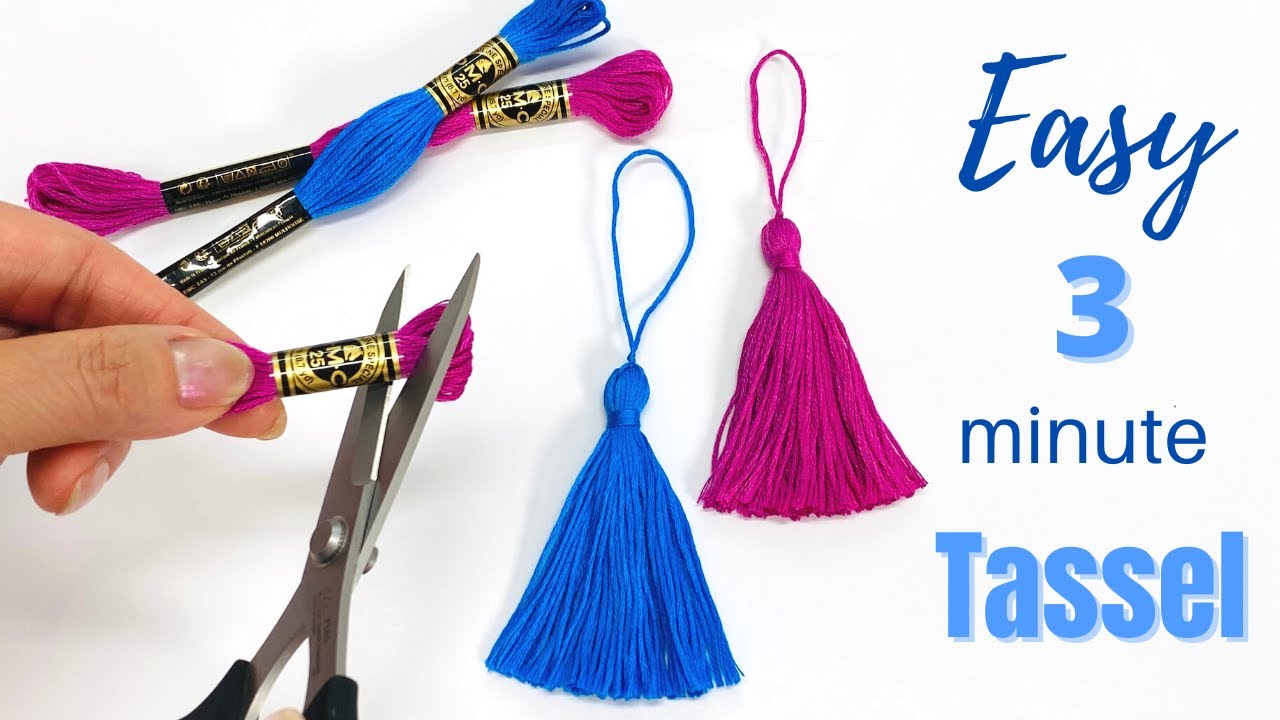
Image Source: i.ytimg.com
What Are Tassels For?
Tassels are like little bunches of threads tied at one end. People have used them for a long time as decorations. They can be fancy or simple. You see them on curtains, clothes, pillows, rugs, and jewelry. Making them yourself lets you pick any color and size you want.
Why Use Embroidery Floss?
Embroidery floss is great for making small tassels. Here is why:
- Lots of Colors: It comes in hundreds of colors. You can find the perfect shade for your project.
- Shine: It has a nice shine that makes tassels look pretty.
- Divisible Threads: Each strand is made of six smaller threads. You can use all six together for a thicker tassel or separate them for a thinner one. This gives you options.
- Easy to Find: You can buy it at craft stores or even many big stores. It is not expensive.
- Smooth Texture: It hangs nicely and feels soft.
Using floss for your DIY thread tassel gives you many ways to be creative.
What You Need to Make a Tassel
Getting your tassel making supplies ready is the first step. You don’t need much!
Essential Materials
- Embroidery Floss: One skein of your chosen color for each tassel.
- Something to Wrap Around: A piece of stiff paper, cardboard, a small book, or even your fingers. The width of this object decides how long your finished tassel will be. A piece of cardboard about 3-4 inches wide is good for a standard size tassel.
- Scissors: Sharp scissors work best for cutting the threads cleanly.
Optional Items
- Ruler: To measure the cardboard and the final tassel length.
- Large Needle or Hook: Helpful for pulling threads through tight spots.
- Stronger Thread: If you plan to hang something heavy from the tassel loop, use a stronger thread than the floss for the top tie.
- Beads or Charms: To add extra decoration.
- Fabric Glue: A tiny dot can secure knots, but this is often not needed.
Here is a simple list of the main things:
| Item | Use | Notes |
|---|---|---|
| Embroidery Floss | The material for the tassel. | Choose your color. |
| Cardboard/Wrapper | Sets the tassel length. | Size affects finished length. |
| Scissors | To cut the threads. | Make sure they are sharp. |
Gathering everything before you start makes the process smooth.
How to Make an Easy Tassel
This is a simple embroidery floss tassel tutorial. Follow these floss tassel instructions to make your own easy thread tassel.
Step 1: Prepare the Floss
Take your skein of embroidery floss. It usually comes in a loop. Do not cut it yet! Keep it in its loop form.
Step 2: Wrap the Floss
You need to wrap the floss around your cardboard or chosen object.
- Take one end of the floss loop.
- Hold it against the edge of your cardboard (the edge that will set the length).
- Start wrapping the floss around the cardboard smoothly. Keep the tension even.
- Wrap the whole skein of floss around the cardboard. Wrap it side-by-side if possible, but overlapping is okay. The more you wrap, the fuller your tassel will be. One standard skein makes a nice small to medium tassel.
Step 3: Tie the Top Loop
This step creates the loop you will use to hang your tassel.
- Cut a piece of floss about 8-10 inches long.
- Carefully slide the wrapped floss off the cardboard. Keep the loop shape together.
- Slide the 8-10 inch piece of floss underneath all the wrapped threads at one end of the loop. This end will be the top of your tassel.
- Bring the two ends of the short floss piece up and tie a strong knot right around the bundle of wrapped threads. Tie a double knot to make sure it is secure. This knot forms the top of your tassel and creates the hanging loop.
Step 4: Create the Tassel Head
Now you will define the “head” of the tassel, which is the top part before the skirt of threads.
- Cut another piece of floss, this one about 12-15 inches long.
- Lay the tassel flat. The loop you just made should be pointing up.
- About 1/2 inch to 1 inch down from the top knot (where the hanging loop is), place the center of this new long piece of floss.
- Wrap one end of this long piece tightly around the bundle of threads, working downwards. Wrap it several times to create a tight neck. Keep the wraps close together and smooth.
- When you are happy with the thickness of the neck, tie off the wrapping thread with a secure knot. You can tie it around the bundle of threads, or hide the knot within the wrapped neck by pulling the ends through. A simple way is to tie a double knot using the two ends of the wrapping thread around the tassel body.
Step 5: Cut the Bottom Loops
Your tassel currently has loops at the bottom. You need to cut them open.
- Hold the tassel by the top loop.
- Look at the bottom end. You will see all the loops of thread.
- Take your sharp scissors and cut straight across the very bottom of all the loops. Make sure you cut every single loop!
Step 6: Trim and Shape
This step makes your tassel look neat and even.
- Hold the tassel by the top loop.
- The threads will likely be uneven at the bottom.
- Use your scissors to carefully trim the bottom of the tassel. Try to make all the threads the same length so the bottom edge is straight and tidy. You can hold it up and trim little by little until it looks good.
You have now made a basic DIY thread tassel! It’s a simple process but the result is lovely. This handmade floss tassel is ready to use.
Making Tassels Different Ways
Once you know the basic floss tassel instructions, you can change things up.
Changing Size
The length of your tassel is set by the width of the object you wrap the floss around.
- Longer Tassel: Use a wider piece of cardboard or wrap around a longer object like a ruler.
- Shorter Tassel: Use a narrower piece of cardboard or wrap around a small card.
The thickness of your tassel depends on how much floss you wrap.
- Thicker Tassel: Wrap the floss around the cardboard more times, maybe using more than one skein.
- Thinner Tassel: Wrap fewer times.
Using Multiple Colors
You can easily make a multi-colored tassel.
- Wrap one color of floss around your cardboard.
- Then, without cutting, add the next color and wrap it too, right on top or next to the first color.
- Keep wrapping colors until you have the mix you want.
- Follow the rest of the steps as usual. When you cut the bottom loops, the colors will mix together.
- For a more striped look, wrap each color in a distinct section on the cardboard before removing and tying.
Adding a Hanging String
If you need a longer string than the loop made in Step 3, you can add one.
- After tying the knot in Step 3, take a longer piece of floss or string.
- Tie this longer piece onto the loop you made. Hide the knot neatly.
Making a Brush Tassel (Similar to Yarn Tassels)
A brush tassel has a smoother, less defined head than the one described above. This method is often seen in yarn tassel tutorials but works for floss too.
- Wrap floss around your cardboard just as in Step 2.
- Slide the wrapped floss off.
- Cut a long piece of floss for the hanging loop (about 15-20 inches). Slide it underneath the top edge of the loop. Tie a single knot, but do not pull it tight yet. Leave it loose.
- Lay the bundle flat. Use another piece of floss (about 12-15 inches) to create the neck. Wrap it tightly around the bundle about 1/2 inch down from the top, just like in Step 4. Tie this wrapping thread off securely.
- Now, pull the first knot you made (the loose one for the hanging loop) tight. This pulls the top ends of the wrapping thread and the main bundle up into the loop, hiding the neck knot.
- Cut the bottom loops.
- Trim the bottom threads evenly.
- The ends from the wrapping thread and the hanging loop threads all become part of the tassel skirt, making it look more like a brush.
This brush style is another great way to make a handmade floss tassel. It is very similar to how you would make a yarn tassel tutorial.
Troubleshooting Common Issues
Sometimes things might not go perfectly. Here are some common problems and how to fix them.
Uneven Bottom
If your tassel skirt looks messy and the threads are different lengths:
- Hold the tassel up by its loop.
- Use sharp scissors. Trim carefully across the bottom. It takes patience to get it straight.
- You can even out the threads by gently brushing them with your fingers first.
Tassel Head is Loose
If the neck you wrapped feels loose and slides down:
- The wrapping thread might not have been pulled tight enough.
- Untie the neck wrapping if you can, or cut it off carefully.
- Cut a new piece of floss and wrap it again, this time pulling each wrap very tight before moving to the next one.
- Tie a very secure double knot at the end.
Threads Tangled When Wrapping
If the floss gets tangled while you wrap it around the cardboard:
- Try to unwrap it gently. If it is too tangled, you might need to cut it off and start with a new piece of floss.
- To prevent tangles, keep the floss smooth as you wrap. Hold the skein loosely or put it in a small bowl while you pull the thread from it.
Tassel is Too Thin
If your tassel does not look full enough:
- You did not wrap the floss enough times.
- You can try adding more threads. Cut a bunch of threads the length of your finished tassel. Carefully tuck these new threads into the top knot or under the neck wrap. This can be tricky.
- The easiest fix is often to just make a new tassel and wrap more floss next time! Use a whole skein for a standard small tassel.
Tassel is Too Fat
If your tassel is too bulky for its size:
- You wrapped too much floss.
- You can try to remove some threads from the middle of the bundle before you tie the neck, but this is difficult to do neatly.
- Again, the easiest fix is often to make a new one and use less floss next time.
Making a DIY thread tassel gets easier with practice! Your first few might not be perfect, but you will quickly learn the right tension for wrapping and tying.
Projects Using Floss Tassels
Once you know how to make a handmade floss tassel, you can use them for many fun things. Here are some embroidery thread projects.
Tassel Keychains
This is a very popular use. Making a tassel keychain craft is simple.
- Make a tassel following the steps.
- When you tie the top loop (Step 3), make the loop big enough to attach to a keychain ring or clip.
- Attach the tassel loop to a keychain ring or clip.
- You can add beads to the top loop before attaching it.
Bookmarks
Add a tassel to the end of a ribbon or string to make a pretty bookmark.
- Make a small or medium tassel.
- Tie the top loop onto one end of a ribbon or sturdy string.
- Place the ribbon between the pages of your book, with the tassel hanging out the bottom.
Jewelry
Small floss tassels make great earrings or pendants.
- Make very small, thin tassels. You might only need to wrap the floss a few times.
- Use a thin thread or even wire for the top loop.
- Attach the top loop to earring hooks, jump rings for necklaces, or bracelets.
- You can put a bead cap over the top of the tassel head before attaching it for a finished look.
Decorating Gifts
Tie a tassel onto the ribbon of a gift for a special touch.
- Make a tassel in a color that matches the gift wrap.
- Tie the top loop of the tassel onto the gift ribbon before making the bow, or tie it onto the finished bow.
Home Decor
Use tassels to decorate items around your home.
- Sew tassels onto the corners of pillows or blankets.
- Make a string of tassels to create a garland for parties or room decor.
- Add tassels to the pulls on blinds or curtains.
- Attach tassels to the handles of baskets or bags.
Clothing and Accessories
Sew tassels onto clothes, bags, or hats.
- Add a row of small tassels to the hem of a shirt or skirt.
- Put a tassel on the zipper pull of a jacket or bag.
- Attach a tassel to the strap of a purse or backpack.
The possibilities for using your easy thread tassel creations are endless! Each handmade floss tassel adds a pop of color and texture.
Comparing Floss Tassels and Yarn Tassels
The basic steps for making a tassel from embroidery floss are very similar to making one from yarn. This is why yarn tassel tutorial instructions often look familiar.
- Material: Floss is thin and shiny, usually made of cotton or rayon. Yarn is thicker, can be made of wool, acrylic, cotton, etc., and has many textures (bumpy, smooth, fuzzy).
- Size: Floss tassels are usually smaller and finer because the thread is thin. Yarn tassels are often larger and bulkier.
- Weight: Floss tassels are very light. Yarn tassels can be heavier depending on the yarn thickness.
- Best Use: Floss tassels are great for jewelry, bookmarks, gift wrap, small crafts. Yarn tassels are better for home decor (pillows, throws), keychains (can be larger), and chunky accessories.
The embroidery floss tassel tutorial uses the same simple wrapping and tying method as a basic yarn tassel tutorial. So, if you learn one, you can easily make the other by just changing the material.
Caring for Your Tassels
Embroidery floss can sometimes get a bit messy after being used or handled a lot.
- Straightening Threads: If the threads get bent or crinkled, you can sometimes straighten them. Hold the tassel over gentle steam (like from a kettle, but be very careful not to burn yourself!). The steam helps relax the fibers. Then, gently comb the threads with your fingers or a fine-tooth comb.
- Cleaning: If a tassel gets dirty, you can hand wash it gently in cool water with a tiny amount of mild soap. Rinse well and gently squeeze out extra water. Hang it to dry completely. You might need to reshape it and comb the threads after it dries.
- Avoiding Snags: Keep your tassels away from things that might snag them, like sharp objects or velcro.
A little care will keep your handmade floss tassel looking nice for a long time.
Summary of Making a Tassel
To quickly go over the floss tassel instructions:
- Wrap embroidery floss around a piece of cardboard (or similar). The width of the cardboard sets the tassel’s length.
- Slide the wrapped floss off carefully.
- Tie a short piece of floss tightly around the top loop to make the hanging loop.
- Wrap another piece of floss tightly around the bundle about 1/2 inch down from the top loop to create the neck.
- Cut the bottom loops of thread.
- Trim the ends so the bottom is straight.
That’s it! You have completed the embroidery floss tassel tutorial. It’s a very easy thread tassel project.
This detailed guide covers everything you need to make your own DIY thread tassel. From gathering tassel making supplies to trying different styles and finding embroidery thread projects, you are ready to start crafting! Enjoy making your own colorful handmade floss tassels.
Frequently Asked Questions
Here are some common questions people ask about making tassels with thread.
How much floss do I need for one tassel?
Usually, one standard skein of embroidery floss (about 8-10 yards) is enough to make one small to medium-sized tassel that is nice and full. If you want a really big or thick tassel, you might need two or more skeins.
Can I use other types of thread?
Yes! You can use many types of thread or yarn. Sewing thread can be used, but you will need to wrap it many, many times to get a thick enough tassel. Craft thread, pearl cotton, or even thin yarn will work. The steps in this DIY thread tassel guide will be mostly the same, just the material changes.
What’s the best way to make the neck tie tight?
Wrap the thread around the bundle firmly, pulling it snug with each turn. When you tie the knot at the end of the wrapping, pull it as tight as you can without breaking the thread. You can use pliers gently to help pull the knot tight if needed, but be careful not to damage the floss. Tying a double or even triple knot helps keep it from coming undone.
How long should the piece of cardboard be?
The piece of cardboard sets the finished length of your tassel’s skirt (the hanging part). If you wrap floss around a piece of cardboard that is 3 inches wide, your finished tassel threads will be about 3 inches long from the neck down. Choose the width based on how long you want your tassel.
Can kids make these tassels?
Yes, this is a great craft for older kids, maybe 8 years old and up, with some adult help. They can do most of the wrapping and tying. An adult should handle the sharp scissors for cutting the bottom loops and trimming. It’s a good easy thread tassel project for families.
How do I add beads to the top loop?
Before you tie the top loop (Step 3), you can thread beads onto the piece of floss you will use for the loop. Slide the beads down to the middle of the floss piece. Then, when you tie the knot around the tassel bundle, the beads will be on the top loop.
What is the difference between an embroidery floss tassel tutorial and a yarn tassel tutorial?
The main difference is the material used. An embroidery floss tassel tutorial uses thin embroidery floss, resulting in smaller, finer tassels. A yarn tassel tutorial uses thicker yarn, resulting in larger, often chunkier tassels. The making steps are usually very similar or identical for basic tassels.
Can I make very tiny tassels?
Yes! To make tiny tassels, you need to wrap the floss around something very narrow, like a popsicle stick, a fork (wrap around the tines), or even just a finger. Use less floss. The smaller the object you wrap around and the less floss you use, the smaller your finished easy thread tassel will be.
My tassel threads are sticking together. How can I make them flow nicely?
Sometimes the floss threads can cling to each other due to static or just being packed together. Gently separate the threads with your fingers. You can try running your fingers through the tassel like a comb. For stubborn cases, a tiny bit of anti-static spray or fabric softener diluted in water (spray lightly) might help, but test this on a scrap first. Steaming can also help relax the fibers and make them hang better.
Creating tassels is a fun and useful skill. With this embroidery floss tassel tutorial, you can easily make beautiful decorations for many different projects. Happy crafting!