
What is the best knot for sewing? The best knot for sewing is typically a small, secure knot that won’t unravel and lays flat against your fabric. Can I tie a knot with just my needle and thread? Yes, you absolutely can tie a knot with just your needle and thread. Who is this guide for? This guide is for anyone who wants to learn how to tie a neat and secure knot for sewing, from beginners to more experienced crafters looking to refine their finishing techniques.
Learning to tie a proper knot is a fundamental skill in sewing. A well-tied knot ensures your stitches stay in place, preventing your work from coming undone. It’s the small details that make a big difference in the final look and durability of your sewing projects. We’ll explore various thread knot techniques to help you achieve a secure stitch knot and a clean finish every time.
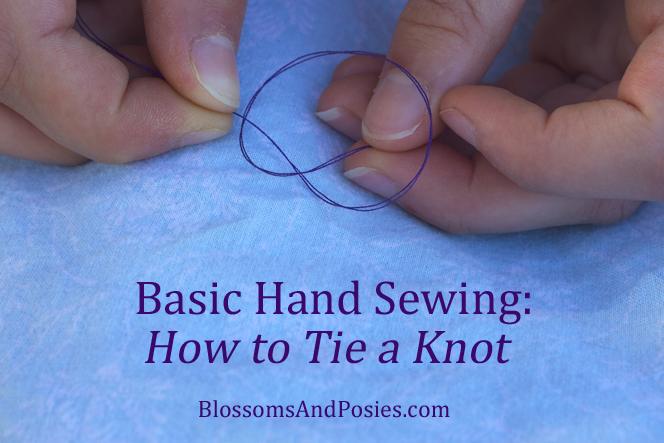
Image Source: blossomsandposies.com
The Importance of a Good Sewing Knot
When you’re working with a needle and thread, the knot you tie at the end is crucial. It’s the anchor that keeps your sewing thread knot from slipping through the fabric. A poorly tied knot can lead to several problems:
- Unraveling stitches: Your hard work can literally fall apart.
- Loose ends: This looks messy and can snag on things.
- Bulky knots: These create bumps on your fabric, which can be unsightly and uncomfortable, especially on clothing.
- Difficulty passing through fabric: Overly large or complex knots can get stuck in the eye of your needle or tear delicate fabrics.
Mastering how to knot sewing thread properly means your stitches will be strong, your seams will hold, and your finished projects will look polished and professional. It’s about creating a finishing stitch knot that is both functional and discreet.
Basic Knot Tying for Sewing: Getting Started
Let’s start with the most basic methods for making a knot for sewing. These are essential for nearly every sewing task.
The Simple Overhand Knot
This is the most common knot, and with a few tricks, you can make it small and secure.
Steps:
- Thread your needle: After threading your needle, leave a tail of thread. The length of the tail will determine the size of your knot. For a small knot, leave about 6-8 inches of thread.
- Create a loop: Bring the end of the thread around your index finger, creating a loop.
- Wrap the thread: Wrap the thread around your finger two to three times, keeping the wraps neat and close together.
- Slide off and pull: While holding the wraps together with your thumb, slide the loop off your finger.
- Tighten: Pull the working end of the thread firmly to tighten the knot against the fabric or where you want it to secure your stitches.
Tips for a Neat Simple Knot:
- Use your fingernail: As you’re about to tighten the knot, use the tip of your fingernail to guide the thread against the fabric. This helps it lie flat.
- Multiple thin threads: If you’re using a thicker thread or want extra security, you can tie two or three simple overhand knots on top of each other.
- Avoid tangles: Keep your thread untangled as you work to prevent knotting issues.
The Surgeon’s Knot (Double Overhand Knot)
This knot is essentially an overhand knot with an extra wrap, making it a bit more secure and less likely to slip.
Steps:
- Thread your needle as you would for the simple overhand knot.
- Create a loop: Bring the end of the thread around your index finger.
- Wrap the thread twice: This is the key difference. Wrap the thread around your finger twice.
- Slide off and pull: Hold the two wraps together and slide them off your finger.
- Tighten: Pull the working end of the thread to create a secure knot.
The surgeon’s knot is excellent for knotting thread end when you need extra assurance that it won’t loosen.
Advanced Thread Knot Techniques for Extra Security
Sometimes, the basic knots just aren’t enough, especially for heavier fabrics or when you need a truly bomb-proof finishing stitch knot. Here are a couple of more advanced techniques.
The Whipstitch Knot (or Wrap Knot)
This method is great for creating a very small, neat knot right at the fabric’s edge or at the end of your stitching line. It’s a fantastic way to finish off a secure stitch knot.
Steps:
- End your stitching: You’ve completed your stitches and have your needle and thread exiting the fabric.
- Create a small loop: Bring the thread back towards the fabric, creating a small loop of thread directly next to where your needle just emerged.
- Wrap around the needle: Instead of wrapping around your finger, wrap the free end of the thread around the needle three to four times, close to the fabric surface.
- Slide the wraps: Hold the wraps together with your fingers against the fabric.
- Pull the needle: Gently pull the needle through the wraps. As the needle pulls through, the wraps will cinch down tightly against the fabric, forming a knot.
- Trim: Trim the excess thread close to the knot.
This technique is superb for sewing finishing knots because the knot is formed on the fabric, making it less likely to pull through.
The Twisted Knot
This knot is excellent for preventing the knot from loosening and is particularly useful when you’re not passing through a thick seam.
Steps:
- Thread your needle and have your thread emerging from the fabric.
- Hold the thread: Pinch the thread about an inch from where it exits the fabric.
- Twist: Twist the thread end in one direction (e.g., clockwise) several times.
- Wrap: Bring the twisted thread end back towards the fabric and wrap it around the standing part of the thread (the part still attached to your needle) two or three times.
- Pull: Pull the needle away from the fabric. The twists will help the thread coil upon itself, creating a compact knot.
- Tighten: Gently pull the needle and thread to tighten the knot securely against the fabric.
This is another excellent method for how to knot sewing thread securely and discreetly.
Thread Knot Techniques for Different Fabrics and Situations
The best knot can depend on the fabric you’re using and the purpose of your stitching.
For Delicate Fabrics (Silk, Chiffon, Organza)
Delicate fabrics can be easily damaged by large or rough knots.
- Tiny Double Knot: Instead of wrapping the thread around your finger multiple times, make just one loop and then loop the thread through that loop again. This creates a very small, neat knot.
- Knotting the thread end: When knotting thread end for these materials, aim for a knot that is as small as possible. Consider using a single strand of thread rather than doubling it up, which inherently creates a bulkier knot.
- Whipstitch Knot: As mentioned, this is excellent as it forms the knot directly on the fabric surface, minimizing the chance of it pulling through or creating a large bump.
For Heavier Fabrics (Denim, Canvas, Upholstery)
These fabrics can handle slightly larger or more robust knots, and you often need that extra security.
- Surgeon’s Knot: The extra wrap provides additional grip and strength, preventing the knot from slipping on coarse fibers.
- Multiple Overhand Knots: Tying two or three simple overhand knots on top of each other creates a substantial knot that’s very unlikely to budge.
- Using Thicker Thread: If the fabric allows, using a slightly thicker thread can also contribute to a more secure stitch.
For Hand-Sewn Buttonholes or Bar Tacks
These areas experience a lot of stress, so a super-secure knot is essential.
- Multiple Wraps: For a finishing stitch knot on a buttonhole, you might wrap the thread around the needle five or six times when using the whipstitch knot method. This creates a substantial anchor.
- Backstitching and Knotting: Often, you’ll backstitch a few stitches at the beginning and end of a buttonhole, then tie a secure knot over these stitches for maximum strength.
How to Knot Sewing Thread Without a Needle
While less common for precise sewing, sometimes you might need to tie off a thread without your needle handy, or you might be securing threads after cutting them.
- The Classic Hand Knot: This is similar to the overhand knot but done entirely with your fingers. Pinch the two ends of the thread together, create a loop with one end around the other, and pull both ends tight.
- The Surgeon’s Knot (Hand): Similar to the classic hand knot, but you loop one end around the other twice before pulling tight.
These are useful for securing fabric ends or temporary ties, but for actual stitching, the needle is your best friend for making a knot for sewing.
Common Mistakes When Tying Sewing Knots and How to Avoid Them
Even experienced sewers can fall into bad habits. Here are common pitfalls and how to sidestep them.
Mistake 1: Knotting Too Far from the Fabric
Problem: If you tie your knot far away from the fabric and then pull it tight, the thread can stretch, and the knot might end up further from the fabric than you intended, creating a loose start.
Solution: Always try to tie your knot as close to the fabric surface as possible. Use your fingertip or fingernail to guide the knot right to the spot where your thread emerges.
Mistake 2: Making Knots Too Big
Problem: Large knots are unsightly, can create puckering, and might not pass through the fabric or needle eye.
Solution: For most general sewing, aim for the smallest possible knot. Use the simple overhand knot with only one or two wraps, and practice the whipstitch knot to keep knots compact. If you need more security, tie two small knots rather than one large one.
Mistake 3: Not Securing the End Properly
Problem: This is the most common reason for stitches unraveling. You think you’ve tied a knot, but it’s too loose or only has one weak wrap.
Solution: Always double-check your knot. Give it a gentle tug to ensure it’s tight. For critical seams, consider tying a surgeon’s knot or even a small overhand knot followed by a whipstitch knot for ultimate security.
Mistake 4: Using Too Much Thread
Problem: Long lengths of thread are prone to tangling and knotting up as you sew, making the process frustrating and resulting in less-than-perfect knots.
Solution: Thread only as much thread as you’ll need for a particular section. About an arm’s length (24-30 inches) is usually a good starting point. If you run out, it’s better to tie off and re-thread than to struggle with a long, tangled piece.
Mistake 5: Ignoring the Fabric Type
Problem: Using a knot suitable for heavy denim on delicate silk will likely result in a large, damaging knot.
Solution: Always consider the fabric. Delicate fabrics need tiny, discreet knots. Sturdier fabrics can accommodate slightly larger or more robust knots.
When to Use a Knot and When Not To
While securing your thread with a knot is standard practice, there are exceptions.
When to Use a Knot:
- Starting a new seam: To anchor your first stitch.
- Finishing a seam: To prevent it from unraveling.
- Attaching buttons, hooks, or other notions: To secure them firmly.
- General hand sewing: Most hand-sewing tasks require a knot at the beginning and end of your thread.
- Decorative stitches: To create a clean finish on visible stitching.
When NOT to Use a Knot (or to Use it Sparingly):
- Sewing with a sewing machine: Machine sewing typically doesn’t require knots. The machine’s reverse stitch function at the beginning and end of a seam secures the stitches. If you do need to knot machine thread, it’s usually done by hand to secure a specific point.
- When the thread will be completely enclosed: If you’re stitching a seam that will be completely hidden inside another seam or hem, and the stress on that particular thread is minimal, you might skip the knot to avoid bulk. Instead, you can backstitch a few times.
- When you need to ” bury” the thread: Sometimes, after making a knot, you can gently pull the needle through the fabric so the knot sinks between the fibers, making it invisible. This is a more advanced technique often used in visible mending or fine embroidery.
Mastering Sewing Finishing Knots
The goal of sewing finishing knots is to be both secure and invisible. Here’s a summary of how to achieve that:
- Choose the Right Knot: Select a knot appropriate for your fabric and the project.
- Knot Close to the Fabric: Tie your knot directly against the fabric surface.
- Keep Knots Small: Avoid large, bulky knots.
- Use Fingernails: Utilize your fingernails to guide the knot flat.
- Trim Excess Thread: After tying a secure knot, trim the excess thread close to the knot with sharp scissors.
By practicing these techniques for knot tying for fabric, you’ll find your sewing projects look much neater and hold up better over time. Learning how to knot sewing thread effectively is a small step that yields significant improvements in your crafting.
Frequently Asked Questions (FAQ)
Q1: Do I need to knot my thread every time I sew by hand?
A1: Yes, generally you need to knot your thread at the beginning and end of your stitching line to prevent it from unraveling. The only exceptions might be if you’re using a sewing machine or if the stitches are completely enclosed and under no tension.
Q2: What’s the best way to knot thread for quilting?
A2: For quilting, a small, secure knot is essential to avoid bulk that could show through the layers. A simple overhand knot with just one or two wraps, tied very close to the fabric, is usually sufficient. Some quilters prefer to bury their knots by pulling the thread through the batting and backing layers after tying, making the knot invisible from the front.
Q3: My sewing thread keeps knotting up while I sew. What am I doing wrong?
A3: This is usually caused by using too much thread, the thread twisting on itself, or the fabric snagging the thread. Try using shorter lengths of thread, gently flicking your wrist to untwist the thread as you sew, and ensuring your needle is sharp and the fabric isn’t catching on anything.
Q4: How many times should I wrap the thread when making a knot?
A4: For a standard simple overhand knot, wrapping the thread around your finger two or three times is common. For a surgeon’s knot, wrap it twice. If you need a very tiny knot for delicate fabrics, one wrap might be enough. Always test on a scrap piece of fabric to see what works best.
Q5: Can I use super glue to secure my sewing knots?
A5: While super glue can secure a knot, it’s generally not recommended for most fabric projects. Super glue can make the fabric stiff, discolor it, and is not washable. Fabric glues or Fray Check are better alternatives if you absolutely need to secure a knot with an adhesive, but proper knot-tying techniques are usually preferred.
Q6: What if my knot is too big and shows on the right side of the fabric?
A6: If your knot is too large, you can try to carefully trim it down with sharp scissors, being careful not to cut the fabric or the stitches. For future projects, practice tying smaller knots, use the whipstitch knot technique, or try burying your knots as mentioned in the quilting answer.
Q7: Is there a knot that doesn’t require a needle at all?
A7: For securing fabric ends or making temporary ties, you can use hand knots like the overhand knot or surgeon’s knot described earlier, using just your fingers. However, for actual stitching and securing stitches to fabric, a needle is essential for most sewing applications.
Q8: How do I tie off thread when I’m done sewing a project completely?
A8: After your last stitch, tie a secure knot as close to the fabric as possible. For extra security, you can tie a second knot on top of the first. Then, carefully trim the excess thread very close to the knot using sharp scissors. For visible stitching, you might want to try to sink the knot into the fabric fibers first.