
Can you hem pants with a sewing machine? Yes, you absolutely can! Hemming pants with a sewing machine is a straightforward skill that anyone can learn, transforming your clothes with a clean, professional finish. Whether you’re shortening trousers, jeans, or skirts, mastering this technique will save you time and money. This comprehensive guide will walk you through everything you need to know, from gathering your supplies to achieving that perfect hem.
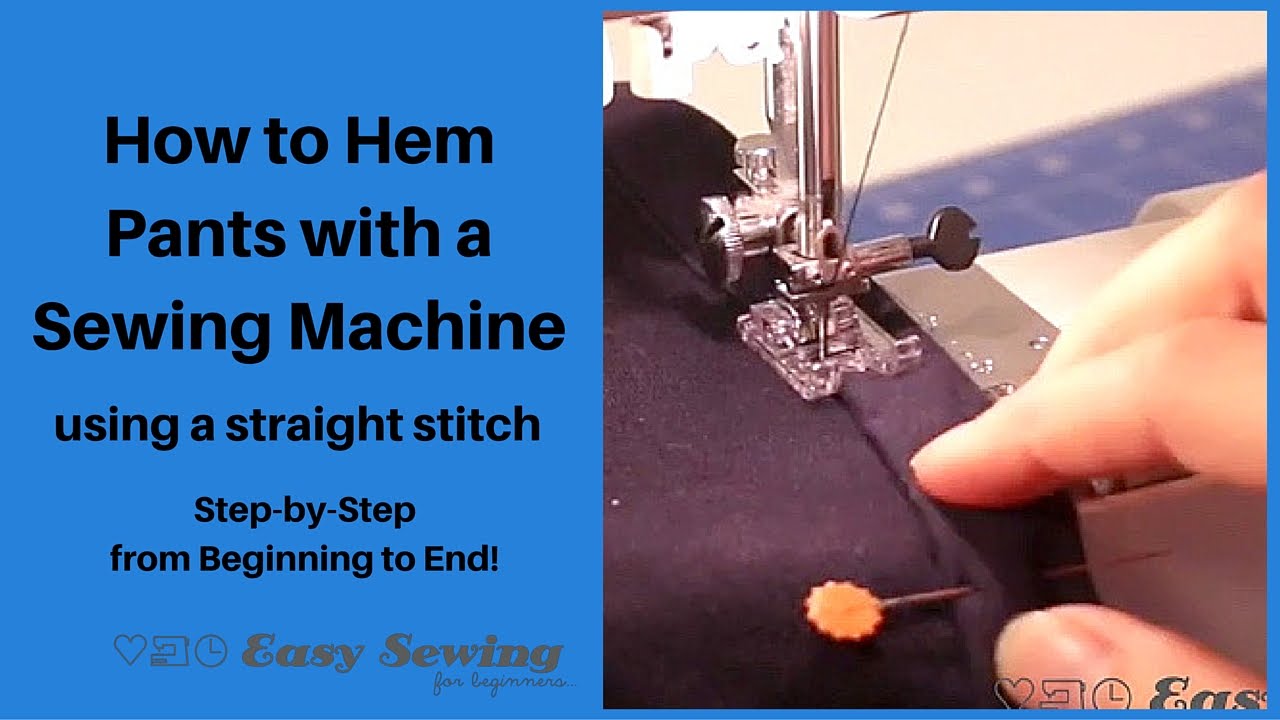
Image Source: i.ytimg.com
Why Hem Your Pants?
Hemming serves several important purposes for your trousers. Firstly, it prevents fabric from fraying, especially after cutting. A well-done hem keeps the fabric edges neat and tidy. Secondly, it gives your pants a polished, finished look. An uneven or unhemmed edge can make even the most expensive pants look unfinished and unprofessional. Lastly, hemming is essential for adjusting the length of pants to fit your specific height and style preference. It’s a fundamental sewing skill that opens up a world of custom fit and garment care.
Essential Supplies for Hemming Pants
Before you start, gather these key items for successful sewing pants hem:
- Your Pants: Of course! Make sure they are clean and ironed.
- Sewing Machine: A basic sewing machine for pants is all you need. Ensure it’s in good working order.
- Thread: Choose a good quality thread that matches your pants.
- Sewing Machine Needles: Use a needle appropriate for your fabric type. A universal needle is often a good starting point.
- Fabric Scissors: Sharp scissors are crucial for a clean cut.
- Measuring Tape or Ruler: For accurate length measurements.
- Fabric Marker or Chalk: To mark your hemline.
- Pins: To hold the hem in place.
- Iron and Ironing Board: Essential for pressing seams and hems.
- Seam Ripper (Optional): If you need to remove an existing hem.
- Hemming Tape (Optional): For a no-sew option or to help stabilize the hem.
Preparing Your Pants for Hemming
Proper preparation is key to a beautiful sewing machine hem pants. Follow these steps:
1. Wash and Dry Your Pants
Always wash and dry your pants according to their care label before hemming. This is crucial because fabric can shrink after washing. If you hem them before washing, they might end up too short after the first wash.
2. Iron Your Pants
A smooth surface makes measuring and marking much easier. Iron out any wrinkles, especially along the original hemline if you’re working with existing pants.
3. Determine the Desired Length
Put on the pants and the shoes you intend to wear with them. Stand in front of a mirror. Have a friend help you, or use a long mirror. Decide where you want the hem to fall. Common hem lengths are:
- No Break: The hem just touches the top of the shoe.
- Slight Break: The hem folds slightly over the top of the shoe.
- Full Break: The hem folds significantly over the shoe, creating a prominent crease.
4. Mark the Hemline
Once you’ve decided on the length, use your fabric marker or chalk to mark the new hemline. Start from one side and work your way around. Ensure the marking is even all the way across. A good trick is to pin the desired length on one side, then measure from that pin straight down to the floor (or your hem level), and then transfer that measurement to the other side.
5. Measure and Cut Excess Fabric
Now, decide how much fabric you want to fold up for the hem. A standard hem allowance is usually between 1 to 2 inches. This allowance will be folded up to create the finished hem.
- Measure from your marked hemline down to the original hem (or fabric edge).
- Add your desired hem allowance (e.g., 1.5 inches) to this measurement.
- Mark this new cutting line.
- Carefully cut off the excess fabric using your sharp fabric scissors, ensuring a straight line. If you are keeping the original hem, you will simply fold up your new allowance.
Simple Steps for How To Sew a Hem
Here’s your step-by-step guide to machine sewing pants:
Step 1: Prepare the Hem Allowance
- Turn your pants inside out.
- Take the bottom edge of the pant leg and fold it up to meet your marked hemline.
- Press this fold firmly with your iron. This creates a crisp crease.
- Now, fold up the fabric again, this time along the marked hemline you made for cutting. This second fold should be the width of your hem allowance. For example, if you decided on a 1.5-inch hem allowance, fold up the fabric so the raw edge is 1.5 inches from the first folded edge.
- Press this second fold firmly. You should now have a double-folded hem ready for sewing.
Step 2: Secure the Hem with Pins
- Use your pins to hold the folded hem in place. Place the pins perpendicular to the folded edge, about every 2-3 inches. Ensure the pins go through all the layers of fabric.
- For a cleaner look and to make sewing easier, you can also baste the hem. This involves using a needle and thread to temporarily stitch the hem in place.
Step 3: Set Up Your Sewing Machine
- Thread your sewing machine with matching thread.
- Select a straight stitch. A stitch length of 2.0 to 2.5 mm is usually suitable for most fabrics.
- Attach a universal presser foot. If you have a zipper foot or a blind hem foot, these can be helpful, but a standard foot works well.
- Place the correct needle for your fabric type into the sewing machine.
Step 4: Start Sewing the Hem
- Place the pinned pant leg under the presser foot, aligning the folded edge with the needle.
- Lower the presser foot.
- Backstitch a few stitches at the beginning to secure the thread.
- Begin sewing along the folded edge, following the crease you pressed. Aim to keep your stitching line as straight and even as possible.
- Sewing machine hem pants typically involves stitching close to the inner folded edge. For a standard hem, this means sewing about 1/8 inch from the top folded edge.
- As you sew, continuously guide the fabric with your hands, but don’t pull or stretch it. Let the machine feed the fabric.
- When you reach the beginning of the hem, backstitch again to secure the end.
- Lift the presser foot, pull the fabric out, and trim the excess threads.
Step 5: Finishing Touches
- Remove the pins.
- Turn the pant leg right side out.
- Press the hem again with your iron. This will give it a professional, crisp finish. You can press the hem to one side or press the seam flat, depending on the look you prefer.
Different Types of Hems for Sewing Pants
There are various ways to hem pants, each offering a slightly different look and feel. Here are a few popular options:
1. The Double Fold Hem (Standard Hem)
This is the most common and durable hem, as described in the steps above. It involves folding the fabric edge twice to create a clean, enclosed finish. It’s excellent for most fabrics, from denim to cotton to linen.
2. The Blind Hem
A blind hem creates a nearly invisible stitch on the outside of the garment. This requires a special blind hem stitch on your sewing machine or careful hand stitching.
How to Create a Blind Hem:
- Prepare the pant leg as usual, but instead of folding the edge up twice, fold it up just once by your desired hem allowance (e.g., 1.5 inches). Press.
- Turn the pant leg right side out.
- Now, fold the fabric back on itself, so the raw edge is about 1/4 inch away from the main folded edge. You’re essentially creating a small pleat or fold that hides the raw edge.
- Pin this fold in place.
- Switch your sewing machine to the blind hem stitch. Refer to your machine’s manual for specific instructions.
- Place the fabric under the presser foot with the folded edge pointing towards you. The needle should be set to swing to the right to catch just a few threads of the main pant fabric, then swing to the left into the hem fold.
- Sew carefully, ensuring you only catch a small amount of the outer fabric with each stitch.
- After sewing, turn the pant leg right side out and press. The stitches should be almost invisible.
This pant hemming tutorial highlights how the blind hem gives a very clean and professional appearance, ideal for dress pants or lighter fabrics.
3. The Rolled Hem
A rolled hem is a very narrow hem, often used on delicate fabrics like silk or chiffon. It can be done by hand or with a special rolled hem foot on your sewing machine.
How to Create a Rolled Hem with a Rolled Hem Foot:
- Prepare the fabric edge by cutting it straight. You might need to trim down the hem allowance significantly if using a rolled hem foot.
- Feed the raw edge of the fabric into the specially designed slot of the rolled hem foot.
- As you sew, the foot will automatically fold and roll the fabric edge.
- This creates a very fine, neat edge.
4. The Cuffed Hem
Some pants, like chinos or certain trousers, are designed to have a cuff. This involves creating a wider hem that is folded upwards to form the cuff. The process is similar to the double fold, but the second fold is much wider.
Creating a Cuffed Hem:
- Determine the desired finished cuff height (e.g., 1.5 inches).
- Add this amount twice to your hem allowance, plus an extra 1/4 inch for seam allowance (e.g., for a 1.5-inch cuff, you’d need 1.5 + 1.5 + 0.25 = 3.25 inches total hem allowance).
- Fold up the fabric twice by your desired cuff height, press, and then fold up again by the 1/4 inch seam allowance to hide the raw edge.
- Sew as you would a double fold hem.
Sewing Machine for Pants: Choosing the Right Machine
While most basic sewing machine for pants will handle hemming effectively, some features can make the process even easier:
- Adjustable Stitch Length: Allows you to fine-tune your stitch for different fabrics.
- Reverse Stitch: Essential for backstitching at the beginning and end of seams.
- Free Arm: Makes it easier to sew pant legs and other circular items.
- Variety of Presser Feet: A standard foot is usually sufficient, but a zipper foot can help get closer to seams, and a blind hem foot is specifically designed for that technique.
If you’re serious about sewing pants regularly, investing in a reliable sewing machine for pants is worthwhile.
Tips for a Perfect Easy Pant Hem
- Use the Right Needle: A sharp, new needle that matches your fabric type (e.g., denim needle for jeans, universal for cottons) will prevent skipped stitches and fabric damage.
- Test on Scraps: Before sewing on your actual pants, test your stitch length and tension on a scrap piece of the same fabric.
- Press as You Go: Ironing at each step (folding, pinning) makes a huge difference in the final appearance.
- Take Your Time: Rushing can lead to uneven stitches or crooked hems.
- Match Thread Color: Using thread that matches your pants fabric will make the stitches less visible.
- Consider Your Fabric:
- Denim: May require a heavier-duty needle and potentially a longer stitch length.
- Knit Fabrics: Might benefit from a stretch stitch or a ballpoint needle to prevent skipped stitches and allow for some stretch.
- Delicate Fabrics: Use a finer needle and a shorter stitch length, and consider a silk or very fine thread.
- For Jeans: If you’re hemming jeans and want to keep the original hem look, carefully remove the existing hem with a seam ripper, cut the new length, and then reattach the original hem. This is a more advanced technique but gives the most authentic result.
Troubleshooting Common Hemming Issues
Even with the best intentions, you might encounter a few snags. Here are some common problems and how to fix them:
| Problem | Cause | Solution |
|---|---|---|
| Uneven Stitching | Fabric not fed evenly, machine tension issues. | Ensure you are not pulling or pushing the fabric. Check machine tension. Use the handwheel to slowly guide the fabric if needed. |
| Skipped Stitches | Wrong needle type, dull needle, incorrect tension, or fabric type. | Change to the correct needle type for your fabric, use a new sharp needle, and re-check tension settings. Try a stretch stitch for knits. |
| Thread Bunching (Bird’s Nest) | Thread tension too loose on top, or too tight below. | Adjust top thread tension (loosen) or bobbin thread tension (tighten). Ensure the bobbin is inserted correctly. |
| Fabric Puckering | Stitch length too short, or needle pulling fabric. | Increase stitch length. Use a new, sharp needle. Consider using a stabilizer for very stretchy fabrics. |
| Hem Too Wide or Too Narrow | Incorrect folding or measuring. | Unpick the stitches, re-measure and re-fold according to your planned hem allowance. |
| Fabric Snagging | Dull needle, wrong needle type, or fabric is delicate. | Use a new, sharp needle appropriate for your fabric. Use a finer needle and thread for delicate materials. |
Frequently Asked Questions (FAQ)
Q1: What is the best stitch length for hemming pants?
A1: A stitch length of 2.0 to 2.5 mm is generally a good starting point for most fabrics when sewing pants hem. For thicker fabrics like denim, you might go up to 3.0 mm, while finer fabrics may look better with a slightly shorter stitch.
Q2: Can I hem pants without a sewing machine?
A2: Yes, you can hem pants by hand, or you can use fabric glue or hemming tape for a no-sew option. However, a sewing machine will give you a more durable and professional finish for machine sewing pants.
Q3: How do I keep my hem straight when sewing?
A3: Ensure you have pressed your folds crisply. Use the seam guides on your sewing machine’s needle plate or use masking tape to mark a straight line if your machine doesn’t have clear guides. Sewing slowly and guiding the fabric gently will also help.
Q4: What is a blind stitch on a sewing machine?
A4: A blind stitch is a type of stitch that appears almost invisible on the outside of the fabric. It’s created by the needle catching just a few threads of the main fabric while making a wider swing into the hem fold. This is perfect for a professional sewing machine hem pants finish.
Q5: How much fabric should I allow for a hem?
A5: A typical hem allowance is between 1 and 2 inches, depending on the fabric and the desired look. For a more substantial cuff, you’ll need more allowance. It’s always better to have a little extra fabric than not enough.
Q6: My pants are made of stretchy material. How should I hem them?
A6: For stretchy fabrics (knits), it’s best to use a ballpoint or stretch needle to avoid damaging the fibers. You should also use a stitch designed for knits, such as a zigzag stitch (with a narrow width and medium length) or a twin needle for a professional, stretchy finish. Avoid stretching the fabric as you sew.
Learning how to hem pants with a sewing machine is a valuable skill. With these simple steps and tips, you can achieve a professional finish that makes your clothes fit perfectly and look fantastic. Enjoy the process and the satisfaction of creating a neat, durable hem on your garments! This pant hemming tutorial should provide all the guidance you need for a successful outcome, making sewing pants a much more accessible task.